Ghosts
 79
79

Ghosts
Banville's "Ghosts" is a masterclass in sustained atmospheric dread, a disquieting narrative that unfurls like a decaying memory. The prose, as ever, is exquisitely controlled, each sentence a precisely placed stone in a meticulously constructed edifice of psychological unease. The professor's descent into a world populated by phantom-like figures is rendered with a chilling detachment that amplifies the horror. However, the deliberate ambiguity, while a stylistic strength, occasionally borders on the frustrating, leaving certain narrative threads frustratingly unresolved. The passage describing the "sea-fog," which seems to embody the island's oppressive past, is particularly potent, a vivid encapsulation of the novel's pervasive melancholic tone. Ultimately, "Ghosts" is a haunting, if occasionally opaque, meditation on the phantoms that inhabit us.
📝 Description
79
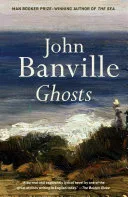
John Banville's 2012 novel "Ghosts" probes the porous boundary between memory and reality.
Set on a desolate island, "Ghosts" centers on a reclusive professor whose isolation is disrupted by strange figures and unsettling events. The narrative deliberately blurs the lines between what is real and what is imagined, fostering a pervasive sense of unease. Banville uses this setting to question the professor's perception and the nature of his encounters.
The novel asks significant questions about identity and the past's hold on the present. It examines how subjective experience can alter our understanding of the world, presenting a disorienting yet meticulously crafted literary experience. The professor's psychological state is central to the unfolding mystery, as the island itself seems to mirror his internal turmoil.
Published in 2012, "Ghosts" touches on traditions that explore the uncanny and the thinness of the veil between the material and immaterial. The novel engages with ideas of spectral presences and the way trauma can manifest as visitations, echoing literary explorations of the supernatural that question subjective reality. Banville's work here aligns with a literary interest in the psychological impact of the past, where internal states project outward, creating what appear to be external, disquieting phenomena.
💡 Why Read This Book?
• Gain insight into the nature of subjective reality, as Banville dissects the protagonist's increasingly unreliable perceptions, mirroring philosophical debates from the early 20th century. • Experience the disquieting effect of spectral presences, learning how Banville uses the motif of the ghost not for jump scares, but as a metaphor for unresolved past traumas. • Understand the literary technique of creating atmosphere through precise, evocative language, as seen in the descriptions of the island setting and its oppressive "sea-fog."
⭐ Reader Reviews
Honest opinions from readers who have explored this book.
❓ Frequently Asked Questions
What is the central theme of John Banville's "Ghosts"?
The central theme revolves around memory, identity, and the uncanny. The novel explores how the past haunts the present, blurring the lines between reality, hallucination, and the spectral.
What literary style does "Ghosts" by John Banville employ?
Banville employs a precise, lyrical, and psychologically driven literary style. The narrative is characterized by its controlled prose, atmospheric descriptions, and exploration of subjective consciousness.
Is "Ghosts" a supernatural horror novel?
While "Ghosts" features spectral figures and an unsettling atmosphere, it is more of a psychological and philosophical novel than a traditional horror story. The 'ghosts' are often manifestations of internal states.
What is the significance of the island setting in "Ghosts"?
The remote island serves as a liminal space, amplifying the protagonist's isolation and the uncanny occurrences. It acts as a physical manifestation of the protagonist's internal landscape and the oppressive weight of memory.
Who is the author of "Ghosts"?
The author is John Banville, a celebrated Irish novelist known for his Booker Prize-winning "The Sea" and his masterful command of language.
When was John Banville's "Ghosts" first published?
"Ghosts" by John Banville was first published on March 7, 2012.
🔮 Key Themes & Symbolism
The Unreliable Narrator
The novel excels in portraying a protagonist whose grip on reality is increasingly tenuous. The reader experiences the unsettling phenomena through the professor's distorted lens, questioning what is real and what is a figment of his psyche. This mirrors existentialist concerns about the nature of self and perception, prominent in post-war literature, where certainty often dissolves.
Memory as a Haunting Force
Banville presents memory not as a passive recollection but as an active, often malevolent, presence. The island becomes a repository for spectral traces of the past, suggesting that unresolved traumas and buried histories can manifest physically, influencing the present. This speaks to psychoanalytic concepts of repressed memories surfacing in symbolic forms.
The Liminal Space
The isolated island setting functions as a liminal zone, a threshold between the known and the unknown, the living and the spectral. It is a place where the ordinary rules of existence seem suspended, allowing for the intrusion of the uncanny. This mirrors symbolic landscapes found in Gnostic texts, where the material world is a flawed intermediary.
Identity and Dissolution
Through the professor's encounters with enigmatic figures, the novel probes the fragility of personal identity. As his perceptions warp, so too does his sense of self, suggesting that identity is not a fixed entity but a fluid construct susceptible to external and internal pressures. The spectral visitors challenge his very being.
💬 Memorable Quotes
Direct passages from the work, attributed to the author.
“The island is a place of ghosts, or perhaps it is the ghosts who make the island.”
— This statement expresses the novel's central ambiguity. It questions whether the spectral phenomena are inherent to the location or if they are projections of the protagonist's troubled mind, suggesting a profound connection between place and psyche.
“He felt himself dissolving, like sugar in water.”
— This simile vividly conveys the protagonist's loss of self and coherence. It illustrates the theme of identity dissolution, where the boundaries of the self become blurred under the weight of psychological distress or spectral influence.
“The sea-fog was a shroud, muffling sound, sight, and thought.”
— This describes the pervasive atmosphere of the island. The sea-fog acts as a sensory and psychological barrier, representing the oppressive nature of memory and the protagonist's mental state, obscuring clarity and fostering unease.
“They were not quite real, yet they were more real than anything else.”
— This paradoxical observation highlights the novel's exploration of reality. The spectral figures, though perhaps not physically present, exert a profound influence, suggesting that subjective experience and psychological truth can be more potent than objective reality.
💡 Key Ideas
Editorial paraphrase of the work's core concepts — not direct quotes.
He was a man who had forgotten how to live, and now he was forgetting how to die.
This line speaks to the protagonist's profound existential malaise. It suggests a state of being so detached from life that even the natural end becomes an alien concept, emphasizing his deep psychological paralysis.
🌙 Esoteric Significance
Tradition
While "Ghosts" is not explicitly a text of a particular esoteric tradition, it speaks to Gnostic and Hermetic concepts concerning the nature of reality and the illusory quality of the material world. The island setting, a liminal space, mirrors the Gnostic idea of the material plane as a flawed intermediary. The protagonist's struggle with perception and identity can be viewed through a lens of seeking gnosis, an intuitive knowledge that transcends the senses.
Symbolism
The "sea-fog" serves as a potent symbol of obfuscation, representing suppressed memories, psychological confusion, and the veiling of truth. The spectral figures themselves function as archetypal manifestations of guilt, loss, or unresolved trauma, acting as messengers from the protagonist's subconscious or a collective unconscious. The island itself symbolizes isolation and a space where the boundaries of the ordinary world are permeable.
Modern Relevance
Contemporary thinkers and practitioners interested in consciousness studies, psycho-geography, and literary explorations of the uncanny find "Ghosts" particularly relevant. Its nuanced portrayal of how internal states manifest externally informs discussions on mindfulness, the impact of environment on psyche, and the artistic representation of existential dread in an increasingly complex world.
👥 Who Should Read This Book
• Students of literary modernism and postmodernism seeking sophisticated explorations of unreliable narration and subjective reality. • Readers interested in psychological thrillers that prioritize atmosphere and character introspection over overt action. • Individuals drawn to philosophical fiction that uses spectral or uncanny elements to probe deeper questions about memory, identity, and the nature of existence.
📜 Historical Context
Published in 2012, John Banville's "Ghosts" arrived in a literary landscape still grappling with the legacy of postmodernism and a persistent fascination with unreliable narration and psychological depth. Banville, already a significant figure in contemporary Irish literature and a recipient of the Booker Prize for "The Sea" in 2005, utilized his signature precise and elegant prose to explore themes of memory, identity, and the uncanny. The novel can be seen in conversation with earlier works that questioned objective reality, such as the metafictional experiments of authors like John Fowles in the late 20th century. While not overtly tied to a specific philosophical movement, its exploration of subjective experience and the spectral traces of the past aligns with perennial esoteric interests in consciousness and the nature of being, echoing themes explored by writers like W.B. Yeats in his later occult writings.
📔 Journal Prompts
The island's sea-fog as a metaphor for repressed memories.
The spectral figures' influence on the professor's sense of self.
Reflections on the dissolution of identity in "Ghosts."
The island as a liminal space between worlds.
Interpreting the ambiguity of the spectral encounters.
🗂️ Glossary
The Uncanny
A psychoanalytic concept, often associated with Sigmund Freud, describing the unsettling feeling evoked by something that is simultaneously familiar and alien. It often relates to repressed fears or primal experiences resurfacing.
Liminal Space
An in-between or transitional place or state. In literature and psychology, it often signifies a threshold where established norms are suspended, allowing for transformation, revelation, or the intrusion of the uncanny.
Doppelgänger
Literally 'double-goer' in German, this refers to a ghostly or non-human twin or double of a living person. In literature, it often symbolizes a hidden aspect of the self, guilt, or a premonition of death.
Metafiction
Fiction that self-consciously draws attention to its status as a work of art, often blurring the lines between fiction and reality, or commenting on the process of writing and storytelling itself.
Subjective Reality
The reality as perceived and experienced by an individual consciousness, as opposed to objective reality, which is considered to exist independently of any observer.
Spectral Presence
The manifestation of a ghost or spirit. In "Ghosts," these presences are often ambiguous, serving as symbolic representations of psychological states or past traumas rather than literal supernatural entities.
Existential Malaise
A feeling of profound unease, anxiety, or dissatisfaction stemming from fundamental questions about existence, freedom, and meaning.