The Holy Grail
 82
82

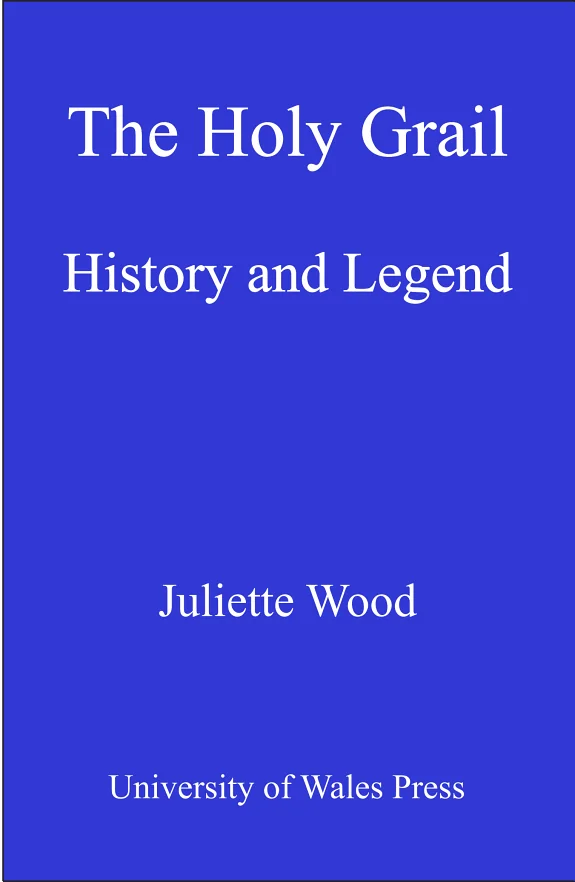
The Holy Grail
Juliette Wood's exploration of the Holy Grail is a commendable scholarly undertaking, distinguishing itself by focusing on the object's trajectory through distinct historical and cultural phases. The strength of the work lies in its rigorous tracing of the Grail's literary and symbolic metamorphosis, particularly its shift from medieval romance to occult fascination. Wood offers a clear account of how writers like Wolfram von Eschenbach and later figures reinterpreted the legend. A limitation, however, is the book's academic tone, which, while precise, may not fully satisfy readers seeking direct engagement with the mystical experience itself. The section detailing the Grail's appearance in the writings of the Hermetic Order of the Golden Dawn, for instance, is informative but remains analytical rather than evocative. Wood's critical approach, dissecting the myth's construction, is its most significant contribution. It provides a solid foundation for understanding the Grail's enduring power.
📝 Description
82
Juliette Wood's 2012 study traces the Holy Grail from Arthurian romance to modern myth.
Published in 2012, Juliette Wood's book examines the Holy Grail's development from its Arthurian literary beginnings. It details how writers like Chrétien de Troyes established the questing knight and the sacred vessel motif in works such as *Perceval*. The text analyzes early allegorical readings that gave the Grail spiritual weight beyond mere chivalry.
Wood then follows the Grail's transformation into a mystical object, noting its adoption by esoteric groups in the late 19th and early 20th centuries. The book considers how this symbol shifted from a literary device to a potent emblem for spiritual seekers and occultists. Finally, the study extends its analysis to the 20th and 21st centuries, showing the Grail's continued presence in literature, film, and popular culture. It dissects how contemporary narratives adapt its themes of seeking and redemption for new audiences.
This book situates the Holy Grail within a tradition of symbols that have been reinterpreted by successive generations. Its journey from a medieval literary object to a focus for occult and spiritual movements mirrors broader trends in Western esotericism, where ancient myths and symbols are often imbued with new mystical significance. Wood's work details how figures from the late 19th century onwards, a period rich with esoteric revival, saw the Grail as a key to hidden knowledge and spiritual attainment.
💡 Why Read This Book?
• Gain a nuanced understanding of the Grail's evolution from Chrétien de Troyes's 12th-century romances to its adoption by 19th-century occultists, appreciating its shifting symbolic weight across centuries. • Discover specific literary transformations, such as how Wolfram von Eschenbach's *Parzival* offered a different perspective on the Grail quest compared to earlier French versions. • Analyze the Grail's continued relevance in modern media, understanding its adaptability as a symbol in works like T.S. Eliot's *The Waste Land* and various film adaptations.
⭐ Reader Reviews
Honest opinions from readers who have explored this book.
❓ Frequently Asked Questions
What is the earliest literary appearance of the Holy Grail?
The concept of the Holy Grail emerges prominently in the late 12th century, with Chrétien de Troyes's unfinished romance *Perceval, le Conte du Graal* being one of the earliest significant literary treatments.
How did the Grail transition from medieval literature to mysticism?
The work examines how later authors and esoteric groups, particularly from the 19th century onwards, reinterpreted the Grail not just as a relic but as a symbol of spiritual attainment, initiation, and hidden knowledge.
Does Juliette Wood's book discuss the Grail in modern films?
Yes, the book extends its analysis to the 20th and 21st centuries, considering how the Grail mythos has been adapted and represented in contemporary literature and cinema.
Which historical figures are key to understanding the Grail's development?
Key figures include medieval romance writers like Chrétien de Troyes and Wolfram von Eschenbach, and later figures associated with esoteric traditions who reinterpreted the Grail symbolism.
What is the main scholarly contribution of this book?
The book's main contribution is its systematic historical and literary analysis of the Grail's transformation across different periods, from its origins to its modern cultural presence.
When was Juliette Wood's The Holy Grail first published?
The book was first published on September 15, 2012, offering a modern scholarly perspective on a long-standing legend.
🔮 Key Themes & Symbolism
Arthurian Romance Origins
This theme focuses on the Grail's inception within the chivalric literature of the Middle Ages. The work analyzes early narratives, such as those by Chrétien de Troyes and Wolfram von Eschenbach, exploring how the Grail was initially presented as a mysterious object central to knightly quests and adventures, often imbued with Christian symbolism but also hinting at deeper, less defined spiritual currents that would later be amplified.
Esoteric Reinterpretation
The study meticulously documents the Grail's transformation into a significant symbol within various esoteric and occult traditions, particularly from the 19th century onward. It examines how groups like the Hermetic Order of the Golden Dawn and individual occultists adopted the Grail as a metaphor for spiritual enlightenment, initiation, and the pursuit of hidden wisdom, moving it far beyond its purely literary or religious context.
Modern Cultural Resonance
This theme addresses the Grail's persistent presence and adaptation in 20th and 21st-century culture. The book dissects its appearance in influential modern literature, notably T.S. Eliot's *The Waste Land*, and its varied interpretations in popular films. It highlights how the enduring power of the Grail legend lies in its capacity to symbolize profound human desires for meaning, redemption, and the sacred in secularized times.
Symbolic Multiplicity
The work underscores the Grail's nature as a symbol with fluid and multiple meanings. Depending on the era and the interpreter, it can represent the Eucharist, a vessel of divine grace, a source of spiritual sustenance, a metaphor for the divine feminine, or an object of alchemical pursuit. Wood demonstrates how this inherent ambiguity contributes to its enduring fascination.
💬 Memorable Quotes
Direct passages from the work, attributed to the author.
“Chrétien de Troyes's *Perceval* introduced the Grail motif into European literature.”
— This statement pinpoints a crucial historical anchor, identifying one of the earliest known literary appearances of the Grail, thereby establishing the starting point for the book's detailed historical tracing of the legend.
“Later adaptations saw the Grail symbolizing spiritual initiation and hidden wisdom.”
— This interpretation emphasizes the esoteric dimension of the Grail, illustrating how its symbolic content evolved to represent inner transformation and the pursuit of arcane knowledge, particularly within occult circles.
“The Grail persists as a potent symbol in modern narratives and film.”
— This captures the book's conclusion regarding the legend's enduring cultural power, demonstrating how the archetype of the Grail continues to be relevant and reinterpreted in contemporary storytelling across various media.
“Wolfram von Eschenbach's *Parzival* presented a distinct Grail tradition.”
— This references a specific literary work that offered a significant variation on the Grail theme, illustrating the diversity within the legend itself and how different authors contributed to its complex development.
💡 Key Ideas
Editorial paraphrase of the work's core concepts — not direct quotes.
The Grail's meaning shifted from a vessel of Christian significance to an object of occult questing.
This paraphrased concept highlights the core argument of the book: the Grail legend underwent a significant transformation, moving from its medieval Christian context to become a central symbol for 19th and 20th-century esoteric movements seeking spiritual knowledge.
🌙 Esoteric Significance
Tradition
The Holy Grail, as examined in Wood's work, fits within the broader stream of Western Esotericism, particularly its manifestation in the late 19th and early 20th centuries. While originating in Christian romance, its symbolic potential was seized by movements like Theosophy and the Hermetic Order of the Golden Dawn. These traditions sought universal spiritual truths, often drawing parallels between Christian symbolism, Gnosticism, and Hermeticism, reinterpreting the Grail not as a physical relic but as an inner attainment or mystical experience.
Symbolism
Key symbols include the Grail vessel itself, often interpreted as representing the divine feminine, the chalice of initiation, or a source of spiritual nourishment and immortality. The quest motif symbolizes the seeker's arduous journey toward enlightenment or reunion with the divine. In some esoteric interpretations, the Grail is linked to the concept of the 'Anima Mundi' or World Soul, representing the hidden creative forces within the universe.
Modern Relevance
Contemporary esoteric practitioners and scholars continue to draw on the Grail symbolism. It appears in discussions of modern Grail quest narratives, psychological archetypes (particularly Jungian analysis), and spiritual paths seeking inner transformation. Thinkers exploring the resurgence of pagan and earth-centered spirituality often find elements of the Grail in its associations with fertility, nature, and hidden knowledge, demonstrating its adaptable symbolic power.
👥 Who Should Read This Book
• Students of comparative literature and medieval studies seeking to understand the origins and evolution of the Arthurian Grail legend. • Researchers of Western Esotericism interested in how historical myths are adopted and reinterpreted by occult and mystical traditions. • Enthusiasts of film and modern cultural studies analyzing the enduring archetypes and symbols that shape contemporary narratives.
📜 Historical Context
Juliette Wood's analysis is situated within scholarship on medieval literature and the history of symbolism, particularly relevant in the early 21st century when interest in mythic archetypes and their modern manifestations remained high. The book engages with the long tradition of Grail scholarship, which gained momentum in the late 19th century with figures like Jessie Weston, who explored pagan and Gnostic roots, influencing Arthurian revivalists and occultists. Wood's work implicitly contrasts with purely literary analyses by foregrounding the Grail's transition into esoteric thought, a field actively explored by contemporaries such as Richard Rudgley. The period following its 2012 publication saw continued academic and popular interest in esoteric traditions and the reinterpretation of ancient myths, making Wood's study a timely contribution to understanding this enduring legend's cultural plasticity.
📔 Journal Prompts
The Grail's transformation from Chrétien de Troyes's romance to esoteric symbol.
Symbolism of the Grail vessel across different interpretations.
The enduring appeal of the quest narrative in modern media.
Wolfram von Eschenbach's distinct contribution to the Grail legend.
The Grail as a metaphor for spiritual initiation.
🗂️ Glossary
Arthurian Romance
A genre of medieval literature featuring King Arthur and his Knights of the Round Table, often involving quests, chivalry, and supernatural elements. The Holy Grail becomes a central motif in later examples of this genre.
Chivalry
The medieval knightly system of conduct and ideals, emphasizing honor, bravery, courtesy, and loyalty. The Grail quest is often depicted as the ultimate chivalric undertaking.
Esotericism
Belief systems and practices that are concerned with private, hidden, or inner knowledge, often distinct from exoteric or public religious doctrines. The Grail is frequently interpreted esoterically.
Gnosticism
A complex set of religious ideas and systems, originating in the first centuries CE, emphasizing spiritual knowledge (gnosis) for salvation. Some scholars link Grail symbolism to Gnostic concepts.
Myth
A symbolic narrative often concerning the primal beginnings of the universe, divinity, and humanity. The Grail legend functions as a potent myth with diverse interpretations.
Symbol
An object, figure, or concept that represents something else, often an abstract idea. The Grail is a highly potent and multi-layered symbol.
Wolfram von Eschenbach
A German knight and poet of the late 12th and early 13th centuries, author of the epic poem *Parzival*, which presents a significant and influential version of the Grail legend.
This book appears in 1 collection
🔮 Readers Also Liked
Browse all →








From the “Holy Grail” Collection
View all →



![EBOOK COLLECTION ( PART 8) [ CSI][h 33t]](/img/thumb/ebook-collection-part-8-csi-h-33t.webp)



More Free Occult Philosophy Books
View all →