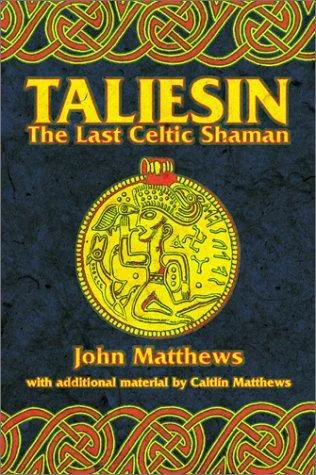
Taliesin
 82
82

Taliesin
The Matthews’ *Taliesin* attempts to pin down a figure that has long existed more as myth than man, and largely succeeds by grounding the bard in the rich soil of Welsh poetic tradition. The authors meticulously examine the surviving poems attributed to him, particularly the 'Cad Goddeu,' offering interpretations that bridge historical scholarship with esoteric understanding. Their strength lies in elucidating the symbolic weight of these ancient verses, presenting Taliesin as an archetypal figure of poetic power and spiritual insight. However, the sheer density of Welsh nomenclature and the sometimes-speculative leaps in connecting historical texts to esoteric practices can occasionally obscure the narrative for the less initiated reader. A particularly illuminating section discusses the bard's ability to shape reality through 'awen' (inspiration), a concept central to understanding his mythos. While not a light read, *Taliesin* provides a valuable, scholarly perspective on a foundational figure of British mythology.
📝 Description
82
John and Caitlín Matthews' 2002 book, Taliesin, examines the legendary Welsh bard.
Taliesin is a scholarly study of the Welsh bard, written by John and Caitlín Matthews. The book serves as both a historical investigation and a practical guide to the symbolic language and esoteric traditions connected to this figure. It analyzes the surviving Welsh poems attributed to Taliesin, assessing their mythological, spiritual, and artistic importance. The authors aim to build a clear understanding of the bard, not just as a historical person, but as a significant symbol of ancient British spirituality and poetic creativity.
This work is primarily for students and practitioners of Celtic spirituality, Arthurian studies, and Western esoteric traditions. Readers interested in the origins of British mythology, bardic lore, and the evolution of spiritual poetry will find much of value. It also appeals to those who want to understand the historical and symbolic depth behind later romanticized portrayals of figures like Taliesin, presenting a more grounded viewpoint.
Published in 2002, Taliesin emerges from a period of renewed interest in Celtic history and mythology. The book engages with academic scholarship on the Taliesin poems, such as the work of Ifor Williams, but shifts focus to the spiritual and initiatory aspects. It situates the bard within Western esoteric traditions, particularly those concerned with the roots of British spirituality and the role of the poet as a channel for inspiration.
💡 Why Read This Book?
• Gain a scholarly perspective on the legendary Welsh bard Taliesin, moving beyond romanticised notions to understand his role as a spiritual and poetic archetype, as explored in the analysis of poems like 'Cad Goddeu'. • Discover the esoteric significance of ancient Welsh bardic traditions and the concept of 'awen' (poetic inspiration), learning how these elements shaped early British spirituality and artistic expression. • Understand the historical context of the Taliesin poems, appreciating their survival and the layers of meaning they have accumulated since their composition, providing a foundation for Celtic studies.
⭐ Reader Reviews
Honest opinions from readers who have explored this book.
❓ Frequently Asked Questions
Who were John and Caitlín Matthews and what is their background in Celtic studies?
John and Caitlín Matthews are prolific authors specializing in Arthurian legends, Celtic mythology, and Western esoteric traditions. Their extensive research spans decades, resulting in numerous books that explore these subjects with both scholarly rigor and an understanding of their spiritual dimensions.
What is the significance of the 'Cad Goddeu' poem in relation to Taliesin?
The 'Cad Goddeu' (Battle of the Trees) is one of the most important poems attributed to Taliesin. The Matthews analyze it as a key text revealing Taliesin's cosmology, his connection to the natural world, and his mastery of magical lore through symbolic language and narrative.
When was 'Taliesin' by John and Caitlín Matthews first published?
The book 'Taliesin' by John and Caitlín Matthews was first published in 2002. This edition sought to provide a contemporary scholarly and esoteric perspective on the legendary bard.
What is 'awen' and why is it important in the context of Taliesin?
'Awen' is a Welsh term referring to poetic inspiration, divine knowledge, or spiritual insight. In the book, it is presented as a core concept associated with Taliesin, representing the creative and transformative power of the bardic spirit.
Does the book offer practical exercises or meditations based on Taliesin's lore?
While the book focuses on scholarly and symbolic interpretation rather than direct instruction, its exploration of bardic traditions and esoteric concepts provides a rich foundation for personal reflection and meditative practice for those interested in Celtic spirituality.
How does 'Taliesin' by the Matthews relate to other works on Arthurian legend?
This work positions Taliesin within the broader landscape of Arthurian and post-Arthurian British mythology. It complements studies of the Mabinogion and Arthurian cycles by focusing on a key figure whose mythology predates and influences later narratives.
🔮 Key Themes & Symbolism
The Bardic Archetype
The book posits Taliesin as the quintessential bardic figure, embodying the power of word, song, and inspiration. This archetype is explored through his attributed poems, which are presented not as mere historical records but as initiatory texts. The authors examine how Taliesin's myths reflect a deep connection to the source of creativity and spiritual understanding, positioning him as a conduit for 'awen,' the divine breath of inspiration crucial in Welsh poetic tradition.
Symbolism of the Mabinogion
Central to the work is the interpretation of key narratives and poems associated with Taliesin, particularly from the Mabinogion cycle. The 'Cad Goddeu' is dissected for its rich symbolic language, revealing cosmology, magical practices, and the interconnectedness of the natural and spiritual realms. The Matthews highlight how these tales function as allegories for spiritual journeys and the transformation of consciousness, offering insights into pre-Christian Welsh belief systems.
Ancient Welsh Cosmology
Taliesin serves as a gateway to understanding the worldview of ancient Britain. The book reconstructs elements of this cosmology by analysing the poetic fragments and mythological allusions attributed to the bard. Concepts such as the cyclical nature of existence, the power inherent in natural forces, and the role of the bard as a seer and mediator between worlds are discussed, providing a window into a complex spiritual heritage.
The Initiatory Journey
The work interprets Taliesin's life and legendary exploits as an initiatory path. His transformations, his battles with supernatural forces, and his profound knowledge are presented as stages in a spiritual quest. The authors suggest that the bardic tradition itself was a form of esoteric schooling, designed to cultivate wisdom, artistic mastery, and a deep communion with the divine, making Taliesin a model for such development.
💬 Memorable Quotes
Direct passages from the work, attributed to the author.
“Taliesin's power lay in his ability to perceive the underlying patterns of existence.”
— This interpretation highlights Taliesin's role as a seer and visionary. It suggests his mastery stemmed from an intuitive understanding of cosmic order and the hidden connections within the universe, a common trait attributed to figures of ancient wisdom.
“Through song, the bard could shape reality and influence the forces of nature.”
— This concept underscores the performative and magical aspect of bardic art. It posits that the spoken word and musical expression held a creative power capable of altering the external world and interacting with spiritual energies.
“The 'Cad Goddeu' is a mythic map of the soul's journey.”
— This interpretation frames the 'Battle of the Trees' not just as a narrative but as an allegorical representation of inner spiritual development. It suggests the poem's events symbolise the challenges and transformations encountered on the path to enlightenment.
“The Welsh bard was both poet and priest, artist and seer.”
— This statement defines the complex role of the traditional Welsh bard. It combines their artistic functions with their spiritual authority, positioning them as figures who mediated between the human and divine realms through their creative and prophetic abilities.
💡 Key Ideas
Editorial paraphrase of the work's core concepts — not direct quotes.
The bardic tradition is a living stream, carrying the wisdom of the ancestors.
This paraphrased concept emphasizes the continuity and enduring relevance of ancient Welsh poetic and spiritual practices. It suggests that the knowledge preserved by bards is not static but a dynamic force passed down through generations.
🌙 Esoteric Significance
Tradition
The work is firmly rooted in the Western esoteric tradition, specifically drawing from Celtic spirituality, Arthurian lore, and bardic mysticism. It seeks to re-establish the esoteric lineage of Welsh poetry, viewing Taliesin not just as a historical figure but as an archetypal master of spiritual knowledge. The Matthews connect this tradition to broader Hermetic and Gnostic currents by emphasizing transformation, inner wisdom, and the power of the creative word as vehicles for spiritual attainment.
Symbolism
Key symbols explored include the bard himself as an embodiment of inspired genius and transformative power, the 'Cad Goddeu' (Battle of the Trees) as a complex allegory for cosmic order and spiritual struggle, and the concept of 'awen' (inspiration) as the divine spark animating creation and the artist. The Matthews interpret these symbols as keys to understanding ancient Welsh cosmology and the initiatory path, revealing layers of meaning beyond their literal representations.
Modern Relevance
Contemporary practitioners of Celtic Reconstructionist Paganism, Druidry, and various Arthurian-focused spiritual paths frequently reference the Matthews' work. Their detailed analysis of bardic lore and the figure of Taliesin provides a framework for understanding ancient spiritual concepts. Thinkers and writers exploring archetypal psychology through the lens of myth, as well as those interested in the power of creative expression for personal and spiritual growth, continue to find value in their interpretations.
👥 Who Should Read This Book
• Students of Arthurian legend and early British mythology seeking to understand the foundational figure of Taliesin beyond romanticised portrayals. • Practitioners of Celtic spirituality and Neo-Druidry interested in the historical and symbolic roots of bardic traditions and the concept of 'awen'. • Readers of Western esotericism looking for scholarly yet spiritually informed interpretations of ancient poetic and mythic cycles, particularly those related to inspiration and transformation.
📜 Historical Context
Published in 2002, John and Caitlín Matthews' *Taliesin* arrived during a period of significant academic and popular revival of interest in Celtic traditions, Arthurian lore, and Western esotericism. The book engaged with established scholarship on Welsh poetry, building upon foundational philological work by figures like Ifor Williams from earlier in the 20th century. However, the Matthews distinguished their approach by integrating esoteric interpretations, seeking to uncover the spiritual and initiatory dimensions within the surviving texts attributed to Taliesin. This placed their work in dialogue with, and sometimes in contrast to, more purely historical or literary analyses prevalent in academia. The early 2000s also saw a flourishing of Neo-Pagan and other nature-based spiritual movements, for whom figures like Taliesin held considerable symbolic importance, creating a receptive audience for the Matthews' synthesis of myth, history, and esoteric practice.
📔 Journal Prompts
The bardic concept of 'awen' as divine inspiration.
Taliesin's transformations and their symbolic meaning.
Reflecting on the 'Cad Goddeu' as a map of inner journey.
The role of the bard in ancient Welsh society.
Interpreting the symbolic language of the Taliesin poems.
🗂️ Glossary
Awen
A Welsh term signifying poetic inspiration, divine knowledge, or spiritual ecstasy. It is considered the animating force of creativity and prophecy, central to the bardic tradition and the figure of Taliesin.
Bard
In ancient Welsh and Celtic culture, a poet, musician, and storyteller of high status, often serving as a historian, philosopher, and spiritual guide. The figure of Taliesin represents the pinnacle of this tradition.
Cad Goddeu
Literally 'The Battle of the Trees,' this is one of the most significant poems attributed to Taliesin. It is a complex allegorical work dealing with creation, magic, and the forces of nature.
Mabinogion
A collection of eleven prose tales from medieval Welsh literature, considered the finest body of prose in medieval Welsh. Several tales feature or allude to the legendary bard Taliesin.
Taliesin
A legendary 6th-century British poet, considered the most accomplished bard of ancient Britain. His attributed poems are a primary source for early Welsh mythology, history, and esoteric beliefs.
Welsh Mythology
The body of myths and legends originating from Wales, often drawing from pre-Christian Celtic beliefs. It encompasses figures like Taliesin, Arthur, and the narratives found in the Mabinogion.
Esotericism
Teachings concerned with the hidden or inner meaning of things, often involving mystical, spiritual, or occult knowledge accessible only to a select group or through specific practices.
🔮 Readers Also Liked
Browse all →









More Free Occult Philosophy Books
View all →