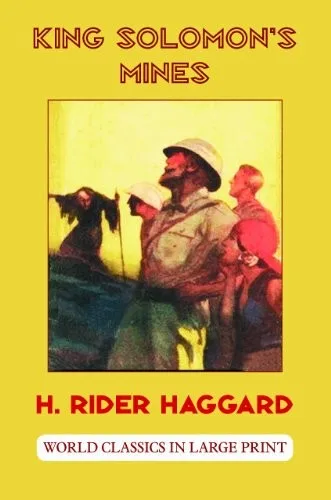
King Solomon's Mines
 79
79

King Solomon's Mines
H. Rider Haggard's King Solomon's Mines is a foundational text in the adventure genre, offering a brisk narrative that propels the reader across a vividly imagined, if ethnographically problematic, African landscape. The character of Allan Quatermain, a somewhat weary but highly capable hunter, provides a solid anchor for the expedition's unfolding drama. The relentless pace and the sheer audacity of the quest for legendary riches remain compelling. However, the novel's depiction of African peoples, viewed through a distinctively 19th-century colonial lens, often feels simplistic and reliant on stereotypes that jar the modern reader. A particularly striking element is the depiction of the isolated Kukuanaland and its ruling class, which, while serving the plot, highlights the era's imaginative, yet biased, construction of 'other' cultures. Ultimately, King Solomon's Mines is a significant historical artifact of adventure literature, best appreciated for its narrative drive and its place in literary history, rather than its nuanced social commentary.
📝 Description
79
Published in 1885, King Solomon's Mines launched the 'lost world' adventure genre.
H. Rider Haggard's 1885 novel follows Allan Quatermain, a hunter, as he leads an expedition into unexplored Africa. Their goal is to locate the fabled mines of King Solomon, supposedly rich with diamonds. The journey is fraught with peril, including treacherous terrain and encounters with local tribes.
The story taps into Victorian-era interests in exploration and the potential for discovery beyond known territories. Its success resonated with a public fascinated by tales of distant lands and hidden wealth. The narrative presents a clash of cultures as the European explorers interact with indigenous African societies.
Quatermain guides the party through dangers, showcasing courage and loyalty amidst the unknown. The novel explores the allure of lost civilizations and the challenges of venturing into uncharted regions.
While not overtly occult, King Solomon's Mines taps into a vein of late 19th-century fascination with ancient mysteries and hidden knowledge. The concept of a lost, advanced civilization, isolated from the modern world and possessing unique structures, echoes esoteric ideas about forgotten peoples and secret histories. The fabled mines themselves, linked to a biblical king renowned for wisdom, suggest a source of immense power or hidden truth, aligning with the broader cultural interest in uncovering secrets of the past.
💡 Why Read This Book?
• Gain an understanding of the foundational 'lost world' adventure narrative, exemplified by the expedition to find King Solomon's fabled mines, a concept that shaped early 20th-century popular fiction. • Experience the thrill of classic exploration literature, following Allan Quatermain’s journey through the dangerous landscapes of 19th-century Africa as depicted in the novel. • Analyze the historical context of late Victorian imperial expansion and its reflection in literature, particularly concerning the European perception of African interior and its potential resources.
⭐ Reader Reviews
Honest opinions from readers who have explored this book.
❓ Frequently Asked Questions
When was King Solomon's Mines first published?
King Solomon's Mines was first published in 1885, a period of significant British exploration and colonial interest in Africa.
Who is the main protagonist in King Solomon's Mines?
The primary protagonist is Allan Quatermain, a seasoned hunter and adventurer who guides the expedition into the African interior.
What is the central goal of the characters in the book?
The central goal is to locate the legendary lost mines of King Solomon, believed to be rich in diamonds, hidden deep within Africa.
What literary genre did King Solomon's Mines help establish?
The novel is considered a seminal work in the adventure genre, particularly pioneering the 'lost world' subgenre.
How is the depiction of African societies viewed today?
The book's portrayal of African peoples reflects 19th-century colonial perspectives and is often viewed as ethnocentric and stereotypical by modern standards.
What historical period influenced the writing of King Solomon's Mines?
The book was heavily influenced by the Victorian era's fascination with exploration, empire, and the discovery of unknown territories in Africa.
🔮 Key Themes & Symbolism
The Allure of Lost Riches
The narrative is driven by the pursuit of King Solomon's legendary diamond mines, a potent symbol of immense, undiscovered wealth. This quest reflects the era's fascination with uncovering hidden treasures and the potential for vast fortunes in unexplored lands. The sheer scale of the rumored riches fuels the adventurers' perilous journey, highlighting a core human desire for prosperity and the romantic notion of finding forgotten fortunes.
Victorian Exploration and Empire
Published in 1885, the novel embodies the spirit of Victorian exploration, where intrepid individuals ventured into unknown territories. It reflects contemporary British imperial ambitions and the romanticized view of colonizing expeditions. The protagonists' journey through Africa, encountering indigenous peoples and navigating uncharted landscapes, mirrors the real-world explorations of the era, albeit filtered through a fictional lens.
The 'Lost World' Trope
King Solomon's Mines is a seminal example of the 'lost world' genre, presenting a hidden, advanced civilization (the Kukuanas) existing in isolation within Africa. This concept of a forgotten realm with unique customs and potentially ancient knowledge tapped into the public's imagination, offering a fantasy of discovery beyond the known world. The isolation of Kukuanaland allows for the preservation of distinct societal structures and beliefs.
Courage and Survival
The survival of the protagonists against formidable odds—treacherous terrain, hostile encounters, and internal conflicts—underscores themes of courage, resilience, and the human will to persevere. Allan Quatermain's expertise and leadership are crucial, showcasing the value of experience and resourcefulness in extreme situations. The narrative emphasizes the constant struggle against both the natural environment and the challenges posed by unknown societies.
💬 Memorable Quotes
Direct passages from the work, attributed to the author.
“The greatest discovery of my life.”
— This statement, attributed to Allan Quatermain, likely refers not to a physical treasure but to the profound realization or understanding gained through his extraordinary African adventure, perhaps about himself or the world.
“I am a hunter, and I have killed my man.”
— This reflects Allan Quatermain's identity and his pragmatic, often lethal, approach to survival in the African wilderness, where hunting and self-defense are intertwined.
“Where the diamonds are, there is the treasure.”
— This straightforward declaration emphasizes the materialistic motivation behind the expedition, focusing on the tangible wealth—diamonds—as the ultimate prize of their arduous quest.
“It was a land of mystery and wonder.”
— This sentiment captures the essence of the 'lost world' aspect of the narrative, describing the awe and astonishment experienced by the explorers upon encountering the hidden realms and unique societies within Africa.
💡 Key Ideas
Editorial paraphrase of the work's core concepts — not direct quotes.
We are not going to be killed by any of those black fiends.
This quote highlights the racial prejudices and fear prevalent in the colonial mindset of the era, reflecting the protagonists' perception of African peoples as dangerous 'fiends' to be overcome.
🌙 Esoteric Significance
Tradition
While not explicitly a work of esoteric doctrine, King Solomon's Mines draws from mythic and archetypal narratives that resonate with esoteric traditions. Its quest for hidden knowledge and a lost civilization echoes Gnostic themes of seeking a purer, forgotten origin or wisdom. The legend of King Solomon himself, associated with occult lore and the construction of esoteric temples, imbues the quest with a layer of ancient mystery that appeals to those interested in Hermetic or Kabbalistic undertones.
Symbolism
The titular 'Mines of King Solomon' function as a powerful symbol for hidden spiritual or material treasures, representing the ultimate goal of a profound quest. The isolation of Kukuanaland symbolizes a spiritual or psychic realm shielded from the mundane world, containing ancient wisdom or societal structures. Allan Quatermain, as the experienced hunter and guide, embodies the archetype of the adept or shaman, navigating dangerous spiritual landscapes to achieve a transformative goal.
Modern Relevance
Contemporary adventure fiction and fantasy continue to draw inspiration from the 'lost world' trope pioneered by Haggard. Elements of hidden civilizations, ancient treasures, and perilous journeys into the unknown are recurring motifs in video games, films, and literature. Thinkers exploring the psychology of exploration and the human drive for discovery might still find value in its narrative structure, while those studying the evolution of colonial literature can analyze its historical significance.
👥 Who Should Read This Book
• Aspiring adventure writers and readers seeking the roots of the 'lost world' genre will find this novel instructive and entertaining, offering a blueprint for thrilling expeditions. • Students of Victorian literature and colonial history can analyze the novel's reflection of 19th-century attitudes towards exploration, empire, and indigenous cultures. • Fans of classic adventure tales seeking a foundational text that combines exploration, mystery, and a quest for legendary riches will appreciate the narrative's enduring appeal.
📜 Historical Context
First published in 1885, H. Rider Haggard’s King Solomon's Mines emerged during a period of intense British imperial expansion and popular fascination with Africa. The late Victorian era was marked by numerous expeditions, fueled by a blend of scientific curiosity, economic ambition, and a desire to map and claim territories. The novel tapped directly into this zeitgeist, offering a thrilling narrative of adventure and discovery that resonated with a public eager for tales of exotic locales and potential riches. Contemporaries like Rudyard Kipling, also exploring colonial themes, were active during this period, though Haggard’s focus was more on pure adventure. The novel's success helped solidify the 'lost world' subgenre, influencing countless subsequent adventure stories. Its reception was largely enthusiastic, cementing Haggard's reputation as a master storyteller of the exotic and the unknown, despite modern critiques of its colonial perspective.
📔 Journal Prompts
The perceived 'mystery' of Kukuanaland and its societal structure.
Allan Quatermain's role as guide and his internal reflections on the expedition.
The symbolic weight of King Solomon's Mines as a destination.
Reflections on the clash between the explorers' objectives and the indigenous inhabitants' lives.
The narrative function of the treacherous African landscape.
🗂️ Glossary
Kukuanaland
The fictional, isolated kingdom in the heart of Africa where the lost mines are said to be located, ruled by a unique and ancient society.
Allan Quatermain
The narrator and protagonist, a skilled English hunter and explorer in Africa, whose experience is crucial to the expedition's survival.
King Solomon's Mines
The legendary, fabled source of immense diamond wealth, the object of the perilous quest undertaken by the novel's protagonists.
The Big Grave
A significant and dangerous landmark encountered by the explorers, representing a formidable obstacle on their journey.
Sorceress Gagool
A cunning and ancient witch doctor who holds considerable influence within Kukuanaland, posing a threat to the expedition.
The Umbopo River
A vital geographical feature within the narrative, serving as a route and a source of both sustenance and peril for the explorers.
Tukwane
A key figure among the native guides or warriors, representing a specific indigenous role or faction within the story.
🔮 Readers Also Liked
Browse all →









More by H. Rider Haggard
All books →




More Free Occult Philosophy Books
View all →