The Hermetic Museum
 74
74

The Hermetic Museum
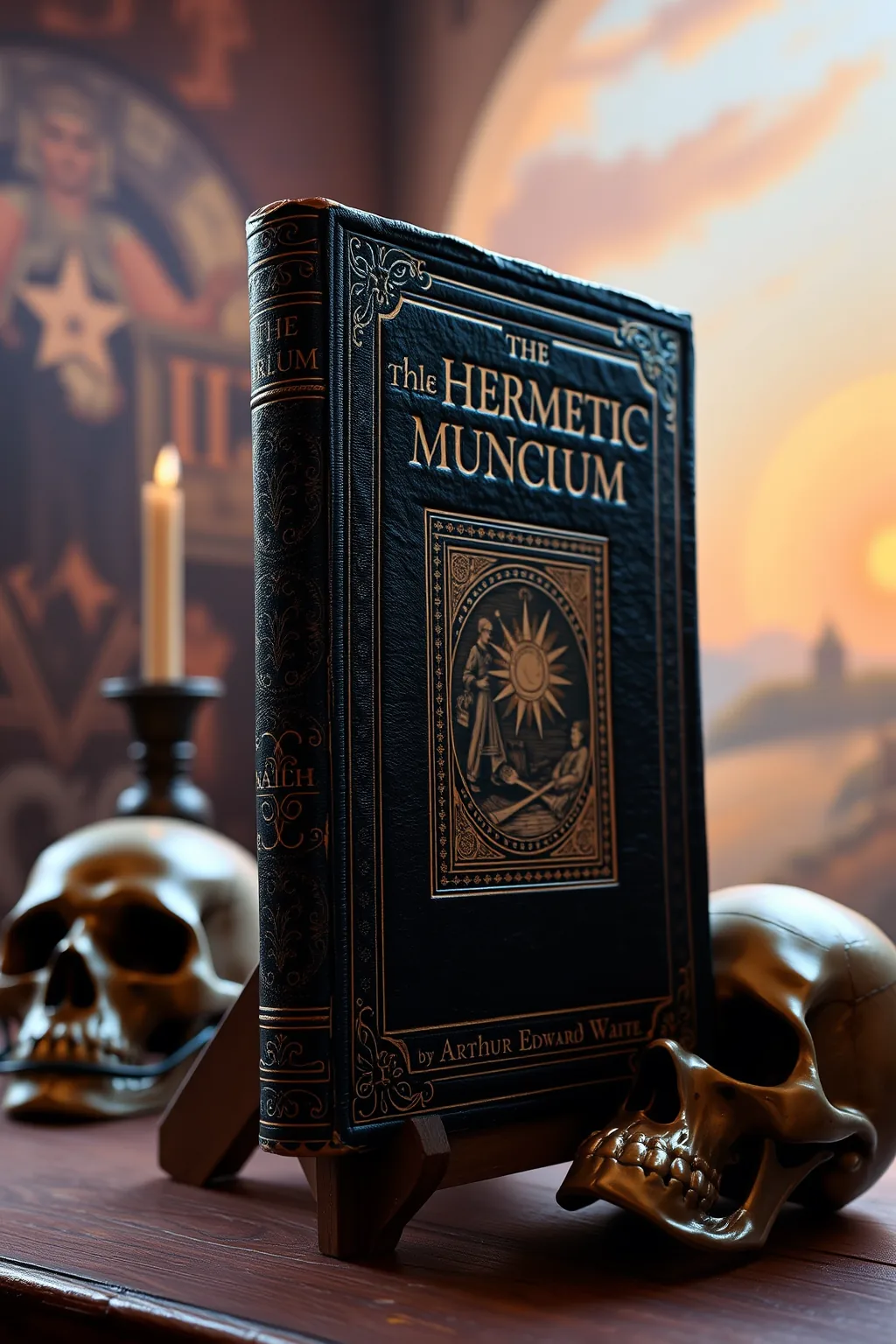
Waite's "The Hermetic Museum" offers a rigorous, albeit dense, exploration of alchemical literature. The strength lies in Waite's deep erudition and his commitment to presenting the historical texts with his own extensive, often critical, annotations. He meticulously dissects the symbolic layers, steering the reader away from literal interpretations towards a more philosophical and psychological understanding of the Great Work. However, this scholarly approach can also be a limitation; the prose is often academic and can be challenging for those new to the subject matter, lacking the more accessible narrative flow found in some contemporary works on alchemy. A particularly illuminating section is Waite's analysis of the "Splendor Solis," where he unpacks its intricate allegorical imagery, demonstrating his mastery of the subject. The book ultimately serves as an indispensable reference for dedicated researchers, providing a foundational text for understanding the intellectual history of Western esotericism.
📝 Description
74
Arthur Edward Waite's 1991 "The Hermetic Museum" compiles and analyzes alchemical texts.
Arthur Edward Waite's "The Hermetic Museum" is a scholarly collection and critical study of alchemical writings, not a physical exhibition. First published in 1991, this book presents a selection of historical alchemical texts, each accompanied by Waite's detailed commentary and analysis. Waite aimed to clarify the philosophical and spiritual dimensions of alchemy, moving beyond the common understanding of metal transmutation to reveal deeper psychological and metaphysical meanings. The work is intended for serious students of esoteric traditions, particularly those interested in the historical and philosophical roots of alchemy. Readers who value academic rigor in the study of mystical subjects will find substantial material here. It offers insights into the symbolic language and conceptual frameworks that shaped alchemical thought for centuries, and will also appeal to those studying the history of science, comparative religion, and Western esotericism.
Waite, a notable figure in late 19th and early 20th-century occultism, was associated with the Hermetic Order of the Golden Dawn. "The Hermetic Museum" reflects this background, engaging with a tradition that had seen renewed interest. Waite sought to present a more disciplined and historically grounded perspective on alchemical literature, often distinguishing his approach from more sensationalized interpretations that were also circulating at the time. The book systematically examines core alchemical concepts.
Arthur Edward Waite's "The Hermetic Museum" situates itself within the broader European alchemical tradition, a lineage stretching from antiquity through the Renaissance and beyond. Waite, a central figure in early 20th-century occultism and a co-founder of the Hermetic Order of the Golden Dawn, approached alchemy with a scholarly intent. This work engages with texts that formed the bedrock of alchemical practice and theory, seeking to uncover their philosophical and spiritual significance rather than their literal chemical processes. It reflects a period when esoteric subjects were being re-examined through both academic and occult lenses, with Waite contributing a perspective that emphasized historical context and symbolic interpretation.
💡 Why Read This Book?
• Gain a scholarly understanding of alchemical symbolism and its philosophical implications, moving beyond simplistic interpretations of transmutation as detailed in Waite's analysis of texts like the "Splendor Solis." • Understand the historical development of alchemical thought from the late 19th century through Waite's critical lens, appreciating his engagement with the Hermetic Order of the Golden Dawn. • Explore the concept of the "Great Work" not merely as a material process but as a profound spiritual and psychological journey, as interpreted through Waite's extensive commentaries on primary alchemical writings.
⭐ Reader Reviews
Honest opinions from readers who have explored this book.
❓ Frequently Asked Questions
What is the "Prima Materia" in the context of "The Hermetic Museum"?
In "The Hermetic Museum," the "Prima Materia" refers to the fundamental, undifferentiated substance that alchemists believed was the starting point for the "Great Work." Waite interprets it as a symbolic representation of the unformed potential from which spiritual and material perfection could be achieved.
Is "The Hermetic Museum" a collection of primary alchemical texts or Waite's commentary?
It is both. The book compiles significant historical alchemical writings, but a substantial portion is dedicated to Arthur Edward Waite's own critical introductions, annotations, and interpretations of these complex texts.
What historical period does "The Hermetic Museum" primarily cover?
While Waite's commentary reflects his own era (late 19th/early 20th century), the alchemical texts he compiles and analyzes span centuries, drawing from medieval and Renaissance alchemical literature.
Who was Arthur Edward Waite and what was his connection to alchemy?
Arthur Edward Waite was a prominent occultist and esoteric scholar, a co-founder of the Hermetic Order of the Golden Dawn. He wrote extensively on alchemy, tarot, and Christian mysticism, seeking to present these subjects with historical accuracy and philosophical depth.
How does "The Hermetic Museum" differ from other books on alchemy?
It distinguishes itself through Waite's scholarly, critical approach, emphasizing the philosophical and spiritual dimensions over purely practical or sensationalist accounts of alchemy. It focuses on textual analysis and historical context.
Does the book discuss the Philosopher's Stone?
Yes, "The Hermetic Museum" extensively discusses the "Philosopher's Stone," not just as a mythical substance for transmuting metals, but as a complex symbol within alchemical philosophy, representing spiritual enlightenment or perfected consciousness.
🔮 Key Themes & Symbolism
The Great Work as Spiritual Allegory
Waite posits that the alchemical "Great Work" transcends the physical transmutation of metals. He interprets the entire process – from the "Prima Materia" to the creation of the "Philosopher's Stone" – as an allegorical representation of inner spiritual development. This involves purification, integration of opposites, and the attainment of higher consciousness, mirroring psychological individuation. The symbolic language of laboratory operations, such as calcination and distillation, is presented as a coded map for the soul's journey towards perfection and gnosis.
Alchemical Symbolism and Hermetic Philosophy
The work meticulously deciphers the rich symbolic lexicon of alchemy, linking it to broader Hermetic traditions. Symbols like the Ouroboros, the hermaphrodite, and the seven planetary metals are analyzed not just for their alchemical significance but also for their place within a comprehensive system of esoteric knowledge. Waite emphasizes how these symbols functioned as a universal language for conveying profound metaphysical truths, accessible to initiates who understood the underlying principles of correspondence and analogy.
Historical and Textual Criticism of Alchemy
A core theme is Waite's rigorous approach to the history of alchemy. He critically examines various alchemical treatises, distinguishing between authentic esoteric teachings and later interpretations or misrepresentations. By presenting selections from key historical texts and providing his scholarly commentary, Waite aims to establish a more accurate historical and philosophical understanding of alchemy, positioning it within the intellectual currents of its time, particularly from the Renaissance onwards.
The Nature of Esoteric Knowledge
"The Hermetic Museum" implicitly explores what constitutes esoteric knowledge. Waite demonstrates that alchemy, as a complex symbolic system, requires a specific mode of understanding – one that appreciates allegory, metaphor, and spiritual correspondence. He contrasts this with purely empirical or materialist viewpoints, suggesting that certain truths about existence and consciousness are accessible only through disciplines that engage the intuitive and symbolic faculties, a hallmark of Hermetic traditions.
💬 Memorable Quotes
Direct passages from the work, attributed to the author.
“The alchemist sought not gold, but wisdom.”
— This succinctly captures Waite's central thesis: that the true pursuit of alchemy was spiritual enlightenment and philosophical understanding, rather than material wealth. It reframes the entire practice as a quest for inner transformation.
“The laboratory is the inner self.”
— This interpretation highlights the symbolic nature of alchemical processes. Waite suggests that the operations performed with substances in a physical laboratory are metaphors for the purification, refinement, and integration of the practitioner's own consciousness and psyche.
“Prima Materia holds all potential.”
— This concept emphasizes the foundational, undifferentiated state from which all things emerge. In an alchemical context, it represents the raw material of the soul or cosmos, containing the latent possibility for perfection and transformation through the Great Work.
“Allegory is the language of the soul's ascent.”
— Waite implies that the complex symbolic narratives found in alchemical texts are not mere stories but are essential vehicles for conveying spiritual truths. These allegories guide the practitioner on their path of inner ascent and transformation.
💡 Key Ideas
Editorial paraphrase of the work's core concepts — not direct quotes.
The Philosopher's Stone is the key to gnosis.
This paraphrase suggests that the ultimate achievement of the alchemical quest, symbolized by the Philosopher's Stone, is not material but spiritual insight – a profound understanding of divine and cosmic principles, or Gnosis.
🌙 Esoteric Significance
Tradition
This work is firmly rooted in the Western Hermetic tradition, drawing heavily on the symbolic language and philosophical underpinnings of classical alchemy. Waite, a scholar of Kabbalah and Hermeticism, views alchemy not merely as proto-chemistry but as a profound spiritual discipline. "The Hermetic Museum" fits within this lineage by presenting alchemical texts as vehicles for spiritual transformation and esoteric wisdom, aiming to elucidate the symbolic path towards Gnosis, a central tenet in many Hermetic and Gnostic systems.
Symbolism
Key symbols explored include the "Prima Materia," representing the undifferentiated potential of the universe or the soul, and the "Philosopher's Stone," which Waite interprets less as a literal substance and more as a symbol of spiritual perfection, enlightenment, or the unified self. The "Great Work" itself is dissected as a multi-stage process of purification, integration, and realization, mirroring the alchemist's inner journey toward divine consciousness.
Modern Relevance
Contemporary practitioners of Western esotericism, particularly those in Hermetic, Kabbalistic, and alchemical circles, continue to draw upon Waite's interpretations. His scholarly approach provides a foundational text for understanding the historical and philosophical context of alchemical symbolism, influencing modern psychological interpretations of alchemy, notably through figures like Carl Jung, who saw alchemical processes as symbolic representations of psychological individuation.
👥 Who Should Read This Book
• Students of Western Esotericism: Those seeking a scholarly and historically informed introduction to the philosophical and symbolic dimensions of alchemy, as analyzed by a key figure of the occult revival. • Comparative Religion Scholars: Readers interested in understanding the parallels between alchemical symbolism and other mystical traditions, exploring how concepts of transformation and gnosis manifest across different belief systems. • Aspiring Alchemists (Philosophical): Individuals drawn to the spiritual and psychological aspects of alchemy, who wish to engage with the allegorical meanings behind laboratory processes and understand the "Great Work" as a path of inner development.
📜 Historical Context
Arthur Edward Waite's "The Hermetic Museum," first published in 1991, emerges from a rich intellectual soil cultivated by late 19th and early 20th-century occult revivalism. Waite himself was a central figure, co-founding the Hermetic Order of the Golden Dawn in 1888. His work on alchemy engages with a tradition that had seen significant scholarly and popular attention, influenced by figures like Eliphas Lévi, whose "Dogme et Rituel de la Haute Magie" (1854-56) had already popularized esoteric concepts. Waite's approach, however, was often more critical and historically grounded than some of his contemporaries, seeking to distinguish genuine alchemical philosophy from mere charlatanry or misinterpretation. His work can be seen as part of a broader scholarly effort to catalogue and understand the vast corpus of Western esoteric literature, often in dialogue with or contrast to the Theosophical movement spearheaded by Helena Blavatsky.
📔 Journal Prompts
The symbolism of the "Prima Materia" in relation to personal potential.
Waite's interpretation of the "Philosopher's Stone" as a spiritual attainment.
Reflecting on the "Great Work" as a metaphor for personal transformation.
The role of allegory in conveying esoteric truths, as seen in alchemical texts.
Connecting alchemical purification processes to psychological integration.
🗂️ Glossary
Prima Materia
The fundamental, undifferentiated substance from which all matter and spirit are believed to originate in alchemical philosophy. Waite often interprets it as a symbol of raw, unformed potential within the individual or cosmos.
Philosopher's Stone
The legendary alchemical substance capable of transmuting base metals into gold and, more importantly, often symbolizing spiritual perfection, enlightenment, or the unified self.
Great Work (Major work)
The entire process of alchemical transformation, encompassing the creation of the Philosopher's Stone. In a philosophical or spiritual context, it refers to the process of spiritual purification, individuation, and attainment of Gnosis.
Transmutation
The alchemical process of changing one substance into another, typically associated with the transformation of base metals into gold. Symbolically, it refers to the transformation of the impure soul into a perfected spiritual state.
Gnosis
Spiritual knowledge or insight, particularly a direct, intuitive apprehension of divine truths. It is often the ultimate goal of esoteric traditions, including alchemy as interpreted by Waite.
Hermeticism
A philosophical and religious tradition based on writings attributed to Hermes Trismegistus. It emphasizes the unity of all things, the correspondence between the macrocosm and microcosm ('As above, so below'), and the pursuit of spiritual knowledge.
Allegory
A story, poem, or picture that can be interpreted to reveal a hidden meaning, typically a moral or political one. Waite heavily relies on understanding alchemical texts as allegorical rather than literal.
🔮 Readers Also Liked
Browse all →








More by Arthur Edward Waite
All books →
More Free Alchemy & Hermeticism Books
View all →