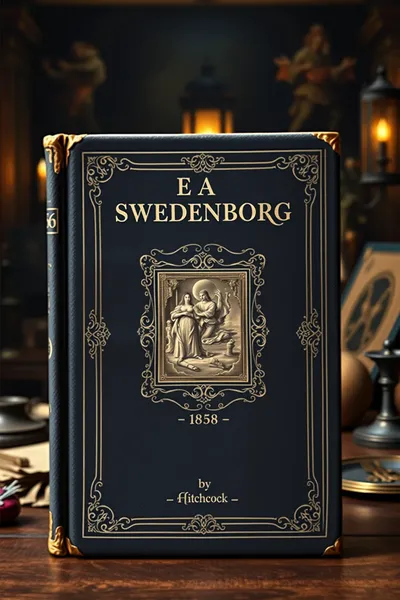
Borges Esencial

 71
71

Borges Esencial
Borges Esencial offers a potent distillation of Jorge Luis Borges's singular literary universe. The selection judiciously highlights his preoccupation with the metaphysical, presenting narratives that function as intricate thought experiments. The strength lies in its concentrated presentation of his most resonant themes—the infinite library, the mirroring of realities, and the elusive nature of identity. A potential limitation for some might be the sheer density of ideas; Borges does not spoon-feed his readers, demanding active engagement with his complex symbolic landscapes. The story "The Garden of Forking Paths" exemplifies this, where the concept of branching timelines and deterministic causality is explored through a seemingly simple espionage plot. This collection serves as an excellent, albeit demanding, gateway into one of the 20th century's most intellectually adventurous writers.
📝 Description
71
Borges Esencial (2017) gathers stories and essays from Jorge Luis Borges's unique literary universe.
This volume collects key writings by Jorge Luis Borges, an Argentine author whose work often engages with philosophical puzzles and unconventional ideas. Published in 2017, Borges Esencial focuses on stories and essays that exemplify his distinctive style. The selection is suited for readers interested in meta-fiction, consciousness, and the nature of reality. Borges's narratives frequently feature intellectual challenges, such as infinite libraries, parallel universes, and the porous boundary between the real and the imagined.
Borges wrote in the 20th century, a time of significant literary and philosophical change. While his work shares some ground with existentialism and post-structuralism, he maintained an individual path. He drew upon diverse sources, including ancient philosophy, theology, and speculative fiction. Early collections like *Ficciones* (1944) already displayed his blend of deep knowledge and creative imagination.
Borges's fiction frequently touches upon concepts that resonate with esoteric traditions, particularly those concerned with metaphysics and the nature of reality. His recurring fascination with labyrinths, infinite regress, and the idea of a universal library mirrors Gnostic notions of complex cosmologies and the search for hidden knowledge. The blurring of dream and reality, and the exploration of mirrored or parallel existences, echo themes found in mystical thought and occult philosophy. His work invites readers to consider the limits of human perception and the possibility of realities beyond ordinary experience.
💡 Why Read This Book?
• You will learn how Borges uses narrative structures to explore the concept of the infinite library, a key symbol in his work first explored in "The Library of Babel." • You will feel the intellectual weight of his engagement with philosophical labyrinths, particularly how he models parallel realities in "The Garden of Forking Paths." • You will gain an appreciation for his unique blend of erudition and imaginative fiction, evident in his discussions of historical figures and esoteric concepts.
⭐ Reader Reviews
Honest opinions from readers who have explored this book.
❓ Frequently Asked Questions
What are the main philosophical themes explored in Borges Esencial?
Borges Esencial primarily explores themes of infinity, time, identity, and the nature of reality. Concepts like the infinite library, cyclical time, and the blurring of dreams and waking life are central to his philosophical inquiries.
Which of Borges's famous stories are typically included in collections like Borges Esencial?
Collections often feature iconic stories such as 'The Library of Babel,' 'The Garden of Forking Paths,' 'Ficciones,' and 'The Aleph,' which encapsulate his distinctive style and recurring motifs.
How does Borges's work relate to esoteric traditions?
Borges's fiction frequently draws upon and alludes to mystical, Gnostic, and Kabbalistic ideas, using them as conceptual frameworks for his explorations of cosmology, infinity, and the hidden structures of the universe.
What makes Borges's writing style unique?
Borges's style is characterized by its erudition, conciseness, and the seamless integration of fictional narratives with philosophical speculation and encyclopedic knowledge, often presented with a dry, ironic wit.
Is Borges Esencial a good starting point for new readers of Jorge Luis Borges?
Yes, this collection serves as an excellent introduction, offering a concentrated dose of his most influential stories and essays, providing a solid foundation for further exploration of his extensive bibliography.
When was Borges Esencial first published?
Borges Esencial was first published in 2017, compiling key works from the celebrated Argentine author Jorge Luis Borges.
🔮 Key Themes & Symbolism
The Infinite Library
The concept of an infinite library, most famously detailed in 'The Library of Babel,' serves as a powerful metaphor for the universe itself. This boundless collection of books, containing every possible permutation of letters, represents both ultimate knowledge and utter chaos. Borges uses this motif to question the nature of order, meaning, and the possibility of comprehending reality's totality, reflecting a deep engagement with metaphysical and epistemological anxieties.
Time and Eternity
Borges consistently grapples with the linearity of time, often proposing cyclical or branching temporal structures. In 'The Garden of Forking Paths,' he conceptualizes time as a network of possibilities rather than a single, determined sequence. This exploration challenges the common perception of time and introduces ideas that echo concepts found in certain mystical traditions regarding eternal recurrence or simultaneous existences.
Identity and the Self
The nature of personal identity is another recurring obsession. Borges questions the stability and singularity of the self, suggesting that identity can be fluid, fragmented, or even illusory. Characters often find themselves confronting doubles, questioning their memories, or experiencing a dissolution of their own consciousness, reflecting a philosophical inquiry into what constitutes the individual beyond subjective experience.
Dreams and Reality
The boundary between dreams and waking life is frequently blurred in Borges's narratives. He explores how the logic and imagery of dreams can seep into or even constitute our perceived reality. This motif highlights the subjective nature of experience and suggests that our understanding of what is 'real' might be as constructed and ephemeral as a dream, echoing Gnostic ideas about illusory worlds.
💬 Memorable Quotes
Direct passages from the work, attributed to the author.
“I do not know, I do not know, I do not know.”
— This repetition conveys a profound sense of epistemological despair and the limits of human knowledge when confronted with the infinite, a recurring sentiment in his philosophical tales.
“Time is the substance I am made of.”
— This metaphorical statement from 'New Refutation of Time' highlights Borges's deep contemplation of temporality as the fundamental element of existence and consciousness.
“To be is to be perceived.”
— Though often associated with Berkeley, Borges plays with this idealist concept, questioning the independent existence of objects and realities outside of consciousness or observation.
“The books are a perfect mirror of the world.”
— This observation from 'The Library of Babel' underscores the idea that a complete representation of reality, however chaotic, could theoretically be contained within a comprehensive textual collection.
💡 Key Ideas
Editorial paraphrase of the work's core concepts — not direct quotes.
The universe (which others call the Library)...
This paraphrased concept expresses Borges's view of the Library of Babel as a direct analogue to the cosmos, suggesting that all of existence is a vast, perhaps incomprehensible, text.
🌙 Esoteric Significance
Tradition
Borges's work frequently engages with themes and structures resonant within esoteric traditions, particularly Gnosticism, Kabbalah, and Neoplatonism. He uses their symbolic languages and philosophical frameworks—such as the concept of a hidden, divine order, the illusory nature of the material world (maya), and the quest for forbidden knowledge—as conceptual springboards for his fiction. While not a practitioner, his literary explorations often mirror the Gnostic search for gnosis or the Kabbalistic understanding of interconnected divine emanations.
Symbolism
Key symbols in Borges's work often carry esoteric weight. The labyrinth, a recurring motif, symbolizes the complexities of existence, the search for meaning, and the often-unsolvable puzzles of the cosmos. The mirror represents self-reflection, duality, and the infinite regress of realities. The library, as seen in 'The Library of Babel,' functions as a metaphor for the universe itself, containing all knowledge and all possibilities, echoing Kabbalistic ideas of the Sephiroth or the totality of creation.
Modern Relevance
Contemporary thinkers and practitioners in fields ranging from postmodern philosophy to speculative fiction continue to draw inspiration from Borges. His exploration of meta-fiction, the nature of reality, and the intersection of knowledge and infinity informs discussions in areas like digital humanities, consciousness studies, and even certain branches of theoretical physics that grapple with complex systems and multiple realities. His approach to constructing narratives based on intricate conceptual frameworks remains influential for authors exploring philosophical and metaphysical themes.
👥 Who Should Read This Book
• Readers interested in the philosophical underpinnings of reality and consciousness, who are drawn to writers who challenge conventional notions of time and identity. • Students and scholars of literature and comparative religion, seeking to understand the intersection of fiction, philosophy, and esoteric thought in the 20th century. • Aspiring writers and thinkers who wish to learn from Borges's masterful use of metaphor, symbolism, and complex narrative structures to explore profound metaphysical questions.
📜 Historical Context
Jorge Luis Borges, a towering figure in 20th-century literature, produced his most influential works in the mid-1900s. His writing emerged during a period when literary modernism was evolving, and philosophical movements like existentialism and structuralism were gaining traction. While not strictly aligned with any single school, Borges engaged with their concerns, particularly regarding language, meaning, and human existence. His fictional universes, often built on encyclopedic knowledge and intricate logic, implicitly challenged the more emotionally driven narratives of some contemporaries. His early collections, such as *Ficciones* (1944) and *El Aleph* (1949), received significant critical attention, though his global recognition solidified later. He was nominated for the Nobel Prize in Literature multiple times, a evidence of his enduring impact, and his combination of the philosophical and the fantastical set him apart from the prevailing literary currents of his time.
📔 Journal Prompts
The nature of the infinite library as a mirror to existence.
Reflect on the concept of forking paths in personal decision-making.
The fluidity of identity as presented in Borges's narratives.
The dreamlike quality of perceived reality and its implications.
How the symbol of the labyrinth shapes understanding of life's challenges.
🗂️ Glossary
Meta-fiction
A type of fiction that self-consciously draws attention to its status as a work of art in wish to comment on the relationship between fiction and reality, often by referencing the author or the process of writing itself.
Gnosticism
A diverse set of religious and philosophical movements in the first centuries CE, emphasizing salvation through esoteric knowledge (gnosis), a dualistic worldview, and often viewing the material world as a flawed creation.
Kabbalah
A system of Jewish mysticism that explores the nature of God and the universe through esoteric interpretations of scripture, often involving complex symbolic diagrams like the Tree of Life.
Epistemology
The branch of philosophy concerned with the theory of knowledge, investigating its nature, scope, and justification, including questions about what can be known and how.
Ontology
The branch of metaphysics dealing with the nature of being, existence, or reality, exploring fundamental questions about what entities exist and their properties.
Aleph
In Borges's work, the Aleph is a point in space that contains all other points, a cosmic, mystical object representing the totality of the universe and the interconnectedness of all things.
Ficciones
A collection of short stories by Jorge Luis Borges, first published in 1944, which includes many of his most famous and philosophically dense works, establishing his unique literary style.
🔮 Readers Also Liked
Browse all →









More by Jorge Luis Borges
All books →


![The Widow Ching Pirate [5 stories]](/img/thumb/the-widow-ching-pirate-5-stories-jorge-luis-borges.webp)
More Free Alchemy & Hermeticism Books
View all →