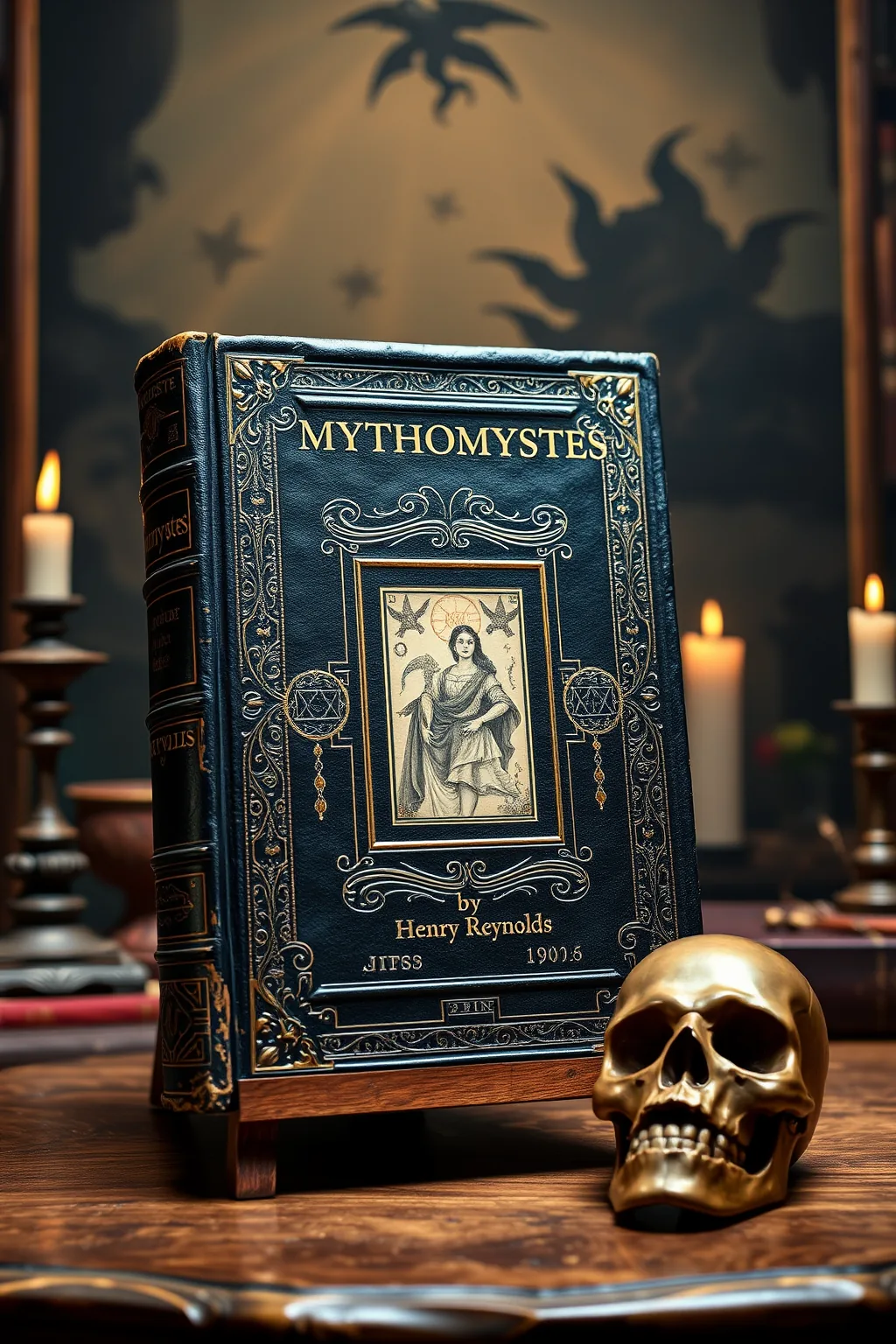
Mythomystes
 61
61

Mythomystes


Review by Aurelia Blackwood (Occult Philosophy Critic) — 'Mythomystes' by Henry Reynolds is a profound exploration of the esoteric traditions that have captivated mystics for centuries. Reynolds' work stands out for its deep esoteric insights and the seamless integration of Neoplatonic philosophy with poetic expression. The book is a must-read for anyone interested in the hidden knowledge of alchemy and hermeticism. Reynolds' strengths lie in his ability to make complex philosophical concepts accessible through vivid symbolism and evocative language. 'Mythomystes' is particularly suited for scholars and practitioners of the occult, offering a rich tapestry of mystical themes and philosophical significance.
📝 Description
61
Henry Reynolds published 'Mythomystes' in the early 1800s, examining alchemy and hermeticism.
Published in the early 19th century, Henry Reynolds' 'Mythomystes' examines the philosophical underpinnings of alchemy and hermeticism. The text draws on Neoplatonic ideas, presenting them with a distinctive literary style. Reynolds aimed this work at individuals interested in esoteric philosophies and the study of occult traditions.
The book structures its discussion around the transformative processes central to alchemy. It encourages readers to look for symbolic meanings within the text, connecting them to an inner spiritual potential. The author's intent was to illuminate the relevance of ancient symbolic thought for contemporary understanding.
As a product of the early 19th century, 'Mythomystes' sits within a period of renewed interest in Western esotericism. It engages with traditions that sought hidden knowledge through symbolic interpretation, particularly alchemy and hermeticism. The book reflects the era's tendency to synthesize classical philosophy, like Neoplatonism, with mystical and occult inquiries. Reynolds' work contributes to a lineage of texts that interpret these ancient systems as paths to spiritual or psychological realization.
💡 Why Read This Book?
Read 'Mythomystes' to gain a deeper understanding of the esoteric traditions that have shaped Western thought. Ideal for seekers of hidden knowledge, scholars of alchemy, and practitioners of the occult, this book offers a unique blend of philosophical depth and poetic beauty. Reynolds' work provides a bridge between ancient wisdom and modern spirituality, making it a valuable resource for anyone interested in the mystical arts.
⭐ Reader Reviews
Honest opinions from readers who have explored this book.
❓ Frequently Asked Questions
What is the main theme of 'Mythomystes'?
The main theme of 'Mythomystes' is the exploration of alchemical transformation and the pursuit of hidden knowledge through Neoplatonic philosophy and hermetic symbolism.
Who is the intended audience for this book?
The intended audience for 'Mythomystes' includes scholars of occult studies, practitioners of the mystical arts, and seekers of esoteric truths.
What makes 'Mythomystes' unique?
'Mythomystes' is unique for its seamless integration of Neoplatonic philosophy with poetic expression, creating a rich and evocative atmosphere that invites readers to explore ancient wisdom in a modern context.
How does 'Mythomystes' contribute to the study of alchemy?
'Mythomystes' contributes to the study of alchemy by providing a deep dive into the symbolism and philosophical significance of alchemical transformation, offering insights that are relevant to both historical and contemporary practitioners.
Is 'Mythomystes' suitable for beginners in the field of esoteric studies?
While 'Mythomystes' is a valuable resource for beginners, its complex themes and symbolism may be best appreciated by readers with some prior knowledge of occult studies.
🔮 Key Themes & Symbolism
Alchemical Transformation
Alchemical transformation is a central theme in 'Mythomystes,' where Reynolds explores the process of spiritual purification and the quest for the philosopher's stone. This theme is rich with symbolism, representing the journey from the mundane to the divine.
Neoplatonic Philosophy
Neoplatonic philosophy is woven throughout 'Mythomystes,' providing a framework for understanding the mystical union between the individual soul and the divine. Reynolds' use of Neoplatonic concepts adds depth to the book's esoteric insights.
Esoteric Symbolism
Esoteric symbolism is a key element in 'Mythomystes,' where Reynolds employs intricate symbols to convey hidden knowledge. The book invites readers to decipher these symbols and uncover the mysteries they hold.
💬 Memorable Quotes
Direct passages from the work, attributed to the author.
“In the silence of the mind, the divine spark ignites.”
— Reynolds highlights the importance of inner stillness in achieving mystical union with the divine.
“The alchemist's work is a dance of elements and essence.”
— Reynolds illustrates the alchemical process as a harmonious interplay between the physical and spiritual realms.
💡 Key Ideas
Editorial paraphrase of the work's core concepts — not direct quotes.
The philosopher's stone is not a physical object but a state of being.
This quote underscores the spiritual nature of alchemical transformation, emphasizing the pursuit of divine enlightenment.
The journey to the divine is a path of symbol and mystery.
This quote emphasizes the esoteric nature of the spiritual quest, where symbols and mysteries guide the seeker.
The hidden knowledge is revealed to those who seek with pure hearts.
This quote underscores the importance of sincerity and purity in the pursuit of esoteric truths.
🌙 Esoteric Significance
Tradition
'Mythomystes' belongs to the Hermetic tradition, which emphasizes the pursuit of hidden knowledge and spiritual transformation. This tradition draws on ancient Egyptian and Greek philosophies, integrating them with alchemical practices and Neoplatonic thought.
Symbolism
Key symbols in 'Mythomystes' include the philosopher's stone, the alchemical process, and the mystical union between the individual soul and the divine. These symbols are rich with esoteric meanings, inviting readers to delve deeper into their significance.
Modern Relevance
The esoteric insights and philosophical depth of 'Mythomystes' remain relevant today, influencing modern practitioners of the mystical arts and scholars of occult studies. The book's exploration of alchemical transformation and Neoplatonic philosophy continues to inspire seekers of hidden knowledge.
👥 Who Should Read This Book
Beginners in the field of esoteric studies will find 'Mythomystes' to be a valuable introduction to the mysteries of alchemy and hermeticism. Scholars of occult studies will appreciate the book's deep philosophical insights and detailed symbolism. Spiritual seekers will be drawn to the mystical themes and the pursuit of divine enlightenment. Practitioners of the mystical arts will find 'Mythomystes' to be a valuable collection of esoteric knowledge and spiritual guidance.
📜 Historical Context
Published in the early 1800s, 'Mythomystes' emerged during a time of renewed interest in alchemy and hermeticism. The book reflects the intellectual curiosity of the era, which saw a resurgence of interest in ancient wisdom and mystical traditions. Reynolds' work was influential in bridging the gap between classical esoteric thought and modern spirituality, providing a foundation for contemporary practitioners and scholars.
📔 Journal Prompts
Reflect on the symbolism of the philosopher's stone in your own spiritual journey.
How does Neoplatonic philosophy influence your understanding of mystical union?
Explore the role of esoteric symbolism in your pursuit of hidden knowledge.
Consider the importance of inner stillness in achieving spiritual transformation.
Write about the significance of alchemical practices in modern spirituality.
🗂️ Glossary
Philosopher's Stone
A symbol in alchemy representing the ultimate goal of spiritual transformation and enlightenment.
Neoplatonism
A philosophical tradition that emphasizes the mystical union between the individual soul and the divine.
Hermeticism
An esoteric tradition that draws on ancient Egyptian and Greek philosophies, integrating them with alchemical practices.
Alchemical Transformation
The process of spiritual purification and the quest for divine enlightenment through alchemical symbolism.
Esoteric Symbolism
The use of symbols to convey hidden knowledge and mystical insights.
This book appears in 2 collections
🔮 Readers Also Liked
Browse all →









From the “Neoplatonism” Collection
View all →






More Free Alchemy & Hermeticism Books
View all →