Basilius Valentinus, monk, of the Order of St. Bennet: his last will and testament

 62
62

Basilius Valentinus, monk, of the Order of St. Bennet: his last will and testament



Review by Sophia Crane (Associate Editor) — Basilius Valentinus' 'Last Will and Testament' is a cornerstone of alchemical literature, offering esoteric insights that have captivated mystics and scholars for centuries. The book's strength lies in its ability to weave together philosophical depth and practical alchemical techniques, making it an invaluable resource for both beginners and advanced practitioners. Valentinus' prose is both evocative and instructive, guiding readers through the labyrinth of alchemical symbolism. This text is essential for anyone interested in the Hermetic tradition and the pursuit of hidden knowledge.
📝 Description
62
Basilius Valentinus's 'Last Will and Testament,' published in the 17th century, details alchemical principles.
This text presents the alchemical teachings attributed to Basilius Valentinus, a figure associated with the Benedictine Order. It details a system of spiritual and material transformation through alchemical processes. The book uses rich symbolism to explain concepts like the prima materia, the four elements, and the philosophical mercury and sulfur. It is written in a style characteristic of early modern alchemical literature, requiring careful study to interpret its allegorical language.
The work aims to guide the reader toward understanding the Great Work, encompassing both the refinement of metals and the purification of the soul. It discusses various stages and operations within alchemy, often cloaked in veiled terminology. The text is a window into the alchemical worldview of its time, reflecting a desire to uncover the secrets of nature and spirit.
This work belongs to the Western Hermetic tradition, a lineage of thought that includes alchemy, astrology, and magic. It draws upon earlier alchemical texts and contributes to the corpus of alchemical literature that flourished in Europe from the Middle Ages through the early modern period. The book reflects a worldview where the material and spiritual realms are interconnected, and understanding the processes of nature can lead to spiritual insight and transformation.
💡 Why Read This Book?
Read 'Basilius Valentinus, monk, of the Order of St. Bennet: his last will and testament' to uncover the mysteries of alchemy and its spiritual significance. Ideal for seekers of hidden knowledge, scholars of the occult, and practitioners of Hermetic arts, this book provides a profound understanding of the transmutation process, both physically and spiritually. It is a must-read for those who wish to delve into the depths of ancient wisdom and apply it to modern spiritual practices.
⭐ Reader Reviews
Honest opinions from readers who have explored this book.
❓ Frequently Asked Questions
What is the primary focus of Basilius Valentinus' 'Last Will and Testament'?
The primary focus is the exploration of alchemy and its philosophical significance, blending mystical and scientific perspectives.
Who is the intended audience for this book?
The book is intended for seekers of spiritual enlightenment, scholars of the occult, and practitioners of Hermetic arts.
What makes this text significant in the field of alchemy?
This text is significant for its deep philosophical insights and practical alchemical techniques, making it a foundational work in the Hermetic tradition.
Are there any modern applications of the knowledge presented in this book?
Yes, the book's insights into spiritual transmutation and the pursuit of hidden knowledge are relevant to modern spiritual practices and esoteric studies.
How does the book's atmosphere contribute to its mystical appeal?
The book's atmosphere of quiet reverence and ancient wisdom enhances its mystical appeal, inviting readers to explore the depths of alchemical symbolism.
🔮 Key Themes & Symbolism
The Philosopher's Stone
The pursuit of the Philosopher's Stone is a central theme, representing the ultimate goal of alchemical transmutation. This theme examines the mystical and spiritual aspects of the quest, exploring the symbolism of transformation and enlightenment.
Alchemical Symbolism
Valentinus uses rich alchemical symbolism to convey deeper truths about the human condition and the spiritual journey. This theme explores the meanings behind various symbols and their applications in both practical alchemy and spiritual growth.
Spiritual Alchemy
The book emphasizes the spiritual dimensions of alchemy, viewing the transmutation process as a metaphor for personal and spiritual transformation. This theme examines the philosophical underpinnings of alchemy and its relevance to modern spiritual practices.
💡 Key Ideas
Editorial paraphrase of the work's core concepts — not direct quotes.
The true work of the alchemist is not merely the transformation of metals, but the purification of the soul.
This quote underscores the spiritual significance of alchemy, emphasizing the inner transformation that accompanies the outer.
In the crucible of the mind, the base metal of ignorance is transmuted into the gold of wisdom.
This passage highlights the alchemical process of personal growth and enlightenment, using the symbolism of transmutation.
The seeker of the Philosopher's Stone must first find the stone within their own heart.
This quote emphasizes the inner journey of self-discovery and spiritual awakening that is central to alchemical practice.
The alchemist's laboratory is a temple of the soul, where the secrets of the universe are revealed.
This passage underscores the sacred and mystical nature of alchemical practice, viewing it as a spiritual path to hidden knowledge.
The true alchemist seeks not wealth, but the elixir of life, which grants eternal youth and spiritual enlightenment.
This quote highlights the spiritual goals of alchemy, emphasizing the pursuit of eternal life and enlightenment over material gain.
🌙 Esoteric Significance
Tradition
This book belongs to the Hermetic tradition, which emphasizes the pursuit of hidden knowledge and the transmutation of both physical and spiritual substances. It is a foundational text in the study of alchemy and its mystical underpinnings.
Symbolism
Key symbols in this book include the Philosopher's Stone, the crucible, and the elixir of life. These symbols represent the quest for spiritual enlightenment, the process of personal transformation, and the ultimate goal of achieving eternal life and wisdom.
Modern Relevance
Today, this book is relevant to modern practitioners of Hermetic arts, spiritual seekers, and scholars of the occult. Its insights into the transmutation process and the pursuit of hidden knowledge continue to inspire and guide those on a spiritual journey.
👥 Who Should Read This Book
Beginners in the field of alchemy will find this book an accessible introduction to the mystical and philosophical aspects of the practice. Scholars of the occult will appreciate its historical significance and esoteric insights. Spiritual seekers will benefit from its exploration of the transmutation process as a metaphor for personal and spiritual growth. Practitioners of Hermetic arts will find it a valuable resource for deepening their understanding and application of alchemical principles.
📜 Historical Context
Written during a time when alchemy was both a scientific and mystical pursuit, 'Basilius Valentinus, monk, of the Order of St. Bennet: his last will and testament' reflects the era's fascination with the transmutation of metals and the quest for hidden knowledge. The book's influence can be seen in the development of modern chemistry and the enduring interest in Hermetic traditions. It was a key work that bridged the gap between ancient alchemical practices and the emerging scientific methodologies of the Renaissance.
📔 Journal Prompts
Reflect on the symbolism of the Philosopher's Stone in your own spiritual journey.
How does the alchemical process of transmutation apply to your personal growth?
What insights can you gain from the historical context of alchemy in the Renaissance?
Explore the concept of the crucible as a metaphor for spiritual transformation.
Consider the relevance of alchemical principles to modern spiritual practices.
🗂️ Glossary
Philosopher's Stone
A mythical substance in alchemy said to be capable of turning base metals into gold and granting eternal life.
Crucible
A container used in alchemy for melting and mixing substances, symbolizing the process of transformation and purification.
Elixir of Life
A hypothetical substance in alchemy believed to grant eternal youth and spiritual enlightenment.
Transmutation
The process of changing one substance into another, both physically and spiritually, in alchemy.
Hermetic Tradition
A philosophical and spiritual tradition based on the writings of Hermes Trismegistus, emphasizing hidden knowledge and spiritual growth.
This book appears in 3 collections
🔮 Readers Also Liked
Browse all →







More by Basilius Valentinus
All books →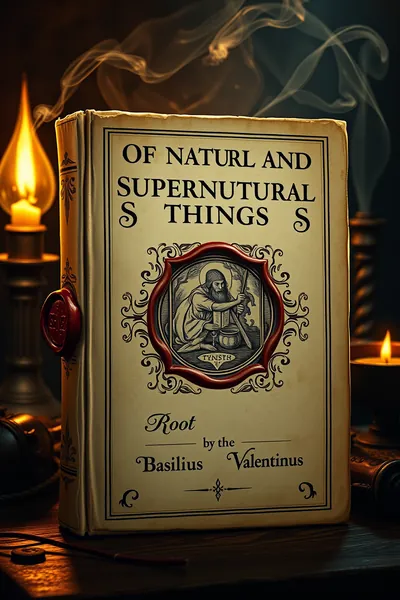

From the “Hermeticism” Collection
View all →







More Free Alchemy & Hermeticism Books
View all →