The Gospel of John (CW 103)
 76
76

The Gospel of John (CW 103)



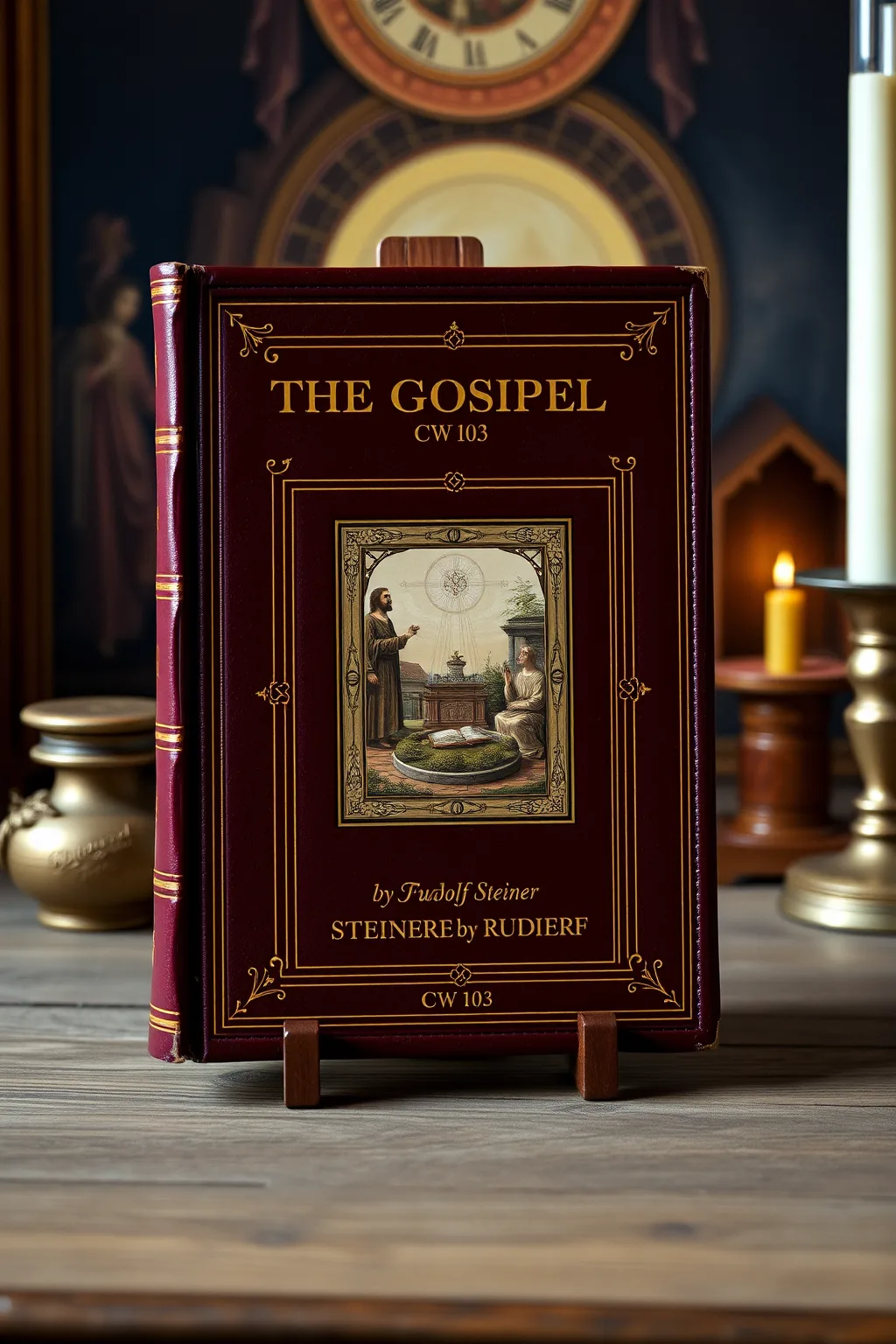
The Gospel of John (CW 103) by Rudolf Steiner is a profound and thought-provoking exploration of esoteric Christianity. Steiner's deep dive into the doctrine of the Logos and the Mystery of Golgotha provides readers with a fresh perspective on ancient religious texts. The book's discussion of the Seven Degrees of Initiation and the Christ Principle offers valuable insights for modern esoteric seekers. Steiner's ability to weave together historical context with spiritual teachings makes this book a treasure trove for those interested in the occult and mystical dimensions of Christianity. The exploration of the Virgin Sophia and the Holy Spirit adds layers of depth to the reader's understanding. This book is a must-read for anyone seeking to deepen their spiritual journey through esoteric and occult philosophy.
📝 Description
76
Rudolf Steiner's 1908 commentary on the Gospel of John (CW 103) interprets its spiritual dimensions.
In 1908, Rudolf Steiner published his commentary on the Gospel of John, designated as Collected Work 103. This work does not recount the biblical narrative but instead examines its underlying spiritual realities. Steiner focuses on the Doctrine of the Logos, presenting it as the cosmic principle through which the material world was formed and the spiritual realm is accessed.
He further investigates the Mystery of Golgotha, viewing it as a singular cosmic event with profound implications for human evolution. The text also details the Seven Degrees of Initiation, outlining a path of spiritual development available to humanity. Steiner's aim is to reveal the supersensible dimensions of the Christian tradition, making them comprehensible through a form of spiritual science.
This commentary fits within the broader tradition of esoteric Christianity, which seeks to understand biblical texts and Christian mysteries through non-literal, spiritual insights. Steiner's approach draws from Theosophy and his own developed spiritual science, aiming to bridge the gap between material science and spiritual experience. It positions the Gospel of John not merely as a historical or theological document, but as a coded account of cosmic and human spiritual evolution, accessible through direct spiritual perception.
💡 Why Read This Book?
Reading The Gospel of John (CW 103) today offers a unique opportunity to explore the esoteric dimensions of Christianity. Rudolf Steiner's insights into the Mystery of Golgotha and the Christ Principle provide a fresh perspective on spiritual growth. This book is invaluable for those seeking to understand the deeper, hidden meanings behind religious texts and their relevance to modern spiritual practices.
⭐ Reader Reviews
Honest opinions from readers who have explored this book.
❓ Frequently Asked Questions
What is the main focus of The Gospel of John (CW 103)?
The main focus of the book is the esoteric and occult dimensions of Christian philosophy, particularly the doctrine of the Logos and the Mystery of Golgotha.
Who should read this book?
This book is ideal for esoteric seekers, spiritual practitioners, and those interested in the deeper, mystical aspects of Christianity.
What makes Rudolf Steiner's interpretation unique?
Steiner's interpretation is unique because it combines historical context with spiritual teachings, offering a fresh perspective on ancient religious texts.
🔮 Key Themes & Symbolism
The Doctrine of the Logos
Steiner's interpretation of the Logos reveals the divine principle underlying the creation and evolution of the cosmos, providing a profound understanding of the spiritual foundations of Christianity.
The Mystery of Golgotha
The crucifixion of Christ is explored in its esoteric dimensions, uncovering the hidden significance of this key event in human history and its impact on spiritual development.
The Seven Degrees of Initiation
Steiner outlines the stages of spiritual initiation, offering insights into the path of enlightenment and the mystical experiences that accompany it, drawing from both Christian and occult traditions.
💬 Memorable Quotes
Direct passages from the work, attributed to the author.
“The Mystery of Golgotha is the key to human evolution.”
— This statement highlights the transformative power of Christ's sacrifice in the spiritual journey of humanity.
“The Seven Degrees of Initiation are the steps to spiritual enlightenment.”
— This insight reveals the structured path to spiritual development and the attainment of higher consciousness.
“The Christ principle is the guiding force of human evolution.”
— This statement underscores the central role of Christ in the spiritual progress of humanity.
💡 Key Ideas
Editorial paraphrase of the work's core concepts — not direct quotes.
The Logos is the divine principle that permeates all creation.
This quote underscores Steiner's emphasis on the universal presence of the divine within the material world.
The Virgin Sophia represents the divine feminine in Christian mysticism.
This quote emphasizes the importance of the feminine aspect of the divine in Steiner's esoteric teachings.
🌙 Esoteric Significance
Tradition
This book belongs to the esoteric tradition of anthroposophy, which seeks to uncover the spiritual truths hidden within the Christian faith. Steiner's work draws from Hermetic, Gnostic, and Kabbalistic teachings, providing a comprehensive understanding of the mystical dimensions of Christianity.
Symbolism
Key symbols in the book include the Logos, the Mystery of Golgotha, and the Virgin Sophia, each representing profound spiritual concepts. The Logos signifies the divine principle of creation, the Mystery of Golgotha embodies the transformative power of Christ's sacrifice, and the Virgin Sophia represents the divine feminine aspect of the Holy Spirit.
Modern Relevance
Steiner's insights remain relevant today, particularly for modern practitioners of esoteric and metaphysical traditions. His work continues to inspire seekers of spiritual knowledge and those interested in the deeper dimensions of Christianity, offering a pathway to spiritual enlightenment and understanding.
👥 Who Should Read This Book
Beginners interested in esoteric Christianity will find Steiner's work accessible and enlightening, providing a solid foundation for further exploration. Scholars of anthroposophy and occult philosophy will appreciate the depth and breadth of Steiner's insights. Spiritual seekers will benefit from the profound spiritual teachings and the path to initiation outlined in the book. Practitioners of esoteric traditions will find valuable tools and techniques for their spiritual development.
📜 Historical Context
Rudolf Steiner's 'The Gospel of John (CW 103)' was written during a period of significant spiritual and intellectual ferment in the early 20th century. Steiner's work emerged as a response to the growing disenchantment with materialism and the search for deeper spiritual truths. The book's influence can be seen in the development of anthroposophy, a spiritual movement that seeks to integrate scientific and spiritual knowledge. Steiner's insights into the Gospel of John have inspired countless seekers and scholars, offering a unique perspective on the esoteric dimensions of Christianity.
📔 Journal Prompts
How does Steiner's interpretation of the Logos deepen your understanding of Christian mysticism?
In what ways has the Mystery of Golgotha impacted your spiritual journey?
Reflect on the Seven Degrees of Initiation and your current stage of spiritual development.
What role does the Virgin Sophia play in your spiritual practice?
How has reading 'The Gospel of John (CW 103)' influenced your view of human evolution and the Christ principle?
🗂️ Glossary
Logos
The divine principle or word underlying creation, central to Steiner's esoteric teachings.
Mystery of Golgotha
The spiritual significance of Christ's crucifixion and its impact on human evolution.
Seven Degrees of Initiation
The stages of spiritual development and enlightenment outlined by Steiner.
Virgin Sophia
The divine feminine aspect of the Holy Spirit in Christian mysticism.
Christ Principle
The guiding force of human spiritual evolution, central to Steiner's esoteric philosophy.
This book appears in 9 collections
🔮 Readers Also Liked
Browse all →








More by Steiner, Rudolf
All books →



From the “Occultism” Collection
View all →








More Free Occult Philosophy Books
View all →