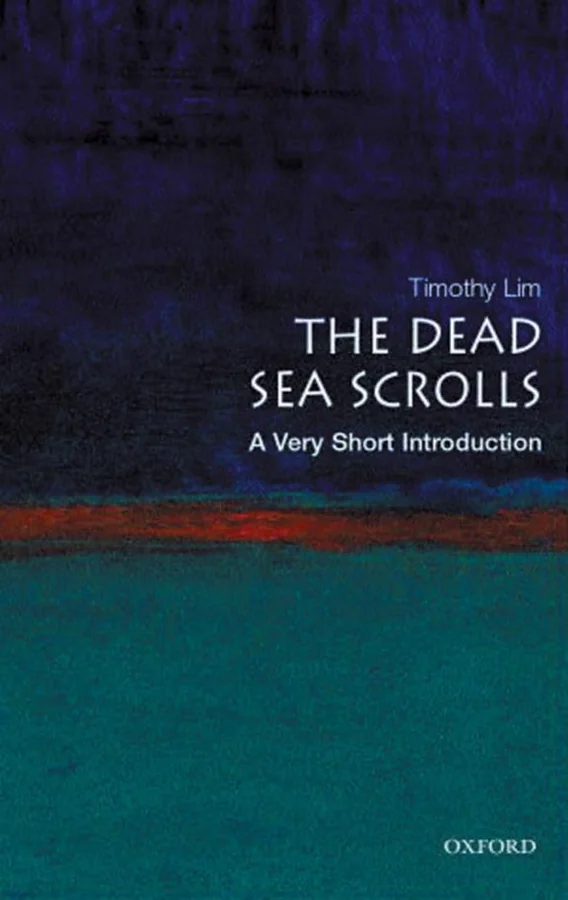
The Dead Sea Scrolls: A Very Short Introduction
 71
71

The Dead Sea Scrolls: A Very Short Introduction
Timothy H. Lim’s "The Dead Sea Scrolls: A Very Short Introduction" attempts a daunting task: distilling centuries of discovery and debate into a digestible format. The work succeeds admirably in providing a clear, factual account of the Qumran finds and their initial reception. Lim carefully lays out the spectrum of scholarly opinion regarding the scrolls' origins, particularly the debate between the Qumran-centric and Jerusalem-centric theories. A notable strength is the book's careful chronological framing, placing the scrolls within their specific historical milieu. However, the "Very Short Introduction" format inherently limits depth. While the discussion of the Essenes is informative, it feels somewhat constrained, leaving one wishing for more exploration into the nuances of their eschatological views, which are only briefly touched upon. The book's value lies in its clarity and its commitment to presenting the evidence without sensationalism. It provides a solid foundation for understanding the scrolls' significance.
📝 Description
71
Timothy H. Lim's 2005 book offers a brief guide to the Dead Sea Scrolls.
This volume summarizes the major discoveries and scholarly interpretations of the Dead Sea Scrolls. It covers the historical circumstances of their finding, which began in 1947 near the Dead Sea. The book describes the variety of texts unearthed, including biblical manuscripts, sectarian documents, and other ancient writings. It is suitable for anyone wanting an accessible introduction to one of archaeology's important discoveries. The work is aimed at students, general readers, and those interested in the historical background of early Judaism and Christianity, without requiring specialized prior knowledge. The text seeks to explain the scrolls for a wider audience.
The scrolls were found in caves near the ancient site of Qumran, with the first discoveries appearing in 1947. These documents date from the 3rd century BCE to the 1st century CE, a time of significant religious and political activity in Judea. The scrolls offer unique insights into Jewish sects, particularly the Essenes, and the textual history of the Hebrew Bible. Their discovery greatly altered biblical scholarship, questioning earlier assumptions about how scripture was transmitted.
While not strictly an esoteric text itself, this introduction contextualizes documents that have been central to discussions within esoteric traditions concerning early Jewish mysticism and proto-Gnostic ideas. The scrolls' sectarian nature and their unique interpretations of scripture have long intrigued those who study hidden or alternative religious movements. The focus on groups like the Essenes and their specific beliefs provides a backdrop for understanding the development of ideas that later appeared in various mystical and Gnostic systems. The book helps clarify the historical roots of concepts that resonate with esoteric inquiries into the nature of revelation and community.
💡 Why Read This Book?
• Gain a foundational understanding of the Dead Sea Scrolls, learning about their discovery in 1947 and their importance as ancient Jewish texts. • Understand the scholarly debates surrounding the scrolls, including the Essene hypothesis and the dating of manuscripts from the 3rd century BCE to the 1st century CE. • Grasp the significance of specific sectarian documents like the Community Rule, appreciating their insights into early Jewish religious life.
⭐ Reader Reviews
Honest opinions from readers who have explored this book.
❓ Frequently Asked Questions
When were the Dead Sea Scrolls discovered and where?
The Dead Sea Scrolls were discovered between 1947 and 1956 in caves near the ancient settlement of Qumran on the northwest shores of the Dead Sea.
What types of texts are included in the Dead Sea Scrolls?
The collection includes over 900 manuscripts, comprising biblical texts (like fragments of Isaiah), apocryphal works, and sectarian documents detailing the beliefs and practices of groups like the Essenes.
What is the historical period covered by the Dead Sea Scrolls?
The scrolls date from approximately the 3rd century BCE to the 1st century CE, offering a window into the religious and social landscape of Judea during the Second Temple period.
Who were the Essenes, and what is their connection to the scrolls?
The Essenes were a Jewish ascetic sect that flourished during the Second Temple period. Many scholars believe they were responsible for writing or collecting many of the Dead Sea Scrolls found at Qumran.
How did the discovery of the Dead Sea Scrolls impact biblical studies?
The scrolls provided the oldest known manuscripts of the Hebrew Bible, allowing scholars to compare them with later texts and gain new insights into the textual history and transmission of scripture.
What is the significance of the Community Rule text?
The Community Rule (Serekh HaYahad) is a key sectarian document that outlines the rules, beliefs, and communal organization of the Qumran group, offering crucial information about their way of life.
🔮 Key Themes & Symbolism
Qumran Sectarianism
The work examines the distinct religious practices and beliefs of the Qumran community, often identified with the Essenes. It explores their communal rules, eschatological expectations, and dualistic worldview, as evidenced in texts like the Community Rule. This exploration offers a unique perspective on Jewish diversity during the Second Temple period, highlighting a group preoccupied with ritual purity, divine judgment, and the imminent arrival of a messianic age. The scrolls thus illuminate a specific, albeit influential, branch of ancient Hebraic thought.
Biblical Manuscript Transmission
A central theme is the significance of the Dead Sea Scrolls for understanding the history of the Hebrew Bible. The book details the discovery of biblical texts, some predating previously known manuscripts by centuries. It addresses the textual variations found and their implications for the accuracy and development of the biblical canon. This aspect is crucial for anyone interested in the textual criticism and historical evolution of sacred scriptures originating from ancient Israelite traditions.
Archaeological Discovery and Interpretation
The narrative frames the scrolls within their discovery context, starting with the initial finds in 1947. It discusses the challenges faced by archaeologists and scholars in excavating the caves and interpreting the fragmented texts. The book navigates the complex scholarly debates that arose, including differing theories on the scrolls' provenance and the identity of their authors, providing an overview of how historical and religious artifacts are studied and understood.
Messianic Expectations
The texts unearthed at Qumran reveal profound messianic hopes and expectations prevalent among certain Jewish groups. The book explores interpretations of these texts, which often speak of multiple messianic figures, including priestly and royal claimants, and a coming divine intervention. This focus provides insight into the spiritual climate of Judea leading up to the time of Jesus and the emergence of early Christianity, showing a society deeply anticipating divine deliverance.
💬 Memorable Quotes
Direct passages from the work, attributed to the author.
“The scrolls date from the third century BCE to the first century CE.”
— This chronological anchor is vital, placing the discovered texts within a critical period of Jewish history, encompassing the Hellenistic and early Roman eras, just before and during the time of Jesus.
“The Qumran community is often identified with the Essenes.”
— This identification suggests the scrolls offer a direct, albeit filtered, view into the doctrines and daily life of a specific, ascetic Jewish sect known for its unique interpretations of Mosaic Law.
“The Community Rule outlines the organization and beliefs of the Qumran sect.”
— This statement highlights the text's importance as a primary source for understanding the internal structure, ethos, and communal practices of the group believed to have produced many of the scrolls.
“Biblical manuscripts found at Qumran are the oldest known copies.”
— This fact underscores the immense value of the scrolls for textual criticism, allowing scholars to examine the state of biblical texts centuries earlier than previously available evidence.
“Scholarly debate continues regarding the exact origin of all the scrolls.”
— This acknowledges the ongoing nature of academic inquiry, recognizing that while much is known, definitive conclusions about every text and its precise attribution remain subjects of active discussion and research.
🌙 Esoteric Significance
Tradition
While not strictly belonging to a single codified esoteric lineage like Kabbalah or Hermeticism, the Dead Sea Scrolls hold profound significance for traditions focused on ancient Hebraic mysticism and early messianic movements. They offer primary source material for understanding the spiritual and apocalyptic currents within Judaism during the Second Temple period, which directly influenced early Christian Gnosticism and later mystical thought. The emphasis on purity, divine secrets, and dualistic cosmology aligns with certain esoteric interpretations of biblical texts.
Symbolism
Key symbols within the scrolls include light and darkness, representing the dualistic struggle between good and evil inherent in the Qumran community's worldview. Water symbolizes ritual purity, essential for participation in the community and for divine favor. The concept of the 'Sons of Light' versus the 'Sons of Darkness' is a potent motif reflecting their perceived cosmic battle. Furthermore, angelic beings and messianic figures appear prominently, symbolizing divine intervention and the hope for salvation in a turbulent era.
Modern Relevance
Contemporary esoteric practitioners and scholars of comparative religion often turn to the Dead Sea Scrolls for insight into the roots of Western mysticism and dualistic philosophies. Thinkers exploring Gnostic traditions, early Christian esotericism, and the historical Jesus movement frequently reference the scrolls. Their emphasis on communal living, scriptural interpretation, and apocalyptic prophecy continues to resonate with modern groups seeking alternative spiritual paths or deeper historical understanding of foundational religious texts.
👥 Who Should Read This Book
• Students of Second Temple Judaism: Gain direct exposure to primary source material useful the diverse religious range of ancient Judea. • Comparative religion scholars: Understand the historical context and textual antecedents of early Christianity and Rabbinic Judaism. • Enthusiasts of ancient history and archaeology: Explore one of the most significant archaeological discoveries of the 20th century and its ongoing scholarly interpretation.
📜 Historical Context
The Dead Sea Scrolls emerged from a period of intense religious and political dynamism in Judea, roughly from the 3rd century BCE to the 1st century CE. This era saw the region under Hellenistic and later Roman rule, fostering diverse Jewish movements and interpretations of tradition. The discovery, commencing in 1947, provided an unprecedented look into groups like the Essenes, whose practices and apocalyptic views were detailed in sectarian texts. The scrolls' existence challenged prevailing notions of biblical textual stability and offered a richer understanding of Jewish pluralism before the destruction of the Second Temple in 70 CE. Scholars like William F. Albright, a prominent archaeologist, immediately recognized their immense significance. The reception was marked by both excitement and protracted scholarly debate, with theories ranging from a singular Essene library to a broader collection from various Jerusalem sources.
📔 Journal Prompts
The Qumran community's emphasis on ritual purity.
The concept of dualism as presented in the Community Rule.
The significance of the biblical manuscripts discovered near the Dead Sea.
Varying interpretations of messianic figures within the scrolls.
The archaeological challenges of excavating and preserving the Dead Sea Scrolls.
🗂️ Glossary
Dead Sea Scrolls
A collection of ancient Jewish manuscripts discovered between 1947 and 1956 in caves near Qumran. They date from the 3rd century BCE to the 1st century CE and include biblical, apocryphal, and sectarian texts.
Qumran
An archaeological site on the northwest shore of the Dead Sea, associated with the discovery of the scrolls. It is believed to have been inhabited by a Jewish sect, likely the Essenes.
Community Rule (Serekh HaYahad)
A key sectarian document found among the scrolls, outlining the rules, organization, and beliefs of the Qumran community, likely the Essenes.
Essenes
An ascetic Jewish sect that flourished during the Second Temple period. Many scholars associate them with the Qumran community and the Dead Sea Scrolls.
Second Temple Period
The era of Jewish history from the rebuilding of the Second Temple in Jerusalem (c. 516 BCE) until its destruction by the Romans in 70 CE.
Sectarian Texts
Manuscripts that reflect the specific beliefs, practices, and rules of particular Jewish groups or sects during the Second Temple period, such as the Dead Sea Scrolls.
Biblical Manuscripts
Copies of books that are part of the Hebrew Bible (Old Testament), found among the Dead Sea Scrolls, providing the oldest known versions of these texts.
This book appears in 1 collection
🔮 Readers Also Liked
Browse all →






From the “Dead Sea Scrolls” Collection
View all →






More Free Sacred Texts & Gnosticism Books
View all →