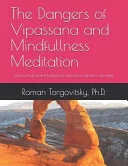
The Dangers of Vipassana and Mindfullness Meditation
 73
73

The Dangers of Vipassana and Mindfullness Meditation
Roman Torgovitsky's "The Dangers of Vipassana and Mindfulness Meditation" is a necessary corrective to the often-unquestioning enthusiasm surrounding contemporary contemplative practices. The author meticulously details how techniques designed for liberation can, in certain contexts or with certain individuals, lead to significant psychological distress. A particular strength lies in his exploration of how concepts like "anatta" can be misconstrued, leading to a sense of depersonalization rather than liberation. However, the book occasionally feels overly focused on the negative, sometimes lacking a balanced perspective that acknowledges the profound benefits many derive. The section discussing the potential for "spiritual bypassing" through meditation, while accurate, could have benefited from more nuanced examples. Despite this, Torgovitsky’s work provides a critical, sober examination of meditation’s shadowed side, essential for anyone engaged deeply with these practices. It serves as a vital counterpoint in the current discourse.
📝 Description
73
Roman Torgovitsky's 2019 book questions the assumed benefits of Vipassana and mindfulness.
Roman Torgovitsky's "The Dangers of Vipassana and Mindfulness Meditation" examines the negative consequences that can arise from common contemplative practices. Published in 2019, the book challenges the widespread belief that these techniques always yield positive results. Instead, it investigates how standard mindfulness methods, despite their aim to promote calm, may sometimes result in detachment, emotional numbness, or worsen existing mental health issues.
This work is not intended for those casually seeking peace. It speaks to experienced meditators who have faced unexpected problems, therapists and counselors wanting a wider view of meditation's effects, and academics in religious studies or psychology interested in the altered states meditation can induce. It will also resonate with individuals skeptical of mindfulness's uncritical adoption in secular settings.
The book analyzes how concepts like "anatta" (non-self) and "dukkha" (suffering) are reinterpreted, and potentially twisted, within secular mindfulness. Torgovitsky suggests that the "dark night of the soul" experiences found in Buddhist meditation traditions can be brought on or intensified by incorrect or extended Vipassana practice. It also discusses the possibility of "spiritual bypassing."
Emerging in an era where Vipassana and mindfulness are integrated into corporate and therapeutic settings, Torgovitsky's book offers a counterpoint to the prevalent, uncritical acceptance. It acknowledges the historical roots of these practices in Theravada Buddhism, noting figures like Jack Kornfield and Sharon Salzberg who helped popularize them in the West. The work contrasts this lineage with contemporary secularized applications, prompting a reevaluation of their impact beyond intended equanimity and well-being.
💡 Why Read This Book?
• Gain a nuanced understanding of "anatta" (non-self) beyond simplistic interpretations, learning how its misapplication in Vipassana can lead to depersonalization, a concept explored in Chapter 3. • Recognize the potential for "spiritual bypassing" as a psychological defense mechanism, a critical insight for discerning authentic spiritual growth versus avoidance. • Understand the historical shift of Buddhist meditation from monastic settings to secular Western contexts since the late 20th century, offering a critical lens on modern mindfulness trends.
⭐ Reader Reviews
Honest opinions from readers who have explored this book.
❓ Frequently Asked Questions
What specific adverse psychological effects does the book detail regarding Vipassana?
The book details potential adverse effects such as dissociation, emotional blunting, existential dread, and the exacerbation of pre-existing mental health conditions, particularly when practices are undertaken without proper guidance or are misapplied.
Does the author suggest avoiding mindfulness meditation altogether?
No, the author Roman Torgovitsky does not advocate for complete avoidance. Instead, he urges caution, critical self-awareness, and the importance of qualified guidance to mitigate potential dangers.
What is 'spiritual bypassing' in the context of meditation, according to the book?
Spiritual bypassing refers to the use of spiritual ideas and practices, including meditation, to sidestep or numb difficult emotions, unresolved issues, or psychological wounds, preventing genuine healing and integration.
When was 'The Dangers of Vipassana and Mindfulness Meditation' first published?
The book was first published in 2019, reflecting contemporary concerns about the widespread adoption of these practices.
Who is the author, Roman Torgovitsky?
Roman Torgovitsky, Ph.D., is an author and researcher who has explored the psychological and existential dimensions of contemplative practices, offering a critical perspective on their potential downsides.
Are there specific groups of people who should be more cautious with these meditation techniques?
Yes, the book suggests individuals with a history of trauma, psychosis, or certain personality disorders may be more vulnerable to adverse effects and should proceed with extreme caution and professional supervision.
🔮 Key Themes & Symbolism
Psychological Repercussions
This theme looks at the potential negative psychological outcomes of rigorous Vipassana and mindfulness practice. It moves beyond the common narrative of universal benefit to explore instances where these techniques can lead to dissociation, emotional blunting, or the surfacing of repressed traumas without adequate support. The work examines how the pursuit of "emptiness" or "non-self" (anatta) might be misinterpreted, leading to existential crises or a sense of depersonalization rather than liberation.
Spiritual Bypassing
A significant focus is placed on the concept of spiritual bypassing, where meditation is employed as a mechanism to avoid confronting difficult emotions, psychological issues, or relational conflicts. The book argues that instead of fostering genuine integration and healing, such practices can create a facade of spiritual attainment, hindering personal growth and emotional maturity. This theme critiques the uncritical application of mindfulness in therapeutic and self-help contexts.
Esoteric Interpretations and Misinterpretations
The work critically analyzes how traditional Buddhist concepts, such as "dukkha" (suffering), are secularized and potentially distorted in modern mindfulness. It explores the "dark night of the soul" phenomena, not just in a Christian context, but as potential states arising from advanced contemplative practice that require careful navigation. The book questions whether the popularization of these techniques strips them of their original esoteric depth and cautionary elements.
The Role of Guidance
Central to Torgovitsky's argument is the critical importance of qualified guidance in the practice of Vipassana and mindfulness. The book highlights the dangers inherent in self-teaching or learning from inadequately trained instructors, particularly for individuals with predispositions to psychological distress. It emphasizes that these powerful techniques require a skilled facilitator to ensure safe and beneficial application, drawing parallels to traditional monastic training.
💬 Memorable Quotes
Direct passages from the work, attributed to the author.
“The pursuit of equanimity can, for some, lead to a profound detachment that borders on the pathological.”
— This highlights the central thesis that the intended positive outcome of meditation—calmness—can, in certain individuals or with improper technique, manifest as a detrimental emotional numbness or disconnection from life.
“Secular mindfulness risks divorcing ancient wisdom from its ethical and soteriological frameworks.”
— This statement points to the concern that popular, decontextualized mindfulness practices may lose their original Buddhist ethical underpinnings and ultimate goals, becoming superficial techniques rather than paths to liberation.
“The concept of 'non-self' becomes a dangerous void if not balanced by a robust sense of embodied presence.”
— This interpretation suggests that understanding 'anatta' without proper grounding can lead to feelings of derealization or depersonalization, a potential pitfall of misapplied Vipassana techniques.
“Meditation, like any potent psycho-spiritual tool, carries inherent risks when wielded without expertise.”
— This expresses the book's cautionary stance, emphasizing that the power of meditative practices necessitates skilled application and warns against their casual or unguided use, akin to handling potent substances.
“Are we meditating to understand suffering, or to escape it?”
— This rhetorical question challenges the underlying motivation for practicing mindfulness, suggesting that the goal is often misconstrued as mere stress reduction rather than genuine engagement with the nature of suffering (dukkha).
🌙 Esoteric Significance
Tradition
While drawing heavily from Buddhist contemplative traditions, particularly Vipassana, Torgovitsky's work functions as a critique of their modern, secularized interpretation. It engages with concepts like 'dukkha' and 'anatta' but frames them within a Western psychological and existential discourse. It departs from traditional lineages by emphasizing potential psychopathology arising from practice, a perspective less emphasized in orthodox teachings focused on liberation pathways.
Symbolism
The book implicitly engages with the symbolism of "emptiness" (sunyata) and "non-self" (anatta). Traditionally, these symbolize liberation from attachment and egoic illusion. Torgovitsky explores how, without proper context and guidance, the pursuit of these states can manifest as negative psychological phenomena: emptiness becoming a void of meaning, and non-self leading to depersonalization, thus inverting their intended esoteric meaning.
Modern Relevance
This work remains highly relevant for contemporary practitioners, therapists, and academics grappling with the ubiquitous presence of mindfulness. It informs discussions around the ethical implementation of meditation in secular settings and appeals to critiques of "McMindfulness." Thinkers and practitioners interested in the phenomenology of consciousness, contemplative science, and the potential shadow aspects of spiritual practices find its cautionary approach valuable.
👥 Who Should Read This Book
• Experienced meditators who have encountered unexpected psychological difficulties or existential unease during their practice. • Mental health professionals (therapists, counselors) seeking a deeper, more critical understanding of the potential adverse effects of mindfulness-based interventions. • Scholars of religious studies, psychology, and philosophy interested in the critical analysis of contemporary spiritual and contemplative movements.
📜 Historical Context
The widespread integration of Vipassana and mindfulness into Western culture accelerated significantly from the late 20th century onwards, championed by figures like Joseph Goldstein and Jack Kornfield, who adapted Theravada Buddhist practices for lay audiences. Torgovitsky's work, published in 2019, arrives at a moment when mindfulness has permeated corporate wellness, therapeutic settings, and even military applications, often stripped of its original Buddhist context. This book emerged as a critical counterpoint to the prevailing narrative of universal benefit, challenging the uncritical adoption of these techniques. It implicitly engages with the broader history of Western engagement with Eastern religions, which has often involved simplification and commercialization. While not directly engaging with a specific contemporary rival school of thought, it implicitly critiques the dominant secular mindfulness movement, often associated with figures like Jon Kabat-Zinn, by highlighting potential negative consequences overlooked by proponents.
📔 Journal Prompts
The potential for 'spiritual bypassing' through meditation: where does healthy detachment end and avoidance begin?
Reflecting on the concept of 'anatta' (non-self) in practice: has it led to clarity or confusion?
The role of qualified guidance in advanced contemplative techniques: what are the risks of solo practice?
Examining the secularization of ancient practices: what esoteric depth is lost in popular mindfulness?
Experiences of 'dukkha' (suffering) encountered during meditation: were they confronted or circumvented?
🗂️ Glossary
Vipassana
A Buddhist meditation technique, often translated as 'insight meditation,' focused on developing awareness of reality as it is, particularly the impermanent, unsatisfactory, and selfless nature of existence.
Mindfulness
A broad term referring to paying attention in a particular way: on purpose, in the present moment, and non-judgmentally. In secular contexts, it is often derived from Buddhist meditation practices.
Anatta
A core Buddhist doctrine, meaning 'non-self' or 'no-soul.' It posits that there is no permanent, unchanging self or essence underlying phenomena.
Dukkha
A fundamental concept in Buddhism, often translated as 'suffering,' 'dissatisfaction,' or 'stress.' It refers to the inherent unsatisfactoriness of conditioned existence.
Spiritual Bypassing
The tendency to use spiritual ideas or practices to avoid dealing with unresolved emotional issues, psychological wounds, or practical life challenges.
Dissociation
A mental process where a person disconnects from their thoughts, feelings, memories, or sense of identity. It can range from mild detachment to severe impairment.
Secularization
The process by which religious elements are removed from public life or stripped of their religious context and meaning, often for broader appeal or integration into non-religious systems.
This book appears in 1 collection
🔮 Readers Also Liked
Browse all →









From the “Vipassana” Collection
View all →







More Free Occult Philosophy Books
View all →