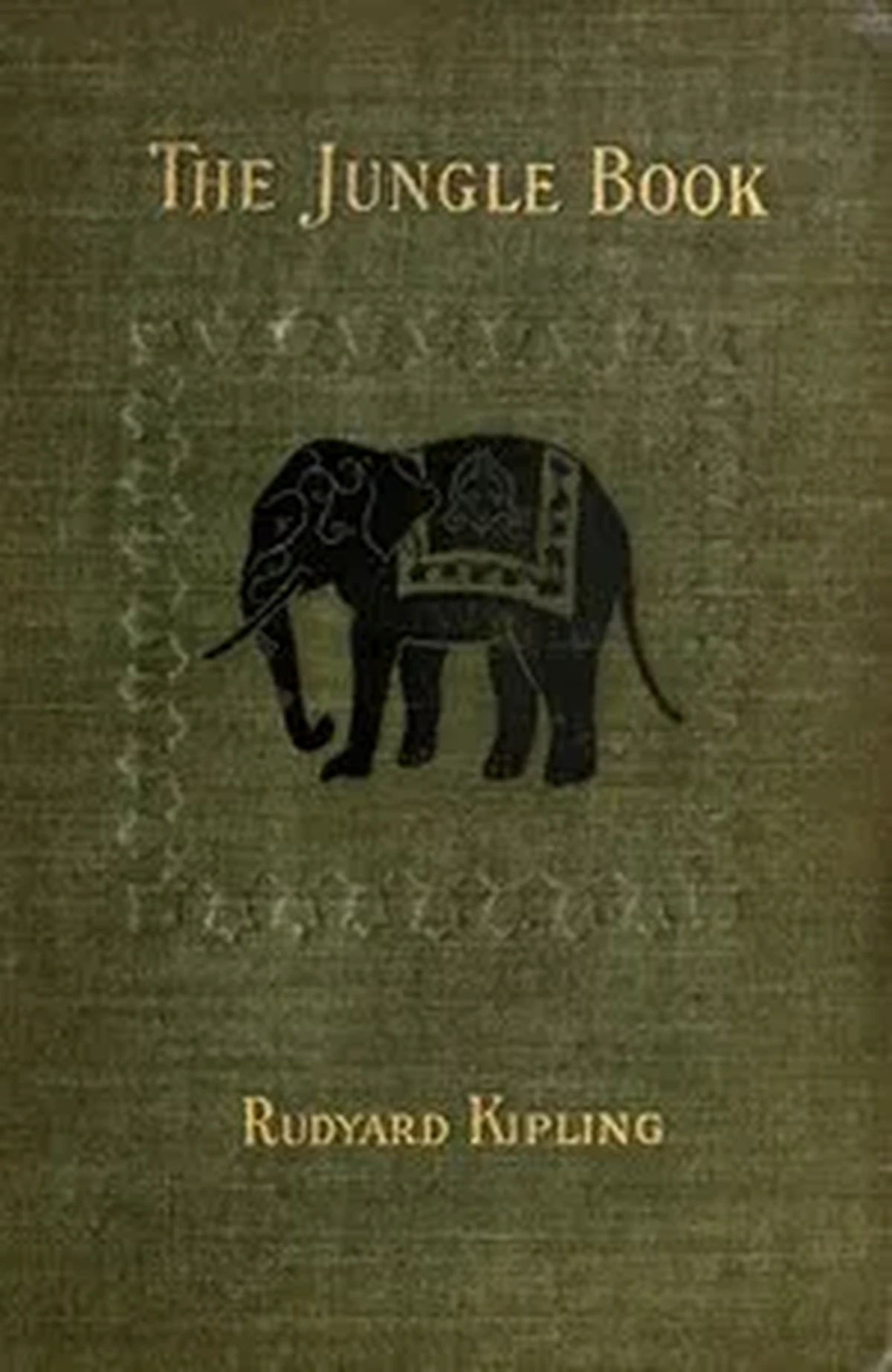
The Jungle Book
 80
80

The Jungle Book
Kipling's "The Jungle Book" presents a peculiar dichotomy. While the tales of Mowgli's upbringing among wolves are vividly rendered, offering a compelling vision of nature's dominion, the underlying social commentary can feel both prescriptive and dated. The meticulously crafted 'Law of the Jungle,' while intended to signify order, occasionally reads as an imposition of human societal structures onto the wild. A notable strength lies in the rich characterization of figures like Baloo and Bagheera, whose interactions with Mowgli lend the narrative significant depth. However, the framing of certain animal interactions, particularly concerning Shere Khan, sometimes leans towards anthropomorphic simplification rather than a true exploration of instinct.
Ultimately, the book offers a fascinating, if occasionally uneven, examination of natural law and societal formation.
📝 Description
80
Rudyard Kipling's The Jungle Book, published in 1924, presents tales of Mowgli raised by wolves.
The Jungle Book, by Rudyard Kipling, collects short stories centered on Mowgli, a human boy adopted by wolves in the Indian wilderness. Beyond Mowgli's adventures, the book features other narratives involving animals and humans, each set against the backdrop of the jungle. These stories examine the concept of natural law, portraying it not as anarchy but as a system of rules and duties that shape behavior within animal communities. Kipling's work reflects a complex understanding of social order and hierarchy, seen through the lens of the wild. The narratives touch on themes of instinct, belonging, and the relationship between humans and the natural world. Published in 1924, the book appeared during a time of growing Western interest in spiritualism and Eastern thought, influenced by Kipling's own experiences in India.
Published in 1924, The Jungle Book emerged when Western interest in spiritualism and Eastern philosophies was rising. Kipling's time in India informed his work, blending colonial themes with indigenous folklore, albeit filtered through a British perspective. The book's depiction of the 'Law of the Jungle' as a structured system, rather than mere chaos, resonates with esoteric traditions that seek order and meaning in natural phenomena and hierarchical structures. It offers a framework for understanding social order rooted in instinct and responsibility within a non-human context.
⭐ Reader Reviews
Honest opinions from readers who have explored this book.
❓ Frequently Asked Questions
What is the origin of the "Law of the Jungle" concept in Kipling's book?
The "Law of the Jungle" in Kipling's work is a fictional construct representing the complex system of rules and social order within the animal kingdom he depicts, first introduced in The Jungle Book, published in 1924.
Who are the main animal characters that influence Mowgli?
Mowgli is primarily influenced by Baloo, the wise bear who teaches him the Law of the Jungle, and Bagheera, the black panther who acts as his protector and mentor.
What does the wolf pack represent in The Jungle Book?
The wolf pack, led by Akela, represents family, community, and adherence to the Law of the Jungle. Their acceptance and eventual rejection of Mowgli highlight themes of belonging and natural order.
Is The Jungle Book based on any specific Indian folklore?
While inspired by Kipling's time in India and drawing on elements of Indian folklore and landscape, the specific narratives and the 'Law of the Jungle' are Kipling's original creations, first compiled in 1924.
What is the esoteric interpretation of Mowgli's upbringing?
Esoterically, Mowgli's upbringing can be seen as an allegory for the initiation process, learning primal laws and instincts before integrating into human society, symbolizing the journey of the soul through different states of being.
What is the significance of Shere Khan in the narrative?
Shere Khan, the tiger, represents the disruption of natural order and the threat of unchecked animosity. His conflict with Mowgli and the wolf pack underscores the importance of maintaining the Law of the Jungle.
🔮 Key Themes & Symbolism
The Law of the Jungle
Kipling's concept of the 'Law of the Jungle' is central, positing a complex, codified system of rules governing the behavior of animals. This law dictates everything from hunting practices to social hierarchies, serving as a moral and practical framework. It's not merely instinct but a learned societal structure, emphasizing communal responsibility and the balance of nature. The work explores how this law maintains order, and the consequences when it is challenged, as seen in the conflict with Shere Khan and the pack's adherence to its tenets.
Belonging and Outcast Status
The narrative deeply examines the theme of belonging, particularly through Mowgli's dual nature as a human raised by wolves. His acceptance into the wolf pack, his tutelage under Baloo and Bagheera, and his eventual confrontation with his human origins highlight the struggle for identity and place. The stories often portray characters who are outcasts or face expulsion, such as Akela the pack leader at times, illustrating the pressures of maintaining conformity within a strict societal structure like the Law of the Jungle.
Nature vs. Civilization
The Jungle Book presents a stark contrast between the wild, governed by primal laws and instincts, and the nascent hints of human civilization. Mowgli's journey represents the bridge between these two worlds. His ability to understand and work through the jungle's rules, yet remain fundamentally human, raises questions about inherent nature versus learned behavior. The work probes the idea of a natural order that exists independently of human constructs, and how one finds their place within it.
Animal Societies and Hierarchy
Kipling meticulously crafts detailed animal societies, each with its own leadership, customs, and interspecies relationships. The wolf pack, the Bandar-log (monkeys), and the individual predators like Shere Khan all operate within specific hierarchical structures. The stories illustrate the dynamics of power, alliances, and conflicts within these communities. This detailed depiction serves to underline the complexity of the natural world and the implicit social contracts that govern it, even outside human society.
💬 Memorable Quotes
Direct passages from the work, attributed to the author.
“What is the use of living if one is always afraid?”
— This question, often posed by Mowgli or attributed to characters facing danger, speaks to the courage required to live authentically, particularly when confronting the inherent threats within the natural world or societal pressures.
“Good hunting to you, and to all your people, grown and grown.”
— A formal blessing or farewell among jungle dwellers, this phrase signifies respect for the cycle of life and death, and a wish for continued sustenance and prosperity within the community.
“We hunt for food, not for pleasure.”
— This statement underscores a core tenet of the Law of the Jungle: hunting is a necessity for survival, not a sport or an act of cruelty. It differentiates primal needs from malicious intent.
“The Jungle is large and thy kin is small.”
— A cautionary reminder to Mowgli, this phrase emphasizes his vulnerability and the vastness of the dangers he faces, urging him to respect the power dynamics and inherent risks of his environment.
💡 Key Ideas
Editorial paraphrase of the work's core concepts — not direct quotes.
The Law runs down from the Moon into the dark, and up from the Sun into the light, and for those who follow it there is no hurt.
This passage articulates the divine or cosmic origin of the Law of the Jungle, suggesting it is an immutable force that governs all existence, offering protection to those who adhere to its principles.
🌙 Esoteric Significance
Tradition
While not explicitly belonging to a single esoteric lineage, The Jungle Book can be interpreted through a lens influenced by Theosophy and general animistic beliefs prevalent in the late 19th and early 20th centuries. The concept of a governing 'Law of the Jungle' echoes ideas of universal laws and cosmic order found in various spiritual traditions. The anthropomorphization of animals and their complex societal structures aligns with animistic worldviews that attribute spirit and consciousness to the natural world.
Symbolism
The wolf pack, led by Akela, symbolizes communal loyalty, adherence to law, and the extended family unit. Mowgli himself represents the initiate or the 'wild child' archetype, learning primal wisdom and working through the boundary between instinctual nature and emerging consciousness. Shere Khan, the tiger, embodies disruptive forces, ego, and the shadow aspect that challenges established order, representing the primal dangers that must be overcome for growth.
Modern Relevance
Contemporary interpretations of The Jungle Book often explore its themes through the lens of environmental ethics, post-colonial studies, and psychological archetypes. Modern animistic practitioners and eco-spiritualists may draw parallels between Kipling's depiction of natural law and their own reverence for the Earth's interconnected systems. The narrative's exploration of identity and belonging continues to resonate in discussions about social integration and the human relationship with the wild.
👥 Who Should Read This Book
['• Students of comparative folklore and mythology seeking to understand Victorian-era interpretations of non-Western narratives and their allegorical potential.', "• Readers interested in philosophical explorations of law, nature, and society, particularly those intrigued by the concept of a 'Law of the Jungle' governing primal order.", '• Individuals drawn to allegorical tales and archetypal journeys, offering insights into themes of identity, belonging, and the human relationship with the natural world.']
📜 Historical Context
First published in 1894, with a sequel in 1924, Rudyard Kipling's The Jungle Book emerged during a period of intense British imperial expansion and burgeoning interest in comparative mythology and folklore. The late Victorian and Edwardian eras saw a fascination with the 'exotic' and the perceived primal nature of colonized lands. Kipling’s own experiences in India deeply influenced his writing, though often filtered through a colonial perspective. The book gained immense popularity, contrasting with the more spiritualist and Theosophical movements gaining traction, such as those championed by Helena Blavatsky. While not directly censored, its portrayal of native cultures and the 'civilizing mission' has been subject to later critical analysis. The work's enduring appeal lies in its exploration of universal themes of law, belonging, and nature, presented through a highly accessible narrative structure.
📔 Journal Prompts
The Law of the Jungle as a framework for order: Does it apply beyond the animal kingdom?
Mowgli's dual nature: Reflect on the tension between instinctual self and societal expectations.
The symbolic role of Baloo and Bagheera in Mowgli's upbringing.
Analyze the portrayal of Shere Khan as a force disrupting natural equilibrium.
Consider the concept of 'belonging' within the wolf pack and its parallels to human social structures.
🗂️ Glossary
Law of the Jungle
A fictional code of conduct and societal rules governing the animal kingdom in Kipling's stories, emphasizing order, balance, and communal responsibility beyond mere survival.
Bandar-log
A term used by Kipling for a tribe of monkeys in The Jungle Book, often depicted as chaotic, lawless, and lacking true wisdom or social structure.
Akela
The leader of the wolf pack that adopts Mowgli. Akela embodies wisdom, justice, and adherence to the Law of the Jungle, though he faces challenges to his authority.
Shere Khan
A male Bengal tiger, driven by hatred for humans and a desire for revenge against the wolf pack. He represents a threat to the established order and Mowgli's safety.
Mowgli
The human protagonist, raised by wolves in the Indian jungle. His story explores his integration into animal society and his eventual return to the human world.
Seeonee
The specific region and wolf pack territory where Mowgli is found and raised, central to the early narratives of The Jungle Book.
Taakai
A term used by Kipling referring to the wolf pack's social unit or tribe.
🔮 Readers Also Liked
Browse all →








More by Rudyard Kipling
All books →





More Free Occult Philosophy Books
View all →