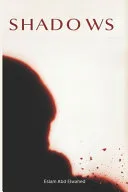
Shadows
 71
71

Shadows
Eslam Abd Elwahed's "Shadows" confronts the primal fear of being awake yet utterly immobile, a state many have only vaguely understood. The strength of this collection lies in its unvarnished presentation of "true" stories, allowing the chilling uniformity of certain experiences to emerge organically. One particularly unsettling passage describes the sensation of weight pressing down, a commonality that transcends individual narrative. However, the book's primary limitation is its unwavering commitment to the literal interpretation of these entities; a deeper exploration of the psychological underpinnings, or even contrasting folkloric interpretations beyond the 'demon' archetype, would have added critical depth. The work explores the terrifying liminal space between consciousness and unconsciousness. "Shadows" offers a raw, albeit one-sided, glimpse into a shared human nightmare.
📝 Description
71
Eslam Abd Elwahed collected 100 true horror stories about shadow people and sleep paralysis.
Shadows presents 100 firsthand accounts of encounters with entities during sleep paralysis. The collected narratives are presented as raw testimonies, detailing both commonalities and unique terrors reported by individuals. The book examines the psychological and supernatural dimensions of these phenomena, suggesting interactions with distinct, often menacing, beings.
This anthology is for readers interested in unsettling human experiences, particularly those who have encountered or are curious about sleep paralysis, shadow figures, and related folklore. It speaks to individuals seeking validation for their own disturbing experiences or those researching the intersection of psychology, folklore, and the paranormal. Readers of true horror accounts will find material here.
The fascination with sleep paralysis and associated hallucinations spans centuries. Accounts of 'night hags' or incubi tormenting sleepers appear in historical texts from the medieval period. Charles Mackay's 1841 work touched upon sleep-related disturbances. The 'shadow person' motif gained traction in online communities in the late 20th and early 21st centuries.
This collection touches upon a long-standing tradition of interpreting nocturnal disturbances as encounters with non-corporeal entities. From medieval tales of incubi and succubi to modern folklore surrounding shadow figures, human experience has grappled with perceived external agents during states of altered consciousness. The book focuses on the subjective reality of these experiences, framing them within a context that bridges psychological interpretation and the belief in supernatural or spiritual intrusions. It taps into the human tendency to find meaning in unsettling phenomena, particularly those occurring at the liminal state between wakefulness and sleep.
💡 Why Read This Book?
• Gain direct exposure to 100 firsthand accounts of shadow people and sleep paralysis, offering a unique perspective on these phenomena beyond typical psychological explanations. • Understand the recurring motifs and specific sensory details—like the feeling of pressure or the appearance of dark figures—that characterize these terrifying encounters, as documented in the collected testimonies. • Explore the raw fear and helplessness described by individuals trapped in sleep paralysis, providing a visceral understanding of this common yet often underexplored human experience, as depicted in the anthology's narratives.
⭐ Reader Reviews
Honest opinions from readers who have explored this book.
❓ Frequently Asked Questions
What is the primary focus of 'Shadows: 100 True Horror Stories'?
The book centers on true, firsthand accounts of sleep paralysis and encounters with 'shadow people' or sleep paralysis demons, presenting them as real experiences of terror.
When was 'Shadows' first published?
The book was first published on January 12, 2026.
What kind of entities are described in the book?
The book details encounters with 'shadow people' and 'sleep paralysis demons,' often described as dark, human-shaped figures that torment individuals during sleep paralysis.
Who is the author of 'Shadows'?
The author of 'Shadows' is Eslam Abd Elwahed.
What is the genre of 'Shadows'?
The genre is Esoteric, specifically focusing on true horror stories related to sleep paralysis and paranormal or supernatural encounters.
Are the stories in 'Shadows' fictional or based on real experiences?
The book explicitly presents its stories as '100 True Horror Stories,' meaning they are claimed to be based on real, personal experiences of the individuals recounting them.
🔮 Key Themes & Symbolism
The Shadow Entity
The recurring motif of the 'shadow person' is central, depicted not as a mere hallucination but as a distinct, often malevolent, entity. These beings are consistently described as dark, amorphous, or human-shaped figures that manifest during the vulnerable state of sleep paralysis. The book focuses on the perceived intelligence and intent of these entities, exploring the terror they inspire through their silent presence, oppressive weight, or perceived interaction with the paralyzed victim.
Sleep Paralysis Phenomenology
This theme studies the visceral experience of sleep paralysis itself: the terrifying awareness without the ability to move, the auditory and visual hallucinations, and the overwhelming sense of dread. The collection meticulously documents the common physical and psychological sensations reported, such as the feeling of a heavy weight on the chest, the perception of intruders, or the inability to breathe. It highlights how these shared elements form the basis for belief in external tormentors.
Fear and Helplessness
Fundamentally, the book explores the primal human emotions of fear and helplessness. Being conscious but physically immobilized creates an extreme vulnerability, amplified by the perceived presence of threatening entities. The narratives emphasize the psychological impact of these encounters, focusing on the lasting dread and the struggle to reconcile these experiences with waking reality. The helplessness is not just physical but also existential, facing an unknown force from within the sanctuary of one's own bed.
Folklore and Modern Testimony
While presenting 'true' stories, the book implicitly taps into ancient folklore surrounding night terrors and incubi/succubi. It bridges historical accounts with contemporary, digitally shared testimonies, showing how the 'shadow person' narrative has evolved and persisted. The collection serves as a modern compendium of these experiences, reflecting how the internet has facilitated the sharing and recognition of these phenomena across disparate individuals, solidifying a shared folkloric understanding.
💬 Memorable Quotes
Direct passages from the work, attributed to the author.
“I knew it was there, pressing down, but my body wouldn't obey.”
— This statement highlights the central conflict of sleep paralysis – the terrifying disconnect between a fully conscious mind and an unresponsive physical form, dominated by an external, oppressive force.
“It wasn't a dream; it felt more real than waking.”
— This interpretation directly addresses the book's premise that these are 'true' experiences, asserting their vividness and perceived reality over ordinary dreams or psychological phenomena.
“I felt its eyes on me, even though I couldn't see them.”
— This highlights the uncanny perception of being observed by the shadow entity, even when its features are indistinct or invisible, emphasizing the psychological penetration of the entity's presence.
💡 Key Ideas
Editorial paraphrase of the work's core concepts — not direct quotes.
The darkness in the corner solidified into a shape, watching me.
This quote expresses the core horror of the book: the transformation of abstract darkness into a perceived sentient presence, emphasizing the visual and psychological terror of the shadow entity.
The silence was the worst part, until I heard it breathe.
This quote plays on sensory details, contrasting the oppressive silence often associated with paralysis with the terrifying introduction of an auditory hallucination, suggesting the entity's proximity and life.
🌙 Esoteric Significance
Tradition
While not explicitly tied to a single esoteric lineage, 'Shadows' engages with themes common in Gnostic and Western Esoteric traditions concerning encounters with non-corporeal entities and the nature of consciousness. The experience of being trapped within one's own body during sleep paralysis can be interpreted through a lens of soul-flight or astral projection gone awry, or as an encounter with lower-level entities or 'archons' that prey on psychic energy, a concept explored in some occult circles.
Symbolism
The primary symbol is the 'shadow person' itself, representing the unknown, the repressed, or an external psychic parasite. Darkness symbolizes the unconscious mind, the void, or the liminal space between states of being. The paralysis symbolizes a state of spiritual or psychic impotence, a vulnerability to external influence. The bedroom, typically a place of rest and safety, becomes a battleground, symbolizing the invasion of personal sacred space by forces from beyond the veil.
Modern Relevance
Contemporary interest in lucid dreaming, astral projection, and paranormal investigation often intersects with the phenomena described in 'Shadows.' Thinkers and practitioners exploring altered states of consciousness, interdimensional beings, or shadow work within psychology and spirituality may find these accounts illustrative. The book speaks to communities focused on cryptozoology, ufology, and paranormal investigation, offering raw data for their ongoing studies into unexplained encounters.
👥 Who Should Read This Book
• Individuals who have personally experienced sleep paralysis and are seeking to understand or validate their encounters with shadow figures. • Researchers or enthusiasts of folklore, paranormal phenomena, and the psychology of fear, looking for firsthand testimonies. • Readers of horror literature interested in true, unsettling accounts that blur the lines between subjective experience and objective reality.
📜 Historical Context
The late 20th and early 21st centuries saw a burgeoning interest in paranormal experiences, fueled by the rise of the internet, which provided platforms for individuals to share personal accounts previously confined to private circles. While sleep paralysis itself has been documented for centuries, with historical parallels to incubi and succubi tormenting sleepers, the specific 'shadow person' phenomenon gained significant traction in online forums and anecdotal collections during this period. This era also saw continued debate between psychological explanations (e.g., hypnagogic hallucinations) and supernatural interpretations. While not a direct contemporary, the work carries the folkloric investigations of figures like Charles Mackay in the 19th century, who documented popular beliefs and delusions, demonstrating a long-standing human fascination with unexplained phenomena occurring during sleep. The book's publication in 2026 places it within a contemporary landscape where digital dissemination of such accounts is commonplace.
📔 Journal Prompts
The paralyzing weight and the shadow figure's presence.
Sensory details of the hallucination: sounds, sights, feelings.
The feeling of being watched by the entity.
Reconciling the reality of the experience with waking logic.
Comparing personal experiences to patterns in the collected stories.
🗂️ Glossary
Shadow People
Entities commonly described as dark, human-shaped figures perceived during sleep paralysis or other altered states of consciousness. They are often believed to be malevolent or intrusive.
Sleep Paralysis
A temporary inability to move or speak that occurs when waking up or falling asleep. It is often accompanied by hallucinations (hypnagogic or hypnopompic) and a sense of dread or pressure.
Hypnagogic Hallucinations
Vivid sensory experiences (visual, auditory, tactile) that occur as a person is falling asleep.
Hypnopompic Hallucinations
Vivid sensory experiences that occur as a person is waking up, often during sleep paralysis.
Entity
In this context, a being or consciousness perceived to exist independently of the human mind, often believed to be non-physical or supernatural.
Phenomenology
The study of structures of experience and consciousness as experienced from the first-person point of view. In this book, it refers to the detailed description of sleep paralysis experiences.
Esoteric
Relating to or accessible only by a small number of people with a specialized knowledge or interest; dealing with hidden or mysterious subjects.