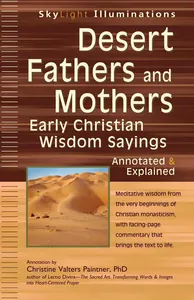
The Conferences of Desert Fathers
 79
79

The Conferences of Desert Fathers
The collection, purportedly compiled from the teachings of early Egyptian ascetics, offers stark, unvarnished wisdom. Its strength lies in the unpretentious directness of the aphorisms and the vivid (if sometimes unsettling) accounts of spiritual warfare. For instance, the repeated emphasis on the constant vigilance required against intrusive thoughts, or *logismoi*, provides a raw, almost tactical, manual for inner discipline. However, the lack of consistent attribution and the potential for later hagiographical embellishment mean that critical distance is essential. The first published edition appearing in 2015 also raises questions about its textual lineage and editorial choices. Ultimately, it serves as a potent, if historically complex, window into an extreme form of early Christian asceticism.
📝 Description
79
The Conferences of Desert Fathers compiles sayings from 4th and 5th century Egyptian monks seeking intense spiritual discipline.
This text is a collection of sayings and anecdotes attributed to early Christian monks in the Egyptian desert, known as the Desert Fathers and Mothers. These individuals, active mainly between the 4th and 5th centuries CE, pursued a life of rigorous spiritual discipline and withdrawal from worldly concerns. The book details their teachings on asceticism, prayer, humility, and the methods for overcoming spiritual temptations. It is particularly suited for students of early Christian mysticism, comparative religion, and the history of asceticism. Those interested in the practical application of spiritual principles and the lives of people committed to radical contemplation and self-denial will find it valuable. Readers looking for historical accounts of monastic origins will also discover informative content within its pages. The sayings and stories originate from a time of major change for Christianity following the Edict of Milan in 313 CE, which allowed for religious tolerance. This new acceptance led many to seek deeper spiritual commitment away from the developing institutional Church. Figures like Anthony the Great and Macarius the Great, documented here, established a model of solitary and semi-communal life that significantly shaped later monastic traditions in both Eastern and Western Christianity.
The Conferences belongs to the tradition of early Christian monasticism, a movement that sought direct experience of the divine through rigorous ascetic practice and withdrawal from society. These Desert Fathers and Mothers developed specific techniques and teachings aimed at purifying the soul and achieving spiritual stillness. Their emphasis on inner struggle, detachment from the material world, and reliance on divine aid forms a significant current within Christian mysticism, distinct from more institutional or theological approaches. This tradition later influenced various contemplative movements across different religious and philosophical spheres.
💡 Why Read This Book?
• Understand the foundational practices of Christian asceticism, as exemplified by figures like Anthony the Great, providing a historical counterpoint to later monastic rules. • Grasp the concept of *logismoi* (tempting thoughts) and the rigorous methods proposed for their overcoming, offering ancient strategies for mental discipline. • Explore the early desert milieu, a crucial period following the Edict of Milan in 313 CE, to see how radical withdrawal shaped spiritual ideals.
⭐ Reader Reviews
Honest opinions from readers who have explored this book.
❓ Frequently Asked Questions
What is the historical period most associated with the Desert Fathers?
The Desert Fathers were most active between the 4th and 5th centuries CE, a time when Christianity was transitioning from a persecuted religion to a dominant societal force in the Roman Empire.
Who was Anthony the Great and why is he significant?
Anthony the Great is considered one of the earliest and most influential Desert Fathers. His life of extreme asceticism and solitary contemplation, starting around 270 CE, set a precedent for monasticism.
What does the term 'apatheia' mean in the context of the Desert Fathers?
*Apatheia* refers to a state of inner tranquility and freedom from destructive passions and emotional disturbances, achieved through rigorous spiritual discipline and prayer.
Are the sayings in The Conferences attributed to specific individuals?
While many sayings are attributed to prominent figures like Macarius the Great or Paphnutius, the collection often anonymizes teachings, focusing on the collective wisdom of the desert community.
What role did silence play in the Desert Fathers' lives?
Silence was considered a vital tool for spiritual growth, allowing for deep prayer, self-examination, and the discernment of God's voice amidst the 'noise' of worldly concerns and internal distractions.
What is the significance of the 'Edict of Milan' in relation to the Desert Fathers?
The Edict of Milan in 313 CE granted religious tolerance, allowing individuals seeking extreme spiritual devotion to withdraw from society and establish the contemplative communities in the desert.
🔮 Key Themes & Symbolism
The Struggle Against Logismoi
A central preoccupation for the Desert Fathers was the concept of *logismoi*, often translated as 'thoughts' or 'temptations'. These were not merely stray ideas but perceived spiritual assaults aimed at derailing one's ascetic path. The texts detail various strategies for combating them, including constant prayer, vigilance, humility, and sometimes, direct confrontation. This theme highlights an intense, internal battlefield where spiritual progress is measured by one's ability to discern and neutralize these intrusive mental states, reflecting a profound engagement with psychological and spiritual warfare from the 4th century onwards.
The Practice of Apatheia
The pursuit of *apatheia*, or freedom from disturbing passions, stands as a central to the Desert Fathers' teachings. This state is not one of emotional numbness but of stable, unperturbed inner peace, achieved through rigorous self-discipline and reliance on divine grace. The texts illustrate how ascetic practices, fasting, and continuous prayer were aimed at cultivating this equanimity. It represents a deliberate reordering of the self, moving away from reactivity towards a state of profound stillness and spiritual clarity that was seen as essential for union with God.
Humility as Foundation
Humility is consistently presented as the bedrock upon which all other spiritual virtues are built. For the Desert Fathers, it was not mere meekness but a profound understanding of one's own limitations and absolute dependence on God. The anecdotes often depict elders demonstrating humility through acts of service, self-effacement, and a willingness to learn from even the most unlikely sources. This theme underscores the idea that true spiritual strength arises not from self-assertion, but from recognizing one's utter need for divine assistance, a concept vital since the early days of Christian monasticism.
The Value of Silence and Stillness
In contrast to the bustling world they left behind, the Desert Fathers highly valued silence and stillness (*hesychia*) as indispensable conditions for spiritual encounter. These were not merely the absence of noise but active states conducive to deep prayer (*theoria*) and communion with the divine. The texts suggest that in the quietude of the desert, away from worldly distractions, individuals could more readily hear the voice of God, confront their inner demons, and achieve profound self-knowledge. This emphasis on contemplative quietude reflects a core tenet of early monasticism originating in the Egyptian desert.
💬 Memorable Quotes
Direct passages from the work, attributed to the author.
“A monk asked an elder, 'What is obedience?' He replied, 'Obedience is the burial of one's own will.'”
— This aphorism expresses the radical self-renunciation central to the Desert Fathers' practice. It suggests that true obedience, particularly to God and spiritual guidance, requires a complete surrender of personal desires and ego, akin to a spiritual death and rebirth.
“If you are going to be a monk, be one in deed and not in name. Do not say, 'I am a monk,' but rather, 'I am doing the work of a monk.'”
— This highlights the emphasis on action and authentic practice over mere outward status. It differentiates genuine spiritual commitment from superficial adherence, stressing that true monasticism is defined by one's deeds and inner disposition, not just a label.
“The mind of a monk is always in his hands; he can cast it where he wills.”
— This speaks to the concept of mental discipline and the monk's perceived control over their thoughts. It implies that through diligent practice, one can direct their focus and actively choose where to place their mental and spiritual attention.
“When you have driven out one demon, three others come and take its place.”
— This vivid image illustrates the ongoing and often escalating nature of spiritual warfare. It suggests that overcoming one temptation or negative pattern does not guarantee lasting peace, but rather requires continuous vigilance and perseverance against new challenges.
“It is better to fall into temptation that you know how to bear, than into one you do not know.”
— This pragmatic piece of advice acknowledges the reality of spiritual struggle. It suggests a strategic approach to testing oneself, advising against seeking out overwhelming challenges and instead focusing on mastering those that are manageable.
🌙 Esoteric Significance
Tradition
While rooted in early Christianity, the Desert Fathers' teachings resonate with broader esoteric traditions through their emphasis on inner transformation, direct experiential knowledge of the divine, and the rigorous discipline of the mind and body. Their focus on combating internal 'demonic' forces and achieving a state of inner purity aligns with Gnostic and Hermetic ideals of purifying the soul to attain higher consciousness.
Symbolism
The desert itself serves as a potent symbol of spiritual isolation, a place stripped bare of worldly illusions where the soul can confront its true nature and God. The concept of *logismoi* represents the 'shadow' or lower psychic forces that must be mastered. Inner stillness (*hesychia*) symbolizes the unmanifest divine presence within, a space of absolute peace accessible through dedicated practice.
Modern Relevance
Contemporary mindfulness practices and contemplative prayer movements draw heavily on the techniques described by the Desert Fathers, particularly their methods for managing thoughts and cultivating presence. Psychospiritual therapists and those exploring non-dual awareness often reference their insights into the nature of the mind and the struggle against egoic patterns, seeing in their 4th-century struggles timeless challenges.
👥 Who Should Read This Book
• Students of early Christian history and mysticism seeking primary source material on asceticism and contemplative life. • Practitioners of meditation and mindfulness interested in ancient techniques for mental discipline and overcoming intrusive thoughts. • Scholars of comparative religion and philosophy examining the development of spiritual practices and ethical frameworks outside mainstream societal norms.
📜 Historical Context
The early Christian monastic movement, particularly the ascetics of the Egyptian desert, emerged in a period of profound societal change following the Edict of Milan in 313 CE. As Christianity gained official favor within the Roman Empire, many sought a more radical path of spiritual commitment away from the world. Figures like Anthony the Great, active from around 270 CE, pioneered a life of eremitical asceticism. The sayings and stories compiled in works like 'The Conferences' reflect this milieu, a stark contrast to the developing theological debates of figures like Augustine of Hippo. These desert dwellers focused on practical wisdom for combating *logismoi* (temptations) and cultivating inner stillness. Their influence was immense, shaping the Rule of Saint Benedict and the broader trajectory of Western and Eastern monasticism, despite the lack of formal scholarly engagement during their time.
📔 Journal Prompts
The practice of *apatheia* as described by the elders.
The nature of *logismoi* and strategies for their discernment.
The significance of silence in cultivating inner stillness.
Humility as the foundation for spiritual progress.
The desert as a symbol for the soul's journey.
🗂️ Glossary
Desert Fathers
Early Christian ascetics, primarily male monks, who lived in the deserts of Egypt from the 4th to 5th centuries CE, seeking a life of extreme spiritual discipline and contemplation.
Logismoi
A Greek term used by the Desert Fathers, often translated as 'thoughts' or 'temptations.' These were understood as invasive mental states or spiritual assaults that hindered prayer and spiritual progress.
Apatheia
A state of inner tranquility, freedom from disturbing passions, and emotional equanimity sought by the Desert Fathers through rigorous spiritual discipline.
Hesychia
A Greek term meaning 'stillness' or 'quietude,' referring to the contemplative state of inner peace and silence cultivated through prayer and withdrawal from worldly distractions.
Asceticism
A practice of severe self-discipline and abstention from all forms of indulgence, typically for religious or spiritual reasons, as a means of achieving spiritual enlightenment or self-mastery.
Eremitical Life
A form of monasticism characterized by solitude and withdrawal from society, practiced by hermits or anchorites, exemplified by many of the Desert Fathers.
Theoria
A Greek term for contemplation or spiritual insight, representing the highest form of prayer and direct experience of the divine, often pursued in a state of *hesychia*.