Joseph Beuys
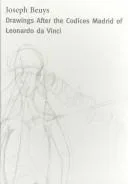
 81
81

Joseph Beuys
Joseph Beuys's artistic and theoretical output, as presented here, remains a potent force, particularly his relentless reimagining of art's function. The book's strength lies in its unvarnished presentation of Beuys's core tenets, especially the expansive notion of "social sculpture." While invaluable for its primary source material, the lack of extensive critical commentary from the 1969 edition can leave newer readers grappling with the sheer density of his ideas without immediate context. A passage discussing his "Fat Corner" installations, where the material itself becomes a metaphor for transformation and energy storage, powerfully illustrates his materialist mysticism. The work's enduring challenge is its demand for a participatory understanding of art. It is a vital document for anyone engaged with art's potential beyond the gallery.
📝 Description
81
Published in 1969, this volume presents Joseph Beuys's radical ideas on art and society.
This book directly engages with the work of artist Joseph Beuys, presenting his concepts that merged art, social activism, and spiritual practice. Originally released in 1969, it details Beuys's ideas such as 'social sculpture,' a notion that art could heal and transform society. The text serves as a primary source for understanding his career and its lasting impact.
It is relevant for artists, theorists, and philosophers interested in the connection between art and social change. Those studying post-war European art, particularly Fluxus, and alternative models of education and community will find it valuable. The book also offers insight into the origins of contemporary participatory art practices.
Beuys's work developed during a time of significant social and political change in Europe. His 'social sculpture' idea drew from thinkers like Rudolf Steiner and Anthroposophy, providing a spiritual and ecological perspective against prevailing materialist critiques. His involvement with the avant-garde movement Fluxus connected him with artists who used performance, conceptual art, and daily life as artistic methods.
Joseph Beuys's thought, as presented here, is deeply intertwined with esoteric traditions, most notably Anthroposophy, founded by Rudolf Steiner. Beuys sought to integrate spiritual and ecological principles into social and artistic structures, moving beyond purely materialist or political frameworks. His concept of 'social sculpture' views every individual as an artist capable of shaping society, a perspective that echoes the Anthroposophical emphasis on human potential and spiritual development. This book illuminates how Beuys used art as a vehicle for societal transformation, rooted in a worldview that values the spiritual dimension of human existence and the natural world.
💡 Why Read This Book?
• Gain a concrete understanding of "social sculpture," Beuys's concept of art as a force for societal transformation, directly challenging traditional definitions of artistic creation. • Explore the symbolic significance of materials like felt and fat as employed by Beuys, understanding their role in his expanded concept of art and energy exchange. • Engage with Beuys's pedagogical theories, particularly his emphasis on intuition and direct experience in learning, as articulated around the time of his teaching at the Düsseldorf Academy of Arts.
⭐ Reader Reviews
Honest opinions from readers who have explored this book.
❓ Frequently Asked Questions
When was Joseph Beuys's foundational work first published?
The seminal work by Joseph Beuys, featuring contributions from Franz-Joachim Verspohl and Ann Temkin, was first published in 1969, marking a significant moment in post-war art discourse.
What is the core concept of 'social sculpture' attributed to Joseph Beuys?
Joseph Beuys's 'social sculpture' proposes that every individual is an artist capable of shaping society through their actions and ideas, extending the definition of art beyond traditional objects.
What materials did Joseph Beuys frequently use and why?
Beuys often utilized felt and fat, materials imbued with symbolic meaning. Felt, for its insulating and protective qualities, and fat, for its transformative and energetic properties, were central to his expanded artistic practice.
How does this book connect to the Fluxus movement?
This book showcases Beuys's deep involvement with the Fluxus movement, an international avant-garde network that explored conceptual art, performance, and the integration of art into everyday life.
What esoteric traditions influenced Joseph Beuys's thinking?
Beuys's thought was notably influenced by Rudolf Steiner and Anthroposophy, evident in his spiritual cosmology, emphasis on intuition, and belief in art's healing and transformative potential for humanity.
Where can I find more information on Joseph Beuys's teaching career?
This book offers insights into Beuys's influential tenure as a professor at the Düsseldorf Academy of Arts, where he developed his theories on art education and expanded the definition of artistic practice.
🔮 Key Themes & Symbolism
Social Sculpture as Societal Art
Beuys posited "social sculpture" as a direct challenge to conventional art forms, viewing human interaction and societal structures as the primary medium for artistic intervention. This concept, developed significantly in the late 1960s, moves beyond the object to embrace the entire human community as a potential artwork. The work explores how collective action and individual creativity can enact social change, aligning with esoteric notions of collective consciousness and transformative practice.
Expanded Concept of Art and Energetics
Central to Beuys's philosophy is the "expanded concept of art," which integrates all human activities, especially intuition and creative thinking, into the artistic realm. He frequently employed materials like fat and felt, imbuing them with symbolic and energetic properties. This approach echoes alchemical ideas of transformation and the manipulation of primal energies, suggesting that art can harness and redirect vital forces for healing and renewal.
Shamanism and Spiritual Healing
Beuys drew heavily on shamanistic practices and his own biographical experiences, particularly his alleged rescue and recovery using felt and fat after a plane crash during WWII. This personal mythology infused his work with a spiritual dimension, positioning the artist as a shamanic figure capable of mediating between the material and spiritual worlds. His performances often resembled rituals, aiming to awaken dormant creative energies within the audience.
Art as Education and Intuition
Beuys fundamentally believed that art education should foster direct experience and intuition rather than rote learning. His teaching methods, particularly at the Düsseldorf Academy of Arts, aimed to empower individuals to recognize their own creative potential. This aligns with esoteric traditions that emphasize inner knowing and direct perception over dogma, encouraging a participatory relationship with knowledge and the world.
💬 Memorable Quotes
Direct passages from the work, attributed to the author.
“Everyone is an artist.”
— This famous dictum captures Beuys's democratic vision of creativity, asserting that all individuals possess the innate capacity for artistic expression and societal contribution, not just those formally recognized by the art world.
“The intention is the real energy.”
— Beuys highlights the paramount importance of the artist's intent and mental state in shaping the outcome and impact of their work, suggesting that psychic and spiritual energy are fundamental drivers of artistic creation.
“Fat is a source of energy.”
— This refers to Beuys's frequent use of fat as a material, symbolizing transformation, warmth, and latent potential. He saw it as a substance that could be molded, melted, and reformed, akin to creative energy itself.
“Felt is insulating.”
— Beuys utilized felt extensively, often referencing its insulating properties as a metaphor for protection, preservation, and the creation of a space conducive to healing or spiritual contemplation.
“The future is the sum of all actions.”
— This statement underscores Beuys's belief in agency and the wide impact of present actions on shaping future realities, aligning with philosophies that emphasize the power of collective will and individual responsibility.
🌙 Esoteric Significance
Tradition
Beuys's work is deeply rooted in Anthroposophy, the spiritual philosophy founded by Rudolf Steiner. It can also be seen as engaging with broader Hermetic principles of transformation and the artist as a creator mirroring divine creative forces. His emphasis on intuition, spiritual energy, and the interconnectedness of all things places him within a lineage that seeks to bridge the material and the spiritual, departing from purely secular or materialist artistic paradigms.
Symbolism
Key symbols in Beuys's oeuvre include fat and felt. Fat, representing a primal, transformable energy source, echoes alchemical concepts of transmutation and the potential for regeneration. Felt, often used as an insulating material, symbolizes protection, preservation, and the creation of a sacred or contemplative space, reminiscent of ritualistic coverings or sacred garments.
Modern Relevance
Contemporary artists and thinkers continue to draw inspiration from Beuys's concept of "social sculpture" in fields ranging from participatory art and community organizing to ecological activism and alternative education. His holistic approach to creativity and his belief in art's capacity for profound societal healing resonate with current movements focused on sustainability, social justice, and the integration of art into daily life.
👥 Who Should Read This Book
• Artists and activists exploring participatory and socially engaged practices, seeking theoretical frameworks for art that actively shapes communities and public life. • Students and scholars of 20th-century art history, particularly those interested in post-war European movements like Fluxus and conceptual art, who want to understand Beuys's unique position. • Individuals interested in the intersection of spirituality, philosophy, and art, especially those drawn to Anthroposophy or esoteric concepts of transformation and healing through creative means.
📜 Historical Context
Published in 1969, this volume emerges from a period of intense artistic and social ferment in post-war Europe. Joseph Beuys was a key figure in the Fluxus movement, an international network known for its experimental performances and conceptual approaches that challenged traditional art boundaries. His "social sculpture" concept offered a spiritual and ecological alternative to the prevailing Marxist critiques of capitalism influencing many intellectuals. Beuys’s work was deeply informed by Rudolf Steiner’s Anthroposophy, a spiritual philosophy that diverged significantly from the more secular or politically radical art movements of the era. While Beuys gained recognition, his unconventional methods and esoteric leanings sometimes met with resistance; for instance, his controversial actions and teaching at the Düsseldorf Academy of Arts eventually led to his dismissal in 1972, a evidence of the disruptive nature of his vision.
📔 Journal Prompts
The energy of fat and felt: how can these materials be understood as conduits for transformation?
Reflecting on 'social sculpture': what societal structures can be reimagined as art?
Beuys's expanded concept of art: identify a non-traditional activity you perform that could be considered artistic.
The artist as shaman: consider the role of intuition and ritual in contemporary creative processes.
Exploring the intention: how does the underlying intention shape the perceived energy of an artwork?
🗂️ Glossary
Social Sculpture
Beuys's concept that extends the definition of art to include all human activities and social structures, positing that society itself can be shaped artistically.
Expanded Concept of Art
Beuys's idea that art encompasses all human creative potential, including thought, intuition, and social action, moving beyond traditional aesthetic objects.
Anthroposophy
A spiritual philosophy founded by Rudolf Steiner, emphasizing the development of human spiritual capacities through intellectual and imaginative means.
Fluxus
An international avant-garde artistic movement of the 1960s and 1970s characterized by experimental, multidisciplinary, and often humorous approaches to art-making.
Fat (as material)
A material frequently used by Beuys, symbolizing transformation, energy storage, and potential for change and healing within his artistic practice.
Felt (as material)
Another key material for Beuys, chosen for its insulating and protective qualities, often representing warmth, preservation, and a boundary for spiritual or energetic processes.
Intuition
For Beuys, a fundamental human faculty crucial for creativity and understanding, prioritized over purely rational or academic knowledge in artistic and educational contexts.
🔮 Readers Also Liked
Browse all →









More by Joseph Beuys, Franz-Joachim Verspohl, Ann Temkin
All books →
More Free Occult Philosophy Books
View all →