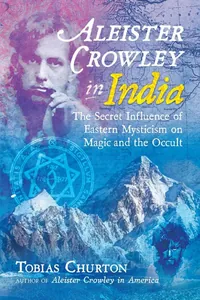
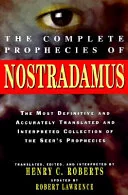
The Complete Prophecies of Nostradamus
 74
74

The Complete Prophecies of Nostradamus
Robert Lawrence's "The Complete Prophecies of Nostradamus" attempts a monumental task: to deliver an unadulterated glimpse into the seer's visions. The presentation of the medieval French alongside a verbatim English translation is commendable, offering a level of textual fidelity rarely seen in popular editions. Lawrence's own annotations, while not always explicitly detailed in the blurb, are crucial for bridging the gap between the archaic text and contemporary understanding. However, the sheer density of the quatrains, even with translation, can be overwhelming. The work's strength lies in its scholarly ambition; its limitation is the inherent difficulty in Nostradamus's vision, which remains profoundly obscure. A passage referencing the 'King of Terror' (often linked to Napoleon) exemplifies the challenge of precise prediction versus post-hoc rationalization. This edition serves best as a reference for dedicated researchers rather than casual dabblers.
📝 Description
74
The 1999 edition of Nostradamus's prophecies offers original French alongside English translations.
This 1999 edition, edited by Robert Lawrence, presents the complete quatrains of Michael Nostradamus. It includes the original medieval French text side-by-side with a literal English translation for each four-line verse. This approach aims to offer a direct encounter with Nostradamus's work, bypassing layers of interpretation common in other editions. The book is for readers who want to engage with the source material directly, examining the verses without relying on secondary analyses. It is particularly suited for serious students of prophecy, historians of esoteric thought, and anyone interested in the original language of the seer's pronouncements. The editor's work focuses on clarity and fidelity to the original text, making it a valuable resource for those who prefer primary source engagement.
The quatrains themselves form the core of the book. These are short, four-line poems written in an often cryptic style. Nostradamus employed allegory, astrological symbols, and historical references within these verses. The editor's role is to facilitate understanding by presenting the French text and its translation, allowing readers to analyze the ambiguities and potential meanings themselves. The concept of interpretation is thus central to engaging with this work, as the verses are understood to require significant decoding to connect them to historical events or future possibilities.
Nostradamus's prophecies represent a significant current within Western esoteric traditions, particularly in the field of divination and prognostication. His quatrains, first published in 1555, became a touchstone for those seeking to understand hidden patterns in history and anticipate future events. The practice of interpreting such cryptic verses, often using astrological and symbolic language, connects to a long history of seer traditions. This book's focus on the original text and literal translation situates it within a scholarly approach to these esoteric materials, aiming for authenticity and direct engagement with the prophetic source.
💡 Why Read This Book?
• Gain direct access to the original medieval French text of Nostradamus's quatrains, side-by-side with a verbatim English translation, allowing for critical comparison not possible with abridged or paraphrased versions. • Understand the editorial methodology employed by Robert Lawrence, examining how he connects Nostradamus's mystic visions to documented historical events and future possibilities. • Explore the structure and thematic consistency within the quatrains, moving beyond sensationalized predictions to analyze the seer's unique literary and prophetic style.
⭐ Reader Reviews
Honest opinions from readers who have explored this book.
❓ Frequently Asked Questions
What is the primary benefit of this edition of Nostradamus's prophecies?
This edition's main advantage is its presentation of the original medieval French text alongside a verbatim English translation, offering a level of textual authenticity and scholarly rigor often missing in other versions.
Who was Nostradamus and when did he live?
Nostradamus, born Michel de Nostredame, was a French astrologer, physician, and reputed seer who lived from 1503 to 1566. He is best known for his book 'Les Prophéties'.
What makes Robert Lawrence's edition definitive?
Robert Lawrence's edition is presented as definitive due to its claim of being unabridged and providing both the original French and a direct English translation, a standard not consistently maintained since 1672.
Are the prophecies in this book easy to understand?
Nostradamus's prophecies are notoriously cryptic and allegorical, written in a complex style. While this edition provides translations, interpretation remains a significant part of engaging with the text.
Can these prophecies be used for modern predictions?
Many believe the prophecies can be applied to modern events, though their symbolic and often ambiguous nature means interpretations vary widely. This edition provides the source material for such analysis.
What historical events have been linked to Nostradamus's prophecies?
Throughout history, events such as the Great Fire of London in 1666, the rise of Napoleon, and the French Revolution have been speculatively linked to verses within Nostradamus's prophecies.
🔮 Key Themes & Symbolism
The Art of Cryptic Verse
The quatrains themselves are the central focus, each a four-line poem designed for maximum ambiguity and symbolic resonance. Nostradamus employed a mix of archaic French, astrological terms, and oblique historical references, creating verses that resist straightforward interpretation. This edition emphasizes the challenge of deciphering these cryptic verses, presenting them in their original form to allow readers to engage directly with the seer's enigmatic language and the layers of meaning embedded within each stanza.
Prophecy and Historical Correlation
A core theme is the perceived correlation between Nostradamus's visions and actual historical events. The editor, Robert Lawrence, highlights this by attempting to link specific quatrains to occurrences ranging from major political shifts to natural disasters. This approach invites readers to consider the nature of precognition and the possibility of foreseeing future calamities or societal transformations through symbolic representation.
Textual Authenticity and Translation
This edition prioritizes textual fidelity, presenting the medieval French original alongside a verbatim English translation. This focus on authenticity is crucial for scholars and dedicated practitioners who wish to avoid the distortions and embellishments that have accumulated in less rigorous editions over centuries. The challenge lies in the linguistic and cultural gulf between the 16th century and the present day, making the translation process itself a significant interpretive act.
The Seer's Visionary State
Central to understanding Nostradamus is the concept of his visionary state. The prophecies are presented not as logical deductions but as the product of mystic visions. This theme explores the nature of such altered states of consciousness and how they might yield insights into temporal events. The book encourages contemplation of the seer's mind and the mechanisms by which he believed he received these far-reaching predictions.
💬 Memorable Quotes
Direct passages from the work, attributed to the author.
“The original French text is presented alongside the English translation.”
— This highlights the editorial commitment to textual accuracy in this edition, allowing readers to compare the archaic source material directly with its modern rendering, a crucial step for serious study of the prophecies.
“Visions are related to actual and future events.”
— This interpretation points to the core purpose of the book: to examine how Nostradamus's purported mystic visions are believed to correspond with both documented history and potential future occurrences.
“Unlocking the predictions within each verse.”
— This signifies the active role the reader, guided by the editor's work, must take in deciphering the complex layers of meaning within each quatrain to understand its predictive content.
“The definitive edition since 1672.”
— This claim emphasizes the perceived rarity and importance of this particular publication, suggesting it offers a level of completeness and accuracy that has been absent from other collections for over three centuries.
💡 Key Ideas
Editorial paraphrase of the work's core concepts — not direct quotes.
The verses are cryptic, a mix of allegory and future prediction.
This paraphrased concept reflects the inherent difficulty in understanding Nostradamus's quatrains, which are not straightforward historical accounts but symbolic representations requiring deep analysis and interpretation to connect with specific events.
🌙 Esoteric Significance
Tradition
Nostradamus's work is situated within the Western esoteric tradition, drawing heavily on Renaissance Neoplatonism, Hermeticism, and astrological lore. His method of prophecy, purportedly derived from divine inspiration and celestial observation, aligns with traditions that sought hidden knowledge through symbolic systems. While not strictly Kabbalistic or Gnostic, his prophetic pronouncements tap into a lineage of seers and mystics who believed in accessing a divine or cosmic blueprint of time and events.
Symbolism
Key symbols in Nostradamus's work include animals (like the lion or eagle, often representing rulers or nations), celestial bodies (sun, moon, stars, representing temporal periods or divine influence), and geographical references (often veiled, such as 'the great river' for the Rhine or Rhône). These symbols function as a coded language, inviting interpretation that links them to specific historical figures, conflicts, or geographical locations, thereby imbuing the quatrains with layers of predictive meaning.
Modern Relevance
Contemporary occultists, futurists, and conspiracy theorists frequently reference Nostradamus. His prophecies are often invoked in discussions of global crises, political assassinations, and major societal shifts. Thinkers exploring synchronicity, archetypal patterns, and the collective unconscious sometimes draw parallels with Nostradamus's symbolic predictions. The enduring appeal lies in the quatrains' adaptability to new events, serving as a Rorschach test for anxieties and hopes about the future.
👥 Who Should Read This Book
• Students of historical prophecy and divination seeking to engage with primary source material, benefiting from the original French text and direct translation. • Researchers in esoteric studies or comparative religion interested in the historical impact and textual evolution of prophetic literature, particularly in the Western tradition. • Enthusiasts of historical cryptography and symbolic language who enjoy deciphering complex, multi-layered texts and exploring potential connections to world events.
📜 Historical Context
Nostradamus's "Les Prophéties" first appeared in 1555, amidst a period of significant religious and political upheaval in Europe. The Reformation was gaining momentum, and anxieties about the future, pestilence, and war were widespread. His work, composed in quatrains of often obscure and allegorical language, quickly gained notoriety, attracting both fervent believers and severe critics. By the late 17th century, various editions had circulated, but many were abridged or heavily altered. The assertion that this 1999 edition is the most complete since 1672 points to a sustained effort to reclaim a more authentic textual lineage, contrasting with the more popular, interpretive versions that became common. The work’s reception has consistently been polarized, with some viewing it as genuine prophecy and others as clever wordplay or coincidence. Contemporaries like the astrologer Louis Lavater engaged with such prophetic texts, reflecting a broader interest in divination and the occult within Renaissance and post-Renaissance intellectual circles.
📔 Journal Prompts
The King of Terror's emergence: Analyze the quatrain's imagery and your interpretation of its historical or future application.
Nostradamus's use of animal symbolism: How do specific creatures represent entities or events in the prophecies?
The editor's connection of visions to events: Evaluate the strength of evidence presented for one specific correlation.
The challenge of translating archaic French prophecy: Reflect on how linguistic shifts might alter meaning.
The seer's method: Consider the nature of the 'mystic visions' described and their source.
🗂️ Glossary
Quatrain
A stanza of four lines, especially one having a rhyme scheme. In this context, it refers to the four-line verses composed by Nostradamus to record his prophecies.
Medieval French
The form of the French language spoken and written from roughly the 9th to the 14th century. Nostradamus wrote in a later form, but it retains archaic elements necessitating careful translation.
Verbatim Translation
A translation that translates each word or phrase literally, aiming for the closest possible rendering of the original text's meaning and structure, as opposed to a more interpretive paraphrase.
Esoteric
Intended for or likely to be understood by only a small number of people with a specialized knowledge or interest. In this context, referring to mystical, occult, or hidden knowledge.
Seer
A person who is believed to have supernatural insight into the future or into hidden things. Nostradamus is commonly referred to as a seer.
Allegory
The expression of ideas and feelings through the use of symbols. Nostradamus's prophecies are often described as allegorical, using symbolic language to represent real events or concepts.
Unabridged
Not shortened or simplified; complete. In this context, referring to an edition that contains the full text of Nostradamus's prophecies without omissions.
This book appears in 1 collection
🔮 Readers Also Liked
Browse all →








From the “Nostradamus” Collection
View all →




More Free Occult Philosophy Books
View all →