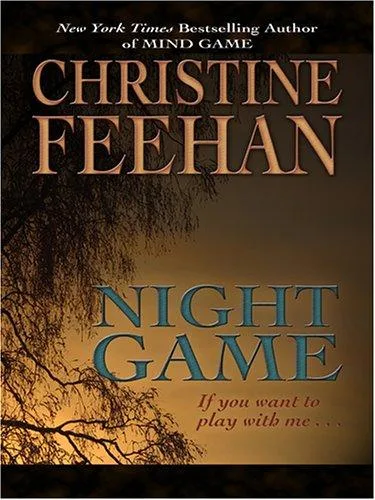
Night game
 78
78

Night game
Christine Feehan’s "Night Game" (2005) positions itself within the burgeoning paranormal romance landscape of the early 2000s, offering a tale of psychic powers and fated connections. The strength of the novel lies in Feehan's consistent ability to build palpable tension between her protagonists, a hallmark of her writing. The psychic element, while central, occasionally feels more like a plot device than a deeply explored facet of character, particularly when its intricacies are glossed over for narrative expediency. A particularly striking aspect is the depiction of the "shadowed" individuals, whose psychic resonance creates both connection and peril, a concept that could have been further elaborated. While it fulfills the genre’s promise of intense romance and danger, its exploration of the esoteric underpinnings remains somewhat superficial. "Night Game" serves its intended audience well, delivering a potent blend of romance and supernatural intrigue.
📝 Description
78
Christine Feehan's 2005 novel "Night Game" examines psychic abilities and intense romantic bonds.
Published in 2005, "Night Game" centers on characters with paranormal abilities, particularly telepathy and other mind-based powers. These abilities are not simply gifts but integral, and often burdensome, aspects of their identities. The narrative follows the development of powerful emotional connections, frequently forged under pressure. These relationships often involve characters drawn together by an irresistible force, a concept akin to destined mates or soul bonds, where they find strength and protection in each other.
The novel appeals to readers interested in speculative fiction that combines romance with darker, more intense themes. Those who appreciate characters with unique, often hidden, talents that they must learn to control while confronting personal and external conflicts will find "Night Game" a fitting choice. It is especially suited for individuals who favor character-driven stories with a strong emotional core set against a supernatural backdrop.
Feehan's work emerged during a significant growth period for paranormal romance. The genre expanded rapidly in the early 2000s with stories featuring supernatural beings in romantic relationships. "Night Game" contributes to this trend by focusing on psychic abilities and the inherent dangers associated with them, aligning with contemporary explorations of the genre.
Within the broader tradition of supernatural and occult fiction, "Night Game" specifically engages with tropes common in paranormal romance. This subgenre often explores the intersection of romantic relationships with supernatural powers, such as telepathy and other psychic gifts. The concept of soul bonds or destined mates, where individuals are inexplicably drawn together, is a recurring theme that taps into ideas of fate and predetermined connection. Feehan's focus on these elements places the novel within a lineage of stories that examine extraordinary human capacities and their impact on intimate relationships, often against a backdrop of danger and conflict.
💡 Why Read This Book?
• Gain insight into the mechanics of psychic resonance and its impact on relationships, as explored through the characters' telepathic connections and the specific challenges they face. • Experience the trope of the fated mate in a high-stakes paranormal setting, understanding how destiny and inherent abilities drive the central romance. • Appreciate Feehan's established narrative style in crafting intense romantic tension within a supernatural framework, as seen in her 2005 publication.
⭐ Reader Reviews
Honest opinions from readers who have explored this book.
❓ Frequently Asked Questions
What is the primary psychic ability explored in Christine Feehan's "Night Game"?
The primary psychic ability explored in "Night Game" is telepathy, allowing characters to communicate mentally and sense each other's thoughts and emotions. This is a recurring element in Feehan's work since its 2005 publication.
Are the characters in "Night Game" connected by destiny?
Yes, the characters are often depicted as being connected by a form of destiny or a fated bond, a common theme in paranormal romance that Feehan utilizes in "Night Game".
What kind of threats do the characters face in "Night Game"?
The characters face threats stemming from their psychic abilities, often involving individuals who seek to exploit or control these powers, as well as dangers inherent to their intense romantic connections.
When was "Night Game" first published?
"Night Game" by Christine Feehan was first published in 2005, contributing to the surge in paranormal romance popularity during that era.
Does "Night Game" feature supernatural creatures like vampires or werewolves?
While "Night Game" focuses on characters with psychic abilities, it is part of a broader paranormal romance genre that often includes various supernatural beings, though its core emphasis remains on psychic powers.
Is "Night Game" part of a series?
Yes, "Night Game" is part of Christine Feehan's broader universe, often connected to her other series where psychic abilities and intense romantic relationships are central themes.
🔮 Key Themes & Symbolism
Psychic Resonance and Control
The narrative deeply explores the nature of psychic abilities, particularly telepathy, as both a source of connection and a dangerous vulnerability. Characters grapple with controlling these powers, which can be overwhelming and attract unwanted attention. The work illustrates how these abilities shape identity and relationships, often leading to intense, almost involuntary, bonds between individuals who share or can perceive each other's thoughts. The inherent conflict lies in harnessing these powers for protection versus succumbing to their potentially destructive influence.
Fated Mates and Destined Bonds
A central theme is the concept of fated mates, where individuals are drawn together by an undeniable, often supernatural, force. This bond transcends mere attraction, suggesting a preordained connection that provides strength and purpose. In "Night Game," this trope is amplified by the characters' psychic capabilities, which can facilitate or complicate the recognition of their destined partners. The narrative examines the intensity and immutability of these connections, portraying them as a crucial element for survival and fulfillment against external adversions.
The Shadow of Danger
The presence of danger is a constant undercurrent, often directly linked to the characters' unique abilities. Individuals with psychic powers are frequently targets for those seeking to exploit or control them, creating a pervasive sense of peril. This external threat forces characters to rely on each other, strengthening their bonds and pushing them to master their abilities. The narrative uses this element of danger to heighten the romantic tension and underscore the stakes involved in the characters' relationships and their pursuit of safety.
Identity and Belonging
The novel probes the struggle for identity among individuals with extraordinary gifts. Often ostracized or misunderstood, these characters seek a sense of belonging and acceptance. Their psychic powers can isolate them, but also lead them to find others like themselves, forming a unique community or a profound partnership. The journey in "Night Game" involves reconciling one's innate abilities with personal desires and societal expectations, ultimately finding validation and strength in embracing who they are, especially when united with a destined partner.
💬 Memorable Quotes
Direct passages from the work, attributed to the author.
“Their minds met, a silent, overwhelming conversation.”
— This interpretation captures the essence of telepathic connection in the book. It emphasizes the non-verbal, intense nature of psychic communication, suggesting an immediate and profound understanding that bypasses spoken language.
“He felt her fear, a cold wave that mirrored his own.”
— This highlights the empathic aspect of psychic abilities, showing how characters can directly experience each other's emotions. It underscores the vulnerability and intimacy created when one's emotional state is involuntarily shared.
“Some connections were forged in fire, others in silence.”
— This phrase suggests that relationships, particularly those of a fated or psychic nature, can form through various intense experiences. It implies that the bond in "Night Game" is deep and possibly predestined, forged through shared trials and a unique understanding.
“She was his anchor in the storm of his own mind.”
— This interpretation speaks to the role of a fated partner in stabilizing someone with powerful, potentially chaotic, psychic abilities. It illustrates how love and connection can provide a crucial grounding force.
💡 Key Ideas
Editorial paraphrase of the work's core concepts — not direct quotes.
The danger wasn't just in the power itself, but in who might discover it.
This paraphrased concept highlights the core conflict of the novel: the inherent risk associated with possessing psychic abilities. It suggests that the true threat often comes not from the power's nature, but from external forces eager to exploit or eliminate those who wield it.
🌙 Esoteric Significance
Tradition
While not explicitly tied to a single esoteric tradition, "Night Game" draws heavily from concepts prevalent in New Age and modern occult thought, particularly regarding psychic abilities. It aligns with the Theosophical emphasis on latent human potential and spiritual evolution through developing inner faculties. The notion of telepathy and empathic connection echoes explorations found in various spiritualist movements and parapsychology research that gained traction in the late 20th century, suggesting a universal consciousness accessible through focused mental discipline.
Symbolism
Telepathy functions as a primary symbol, representing direct, unmediated connection and understanding that transcends physical limitations. The concept of a "fated mate" or soul bond symbolizes ultimate union and destiny, suggesting that certain individuals are cosmically aligned for mutual support and growth. The "shadowed" nature of characters or their abilities can symbolize the hidden aspects of the psyche or the inherent dangers that accompany spiritual or psychic development, representing the necessary confrontation with one's darker potentials.
Modern Relevance
Contemporary interest in "Night Game" reflects a sustained fascination with psychic phenomena and romantic destiny in speculative fiction. Modern readers continue to explore themes of heightened awareness and connection, particularly in online communities dedicated to paranormal romance and discussions of latent psychic abilities. The work speaks to individuals interested in exploring the boundaries of human consciousness and the potential for profound interpersonal bonds that defy conventional explanation, aligning with current interests in mindfulness and energetic connections.
👥 Who Should Read This Book
• Readers fascinated by the exploration of telepathy and other psychic abilities as central to character development and plot. • Fans of paranormal romance seeking intense, fated-mate relationships set against a backdrop of supernatural danger and intrigue. • Individuals interested in speculative fiction that examines themes of destiny, control, and the profound connections that can form between individuals with extraordinary gifts.
📜 Historical Context
Christine Feehan’s "Night Game," released in 2005, arrived during a golden age for paranormal romance. This period saw a dramatic surge in the genre's popularity, fueled by authors like Laurell K. Hamilton, whose Anita Blake series had already established a significant readership for dark fantasy with romantic elements, and Charlaine Harris, whose Southern Vampire Mysteries began gaining traction. Feehan's contribution sits within this trend, focusing on psychic abilities rather than traditional vampires or werewolves, though often within similar narrative structures of intense romantic bonds and inherent danger. The early 2000s were characterized by a growing appetite for speculative fiction that explored supernatural themes in intimate, character-driven ways. "Night Game" tapped into this market, offering readers the allure of extraordinary powers and fated connections, aligning with a broader cultural fascination with the mystical and the paranormal that permeated popular media.
📔 Journal Prompts
The silent conversation between psychic minds.
Manifestations of fated connections in relationships.
Balancing internal power with external threats.
The discovery and control of latent abilities.
Finding belonging when possessing unique gifts.
🗂️ Glossary
Telepathy
The supposed communication of thoughts or ideas by means of direct mental contact, a primary psychic ability featured in the novel.
Psychic Abilities
Extraordinary mental capacities, such as telepathy, empathy, or precognition, possessed by characters in the book that influence their lives and relationships.
Fated Mate
A concept where two individuals are destined to be together, often through a supernatural or cosmic connection, providing mutual support and intense attraction.
Resonance
In the context of the book, this refers to the sympathetic vibration or connection between individuals, particularly those with psychic links.
Shadowed
A term that may refer to individuals or aspects of themselves that are hidden, dangerous, or possess unique, often dark, psychic characteristics.
Paranormal Romance
A genre blending romantic elements with supernatural or fantasy themes, often featuring characters with extraordinary abilities or supernatural beings.
Destiny
The predetermined course of events, often seen as an inescapable force guiding the characters' lives and relationships within the narrative.
🔮 Readers Also Liked
Browse all →








More by Christine Feehan
All books →





More Free Occult Philosophy Books
View all →