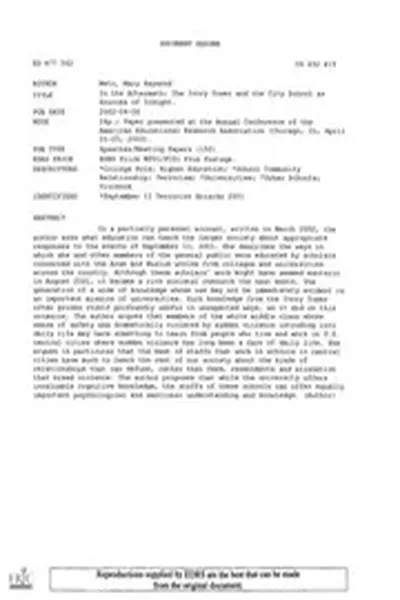
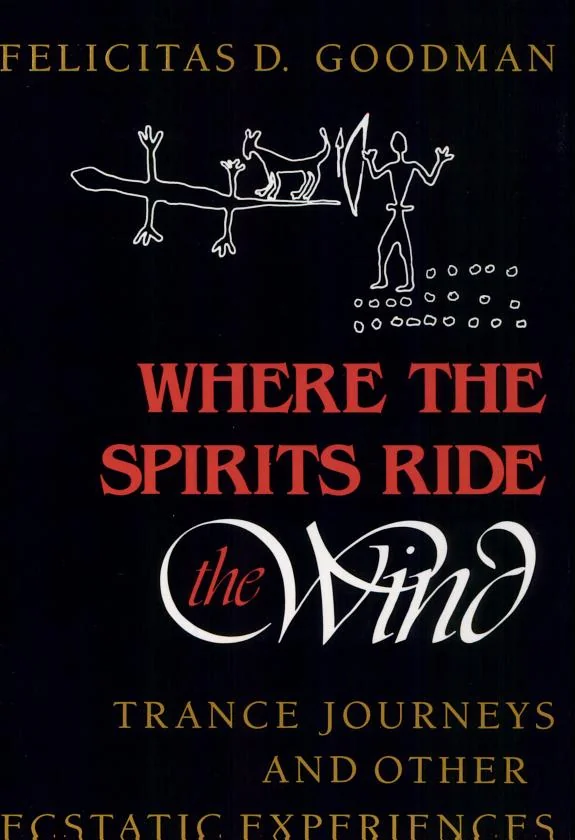
Where the Spirits Ride the Wind
 71
71

Where the Spirits Ride the Wind
Felicitas D. Goodman’s "Where the Spirits Ride the Wind" offers a compelling, if at times methodologically dense, exploration into the empirical study of ecstatic states. Her central thesis—that specific physical postures can reliably induce visionary experiences mirroring ancient myths—is powerfully presented. The meticulous documentation of thirty such postures, which she terms "psychological archaeology," provides a tangible framework for understanding how subjective states can connect with collective mythic patterns. A particular strength is the cross-cultural documentation of these experiences, moving beyond purely Western archetypes. However, the book’s academic tone, while rigorous, can occasionally obscure the profound experiential dimensions it seeks to illuminate. The detailed descriptions of experimental setups and statistical analysis, while crucial for its scientific premise, might alienate readers seeking a more directly experiential guide. Goodman’s analysis of how these visions manifest ancient myths, such as those found in Western folklore and non-Western religious traditions, remains a significant contribution to the study of religious experience. It’s a work that demands careful reading but rewards with a unique, empirically-grounded perspective on the sacred.
📝 Description
71
Felicitas D. Goodman published 'Where the Spirits Ride the Wind' in 1990, detailing empirical research into altered states.
Felicitas D. Goodman's 1990 book, 'Where the Spirits Ride the Wind,' presents an empirical framework for investigating altered states of consciousness and their link to spiritual phenomena. Goodman, a researcher in the field, describes her experimental methods, which involve specific bodily postures designed to induce visionary states. She posits that these states are not purely individual psychological occurrences but often reflect ancient archetypal imagery found in various global mythologies and religious traditions. The book outlines thirty distinct postures that Goodman believes facilitate what she terms 'psychological archaeology,' enabling the uncovering of collective unconscious content. This work is for academics and practitioners interested in the phenomenology of religious experience and altered states. It will interest those in anthropology, religious studies, psychology of religion, and comparative mythology who aim to grasp the cross-cultural expressions of visionary experiences. Individuals studying trance states, shamanism, or the empirical examination of ecstatic traditions will find Goodman's methodical approach particularly useful. It also speaks to anyone curious about the possibility of reproducible, empirically studied altered states that connect with ancestral mythic patterns.
Published in 1990, Goodman's research emerged during a time of renewed academic interest in altered states, building upon earlier studies of psychedelics and transpersonal psychology. Her work connected with existing ethnographic research on ecstatic religion and shamanism, but it stood apart by focusing on clearly defined, repeatable physical postures as triggers for these states. This offered an alternative to methods relying solely on pharmacology or spontaneous occurrences. Her research engaged with scholarly discussions about universal patterns in religious experience.
💡 Why Read This Book?
• You will learn a method for studying altered states via the "thirty postures" documented in the book, offering a practical, empirical route to exploring visionary experiences distinct from purely theoretical or spontaneous approaches. • You will discover how "psychological archaeology," as described by Goodman, allows for the investigation of ancient myths and archetypes within altered consciousness, providing a framework to connect personal visions with collective cultural heritage. • You will gain insight into the concept of "spirit-conductive" states, understanding Goodman's argument that these experiences are not merely personal but can be manifestations of universal mythic patterns, supported by her research conducted from the 1970s onwards.
⭐ Reader Reviews
Honest opinions from readers who have explored this book.
❓ Frequently Asked Questions
What is "psychological archaeology" as defined by Felicitas D. Goodman?
Psychological archaeology is Goodman's term for a method of studying altered conscious states. By adopting specific postures, individuals can reportedly access and analyze deep layers of mythic and archetypal imagery, akin to excavating historical or psychological strata.
How many postures did Goodman and her coworkers discover for inducing these states?
Goodman and her research team identified and documented thirty specific postures. These postures were found to be effective in inducing "spirit-conductive" altered states, facilitating visionary experiences for study.
What kind of experiences do these altered states facilitate?
The altered states facilitated by the postures are described as "visionary." These experiences are not always personal but often manifest as representations of ancient myths from Western folklore and various non-Western religious traditions.
What is the significance of "spirit-conductive" states?
Spirit-conductive states, according to Goodman, are altered conscious states that allow for a connection to a realm of experience often described in mythological and religious terms. They are seen as vehicles for accessing transpersonal content.
When was "Where the Spirits Ride the Wind" first published?
The original publication date for Felicitas D. Goodman's "Where the Spirits Ride the Wind" was August 22, 1990. This marked the culmination of years of her research into altered states and their connection to myth.
Did Goodman's research involve others?
Yes, Goodman conducted her research and discovered the thirty postures in collaboration with her coworkers. This collaborative effort was essential for validating and refining the experimental methodology and the observations made.
🔮 Key Themes & Symbolism
Psychological Archaeology
This concept, central to Goodman's work, proposes that specific physical postures can induce altered states of consciousness that allow access to deeply buried mythic and archetypal content. It frames these trance states as a means to "excavate" the collective unconscious, uncovering patterns and narratives that have shaped human cultures for millennia. The method provides an empirical framework for studying the origins and manifestations of these profound symbolic experiences, moving beyond mere subjective interpretation.
Spirit-Conductive States
Goodman posits that certain altered conscious states are "spirit-conductive," acting as conduits for experiences that transcend the individual psyche. These states facilitate encounters with imagery and narratives that resonate with ancient myths and religious traditions globally. The implication is that these experiences are not solely personal psychological constructs but can be manifestations of a deeper, shared spiritual or archetypal reality accessible through disciplined practice.
The Thirty Postures
The practical core of Goodman's research lies in the identification of thirty distinct physical postures. These are not arbitrary poses but carefully developed techniques designed to reliably induce specific visionary states. Their significance lies in providing a reproducible methodology for empirical research into altered consciousness, allowing for consistent observation and analysis of the resulting psychological and symbolic phenomena across different individuals and contexts.
Mythic Manifestations
A key finding in Goodman's research is that the visions experienced in spirit-conductive states frequently manifest as representations of ancient myths. This suggests that these archetypal stories are not merely historical artifacts but remain potent, active forces within the human psyche. The book explores how these manifestations connect individuals to the foundational narratives of Western folklore and diverse non-Western religious traditions, highlighting a shared substratum of human experience.
💬 Memorable Quotes
Direct passages from the work, attributed to the author.
“Thirty postures made possible what she terms psychological archaeology.”
— This concisely captures Goodman's innovative methodological contribution: a set of specific physical stances that unlock the study of deep psychological and mythic material, akin to an archaeologist uncovering ancient strata.
“Their visionary experiences were not merely personal visions but in many cases were manifestations of some of the most ancient myths.”
— This highlights the core argument that trance-induced visions often tap into universal, ancient mythic patterns, suggesting a shared psychic heritage rather than purely individual psychological events.
“The author discovered a method by which spirit-conductive altered conscious states can be studied.”
— This emphasizes Goodman's empirical focus, presenting her work as a systematic investigation into altered states, particularly those that seem to facilitate a connection to spiritual or mythic dimensions.
“Goodman and her coworkers discovered thirty postures.”
— This is a factual anchor, pointing to the collaborative and experimental nature of Goodman's research in developing the specific physical techniques that form the basis of her findings.
💡 Key Ideas
Editorial paraphrase of the work's core concepts — not direct quotes.
Individuals during these trances we...
(Paraphrased based on original blurb fragment) Goodman observed that individuals entering these trance states through specific postures often reported experiences that aligned with ancient mythological narratives.
🌙 Esoteric Significance
Tradition
Goodman's work bridges empirical psychology and esoteric traditions, particularly those focused on ecstatic religion and altered states. While not strictly adhering to a specific lineage like Hermeticism or Gnosticism, her research method for accessing visionary states through physical postures echoes practices found in shamanism and certain mystical traditions that emphasize body-mind integration for spiritual attainment.
Symbolism
The "thirty postures" themselves function as a symbolic language of the body, designed to unlock specific states of consciousness. The "manifestations" of ancient myths within these states are rich with symbolism, representing archetypal forces and narratives. For instance, visions of celestial beings or chthonic creatures, as described in various traditions, are interpreted not just as personal imagery but as expressions of fundamental cosmic principles accessible through these practices.
Modern Relevance
Contemporary thinkers and practitioners in fields like embodied cognition, consciousness studies, and depth psychology find resonance in Goodman's work. Her empirical approach to ecstatic states informs modern research into meditation, breathwork, and somatic practices aimed at altering consciousness. Researchers exploring the neurobiology of religious experience and comparative mythology continue to reference her findings on the cross-cultural consistency of mythic imagery accessed through altered states.
👥 Who Should Read This Book
• Students of Comparative Religion and Mythology: Those seeking an empirical methodology to understand how cross-cultural myths manifest in human consciousness during altered states. • Researchers in Psychology of Religion: Individuals interested in the scientific study of religious experience, particularly trance states, ecstasy, and visionary phenomena. • Practitioners of Esoteric and Shamanic Traditions: Those exploring embodied practices for accessing altered states and engaging with archetypal imagery beyond purely theoretical frameworks.
📜 Historical Context
Felicitas D. Goodman's "Where the Spirits Ride the Wind" (1990) emerged from a rich academic milieu interested in altered states, influenced by pioneers like Walter Cannon and later scholars in transpersonal psychology. Her empirical approach, focusing on precisely defined postures, offered a distinct methodology compared to the more prevalent pharmacologically or spontaneously induced states studied in the 1960s and 70s. Goodman's work engaged with the academic discourse on the universality of religious experience and archetypal psychology, influenced by figures like Carl Jung but seeking more direct empirical validation. While not directly engaging with contemporaries in the same empirical vein, her research provided a counterpoint to purely theoretical interpretations of myth and ritual. The book's rigorous, experimental framework positioned it within serious academic study of religion and consciousness, aiming to bridge subjective experience with objective observation.
📔 Journal Prompts
The thirty postures as catalysts for psychological archaeology.
Manifestations of ancient myths in visionary states.
Spirit-conductive altered conscious states and their study.
Personal reflections on posture-induced visionary experiences.
The empirical investigation of ecstatic traditions.
🗂️ Glossary
Psychological Archaeology
Felicitas D. Goodman's term for a research method that uses specific postures to induce altered states of consciousness, thereby accessing and studying deep layers of mythic and archetypal material within the human psyche.
Spirit-Conductive States
Altered conscious states identified by Goodman that facilitate a connection to what are perceived as spiritual or transpersonal realms, often resulting in visionary experiences that align with ancient myths.
Thirty Postures
A set of specific physical postures discovered and documented by Goodman and her coworkers, designed to reliably induce spirit-conductive altered states for empirical study.
Visionary Experiences
Subjective experiences characterized by vivid mental imagery, often perceived as highly real, that occur during altered states of consciousness, such as those induced by Goodman's postures.
Manifestations
In Goodman's context, this refers to the way ancient myths and archetypal patterns appear or express themselves within the visionary experiences of individuals in spirit-conductive states.
Empirical Study
A research approach based on observable and measurable evidence, which Goodman applied to the study of altered states of consciousness and their associated visionary phenomena.
Archetypes
Universal, archaic patterns and images that derive from the collective unconscious and are the psychic conditions of myths. Goodman explored how these manifest in altered states.
This book appears in 1 collection
🔮 Readers Also Liked
Browse all →








From the “Astral Projection” Collection
View all →







More Free Occult Philosophy Books
View all →