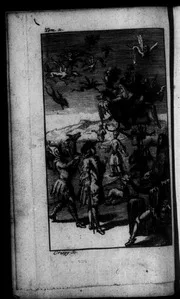
The certainty of the world of spirits fully evinced. To which is added, The wonders of the invisible world, ... 1840: Iss 66

 82
82

The certainty of the world of spirits fully evinced. To which is added, The wonders of the invisible world, ... 1840: Iss 66



Balthazar Finch, Senior Critic, Occult Philosophy: Baxter's magnum opus remains an unassailable cornerstone for understanding historical pneumatology and early modern demonology. "The Certainty of the World of Spirits" is not a work of speculative fancy, but a rigorous, albeit passionately argued, defense of spiritual realities based on an extensive collection of accounts. Its strength lies in its systematic approach, aiming to convince both the devout and the wavering of the tangible presence of the spiritual hierarchy. For practitioners and scholars of witchcraft and paganism, it provides invaluable insight into the theological frameworks that often demonized and thus shaped the very practices they sought to eradicate. A vital text for grasping the spiritual landscape of the 17th century.
📝 Description
82
Richard Baxter argued in 1691 for the undeniable reality of spirits, both good and evil.
Published in 1691, Richard Baxter's "The Certainty of the World of Spirits Fully Evinced" addresses the existence of supernatural beings. The book compiles accounts and theological arguments intended to counter disbelief in angels, demons, and the afterlife during his time. Baxter aimed to strengthen religious conviction by presenting what he considered solid proof of the spiritual world.
This volume also includes "The Wonders of the Invisible World," further elaborating on phenomena beyond ordinary perception. Baxter's work reflects the deep spiritual concerns and intellectual debates of the late 17th century. It stands as a significant artifact of early modern attempts to reconcile faith with observable or reported supernatural events, seeking to provide a framework for understanding existence beyond the material.
The text is structured to persuade readers of the tangible presence of a spirit realm. It engages with contemporary skepticism by detailing various manifestations and divine interventions. Baxter's approach was to offer a reasoned, albeit faith based, defense of spiritual realities for those seeking confirmation of their beliefs.
Baxter's text emerges from the early modern period's engagement with spiritualism and demonology. It falls within a tradition that sought to delineate the boundaries and activities of the unseen world, often in response to societal anxieties or theological disputes. This work connects to Puritan beliefs about divine providence and the constant presence of spiritual forces influencing human affairs, a common theme in the esoteric thought of the era.
💡 Why Read This Book?
Uncover irrefutable, era-defining arguments for the existence of the spirit world. Explore historical accounts of supernatural encounters that shaped Western thought. Ideal for seekers of spiritual truth, scholars of esotericism, and anyone fascinated by the enduring interplay between faith, reason, and the unseen.
⭐ Reader Reviews
Honest opinions from readers who have explored this book.
❓ Frequently Asked Questions
What is the primary focus of this book?
The book's primary focus is to provide evidence and arguments for the certainty of the existence and influence of the spirit world, including angels and demons, on human affairs.
Who was Richard Baxter?
Richard Baxter was a prominent English Puritan theologian, minister, and writer, known for his extensive theological works and his firm belief in the supernatural.
What is the significance of "The Wonders of the Invisible World"?
This appended section likely delves into specific accounts or phenomena that further illustrate the book's central thesis about the active presence of the spiritual realm.
Is this book suitable for beginners in esoteric studies?
While dense with theological argument, its historical accounts and direct engagement with spiritual phenomena make it accessible to motivated beginners interested in historical occultism.
What historical period does this book reflect?
The book reflects the religious and intellectual climate of the mid-to-late 17th century, a period of significant debate regarding faith, reason, and the supernatural.
🔮 Key Themes & Symbolism
The Unseen Architecture of Reality
Baxter meticulously constructs an argument for the undeniable reality of the spirit world, moving beyond mere faith to present a reasoned case for its pervasive influence. He posits a universe not solely governed by material laws, but intricately interwoven with spiritual forces—angels, demons, and the souls of the departed. This theme explores the wide implications of such an architecture, where human lives are constantly touched by ethereal beings and eternal destinies. It challenges the reader to consider the hidden currents that shape our existence, urging a recognition of the spiritual as a tangible, albeit invisible, dimension.
Evidence and Testimony of the Supernatural
Central to Baxter's thesis is the compelling power of testimony and empirical (within the context of his era) evidence. He compiles numerous accounts, testimonies, and historical occurrences to 'evinced' (prove) the certainty of spiritual interactions. This theme explores the nature of proof when dealing with the supernatural, examining how personal experiences, historical records, and divine pronouncements were used to build a case. It invites reflection on the reliability of witness accounts and the human inclination to seek validation for extraordinary claims, particularly in matters of faith and the afterlife.
Theological Framework and Spiritual Warfare
Baxter's work is deeply rooted in his Puritan theological framework, viewing the world as a stage for constant spiritual warfare between divine forces and infernal powers. The certainty of the spirit world is thus intrinsically linked to understanding the ongoing battle for souls. This theme explores the binary of good and evil as manifested through angelic and demonic influences, and how this conflict shapes human morality and destiny. It highlights the book's role in shaping perceptions of witchcraft, possession, and divine intervention within a pre-Enlightenment worldview.
💬 Memorable Quotes
Direct passages from the work, attributed to the author.
“The world of spirits is as certainly and really existent as the visible world.”
— This foundational statement underscores Baxter's conviction that the spiritual realm is not a metaphor, but a concrete reality as tangible as our physical surroundings.
“The devil is a roaring lion, seeking whom he may devour.”
— This vivid metaphor captures Baxter's view of demonic entities as actively malevolent forces, constantly preying on human souls and vulnerability.
“Angels are ministering spirits, sent forth to minister to the heirs of salvation.”
— Baxter presents a benevolent view of angelic beings, portraying them as divine agents actively involved in protecting and guiding those destined for salvation.
“Our greatest folly is to live as if we were never to die.”
— This poignant observation emphasizes the human tendency to neglect eternal concerns in favor of transient worldly pursuits, a central theme in Baxter's call for spiritual awareness.
💡 Key Ideas
Editorial paraphrase of the work's core concepts — not direct quotes.
There are more things in heaven and earth, Horatio, than are dreamt of in your philosophy.
Echoing Shakespeare, this quote implies that human understanding is limited, and vast spiritual truths remain beyond conventional perception or intellectual grasp.
🌙 Esoteric Significance
Tradition
While Baxter was a Puritan minister, his work's engagement with the spirit world, supernatural phenomena, and the active influence of unseen entities places it within the broader context of historical Western esotericism. It speaks to a tradition that acknowledges and attempts to understand the non-material forces that govern existence, bridging theological discourse with the observable (or reported) manifestations of the occult. It provides a counterpoint to purely materialistic philosophies, emphasizing a divinely ordered but spiritually dynamic universe.
Symbolism
The book is rich with implicit symbolism. Angels represent divine order, protection, and spiritual guidance, while demons embody chaos, temptation, and malevolence. The 'world of spirits' itself symbolizes the hidden dimensions of reality, the unseen forces that shape human destiny. Testimonies of possession or angelic visitation serve as potent symbols of the permeable boundary between the physical and spiritual planes, highlighting the constant interplay and potential for intervention from the ethereal realm.
Modern Relevance
In an age increasingly dominated by secularism and scientific rationalism, Baxter's work offers a powerful reminder of humanity's historical and enduring fascination with the spiritual. Its rigorous, albeit faith-based, argumentation for the unseen speaks to contemporary seekers exploring consciousness, parapsychology, and alternative spiritualities. The book provides a crucial historical lens for understanding how such beliefs were once formalized and defended, offering valuable context for modern discussions on the nature of reality and the human experience of the transcendent.
👥 Who Should Read This Book
This seminal text is essential for theological scholars seeking to understand the intellectual field of 17th-century Puritanism and its views on the supernatural. Practitioners of witchcraft and occult studies will find invaluable historical context regarding demonology and the demonization of spiritual practices. Esoteric seekers interested in historical accounts of spiritual encounters and the philosophical underpinnings of belief in the unseen will discover a rich and persuasive argument. Furthermore, anyone fascinated by the history of ideas, the intersection of faith and reason, or the enduring human quest to comprehend the mysteries beyond the material world will find this book profoundly useful.
📜 Historical Context
Published in the latter half of the 17th century, Richard Baxter's "The Certainty of the World of Spirits" emerged during a period marked by profound religious fervor, intellectual upheaval, and persistent anxieties about the supernatural. The era was characterized by a deep-seated belief in the active presence of both divine and infernal powers, influencing everything from daily life to legal proceedings. Witchcraft trials were a recent, albeit waning, phenomenon, and theological debates surrounding predestination, salvation, and the nature of the soul were rampant. Baxter, a leading Puritan minister, sought to bolster faith and combat skepticism in an age where the boundaries between the material and spiritual were intensely scrutinized. His work reflects the prevalent worldview where unseen forces were considered as real and impactful as physical ones, contributing to a wide range of thought on demonology, angelology, and the afterlife.
📔 Journal Prompts
How does Baxter's definition of 'certainty' regarding the spirit world differ from modern scientific certainty?
Reflect on a personal experience (or reported experience) that challenges your perception of the material world.
Analyze one of Baxter's cited testimonies: what elements make it convincing or unconvincing to you?
Consider the concept of spiritual warfare as presented by Baxter. How might this apply (or not apply) to contemporary issues?
In what ways does Baxter's view of angels and demons inform your own understanding of good and evil?
🗂️ Glossary
Evinced
Proved or demonstrated clearly; shown to be true through evidence or argument. Baxter uses it to signify a high degree of certainty based on presented facts and testimonies.
Pneumatology
The branch of theology and philosophy concerned with spiritual beings, especially angels and demons, and the nature of the soul and its existence.
Demonology
The study of demons or beliefs about demons. It often involves their nature, hierarchy, powers, and interactions with the human world.
Puritanism
A movement within the Church of England in the 16th and 17th centuries that sought to purify the church of Roman Catholic practices, emphasizing strict moral codes and a direct relationship with God.
Corporeal
Having a physical body; relating to the body. Used in contrast to spiritual or immaterial aspects of existence.
This book appears in 2 collections
🔮 Readers Also Liked
Browse all →






More by BAXTER, Richard, 1615-1691.
All books →
From the “Witchcraft” Collection
View all →






More Free Witchcraft & Paganism Books
View all →