Witches and Demons
 76
76

Witches and Demons
Jean La Fontaine's "Witches and Demons" offers a sober, academic counterpoint to the lurid fascination with diabolism. Rather than succumbing to the sensationalism it dissects, the work meticulously unpacks the social and anthropological underpinnings of beliefs about witches and demons. A significant strength lies in its rigorous examination of how public scares, such as those surrounding devil-worship, are constructed and perpetuated. La Fontaine effectively demonstrates that these phenomena are often less about actual occult practices and more about societal anxieties and the labeling of the 'other'.
However, the book's academic tone, while a strength for scholarly readers, might prove dense for those seeking a more narrative exploration of historical witchcraft. The detailed analysis of anthropological perspectives, while crucial, can occasionally overshadow the more visceral historical accounts. One particularly striking section discusses the persistent, yet largely unfounded, accusations of human sacrifice and the use of body parts in healing, illustrating how potent these myths become in the public imagination. Ultimately, "Witches and Demons" serves as an essential corrective, grounding the study of the occult in critical social analysis.
📝 Description
76
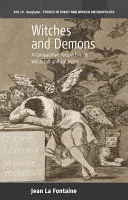
Jean La Fontaine's 2016 book, Witches and Demons, examines the historical construction of evil related to witchcraft accusations.
Witches and Demons scrutinizes how societies historically constructed the idea of evil, focusing on accusations of witchcraft and devil worship. Jean La Fontaine moves past sensational accounts to analyze the interplay of societal anxieties, anthropological viewpoints, and public perceptions. The book dissects instances of supposed demonic influence, myths of human sacrifice, and the misidentification of children as witches.
La Fontaine aims to differentiate scholarly study of belief systems from popular, fear-driven interpretations of the occult and the demonic. The work is suited for those interested in the anthropology of religion, the history of witchcraft, and the sociology of belief. Academics studying folklore, cultural anxieties, and the demonization of groups will find it relevant, as will readers with backgrounds in comparative religion or the history of magic.
Published in 2016, Witches and Demons engages with scholarly traditions analyzing witchcraft and demonology. The book critiques earlier studies that may have sensationalized or simplified these phenomena. La Fontaine focuses on the intersection of expert and lay understandings of evil, particularly how public fears shape cultural perceptions of the demonic. This work contributes to an ongoing academic discussion about the social and psychological factors underlying historical beliefs in witchcraft and demonic activity.
💡 Why Read This Book?
• Understand the anthropological construction of evil: Learn how societal anxieties, not just occult practices, fuel beliefs about witches and demons, as explored through analyses of "public scares" and "mistaken accusations" in the book. • Differentiate scholarly inquiry from popular myth: Gain critical tools to distinguish between academic study and sensationalized narratives, particularly concerning topics like "human sacrifice" and "body parts in healing". • Analyze the social roots of demonization: Discover how cultural forms of evil are created and how they impact specific groups, exemplified by La Fontaine's examination of witchcraft accusations against vulnerable individuals.
⭐ Reader Reviews
Honest opinions from readers who have explored this book.
❓ Frequently Asked Questions
What is the primary focus of Jean La Fontaine's "Witches and Demons"?
The book primarily focuses on the anthropological and cultural construction of evil, particularly examining how beliefs about devil worship, black magic, and witchcraft emerge from societal anxieties and misconceptions rather than solely from documented practices.
Does "Witches and Demons" explore actual historical witchcraft practices?
While it touches upon historical accusations and beliefs, the book's main aim is to analyze the *understanding* and *cultural forms* of evil as perceived by both experts and the public, rather than detailing specific magical rituals or historical witch trials.
What is meant by "public scares" in the context of this book?
"Public scares" refers to widespread societal anxieties and moral panics, often fueled by misinformation or prejudice, that lead to the demonization of certain groups or practices, such as the historical fears surrounding devil-worship.
Who originally published "Witches and Demons" and when?
The book "Witches and Demons" by Jean La Fontaine was first published on April 1, 2016.
What kind of misconceptions does the book address regarding witchcraft?
It addresses misconceptions about human sacrifice, the use of body parts in healing practices, and mistaken accusations of children practicing witchcraft, demonstrating how these ideas are socially constructed.
Is this book suitable for someone interested in occult fiction?
No, this book is an academic and anthropological study, not fiction. It analyzes the cultural phenomenon of beliefs about the occult and the demonic from a critical, scholarly perspective.
🔮 Key Themes & Symbolism
Social Construction of Evil
La Fontaine meticulously examines how concepts of evil, particularly concerning witches and demons, are not inherent truths but are actively shaped by social anxieties and cultural narratives. The work highlights how "public scares" and societal prejudices lead to the labeling and demonization of individuals and practices, demonstrating that the perceived forms of evil often reflect the fears of the society that defines them. This theme underscores the book's anthropological approach, moving beyond theological or purely historical accounts to explore the societal mechanisms behind belief.
Misconceptions and Public Scares
A central theme is the deconstruction of widespread misconceptions that fuel public fear and misunderstanding. The book specifically addresses sensational claims about human sacrifice and the alleged use of body parts in healing, revealing them as often unfounded or distorted interpretations. By analyzing these "mistaken accusations," La Fontaine illustrates how potent myths can become in shaping collective consciousness and justifying societal reactions, particularly in the context of witchcraft accusations.
Anthropology of Belief
The work functions as a deep dive into the anthropology of belief systems, contrasting scholarly analysis with lay understandings of the supernatural. La Fontaine scrutinizes how different cultural groups and academic disciplines interpret phenomena like devil worship and witchcraft. By dissecting the intersection of expert knowledge and popular imagination, the book offers insights into how societies grapple with the inexplicable and construct categories of the sacred and the profane, the good and the evil.
Demonization and Scapegoating
The theme of demonization is explored through the lens of historical accusations, particularly focusing on "mistaken accusations of children practicing witchcraft." This aspect of the book highlights how vulnerable populations can become targets when societal anxieties reach a fever pitch. La Fontaine demonstrates how the process of demonization serves social functions, often acting as a mechanism for control, social cohesion, or scapegoating, thereby revealing more about the accusers than the accused.
💬 Memorable Quotes
Direct passages from the work, attributed to the author.
“Jean La Fontaine explores the intersection of expert and lay understandings of evil and the cultural forms that evil assumes.”
— This statement defines the book's central analytical framework: examining how both academic theories and popular beliefs about the demonic converge and diverge, shaping societal perceptions and definitions of evil.
“Devil worship, black magic, and witchcraft have long captivated anthropologists as well as the general public.”
— This opening observation frames the book's subject matter, acknowledging its dual appeal to academic researchers and a broader audience fascinated by the occult, while setting the stage for a more critical examination.
“Together, these cases demonstrate that compar”
— This fragment suggests the book aims to draw comparative conclusions from the examined cases, likely emphasizing the recurring patterns of social anxiety and cultural construction underlying beliefs about witchcraft and demonic influence across different contexts.
“The book examines the cultural forms that evil assumes.”
— This highlights the book's focus on how abstract notions of evil manifest in tangible societal beliefs, practices, and accusations, particularly concerning witchcraft and demonology.
💡 Key Ideas
Editorial paraphrase of the work's core concepts — not direct quotes.
The chapters touch on public scares about devil-worship, misconceptions about human sacrifice and the use of body parts in healing practices, and mistaken accusations of children practicing witchcraft.
This passage succinctly outlines the core case studies and thematic concerns of the book, indicating a focus on dismantling sensationalist myths and analyzing the social roots of such beliefs.
🌙 Esoteric Significance
Tradition
While "Witches and Demons" is primarily an anthropological and sociological study, it engages with themes often explored within esoteric traditions concerning the nature of malevolent forces and belief systems. It doesn't adhere to a specific lineage like Hermeticism or Gnosticism but rather provides a critical lens through which to view how these traditions, and the broader cultural understanding of the occult, have been shaped by social forces and public perception. It serves as a meta-commentary on how esoteric concepts become mythologized.
Symbolism
The book implicitly dissects the symbolism attached to witches and demons within Western culture. "Devil worship" becomes a symbol for societal transgression and the inversion of religious norms, often fueled by fear of the unknown or the "other." "Black magic" symbolizes forbidden knowledge and power, feared for its perceived ability to disrupt social order. The figure of the witch, particularly in historical accusations against children, symbolizes societal anxieties about purity, innocence corrupted, and the perceived threat to established moral frameworks.
Modern Relevance
Contemporary thinkers and practitioners exploring the sociology of religion, the psychology of belief, and critical studies of occultism find value in La Fontaine's analytical framework. It informs discussions on how conspiracy theories and moral panics surrounding perceived hidden forces (whether religious, political, or paranormal) continue to operate in modern society. For those interested in the historical roots of modern paganism or Wicca, understanding the social construction of witchcraft accusations provides crucial context for the reappropriation and redefinition of these terms.
👥 Who Should Read This Book
• Anthropologists and Sociologists: Researchers studying belief systems, cultural anxieties, and the social construction of deviance will find La Fontaine's analysis of "public scares" and "mistaken accusations" particularly relevant. • Historians of Witchcraft and Magic: Scholars seeking a critical perspective on how witchcraft and demonology have been understood by both academics and the public will benefit from the book's nuanced approach. • Critical Thinkers interested in Folklore and Mythology: Readers fascinated by how myths and sensationalist narratives about the occult and evil emerge and persist will gain valuable insights into their underlying social and cultural mechanisms.
📜 Historical Context
Published in 2016, "Witches and Demons" by Jean La Fontaine enters a scholarly conversation about the history of witchcraft and demonology that has been active for decades. Influential works by figures like Keith Thomas (whose "Religion and the Decline of Magic" was published in 1971) and H.R. Trevor-Roper (whose "The European Witch-Hunts" appeared in 1952) had already established a framework for understanding the social, economic, and psychological factors behind witch trials. La Fontaine's work distinguishes itself by focusing on the "intersection of expert and lay understandings" and the "cultural forms that evil assumes," rather than solely on the mechanics of historical persecution. It engages with contemporary anthropological theory, implicitly critiquing earlier, perhaps less nuanced, approaches. While not directly engaging in public debate or facing censorship itself, the book addresses the historical legacy of such panics and the enduring power of misconceptions.
📔 Journal Prompts
The cultural forms that evil assumes: How do contemporary anxieties shape our understanding of perceived malevolent forces?
Mistaken accusations of children practicing witchcraft: Reflect on how societal fears can lead to the scapegoating of vulnerable groups.
Public scares about devil-worship: Analyze a modern-day phenomenon that mirrors the structure of historical moral panics.
Intersection of expert and lay understandings: How do academic theories about the occult differ from popular depictions, and why?
The role of misconceptions about human sacrifice in shaping beliefs about the demonic.
🗂️ Glossary
Devil Worship
A broad term often used to describe perceived practices involving the veneration or invocation of the devil, frequently associated with accusations of witchcraft and black magic, and often rooted in societal fears and misconceptions.
Black Magic
Refers to magical practices believed to be intended to cause harm or used for selfish or nefarious purposes, often contrasted with 'white magic' used for benevolent aims. In historical contexts, it was frequently linked to witchcraft accusations.
Witchcraft
Historically, a term used to accuse individuals (often women) of practicing magic, typically in league with demonic forces. The definition and perceived nature of witchcraft have varied significantly across cultures and time periods.
Human Sacrifice
The act of killing one or more human beings as part of a ritual offering to a deity or supernatural power. Accusations of human sacrifice were a serious and often unfounded element in historical witch trials.
Body Parts in Healing
Refers to the purported use of human or animal body parts in magical or medicinal practices. Such beliefs were often sensationalized and used as evidence in accusations of witchcraft or malevolent practices.
Public Scares
Periods of widespread societal anxiety and panic, often fueled by misinformation or prejudice, leading to collective fear and the demonization of perceived threats, such as those surrounding historical accusations of devil worship.
Lay Understandings
The beliefs, interpretations, and common knowledge held by the general public, as distinct from the specialized knowledge or theories of experts or academics in a particular field.