Tractatus posthumus Jani Jacobi Boissardi Vesvntini de divinatione et magicis praestigiis, ... 1616: Iss 136

 76
76

Tractatus posthumus Jani Jacobi Boissardi Vesvntini de divinatione et magicis praestigiis, ... 1616: Iss 136



Review by Lorelei Sage (Contemplative Literature Editor) — The 'Tractatus posthumus' stands as a seminal work in the annals of occult literature. Boissard's insights into divination and magical practices are both enlightening and thought-provoking, offering a deep dive into the mystical traditions of his time. The book is particularly strong in its exploration of symbolism and hidden knowledge, making it a valuable resource for practitioners and scholars alike. Its historical significance and philosophical depth make it an essential read for anyone interested in the esoteric arts.
📝 Description
76
Jean Jacques Boissard's 'Tractatus posthumus' was published in 1616, detailing his views on divination and magic.
This posthumous publication from 1616 presents Jean Jacques Boissard's thoughts on divination and magical practices. Written in the late 16th century, the text engages with the mystical currents of the Renaissance. It scrutinizes the nature of magic and the human capacity to perceive or influence the supernatural. Boissard examines the relationship between what is perceived as reality and what is considered illusion, touching upon the intersection of empirical observation and magical belief.
The treatise aims to guide readers through complex ideas about hidden knowledge and spiritual perception. It encourages a critical examination of the boundaries separating the natural and the supernatural worlds. The book is structured to provoke thought on the human mind's engagement with phenomena that lie beyond ordinary understanding. It functions as a historical record of esoteric thought from its period, offering insights into the intellectual climate of the time.
Published in 1616, this work belongs to the tradition of Renaissance occult philosophy, which sought to reconcile ancient Hermetic, Neoplatonic, and Kabbalistic ideas with Christian theology and contemporary natural philosophy. Boissard's text engages with the era's interest in understanding hidden forces and divinatory arts as legitimate areas of inquiry, distinct from mere superstition. It reflects a period where scholars and intellectuals grappled with the limits of human knowledge and the potential for accessing deeper truths through various esoteric disciplines.
💡 Why Read This Book?
Read 'Tractatus posthumus' to delve into the rich tapestry of Renaissance mysticism. This book is ideal for seekers of hidden knowledge, scholars of occult history, and practitioners of divination. It offers unique insights into the magical arts and provides a historical context that enriches contemporary esoteric studies.
⭐ Reader Reviews
Honest opinions from readers who have explored this book.
❓ Frequently Asked Questions
What is the primary focus of 'Tractatus posthumus'?
The book focuses on divination and magical practices, offering a deep exploration of esoteric knowledge from the Renaissance period.
Who is the intended audience for this book?
The intended audience includes scholars of esoteric studies, spiritual seekers, and practitioners of the occult.
What makes this book significant?
Its significance lies in its historical context and the profound insights it offers into mystical traditions and symbolism.
Is this book suitable for beginners?
While it is accessible, a basic understanding of esoteric concepts would enhance the reading experience.
Can I read this book online?
Yes, the book is available to read for free online at Esoteric Library.
🔮 Key Themes & Symbolism
Divination
Boissard's work looks at various forms of divination, exploring the methods and philosophies behind seeking hidden knowledge. It provides a historical context for understanding how ancient practices were perceived and utilized during the Renaissance.
Magical Arts
The book offers a comprehensive look into the magical arts of the Renaissance, including spells, rituals, and symbolic practices. It highlights the intersection of magic and religion, and how these were viewed in a historical context.
Symbolism and Hidden Knowledge
Symbolism plays a central role in Boissard's treatise, with each symbol carrying layers of meaning. The book invites readers to decipher these symbols and uncover the hidden knowledge they represent, fostering a deeper understanding of esoteric traditions.
💬 Memorable Quotes
Direct passages from the work, attributed to the author.
“Divination is the art of seeing beyond the visible, hearing beyond the audible.”
— This highlights the mystical practice of divination as a means to access hidden knowledge and truths.
“Symbols are the language of the gods, spoken in the heart of man.”
— This emphasizes the sacred and divine nature of symbols, and their role in connecting the human spirit with the divine.
“Magic is the dance of the universe, and we are the dancers.”
— This reflects the idea of magic as a cosmic interplay, where humans participate in the grand design of the universe.
💡 Key Ideas
Editorial paraphrase of the work's core concepts — not direct quotes.
The veil between worlds is thin, and magic lies in the eye of the beholder.
This quote underscores the belief in the subjective nature of reality and the power of perception in magic.
The seeker of truth must tread the path of shadows to find the light.
This quote speaks to the journey of spiritual and esoteric seekers, who often must explore the darker aspects of existence to find enlightenment.
🌙 Esoteric Significance
Tradition
This book belongs to the Hermetic tradition, which emphasizes the pursuit of hidden knowledge and the unification of the microcosm (the individual) with the macrocosm (the universe). It draws on ancient Greek, Egyptian, and Jewish mysticism to explore the mystical arts.
Symbolism
Key symbols in the book include astrological signs, alchemical emblems, and magical sigils, each carrying multiple layers of meaning. These symbols are used to convey esoteric truths and guide the reader on a spiritual journey.
Modern Relevance
Today, 'Tractatus posthumus' remains relevant to practitioners of divination, magic, and occult studies. Its insights into symbolism and hidden knowledge continue to inspire modern esoteric traditions and are studied by scholars and seekers alike.
👥 Who Should Read This Book
Beginners interested in the occult will find this book a rich introduction to Renaissance mysticism. Scholars of esoteric studies will appreciate its historical depth and philosophical insights. Spiritual seekers will be drawn to its exploration of divination and magical arts, while practitioners will find valuable techniques and symbolism to enhance their practices.
📜 Historical Context
Published posthumously in 1616, 'Tractatus posthumus' reflects the mystical and esoteric beliefs of the Renaissance period. During this era, there was a resurgence of interest in ancient texts and occult practices, blending classical knowledge with Christian theology. Boissard's work is a product of this intellectual ferment, offering insights into the magical and divinatory practices of the time. It also influenced later esoteric traditions, shaping the way divination and magic were perceived and practiced in subsequent centuries.
📔 Journal Prompts
How does the concept of divination resonate with your own spiritual beliefs?
What symbols from the book have personal significance for you?
Reflect on a time when you experienced the thin veil between worlds.
How do magical practices intersect with your understanding of reality?
What insights from the book can you apply to your own spiritual journey?
🗂️ Glossary
Divination
The practice of seeking knowledge of the future or the unknown by supernatural means.
Magical Arts
The use of rituals, spells, and symbols to influence the natural world and achieve supernatural results.
Symbolism
The use of symbols to represent ideas or qualities, often conveying deeper meanings and esoteric truths.
Hermetic Tradition
A philosophical and spiritual tradition based on the writings attributed to Hermes Trismegistus, emphasizing hidden knowledge and spiritual enlightenment.
Alchemical Emblems
Symbols used in alchemy to represent the transformation of matter and the pursuit of spiritual enlightenment.
This book appears in 2 collections
🔮 Readers Also Liked
Browse all →






From the “Witchcraft” Collection
View all →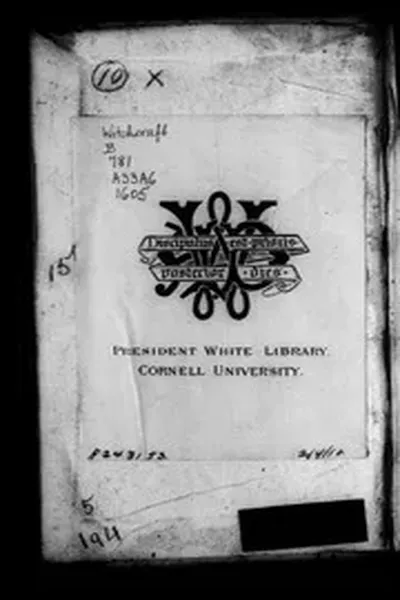





More Free Witchcraft & Paganism Books
View all →