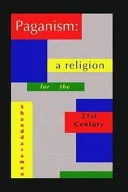
Paganism: A Religion for the 21st Century
 75
75

Paganism: A Religion for the 21st Century
Shanddaramon's "Paganism: A Religion for the 21st Century" attempts to bridge the gap between ancient spiritual impulses and the fragmented realities of postmodern life. The author rightly identifies the challenges faced by traditional religions in a world increasingly shaped by science and secularism. The book's strength lies in its accessible presentation of Modern Paganism as a flexible, nature-attuned alternative. However, the work occasionally feels more like a manifesto than a deep theological exploration. For instance, the assertion that "our religious institutions have struggled to come to terms with current cultural trends" is a valid observation, but the subsequent proposed solution, while appealing in its adaptability, could benefit from more detailed exploration of specific theological or philosophical underpinnings rather than broad strokes.
While the intention is laudable, the book sometimes oversimplifies the complexities of both traditional religions and the diverse landscape of contemporary paganism itself. The concept of Paganism as an "antidote" is compelling, but the specifics of its application and philosophical grounding could be more robustly articulated. Ultimately, the book serves as a useful introduction to a specific vision of modern pagan spirituality, urging readers towards a path that honors both the earth and evolving human consciousness.
📝 Description
75
Published in 2009, Shanddaramon's Paganism: A Religion for the 21st Century argues for a modern spiritual framework.
Shanddaramon's 2009 book frames Modern Paganism as a spiritual path suited for the contemporary world. The author suggests that many established religions fail to connect with current cultural views and scientific understanding, leaving a gap for those seeking genuine spiritual meaning. This work proposes Paganism as a flexible approach, one that can incorporate modern realities and personal experience. It is written for individuals feeling disconnected from traditional religious doctrines or curious about alternative spiritual paths. Readers who want a worldview that blends personal experience with metaphysical ideas, and a religion that can change with human knowledge, will find this book useful. It speaks to those seeking an intellectually and experientially fulfilling spiritual practice, one not confined by old texts or strict rules.
The book emerged in the early 21st century, a time of global connection and digital growth that saw increased interest in neo-pagan and earth-centered beliefs. Shanddaramon's text arrives in this context, a period when writers like Chas S. Clifton were documenting these spiritual movements. Unlike pagan traditions that focus on recreating specific ancient European practices, this book promotes a blended and adaptable form of paganism. It can draw from various sources and engage with current scientific and philosophical ideas, moving beyond the limitations of older, more rigid spiritual systems.
This book situates itself within the broader revival of pagan and earth-centered spiritualities that gained traction in the late 20th and early 21st centuries. It differentiates itself from strict historical reconstructionist movements by advocating for a syncretic approach. This means it allows for the incorporation of diverse elements and encourages engagement with contemporary thought, science, and philosophy. The work positions Paganism not as a relic of the past, but as a living, evolving tradition capable of meeting modern spiritual needs.
💡 Why Read This Book?
• Learn how Modern Paganism offers a spiritual path that directly addresses the perceived disconnect between traditional religion and contemporary scientific/cultural realities, as discussed in the book's core argument. • Discover the concept of Paganism as an adaptable framework, capable of integrating diverse beliefs and evolving with human knowledge, a key theme presented from its 2009 publication. • Gain an understanding of why this approach seeks to honor the natural world and human experience, providing a counterpoint to rigid, dogma-based religious structures.
⭐ Reader Reviews
Honest opinions from readers who have explored this book.
❓ Frequently Asked Questions
What year was 'Paganism: A Religion for the 21st Century' first published?
The book 'Paganism: A Religion for the 21st Century' by Shanddaramon was first published on March 26, 2009, positioning it as a contemporary response to spiritual needs.
How does Shanddaramon's book address the challenges of postmodern religious life?
The book argues that traditional religious institutions struggle with current cultural trends. It proposes Modern Paganism as an antidote, a spiritual path that recognizes and honors the realities of our world.
Is this book about historical pagan practices or a modern interpretation?
Shanddaramon's work focuses on Modern Paganism as a living, adaptable tradition for the 21st century, rather than a strict adherence to ancient historical practices.
What kind of reader would find 'Paganism: A Religion for the 21st Century' most appealing?
It appeals to individuals disillusioned with conventional religions, those exploring alternative spiritualities, and anyone seeking a path that integrates personal experience with broader metaphysical understanding.
Does the book offer practical guidance for spiritual practice?
While presenting a philosophy, the book's core is about framing Paganism as a relevant and viable religion for today. Specific practices would likely be explored through its adaptable framework.
What is the author's view on the relationship between Paganism and science?
The book suggests that Modern Paganism can honor the realities of our world, implying an acceptance or integration of scientific understanding, unlike some traditional faiths that may conflict with it.
🔮 Key Themes & Symbolism
Adaptable Spirituality
The central tenet is Paganism's capacity to function as a flexible, evolving religion for contemporary life. Unlike rigid doctrines, it embraces change and integration with modern knowledge. This theme addresses the perceived inability of older religious structures to accommodate postmodern realities, offering a spiritual framework that can be continually redefined by its adherents.
Nature Reverence
A core element is the honoring of the natural world. This theme posits that true spirituality is found in connection with the earth, its cycles, and its inherent divinity. It serves as an antidote to the perceived alienation from nature often fostered by urbanized, industrialized societies and some traditional religions.
Postmodern Religious Void
The book identifies a spiritual vacuum created by the perceived failings of established religious institutions to engage with current cultural trends and scientific understanding. It frames Modern Paganism as a direct response to this void, providing a coherent and meaningful spiritual path for those seeking alternatives.
Personal Spiritual Authority
Implied within the concept of an adaptable religion is a move away from external, hierarchical religious authority. Individuals are empowered to construct their own spiritual understanding, drawing from nature and personal experience, rather than adhering strictly to dogma or scripture dictated by an institution.
💬 Memorable Quotes
Direct passages from the work, attributed to the author.
“Our religious institutions have struggled to come to terms with current cultural trends.”
— This observation highlights the author's critique of traditional faiths, suggesting they are outmoded or unable to adapt to the complexities and advancements of the postmodern world.
“Modern Paganism is an antidote for those seeking a spiritual path that recognizes and honors the realities of our world.”
— This frames Paganism not just as an alternative, but as a direct remedy for spiritual dissatisfaction stemming from a perceived disconnect between ancient religions and contemporary life.
“A religion for the 21st Century.”
— This phrase captures the book's primary ambition: to present Paganism as a relevant, forward-looking spiritual system capable of meeting the needs of modern individuals.
“Recognizes and honors the realities of our world.”
— This points to an inclusive approach, suggesting that this form of Paganism does not require adherents to abandon scientific understanding or contemporary values in favor of outdated beliefs.
“Seeking a spiritual path.”
— This identifies the target audience: individuals actively searching for meaning and connection, who may feel unfulfilled by conventional religious or secular options.
🌙 Esoteric Significance
Tradition
This work positions itself within the broader range of Modern Paganism, which draws from diverse esoteric and nature-based traditions. It departs from strict adherence to any single historical lineage (like Hermeticism or Gnosticism) to forge a more syncretic and adaptable spiritual path, emphasizing personal experience and contemporary relevance over ancient dogma.
Symbolism
While specific symbols aren't detailed in the blurb, a religion for the 21st century likely emphasizes symbols of nature—the earth, seasons, celestial bodies—as direct manifestations of the divine. It may also incorporate adaptable symbols representing cycles of life, death, and rebirth, reflecting a continuous process of change and renewal relevant to modern existence.
Modern Relevance
Contemporary thinkers and practitioners interested in animism, earth-centered spirituality, and non-dogmatic religious frameworks find resonance in Shanddaramon's vision. It speaks to current concerns about ecological crises and the search for meaning in a secularized world, influencing discussions on how to construct relevant spiritual practices for today.
👥 Who Should Read This Book
• Individuals disillusioned with traditional religious structures, seeking a spiritual path that aligns with contemporary scientific and cultural understanding. • Explorers of alternative spiritualities who are interested in the principles and potential of Modern Paganism as a flexible, nature-attuned belief system. • Comparative religion students and researchers examining the evolution of spiritual practices in the 21st century and the emergence of new religious movements.
📜 Historical Context
Shanddaramon's "Paganism: A Religion for the 21st Century," published in 2009, arrived during a period of significant growth and diversification within neo-pagan movements. The early 21st century saw a continued evolution from the more historically reconstructivist paganisms that had gained traction in the late 20th century. This work emerged in dialogue with, and perhaps in contrast to, movements like Asatru or Hellenism, which often emphasized fidelity to ancient sources. The intellectual currents of the time included postmodern critiques of grand narratives and a widespread interest in spirituality decoupled from institutional religion. While not directly engaging with specific academic scholars by name in the blurb, the book reflects a broader trend discussed by observers like Graham Harvey, who noted the increasing complexity and varied forms of contemporary pagan practice. The reception of such works often involved debates within the pagan community itself regarding authenticity versus adaptation.
📔 Journal Prompts
The concept of Paganism as an "antidote" to modern spiritual malaise.
Modern Paganism's recognition and honoring of "the realities of our world."
The struggle of religious institutions to adapt to current cultural trends.
Formulating a personal spiritual path that acknowledges contemporary knowledge.
The potential for nature to serve as a primary source of spiritual connection.
🗂️ Glossary
Postmodern World
A historical and cultural period characterized by skepticism towards grand narratives, a focus on individual experience, and the influence of mass media and technology.
Religious Institutions
Organized bodies of faith, such as churches, temples, or mosques, that provide a structure for religious practice, doctrine, and community.
Cultural Trends
The general direction in which societal attitudes, behaviors, and beliefs are developing or changing over time.
Spiritual Path
A personal journey or system of beliefs and practices undertaken to achieve spiritual growth, understanding, or connection.
Modern Paganism
A contemporary religious movement that draws inspiration from pre-Christian European polytheistic religions, often emphasizing nature, earth cycles, and personal experience.
Antidote
A remedy or solution that counteracts a specific problem or negative condition, in this context, spiritual dissatisfaction.
Honoring Realities
Acknowledging and respecting the factual conditions and truths of existence, including scientific understanding and contemporary societal structures.