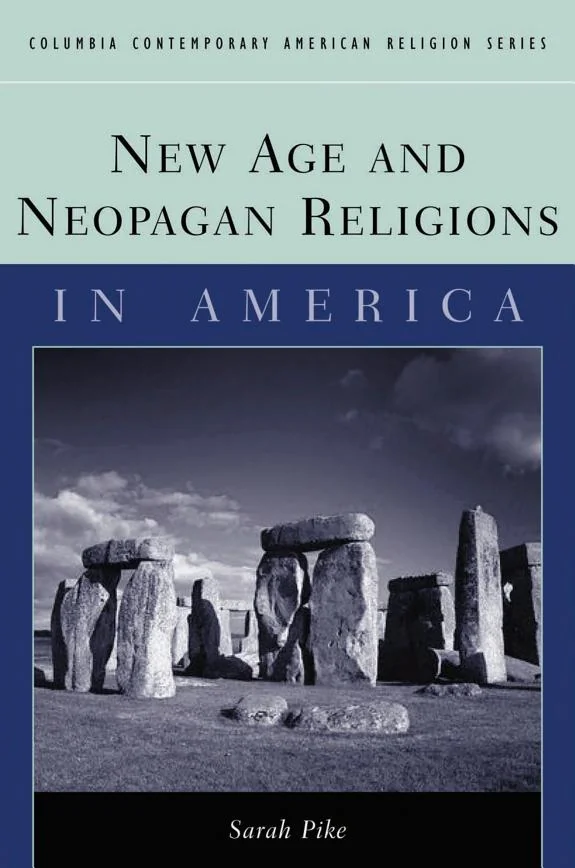
New Age and Neopagan Religions in America
 72
72

New Age and Neopagan Religions in America
Sarah M. Pike's "New Age and Neopagan Religions in America" offers a sober, scholarly account that grounds the often-ethereal subject matter in rigorous historical analysis. The book's strength lies in its careful delineation of the often-blurred lines between New Age spirituality and Neopagan traditions, demonstrating their distinct origins and overlapping influences. Pike's chapter on the re-emergence of these faiths in the 1960s counterculture is particularly illuminating, showcasing how social upheaval provided fertile ground for alternative spiritualities. A limitation, however, is the book's predominantly academic tone, which might deter readers seeking a more experiential exploration. The detailed examination of figures like Gerald Gardner and Dion Fortune provides crucial context, but occasionally the narrative feels detached from the lived realities of practitioners. Despite this, Pike's work remains an indispensable resource for understanding the complex religious pluralism of the modern United States.
📝 Description
72
Sarah M. Pike's 2004 book surveys the development of New Age and Neopagan religions in America.
Sarah M. Pike's study provides an academic overview of emergent spiritual movements in the United States. The book traces these religions from their roots in 19th-century spiritualism and occultism, noting their increased visibility during the 1960s counterculture. Pike details the distinctions and commonalities among various New Age and Neopagan traditions.
The work places these spiritual paths within the broader context of American religious history. It highlights their often difficult relationship with established faiths, particularly Christianity. The study covers the period from the Theosophical Society and Spiritualism in the 19th century to the wide array of practices that emerged later in the 20th century. Pike examines how these movements offered different ways to understand the world and individual experiences.
This book examines spiritual traditions that grew out of 19th-century occultism and spiritualism, movements often considered part of the broader esoteric revival. It details how these currents developed into distinct New Age and Neopagan paths in America. The study focuses on the formation of alternative religious identities and communal structures outside of mainstream Western religious traditions.
💡 Why Read This Book?
• Understand the specific historical trajectory of Neopaganism from its 1960s resurgence, detailing its relationship with earlier occult traditions. • Gain clarity on the distinctions and commonalities between New Age spirituality and various Neopagan paths, moving beyond simplistic categorizations. • Analyze the interplay between these emergent religions and dominant American culture, particularly the tensions with Christianity, as explored in the book's critical sections.
⭐ Reader Reviews
Honest opinions from readers who have explored this book.
❓ Frequently Asked Questions
When did New Age and Neopagan religions begin to gain significant traction in the US according to Sarah Pike?
Sarah M. Pike traces the origins of these movements to the 19th century but highlights their major reemergence and diversification during the 1960s counterculture.
What are some core themes Sarah Pike explores in New Age and Neopagan Religions in America?
The book delves into themes such as healing practices, evolving understandings of gender and sexuality, millennialism, and the importance of ritual experience within these spiritual communities.
Does Sarah Pike discuss the relationship between New Age/Neopaganism and Christianity?
Yes, Pike explicitly considers the often antagonistic relationship between these emergent spiritual practices and established religions in America, with a particular focus on Christianity.
What distinguishes New Age from Neopaganism in Pike's analysis?
Pike examines the differences and similarities between the movements, suggesting that while they share some common ground and historical influences, they represent distinct spiritual orientations and practices.
What historical periods are covered in the book regarding these religions?
The work spans from the 19th century, examining precursors like Spiritualism and Theosophy, through the significant developments of the 1960s and beyond.
Who is Sarah M. Pike and what is her approach in this book?
Sarah M. Pike is an academic scholar whose approach in this book is historical and analytical, surveying the development and characteristics of New Age and Neopagan religions in the United States.
🔮 Key Themes & Symbolism
Roots in Spiritualism
Pike details how 19th-century movements like Spiritualism, with its séances and channeling, provided a foundational layer for later New Age and Neopagan thought. These early practices explored direct communication with unseen realms and spirits, establishing a precedent for seeking alternative spiritual truths outside orthodox religious structures.
Counterculture Synthesis
The 1960s counterculture acted as a crucial incubator, allowing diverse elements from Western esotericism, Eastern philosophies, and indigenous traditions to coalesce into recognizable New Age and Neopagan forms. This era saw a deliberate rejection of materialism and a search for holistic living and spiritual authenticity.
Gender and Sexuality
The book examines how New Age and Neopagan religions often challenged traditional patriarchal norms by exploring divine feminine principles, goddess worship, and more fluid understandings of gender and sexuality, offering alternative social models.
Ritual and Practice
Central to these traditions is the emphasis on ritual as a means of accessing altered states of consciousness, connecting with nature, and fostering community. Pike analyzes the variety of ritual forms, from Wiccan ceremonies to New Age healing circles.
💬 Memorable Quotes
Direct passages from the work, attributed to the author.
“The work explores the reemergence of these spiritual paths during the 1960s.”
— This highlights the book's focus on a key period where countercultural energies fostered the growth and diversification of alternative spiritual movements in America.
“Pike considers the differences and similarities between the New Age and Neopagan movements.”
— This indicates the book's analytical approach to categorizing and understanding distinct yet often overlapping spiritual traditions, moving beyond broad generalizations.
“The book addresses the antagonistic relationship between these practices and Christianity.”
— This points to the critical examination of the societal and religious conflicts faced by emergent spiritualities in a predominantly Christian cultural landscape.
“Key topics include healing, gender and sexuality, millennialism, and ritual experience.”
— This outlines the core thematic content, revealing the book's engagement with the practical and ideological concerns central to New Age and Neopagan adherents.
“The history is traced from origins in the nineteenth century.”
— This establishes the book's chronological scope, anchoring the study in the earlier esoteric and spiritualist movements that preceded contemporary New Age and Neopaganism.
🌙 Esoteric Significance
Tradition
This work engages with the broad Western Esoteric Tradition, particularly its 19th and 20th-century manifestations. It sits within the lineage of scholarship examining Hermeticism, Theosophy, and occult revivalism, but focuses on how these streams fed into distinctly American expressions of spirituality that diverged from their European origins.
Symbolism
The book implicitly touches upon symbols central to these traditions, such as the pentagram (often associated with Neopaganism and Wicca), and the concept of 'synchronicity' (a key term in Jungian psychology influential to the New Age). These symbols represent the connection between the mundane and the magical, and the belief in meaningful patterns within the universe.
Modern Relevance
Pike's scholarship remains highly relevant for understanding contemporary spiritual seekers who draw from diverse traditions, often blending elements of psychology, Eastern religions, and indigenous practices. Thinkers and practitioners in fields like ecopsychology, modern Wicca, and various forms of alternative spirituality can find historical context for their practices.
👥 Who Should Read This Book
['• Students of American religious history: Gain a comprehensive academic overview of the development and cultural impact of emergent spiritualities in the US.', '• Scholars of new religious movements: Access a detailed analysis that distinguishes between New Age and Neopagan traditions, offering critical historical context.', '• Individuals interested in the 1960s counterculture: Understand how this era served as a crucible for alternative spiritual beliefs and practices that continue to influence society.']
📜 Historical Context
Published in 2004, Sarah M. Pike's "New Age and Neopagan Religions in America" arrived at a time when the study of new religious movements had matured, moving beyond initial moral panics to nuanced sociological and historical analysis. The book emerged within an intellectual climate that increasingly recognized the pluralization of American religious life. Pike's work contextualizes these movements against the backdrop of 19th-century occultism, theosophy, and spiritualism, tracing their distinct evolution and re-emergence during the 1960s counterculture. Key contemporaries in the academic study of religion, such as J. Gordon Melton, had already laid groundwork in cataloging these groups, but Pike’s contribution lies in her detailed historical tracing and comparative analysis of the New Age and Neopagan phenomena specifically within the American context. The book implicitly engages with the ongoing dialogue concerning the definition and boundaries of 'religion' itself.
📔 Journal Prompts
The role of the 1960s counterculture as a catalyst for spiritual innovation.
The historical links between 19th-century Spiritualism and later New Age practices.
Examining the concept of 'millennialism' within diverse American spiritual movements.
The ways ritual experience shapes community identity in Neopagan traditions.
Contrasting the New Age approach to healing with more traditional religious frameworks.
🗂️ Glossary
New Age
A broad, often eclectic spiritual movement emphasizing personal transformation, holistic healing, and a synthesis of various religious and philosophical traditions, often with a focus on the Aquarian Age.
Neopaganism
A contemporary religious movement characterized by the revival of ancient polytheistic, nature-based religions, including Wicca, Druidry, and various reconstructionist traditions.
Spiritualism
A 19th-century movement centered on the belief that the living could communicate with the spirits of the dead, often involving mediums and séances.
Theosophy
An esoteric philosophy founded in the late 19th century by Helena Blavatsky, seeking to uncover universal truths behind all religions and philosophies.
Millennialism
Belief in a future golden age or transformation, often linked to a specific historical event or the end of an era, prevalent in both religious and secular thought.
Counterculture
A subculture whose values and norms of behavior differ substantially from those of mainstream society, often in opposition to traditional social orders.
Esotericism
Belief systems and practices that are concerned with the nature of reality and the human condition, often involving hidden knowledge or practices accessible only to initiates.
This book appears in 1 collection
🔮 Readers Also Liked
Browse all →
![ERIC ED085284: World History. Volumes I and II. [Sahuarita High School Career Curriculum Project].](/img/thumb/eric-ed085284-world-history-volumes-i-and-ii-sahuarita-high-school-career-curriculum-project-eric.webp)






From the “Neopaganism” Collection
View all →







More Free Witchcraft & Paganism Books
View all →