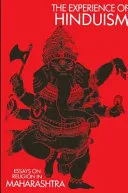
The Experience of Hinduism
 74
74

The Experience of Hinduism
Maxine Berntsen’s compilation, *The Experience of Hinduism*, provides a vital counterpoint to idealized or monolithic portrayals of religious life. Its strength lies in the raw, immediate quality of its source material, particularly Irawati Karve’s contributions. Karve’s account of her pilgrimage to Pandharpur, for instance, grounds the sacred in the mundane realities of travel and devotion. However, the inclusion of essays on the R.S.S. alongside more traditional devotional accounts feels somewhat jarring, lacking a robust framework to bridge these disparate elements. The work offers a compelling glimpse into possession phenomena and saintly sermons, but the analytical connective tissue between these varied expressions could be more developed. Still, for its unvarnished presentation of lived faith, it remains a valuable resource.
📝 Description
74
Published in 1988, The Experience of Hinduism counters purely textual approaches to faith.
Maxine Berntsen's 1988 collection focuses on the lived reality of religious practice in the Marathi-speaking regions of India. It moves away from abstract theology to detail the felt experience of spiritual life. The volume includes essays, some translated into English for the first time, by Irawati Karve and other contributors.
The book presents firsthand accounts of phenomena such as divine possession, the spontaneous sermons of saints, and the religious nationalism associated with the R.S.S. It aims to capture the diverse and often unexpected textures of religious experience. This approach emphasizes ethnographic detail and personal testimony over doctrinal explanations.
This work is suited for scholars of South Asian religions and anthropologists interested in lived religion. General readers seeking an unvarnished view of Indian spiritual practices will also find it valuable. It is particularly relevant for those interested in the sociology of religion, the psychology of spiritual encounters, and the phenomenon of religious nationalism.
This collection situates itself within a tradition of studying religion through direct experience and ethnographic observation, rather than solely through scripture or dogma. By highlighting practices like divine possession and ecstatic utterance, it engages with the subjective, often ineffable, dimensions of spiritual life. The focus on regional specificity in India also counters monolithic views of religious traditions, suggesting that spiritual experience is shaped by local culture and history.
💡 Why Read This Book?
• Gain insight into the lived religious experiences of Marathi-speaking India, moving beyond abstract theology to understand phenomena like divine possession and ecstatic saintly sermons, as detailed in the essays. • Understand the intersection of religious nationalism and spiritual practice through the inclusion of firsthand accounts related to the R.S.S. movement, offering a specific historical perspective. • Explore the personal dimension of pilgrimage through Irawati Karve's classic essay 'On the Road,' detailing her journey to Pandharpur and the devotional realities encountered.
⭐ Reader Reviews
Honest opinions from readers who have explored this book.
❓ Frequently Asked Questions
What specific region of India does 'The Experience of Hinduism' focus on?
The book specifically concentrates on the Marathi-speaking region of India, offering detailed ethnographic accounts of religious life within this particular cultural and linguistic context.
Who is Irawati Karve and why is her work included?
Irawati Karve was a prominent Indian anthropologist and sociologist. Her inclusion is significant as her classic essay 'On the Road' and three other previously untranslated works provide foundational ethnographic perspectives on religious experience in the region.
Does the book cover different types of religious expression?
Yes, it presents a multi-faceted view, including ecstatic religious experiences like divine possession, the preaching of inspired saints in the bhajan style, and the religious nationalism associated with the R.S.S.
When was 'The Experience of Hinduism' first published?
The book was first published in 1988, offering a contemporary perspective on religious experiences in India during that era.
What is the significance of the R.S.S. mention in the book?
The mention refers to the Rashtriya Swayamsevak Sangh (R.S.S.), a Hindu nationalist organization. The book includes autobiographical accounts exploring the religious nationalism connected to this militant movement.
Is this book suitable for academic study?
Absolutely. It is valuable for scholars of South Asian religions, anthropologists, and sociologists due to its focus on lived religious experience and ethnographic detail from the Marathi region.
🔮 Key Themes & Symbolism
Lived Religious Practice
This work moves beyond doctrine to illustrate the tangible, felt reality of religious life in the Marathi region. It showcases phenomena such as divine possession, where individuals become conduits for spiritual forces, and the spontaneous, devotional outpourings of saints through bhajan. The inclusion of Irawati Karve's pilgrimage narrative to Pandharpur grounds these experiences in the everyday realities of travel and devotion, illustrating how faith is enacted rather than merely believed.
Religious Nationalism
The book examines the potent intersection of religious identity and political ideology through autobiographical accounts of the R.S.S. (Rashtriya Swayamsevak Sangh). This exploration reveals how spiritual fervor can be channeled into militant nationalism, offering a critical perspective on the social and psychological underpinnings of organized religious movements. It highlights the ways in which shared faith can fuel collective action and political agendas.
Regional Specificity
Focusing on the Marathi-speaking area of India, the book emphasizes that religious experience is deeply embedded in specific cultural and linguistic contexts. It moves away from generalized notions of 'Hinduism' to present the unique devotional practices, pilgrimage routes (like Pandharpur), and social dynamics characteristic of this particular region. This localized approach provides a more granular understanding of religious diversity within India.
Anthropological Perspectives
Through the contributions of Irawati Karve and other ethnographic accounts, the book adopts an anthropological lens to study religion. It prioritizes firsthand observation and personal testimony, capturing the subjective dimensions of spiritual encounters. This method allows for an exploration of phenomena like spirit possession and saintly charisma as lived realities, rather than solely as theological constructs.
💬 Memorable Quotes
Direct passages from the work, attributed to the author.
“Possession by gods and ghosts.”
— This concise phrase expresses the raw, often unsettling, spiritual phenomena documented in the book, highlighting the permeable boundary between the mundane and the supernatural in lived religious experience.
“An actual sermon by an inspired saint in the traditional bhajan style.”
— This points to the spontaneous, divinely-influenced nature of religious expression captured by the book, contrasting with formal, pre-written sermons and emphasizing the performative and ecstatic elements of faith.
“The religious nationalism of the militant R.S.S.”
— This highlights a key theme: the mobilization of religious identity for political and ideological purposes, presenting a stark example of how faith can intersect with activism and potentially aggressive movements.
“Multi-faceted images of religious experience.”
— This phrase underscores the book's approach, aiming to present a complex, varied, and non-uniform picture of how individuals in a specific region encounter and practice their faith.
“On the Road, about her pilgrimage to Pandharpur.”
— This references a specific, classic ethnographic account within the collection, grounding the study in a concrete journey and a significant pilgrimage site central to Marathi devotional traditions.
🌙 Esoteric Significance
Tradition
While not strictly belonging to a single Western esoteric lineage like Hermeticism or Kabbalah, this work appeals to Gnostic and anthropological approaches that prioritize direct, subjective experience over established dogma. It aligns with traditions that value inner realization and the unfolding of spiritual potential through diverse, often unconventional, manifestations.
Symbolism
The concept of divine possession itself functions as a potent symbol, representing the dissolution of the individual ego and direct communion with the divine or other spiritual entities. The bhajan, as a form of ecstatic devotional singing, symbolizes the unmediated expression of the soul's longing and union with the sacred, often bypassing intellectual comprehension.
Modern Relevance
Contemporary scholars of religion and spirituality, particularly those focusing on South Asian studies and the anthropology of religion, continue to draw upon the ethnographic methods and detailed case studies presented here. Thinkers exploring the sociology of religious movements, the psychology of spiritual experiences, and the political implications of faith find the book's empirical approach invaluable.
👥 Who Should Read This Book
• Anthropologists and religious studies scholars: Gain access to crucial ethnographic data and firsthand accounts from the Marathi region, enriching comparative studies of religious practice. • Students of Indian culture and history: Understand the diverse manifestations of Hinduism beyond scripture, exploring lived faith, pilgrimage, and socio-political movements like the R.S.S. • Readers interested in the psychology of religion: Examine documented instances of divine possession and the sermons of inspired saints, offering empirical material on altered states and spiritual expression.
📜 Historical Context
Published in 1988, *The Experience of Hinduism* emerged at a time when the academic study of religion was increasingly turning towards lived experience and ethnographic detail, moving away from purely textual or theological analyses. This shift was partly a response to earlier, more abstract theoretical frameworks. The inclusion of Irawati Karve's work, particularly essays translated into English for the first time, was significant for broadening the accessibility of Indian anthropological scholarship. During this period, scholars like Louis Dumont were influential in shaping understandings of Indian social structure, though Karve's focus provided a more granular, experiential counterpoint. The book's engagement with religious nationalism through the R.S.S. also reflected growing academic and public interest in the political dimensions of religion, a trend that would only intensify in subsequent decades.
📔 Journal Prompts
The phenomenon of divine possession as described in the Marathi region.
Irawati Karve's pilgrimage to Pandharpur and its spiritual significance.
The R.S.S. and its connection to religious nationalism.
The structure and impact of a saint's bhajan sermon.
Comparing different expressions of religious experience presented in the essays.
🗂️ Glossary
Marathi
An Indo-Aryan language spoken predominantly by the Marathi people of Maharashtra, India. The book focuses on religious experiences within this linguistic and cultural region.
Bhajan
A devotional song or hymn, typically in Hinduism, often sung in a congregational setting. It is characterized by its emotional and often ecstatic nature, aiming to foster devotion.
Pandharpur
A city in Maharashtra, India, famous as a pilgrimage site for the Hindu god Vitthal. It is a central location for the Varkari tradition of devotionalism.
R.S.S.
Abbreviation for Rashtriya Swayamsevak Sangh, a prominent Indian right-wing Hindu nationalist, paramilitary volunteer organization. The book explores its connection to religious nationalism.
Possession
In a religious context, this refers to the belief that a divine spirit, deity, ghost, or other supernatural entity can take control of a person's body, influencing their thoughts and actions.
Pilgrimage
A journey undertaken for religious or spiritual reasons, typically to a place regarded as sacred. It often involves devotion, penance, and seeking spiritual merit.
Autobiographical account
A narrative written by the person themselves about their own life experiences. In this book, such accounts offer personal perspectives on religious and political engagement.