The Book Of Lambspring

 61
61

The Book Of Lambspring

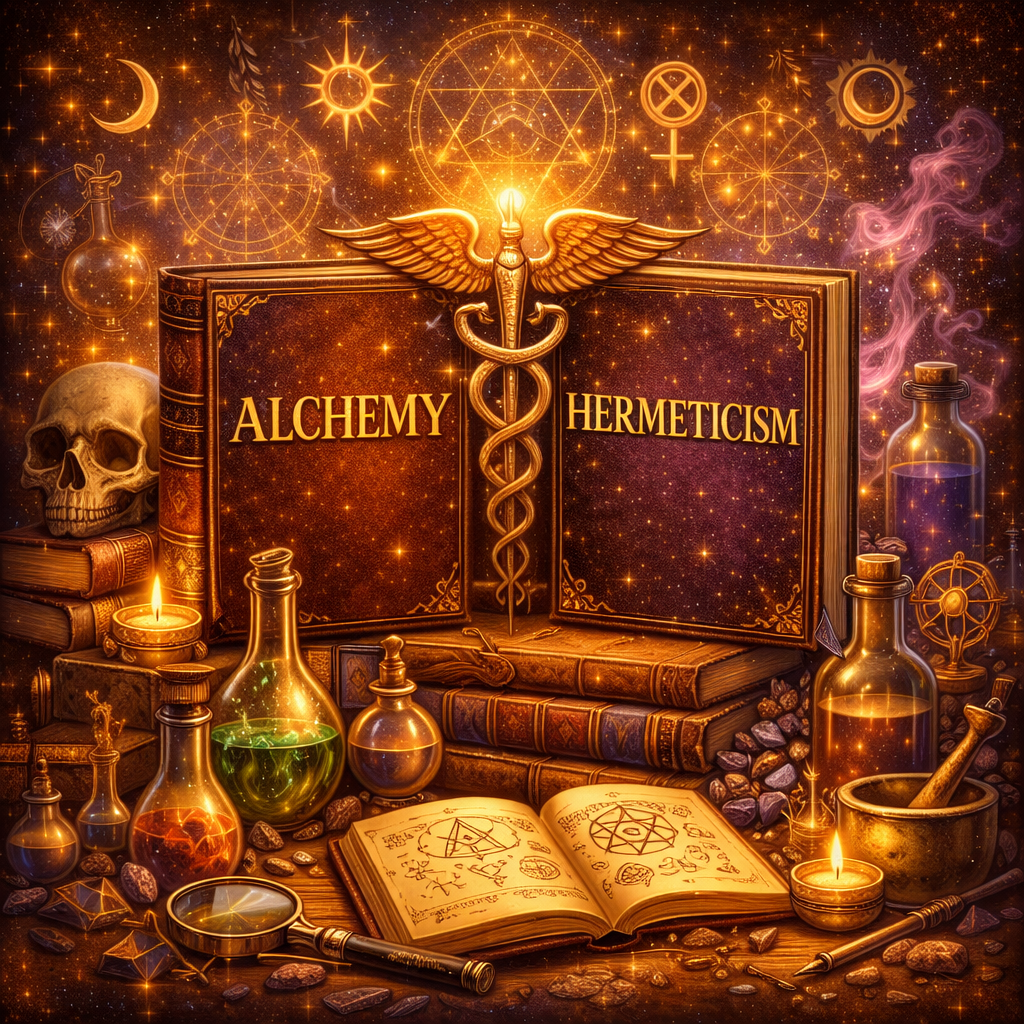

Review by Lorelei Sage (Contemplative Literature Editor) — Arthur Edward Waite's The Book of Lambspring stands as a beacon of esoteric wisdom, shedding light on the arcane practices of alchemy. Waite's meticulous scholarship and poetic prose make this text a must-read for anyone interested in the mystical arts. The book's strengths lie in its ability to bridge the gap between ancient knowledge and modern understanding, offering readers a comprehensive guide to the hermetic traditions. Waite's insights into symbolism and hidden meanings are particularly noteworthy, providing a deeper appreciation for the spiritual journey. This book is ideal for those who seek to unravel the mysteries of the universe and find their own path to enlightenment.
📝 Description
61
Arthur Edward Waite published The Book of Lambspring in 1913, presenting alchemical symbolism.
Arthur Edward Waite's 1913 publication, The Book of Lambspring, examines the esoteric art of alchemy through a collection of allegorical images. Waite's translation and commentary aim to unlock the secrets contained within these visual representations, which he believed conveyed a spiritual and philosophical message. The text connects alchemical processes to inner transformation, suggesting that the manipulation of physical substances mirrors a path toward spiritual enlightenment. Waite's approach emphasizes the symbolic language of alchemy, moving beyond purely material interpretations. This work is intended for those interested in the historical and philosophical dimensions of alchemical thought.
The book's focus is on the interpretation of the Lambspring plates, a series of alchemical images. Waite analyzes the iconography and narrative presented in these plates, relating them to hermetic philosophy and the pursuit of spiritual knowledge. He argues that these images offer a coded system for understanding the Great Work, the alchemical transformation. Readers will find discussions on the symbolic meanings of various elements and stages within the alchemical process as depicted in the plates. The aim is to illuminate the deeper, spiritual implications of alchemical traditions.
The Book of Lambspring sits within the Western esoteric tradition, specifically concerning alchemy as a spiritual discipline rather than a purely chemical one. Arthur Edward Waite, a prominent figure in occult studies, approached alchemy through a lens informed by Rosicrucianism and hermeticism. This perspective views the alchemical "Great Work" as a metaphor for personal spiritual development and union with the divine. The book engages with the tradition of interpreting symbolic imagery, common in alchemical texts, to convey hidden knowledge. It follows in a lineage of scholars who sought to decode the allegorical language of alchemy to reveal its philosophical and mystical underpinnings.
💡 Why Read This Book?
Read The Book of Lambspring to unlock the secrets of alchemy and the hermetic traditions. This book is ideal for seekers, scholars, and practitioners who wish to explore the mystical and esoteric dimensions of human experience. Waite's work offers a rich tapestry of symbolism and hidden knowledge, making it an invaluable resource for those on a spiritual journey.
⭐ Reader Reviews
Honest opinions from readers who have explored this book.
❓ Frequently Asked Questions
What is the main focus of The Book of Lambspring?
The main focus is the exploration of alchemical symbolism and the hermetic traditions, providing insights into the mystical and esoteric arts.
Who is the intended audience for this book?
The intended audience includes scholars of esoteric studies, spiritual seekers, and practitioners of the occult.
What makes this book unique?
The Book of Lambspring is unique in its ability to bridge ancient alchemical knowledge with modern spiritual practices, offering a comprehensive guide to the hermetic traditions.
Can beginners read this book?
While beginners can read it, the book is more suited for those with some background in esoteric studies due to its complex symbolism and philosophical depth.
Are there any modern applications of the teachings in this book?
Yes, modern practitioners of alchemy and hermeticism use the teachings in this book to deepen their spiritual practices and understanding of the mystical arts.
🔮 Key Themes & Symbolism
Alchemical Symbolism
The Book of Lambspring explores the strong symbolism of alchemy, studying the hidden meanings behind ancient alchemical texts. Waite's work reveals the spiritual and philosophical significance of these symbols, providing readers with a deeper understanding of the hermetic traditions.
Hermetic Traditions
This book offers a comprehensive overview of the hermetic traditions, highlighting their influence on Western esotericism. Waite's insights into the hermetic philosophies and practices make this a valuable resource for scholars and spiritual seekers alike.
Spiritual Transformation
The Book of Lambspring encourages readers to engage in a journey of spiritual transformation. Through its exploration of alchemical symbolism and hermetic wisdom, the book provides a roadmap to inner enlightenment and self-discovery.
💡 Key Ideas
Editorial paraphrase of the work's core concepts — not direct quotes.
The great work of alchemy is the transformation of the soul.
This quote underscores the spiritual dimension of alchemy, emphasizing its role in inner transformation.
In the crucible of the mind, all things are possible.
This passage highlights the power of the mind in achieving spiritual and material goals through alchemical practices.
The philosopher's stone is the key to unlocking the mysteries of the universe.
This quote symbolizes the ultimate goal of alchemy, the attainment of enlightenment and understanding.
The hermetic path is one of self-discovery and spiritual enlightenment.
This passage emphasizes the personal and spiritual journey that the hermetic traditions offer.
Through symbolism, the secrets of the ages are revealed.
This quote underscores the importance of symbolism in understanding the hidden knowledge of alchemy.
🌙 Esoteric Significance
Tradition
The Book of Lambspring belongs to the Hermetic tradition, which encompasses a wide range of esoteric practices and philosophies aimed at spiritual enlightenment and the understanding of the universe's hidden truths.
Symbolism
Key symbols in the book include the philosopher's stone, the crucible, and various alchemical processes, each representing different stages of spiritual transformation and enlightenment.
Modern Relevance
This book remains relevant today for modern practitioners of alchemy and hermeticism, offering insights into ancient wisdom that can be applied to contemporary spiritual practices. It is used by scholars, seekers, and practitioners to deepen their understanding of the mystical arts.
👥 Who Should Read This Book
Beginners may find the book challenging due to its complex symbolism and philosophical depth, but it is an invaluable resource for scholars of esoteric studies. Spiritual seekers will find inspiration in the hermetic traditions, while practitioners of the occult will appreciate the practical applications of alchemical symbolism. Overall, this book is ideal for those with a deep interest in the mystical and esoteric dimensions of human experience.
📜 Historical Context
The Book of Lambspring was written during a time when alchemy was both a scientific and spiritual pursuit. Arthur Edward Waite, a prominent occultist and scholar, compiled this work to preserve and transmit the esoteric knowledge of the hermetic traditions. The book's influence can be seen in the ongoing study and practice of alchemy and hermeticism, making it a timeless resource for seekers of hidden wisdom.
📔 Journal Prompts
How do the symbols of alchemy resonate with your personal spiritual journey?
What insights from The Book of Lambspring have you found most transformative?
How can you apply the principles of hermeticism to your daily life?
What does the philosopher's stone represent to you?
How does the concept of spiritual transformation manifest in your own experiences?
🗂️ Glossary
Alchemy
An ancient practice that combines elements of chemistry, physics, and mysticism, aiming to transform base metals into gold and achieve spiritual enlightenment.
Hermeticism
A philosophical and spiritual tradition based on the writings attributed to Hermes Trismegistus, emphasizing the unity of all things and the path to spiritual enlightenment.
Philosopher's Stone
A legendary alchemical substance said to be capable of turning base metals into gold and granting immortality, symbolizing the ultimate goal of spiritual transformation.
Crucible
A vessel used in alchemy to melt and purify metals, symbolizing the process of spiritual purification and transformation.
Symbolism
The use of symbols to represent abstract ideas or qualities, a key aspect of alchemical and hermetic traditions.
This book appears in 3 collections
🔮 Readers Also Liked
Browse all →







More by Arthur Edward Waite
All books →
From the “Hermeticism” Collection
View all →








More Free Alchemy & Hermeticism Books
View all →