The Aryan Path Vol-VII No-11
 83
83

The Aryan Path Vol-VII No-11



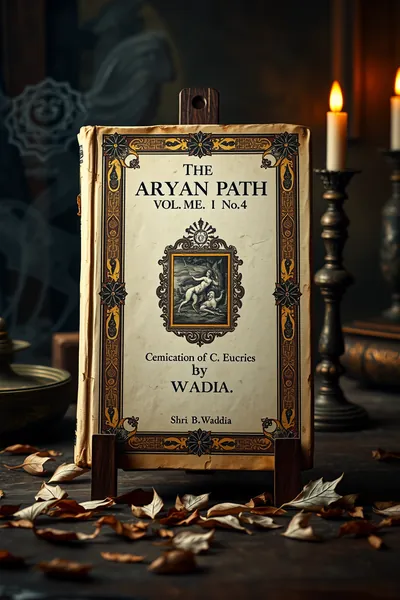
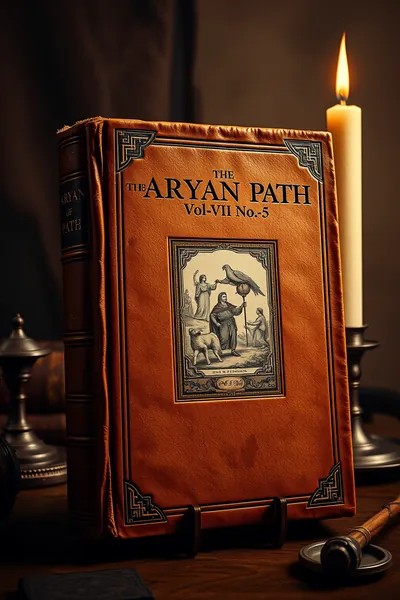
The Aryan Path Vol-VII No-11 (1936) stands as a beacon of esoteric wisdom in the modern world. Edited by the esteemed Shri B.P Wadia, this volume is a treasure trove of insights from some of the most brilliant minds of the time. The journal's commitment to the original teachings of Madame H.P. Blavatsky and William Q. Judge ensures that readers receive an unadulterated glimpse into the ancient wisdom that has guided spiritual seekers for centuries. The articles, reviewed from a universal Theosophical perspective, offer a deep dive into the mysteries of the divine and the interconnectedness of all beings. For modern esoteric seekers, this text provides a valuable resource for understanding the spiritual evolution of humanity and the timeless truths that transcend temporal boundaries.
📝 Description
83
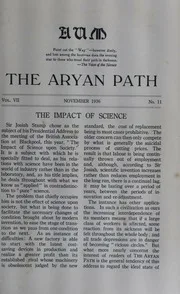
The November 1938 issue of The Aryan Path (Vol-VII, No-11) contains essays by prominent Theosophists.
This issue of The Aryan Path, published in November 1938, offers a collection of writings on Theosophical subjects. It includes contributions from individuals involved with the Theosophy Company (Mysore) Pvt Ltd. The articles address spiritual enlightenment and the concept of universal consciousness.
The journal's content aims to foster introspection and spiritual inquiry. It focuses on the symbolism and mystical insights central to Theosophical philosophy. This particular edition is intended for readers interested in the occult and metaphysical aspects of Theosophy.
The writings present a view of existence that encourages a deeper understanding of its layers. The contributors are identified as thinkers, artists, and philosophers who engage with these esoteric themes.
The Aryan Path was a journal associated with the Theosophical movement, which sought to synthesize Eastern and Western esoteric traditions in the late 19th and early 20th centuries. Founded by Helena Blavatsky, Theosophy aimed to uncover universal truths underlying all religions and philosophies. This publication, edited by B.P. Wadia, reflects that lineage by presenting discussions on spiritual development and consciousness within that framework. It engaged with concepts such as karma, reincarnation, and the nature of the divine, drawing from both ancient philosophies and modern occult thought.
💡 Why Read This Book?
Reading The Aryan Path Vol-VII No-11 (1936) today offers a unique opportunity to connect with ancient esoteric wisdom in a contemporary context. This book provides valuable insights into the spiritual evolution of humanity and the interconnectedness of all beings. It is an essential read for those seeking a deeper understanding of Theosophy and Anthroposophy, and for anyone interested in the esoteric traditions that have shaped spiritual thought throughout history.
⭐ Reader Reviews
Honest opinions from readers who have explored this book.
❓ Frequently Asked Questions
What is the main focus of The Aryan Path Vol-VII No-11 (1936)?
The main focus of this volume is the exploration of Theosophical and Anthroposophical principles, aiming to reinterpret ancient wisdom for the modern era.
Who edited The Aryan Path Vol-VII No-11 (1936)?
The journal was edited by Shri B.P Wadia, a visionary deeply inspired by the original teachings of Madame H.P. Blavatsky and William Q. Judge.
What kind of contributors did Shri B.P Wadia invite?
Shri B.P Wadia invited eminent thinkers, artists, and philosophers to contribute articles, ensuring a diverse and rich exploration of esoteric themes.
🔮 Key Themes & Symbolism
Ancient Mystical Knowledge
This journal explores the ancient records and mystical teachings that have shaped the world of Theosophy. It offers a comprehensive look into the esoteric wisdom that has captivated seekers for centuries.
Universal Consciousness
The Aryan Path explores the concept of universal consciousness, presenting it as a unifying principle that underlies all spiritual traditions. This theme is explored through the lens of Theosophical philosophy, offering a deep and profound understanding.
Symbolism and Mystical Insights
The journal features articles that examine the symbolism and mystical insights of Theosophy. These contributions provide unique perspectives that enrich the reader's understanding of the deeper layers of existence.
💬 Memorable Quotes
Direct passages from the work, attributed to the author.
“Theosophy offers a wide range of symbolism and mystical insights.”
— This statement emphasizes the depth and complexity of Theosophical philosophy.
💡 Key Ideas
Editorial paraphrase of the work's core concepts — not direct quotes.
The great truths of the Ancient Records are timeless.
This quote emphasizes the enduring relevance of ancient mystical knowledge.
Spiritual enlightenment is a journey of self-discovery.
This line underscores the importance of personal growth in the pursuit of spiritual wisdom.
Universal consciousness unites all spiritual traditions.
This passage highlights the unifying principle that underlies all mystical and esoteric teachings.
The Aryan Path invites readers to explore the hidden knowledge of the ancient records.
This line encourages seekers to examine the esoteric wisdom that has captivated generations.
🌙 Esoteric Significance
Tradition
The Aryan Path Vol-VII No-11 belongs to the Theosophical tradition, which emphasizes the study of ancient mystical and esoteric knowledge. It draws on the teachings of Mdm. H.P. Blavatsky and William Q Judge, focusing on universal principles and spiritual enlightenment.
Symbolism
Key symbols in this journal include the ancient records, universal consciousness, and the unifying principles of spiritual traditions. These symbols represent the deeper layers of existence and the hidden knowledge that has captivated seekers for centuries.
Modern Relevance
The teachings presented in The Aryan Path Vol-VII No-11 remain relevant today, particularly for modern practitioners of Theosophy and other mystical traditions. They offer a comprehensive look into the esoteric wisdom that continues to inspire spiritual seekers and scholars.
👥 Who Should Read This Book
Beginners interested in Theosophy and esoteric knowledge will find this journal to be an accessible introduction to ancient mystical teachings. Scholars and researchers will appreciate the depth and complexity of the articles, which provide unique perspectives on universal consciousness and spiritual enlightenment. Spiritual seekers will benefit from the useful insights and symbolism presented, while practitioners of Theosophy will find valuable resources for deepening their understanding and practice.
📜 Historical Context
Published in the early 20th century, The Aryan Path Vol-VII No-11 emerged during a time of significant spiritual and intellectual exploration. Shri B.P. Wadia, inspired by the original Theosophical teachings of Mdm. H.P. Blavatsky and William Q Judge, aimed to repeat the great truths of the ancient records for the modern era. This journal played a central role in disseminating esoteric knowledge and fostering a community of seekers and scholars dedicated to the study of mystical and occult traditions.
📔 Journal Prompts
Reflect on how the teachings of The Aryan Path Vol-VII No-11 have influenced your spiritual journey?
What symbols and mystical insights resonated with you the most?
How does the concept of universal consciousness apply to your understanding of spirituality?
What ancient records or mystical teachings have you discovered that align with the themes in this journal?
How can you incorporate the esoteric wisdom from this journal into your daily life?
🗂️ Glossary
Theosophy
The study of ancient mystical and esoteric knowledge, focusing on universal principles and spiritual enlightenment.
Universal Consciousness
The unifying principle that underlies all spiritual traditions, representing the interconnectedness of all beings.
Ancient Records
The mystical teachings and esoteric knowledge passed down through generations, often hidden from mainstream understanding.
Spiritual Enlightenment
The process of achieving a deeper understanding of oneself and the universe, leading to spiritual growth and wisdom.
Symbolism
The use of symbols to represent deeper layers of existence and hidden knowledge in mystical and esoteric traditions.
This book appears in 2 collections
🔮 Readers Also Liked
Browse all →





From the “Theosophy” Collection
View all →



More Free Theosophy & Anthroposophy Books
View all →