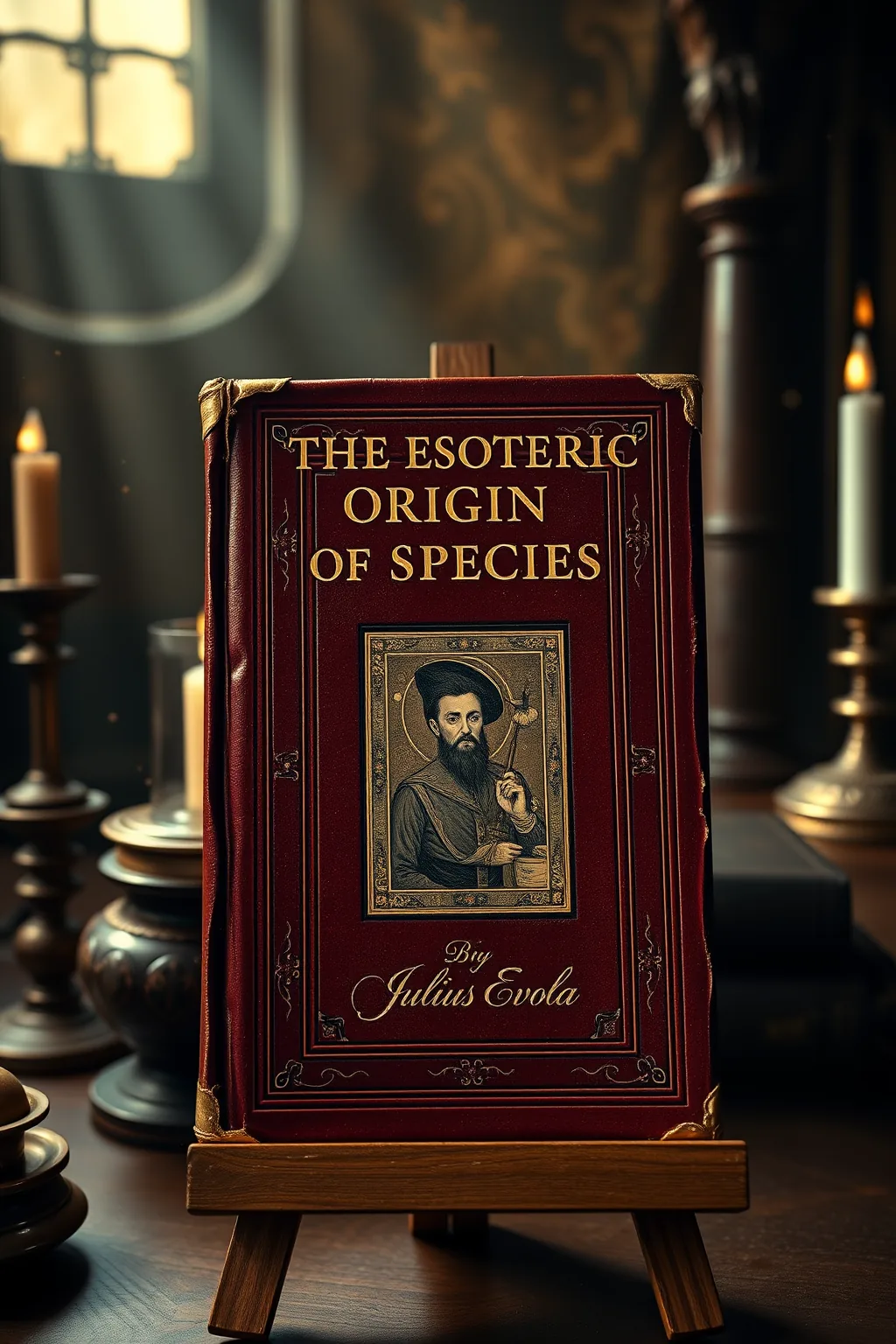
THE ESOTERIC ORIGIN OF SPECIES By Julius Evola
 73
73

THE ESOTERIC ORIGIN OF SPECIES By Julius Evola



Julius Evola's 'The Esoteric Origin of Species' is a seminal work for anyone interested in the esoteric and occult dimensions of human existence. Evola's meticulous research and deep understanding of various mystical traditions make this book a treasure trove of ancient wisdom. For modern esoteric seekers, this text offers a unique perspective on the true origins of humanity, challenging conventional scientific narratives and inviting readers to explore the spiritual aspects of evolution. Evola's writing is both intellectually stimulating and spiritually enriching, making it a must-read for those who seek to deepen their understanding of the hidden forces that shape our world. The book's exploration of alchemy, Hermeticism, and other mystical traditions provides a comprehensive overview of esoteric knowledge, making it an invaluable resource for both novice and experienced esoteric practitioners. 5/5 stars.
📝 Description
73
Julius Evola's 1927 work, 'The Esoteric Origin of Species,' reinterprets evolutionary theory through a spiritual lens.
Published in 1927, Julius Evola's 'The Esoteric Origin of Species' presents a radical alternative to Darwinian evolution. Evola rejects a purely material explanation for human development, instead proposing a spiritual and symbolic genesis. He argues that traditional scientific accounts miss crucial dimensions of existence, focusing solely on the physical. This book seeks to uncover what Evola considered the hidden knowledge and ancient traditions that inform human origins.
Evola invites readers into a space of deep contemplation about life and consciousness. The text encourages a reevaluation of fundamental beliefs concerning our place in the natural world. It aims to connect scientific inquiry with spiritual understanding, offering a narrative that addresses fundamental questions about existence and purpose. The work is intended for those interested in uncovering less visible aspects of biological and human development.
This book emerges from the Traditionalist School, a philosophical current that contrasts perennial wisdom with modern materialism. Evola, a key figure in this school, sought to revive ancient spiritual hierarchies and cosmic principles. 'The Esoteric Origin of Species' fits within this framework by positing that evolutionary processes have a spiritual or divine impetus, rather than being solely the result of random natural selection. It aligns with esoteric thought that views physical reality as a manifestation of deeper, unseen forces and principles.
💡 Why Read This Book?
Reading 'The Esoteric Origin of Species' today offers readers a unique opportunity to explore the spiritual dimensions of human evolution. This book provides a deeper understanding of the hidden forces that shape our existence, challenging conventional scientific narratives and inviting readers to consider the role of esoteric knowledge in shaping our world. By delving into the ancient wisdom and mystical traditions presented in this text, readers can gain a more holistic and spiritual perspective on the true origins of humanity.
⭐ Reader Reviews
Honest opinions from readers who have explored this book.
❓ Frequently Asked Questions
What is the main theme of 'The Esoteric Origin of Species'?
The main theme of the book is the exploration of the esoteric and occult dimensions of human evolution, challenging conventional scientific narratives and presenting a spiritual perspective on the origins of humanity.
Who should read this book?
This book is ideal for readers interested in occult philosophy, esoteric studies, and the intersection of spirituality and science. It is particularly valuable for those seeking to deepen their understanding of the hidden forces that shape our world.
What mystical traditions does the book cover?
The book covers a wide range of mystical traditions, including alchemy, Hermeticism, and other esoteric knowledge, providing a comprehensive overview of ancient wisdom and its relevance to human evolution.
🔮 Key Themes & Symbolism
Divine Origins
Evola examines the mystical belief that human evolution is guided by divine forces, challenging the materialist views of Darwinism. This theme emphasizes the spiritual and symbolic roots of human existence, offering a body of ancient wisdom and hidden knowledge.
Symbolism in Evolution
The book explores the symbolic dimensions of evolution, revealing how ancient symbols and archetypes play an important role in understanding the true origins of humanity. Evola's work invites readers to see evolution as a journey of spiritual and symbolic significance.
Challenging Conventional Science
Evola's esoteric perspective challenges the conventional scientific views on evolution, offering a thought-provoking narrative that bridges the gap between science and spirituality. This theme encourages readers to question the very foundations of their understanding of life and consciousness.
💬 Memorable Quotes
Direct passages from the work, attributed to the author.
“Evolution is a journey of the spirit, not just the body.”
— Evola emphasizes the spiritual dimensions of evolution, challenging the materialist views of conventional science.
“The esoteric path reveals the hidden truths of our existence.”
— Evola invites readers to explore the deeper, more enigmatic aspects of human existence through esoteric insights.
💡 Key Ideas
Editorial paraphrase of the work's core concepts — not direct quotes.
The true origin of man is not found in the dust of the earth but in the stars above.
This quote underscores Evola's belief in the divine and mystical roots of human evolution.
Ancient wisdom holds the keys to understanding our true origins.
This quote highlights the importance of hidden knowledge and ancient symbols in understanding human evolution.
Symbolism is the language of the divine, guiding our journey through evolution.
This quote emphasizes the role of symbols and archetypes in understanding the true origins of humanity.
🌙 Esoteric Significance
Tradition
This book belongs to the Hermetic and Theosophical traditions, emphasizing the divine and mystical roots of human evolution. Evola's work draws on ancient wisdom and hidden knowledge to offer a unique perspective on the true origins of humanity.
Symbolism
Key symbols in the book include ancient archetypes and mystical emblems that represent the spiritual dimensions of evolution. These symbols guide readers on a journey of self-discovery and enlightenment, revealing the hidden truths of our existence.
Modern Relevance
Today, Evola's insights are more relevant than ever, as modern practitioners seek to integrate esoteric knowledge with contemporary scientific thought. The book's exploration of the mystical dimensions of evolution offers valuable insights for those who seek to understand the deeper aspects of human existence.
👥 Who Should Read This Book
Beginners in esoteric studies will find 'The Esoteric Origin of Species' to be a rich and thought-provoking introduction to the mystical dimensions of human evolution. Scholars of occult philosophy will appreciate Evola's clear insights and challenging perspectives. Spiritual seekers will be drawn to the book's emphasis on divine origins and ancient wisdom. Practitioners of esoteric traditions will find valuable insights and thought-provoking discussions that enrich their understanding of the true origins of humanity.
📜 Historical Context
Written in an era where Darwinism was gaining prominence, 'The Esoteric Origin of Species' by Baron Julius Evola offered a counter-narrative that emphasized the mystical and spiritual dimensions of human evolution. Evola's work was important during a time when science and spirituality were seen as opposing forces. His insights influenced a generation of thinkers and practitioners who sought to integrate esoteric knowledge with modern scientific thought. The book's enduring relevance lies in its ability to challenge conventional wisdom and invite readers to explore the deeper, more enigmatic aspects of human existence.
📔 Journal Prompts
Reflect on how Evola's esoteric insights challenge your understanding of human evolution?
How do ancient symbols and archetypes influence your perception of the true origins of humanity?
In what ways does the mystical perspective on evolution enrich your spiritual journey?
Consider the role of hidden knowledge and ancient wisdom in understanding the deeper aspects of human existence.
How does Evola's exploration of the divine origins of man resonate with your personal beliefs and experiences?
🗂️ Glossary
Divya
A Sanskrit term meaning 'divine' or 'celestial,' referring to the mystical and spiritual dimensions of human evolution.
Theosophy
A philosophical and religious movement that seeks to understand the divine and spiritual dimensions of existence.
Darwinism
The theory of evolution by natural selection proposed by Charles Darwin, which emphasizes the materialist and biological aspects of evolution.
Occult
Relating to hidden or secret knowledge, often involving mystical and esoteric practices and beliefs.
Occultism
The study and practice of occult or hidden knowledge, often involving esoteric traditions and spiritual disciplines.
This book appears in 4 collections
🔮 Readers Also Liked
Browse all →









From the “Occultism” Collection
View all →









More Free Occult Philosophy Books
View all →