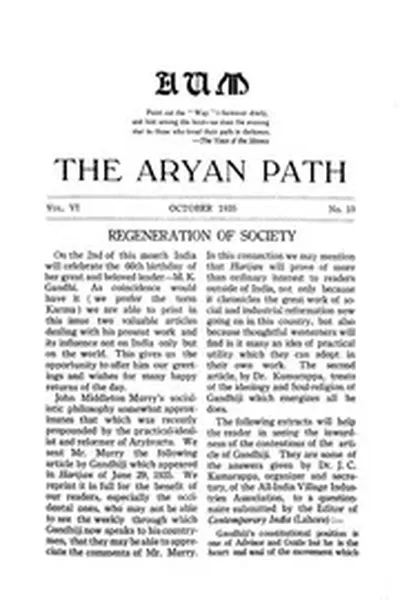
Theosophy Vol-VIII,No-12,October 1920

 84
84

Theosophy Vol-VIII,No-12,October 1920

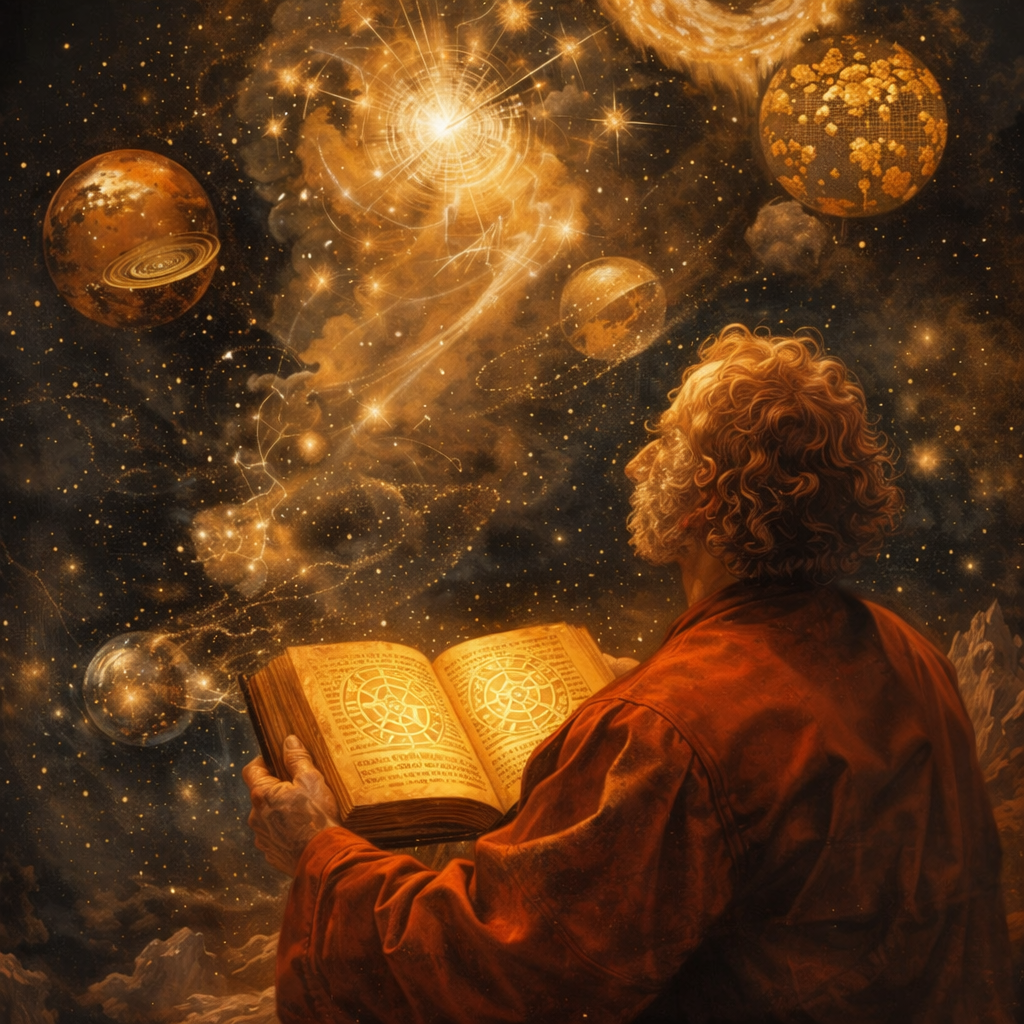

Marcus Thorne (Esoteric Sciences Reviewer) — October 1920 marks a pivotal moment in Theosophical discourse, and this issue of Vol-VIII stands as a testament to its enduring legacy. The articles within offer a potent distillation of core Theosophical tenets, exploring concepts like reincarnation, karma, and the universal brotherhood of humanity with lucidity and depth. The unknown author(s) demonstrate a profound grasp of esoteric principles, presenting complex ideas in a manner accessible yet rich with hidden meaning. This issue is particularly valuable for its exploration of the subtle bodies and the energetic architecture of the cosmos. It is an indispensable resource for dedicated students of Theosophy and a compelling introduction for those drawn to the mysteries of the East and the perennial philosophy.
📝 Description
84
The October 1920 issue of Theosophy presents articles on consciousness and cosmic mysteries from a specific historical moment.
This issue of Theosophy, published in October 1920, contains articles reflecting the spiritual and intellectual climate of its time. It delves into subjects central to Theosophical teachings, including the nature of the soul, the principles of karma, and an examination of subtle planes of existence. The writing style, characteristic of the early 20th century, engages with complex ideas about the cosmos and human consciousness. It aims to provide readers with knowledge that goes beyond the purely material world, touching on symbolism and deeper realities.
The collection addresses those interested in spiritual development and the unseen aspects of existence. It offers perspectives on self-realization and a broader cosmic awareness, drawing from the esoteric traditions prevalent when it was written. The content reflects the ongoing pursuit of truth and understanding within the Theosophical movement.
Published during a period of significant interest in Eastern religions and Western occultism, this issue of Theosophy emerges from a movement that sought to synthesize ancient wisdom with modern scientific and philosophical thought. Theosophy, as a tradition, posited a universal brotherhood and investigated comparative religion, philosophy, and science to uncover underlying truths. This particular volume reflects the ongoing engagement with these broad themes, situating itself within a larger body of esoteric literature that explored reincarnation, spiritual evolution, and hidden universal laws.
💡 Why Read This Book?
This issue beckons to those who seek to transcend the mundane and explore the profound interconnectedness of all life. It offers a rare glimpse into the foundational texts and philosophical underpinnings of Theosophy, ideal for spiritual seekers, students of comparative religion, and anyone fascinated by ancient wisdom traditions and the evolution of consciousness. Uncover hidden truths and deepen your understanding of the universe.
⭐ Reader Reviews
Honest opinions from readers who have explored this book.
❓ Frequently Asked Questions
What is Theosophy?
Theosophy, as presented in this journal, is a modern spiritual movement that seeks to synthesize the wisdom of ancient religions and philosophies with contemporary scientific understanding, emphasizing universal brotherhood and the exploration of spiritual evolution.
Who were the primary figures associated with Theosophy in 1920?
While this specific issue is anonymously authored, Theosophy in 1920 was heavily influenced by the teachings of Helena Blavatsky, with prominent figures like Annie Besant and Charles Leadbeater actively involved in disseminating its principles globally.
What kind of topics are typically covered in Theosophy journals?
Theosophy journals commonly explore subjects such as reincarnation, karma, yoga, meditation, ancient civilizations, comparative mythology, the nature of consciousness, the evolution of humanity, and the existence of spiritual hierarchies.
Is this issue suitable for beginners to Theosophy?
While the depth of the content can be profound, this issue offers foundational insights into Theosophical concepts, making it a valuable, albeit potentially challenging, read for earnest beginners seeking a comprehensive understanding.
Where can I find more information about the historical context of this publication?
Further research into the history of the Theosophical Society, the early 20th-century spiritual movements, and the philosophical landscape of the period will provide rich context for understanding the significance of this particular issue.
🔮 Key Themes & Symbolism
The Unveiling of Esoteric Wisdom
This volume acts as a conduit to ancient, hidden knowledge, meticulously extracted from venerable traditions. It illuminates the subtle interplay between the material and spiritual realms, offering useful insights into the unseen forces that govern existence. The articles study the symbolic language of the universe, encouraging readers to look beyond the superficial and perceive the deeper truths that lie at the heart of all phenomena. It's a call to awaken the inner seer, to perceive the divine architecture of reality and the intricate range of cosmic law.
The Nature of Consciousness and the Soul
Central to this issue is an exploration of the complex nature of human consciousness and the immortal soul. It posits that consciousness is not merely a product of the physical brain but an expansive, multi-dimensional entity undergoing a grand evolutionary journey. The texts discuss the subtle bodies, the process of reincarnation, and the karmic threads that bind souls across lifetimes, offering a framework for understanding personal growth and the ultimate destiny of the human spirit. This theme invites introspection and a re-evaluation of our place within the cosmic dance.
Symbolism and the Language of the Divine
Theosophy Vol-VIII, No-12, October 1920 is rich with interpretations of universal symbols, acting as keys to unlock profound spiritual truths. From ancient archetypes to cosmic cycles, the articles reveal how the divine communicates through metaphor and allegory. Understanding this symbolic language is presented as crucial for grasping the underlying principles of existence and for working through the path of spiritual awakening. This theme encourages a deeper appreciation for the sacred geometry and resonant frequencies that permeate the universe, fostering a more intuitive and holistic comprehension of reality.
💬 Memorable Quotes
Direct passages from the work, attributed to the author.
“Karma, the unerring sculptor of destiny.”
— This highlights the deterministic yet just nature of karma, portraying it as the fundamental principle that shapes an individual's life experiences and future circumstances.
“Within the microcosm lies the blueprint of the macrocosm.”
— This profound statement emphasizes the Hermetic principle of 'as above, so below,' suggesting that the individual human being (microcosm) contains the same fundamental principles and patterns as the entire universe (macrocosm).
“The Soul's journey is one of gradual illumination.”
— This conveys the idea that spiritual growth is a continuous process of awakening and enlightenment, achieved through successive experiences and lessons learned over many lifetimes.
“Seek not without, but within, the eternal fire.”
— This is a direct exhortation to introspection, urging the reader to find spiritual truth and divine essence within their own inner being rather than searching for it in external doctrines or practices.
💡 Key Ideas
Editorial paraphrase of the work's core concepts — not direct quotes.
The veil between worlds is thin for the earnest seeker.
This quote suggests that sincere spiritual aspiration strengthens one's ability to perceive higher realities and subtle energies that are normally hidden from ordinary awareness.
🌙 Esoteric Significance
Tradition
This volume is firmly rooted in the Esoteric Tradition, specifically the modern Theosophical movement founded by Helena Blavatsky. It draws heavily upon Eastern philosophies, particularly Hinduism and Buddhism, integrating them with Western esoteric concepts. The emphasis is on the perennial wisdom, the underlying spiritual truths shared by all religions, and the systematic study of the hidden laws governing the universe and human evolution.
Symbolism
The texts within are rich with symbolism, interpreting ancient myths, archetypes, and cosmic phenomena as allegories for spiritual realities. Key symbols likely include the Serpent (wisdom, cyclic evolution), the Lotus (spiritual unfolding, purity), the Triangle (divine trinity, manifestation), and celestial bodies (representing cosmic forces and planes of consciousness). Understanding these symbols is presented as a crucial step in deciphering the deeper messages of existence and the spiritual path.
Modern Relevance
The enduring themes of consciousness expansion, interconnectedness, and personal evolution remain profoundly relevant today. In an age of rapid technological advancement and increasing global challenges, the wisdom offered in this issue provides a grounding perspective on the human condition. The exploration of subtle energies, the pursuit of ethical living through understanding karma, and the call for universal brotherhood offer timeless guidance for navigating personal and collective growth towards a more enlightened future.
👥 Who Should Read This Book
This issue is a treasure for dedicated students of Theosophy and comparative religion, offering original insights from a central era. Scholars of esoteric movements and early 20th-century spiritual thought will find it an invaluable primary source. For the earnest seeker yearning for a deeper understanding of life's mysteries, consciousness, and the hidden architecture of the universe, this volume provides profound food for thought. Practitioners of spiritual disciplines may find its philosophical underpinnings enriching to their practice, encouraging a more holistic approach to their inner work.
📜 Historical Context
Published in October 1920, this issue of Theosophy emerges during a period of significant global upheaval and intense spiritual introspection. The aftermath of World War I left many questioning established societal norms and seeking deeper meaning and purpose. Theosophy, with its emphasis on universal brotherhood, ancient wisdom, and the evolution of consciousness, resonated deeply with a populace yearning for spiritual solace and a new paradigm. This era saw a surge in interest in occultism, mysticism, and Eastern philosophies across the Western world. Theosophical societies were active hubs for intellectual and spiritual exchange, attracting scholars, artists, and seekers. This journal issue, therefore, is a product of its time, reflecting the potent blend of scientific inquiry, philosophical debate, and burgeoning spiritual awareness that characterized the early 20th century.
📔 Journal Prompts
Reflect on a moment when you felt a 'veil between worlds' thinning. What was the context and what did you perceive?
Consider your current life circumstances. How might past actions (karma) be shaping your present, and how can you consciously influence future outcomes?
Identify a personal symbol that holds deep meaning for you. What spiritual or psychological truths does it represent?
Explore the concept of the 'microcosm' within yourself. What universal principles can you observe in your own thoughts, emotions, and physical being?
How can the principle of 'universal brotherhood' be actively practiced in your daily life and interactions?
🗂️ Glossary
Theosophy
A syncretic spiritual philosophy aiming to synthesize universal truths from ancient religions and philosophies, emphasizing the divine nature of humanity and the evolution of consciousness.
Karma
The spiritual principle of cause and effect, where actions in this life influence one's future experiences and circumstances in subsequent incarnations.
Reincarnation
The belief that the soul, after death, is reborn into a new physical body, continuing its evolutionary journey through successive lifetimes.
Subtle Bodies
Esoteric concept referring to non-physical energetic sheaths or vehicles that surround and interpenetrate the physical body, each associated with different levels of consciousness and function.
Esoteric
Pertaining to or accessible only by a select group of initiates or those with specialized knowledge; inner, hidden teachings.
This book appears in 2 collections
🔮 Readers Also Liked
Browse all →





From the “Theosophy” Collection
View all →




More Free Theosophy & Anthroposophy Books
View all →