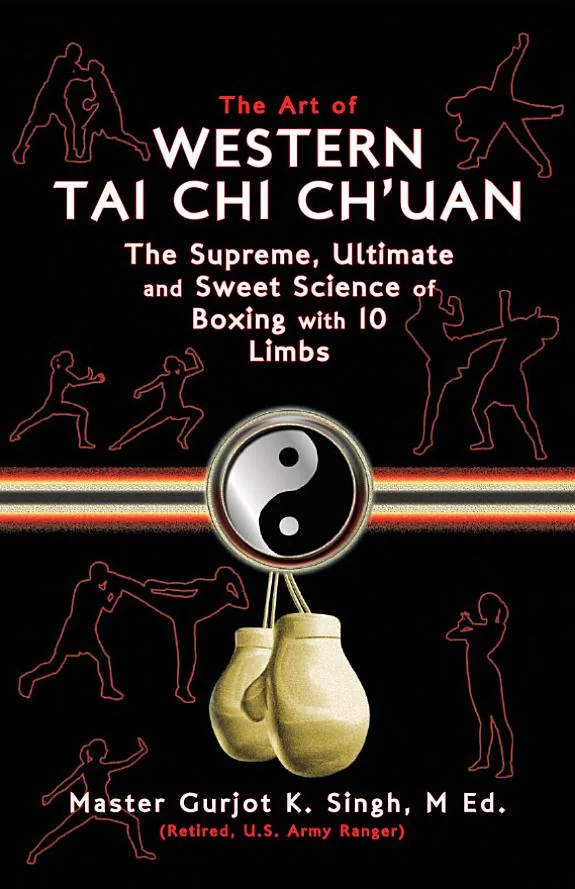
The Art of Western Tai Chi Ch'uan
 71
71

The Art of Western Tai Chi Ch'uan
M. Ed. Singh's 'The Art of Western Tai Chi Ch'uan' offers a fascinating, if somewhat niche, proposition for the modern combat athlete. The core concept—integrating the "13 Strategies" of Tai Chi with Western Boxing, Kickboxing, and Grappling—is intellectually stimulating. Singh's explanation of how to apply these ancient principles to contemporary fighting tactics, particularly the emphasis on developing an "intimidating defense," is a clear strength. However, the book's focus remains tightly fixed on amateur fighting competitors, which may limit its appeal to a broader martial arts audience. A particularly engaging section discusses the application of Tai Chi's yielding principles to defensive grappling exchanges, illustrating the practical fusion. While the theoretical framework is compelling, a deeper exploration of the physiological and psychological training required for this unique synthesis would have provided further value. Ultimately, it's a specialized manual for a very specific application of martial philosophy.
📝 Description
71
M. Ed. Singh's 2010 book fuses Tai Chi principles with modern combat sports.
Published in 2010, 'The Art of Western Tai Chi Ch'uan' by M. Ed. Singh merges the strategic principles of Tai Chi Ch'uan with the kinetic frameworks of modern combat sports. Singh designed this synthesis for practical application, intending to improve the capabilities of amateur fighters. The text details how the "13 Strategies" of Tai Chi can be integrated with fundamental tactics from Western Boxing, Kickboxing, and Grappling. This book is specifically oriented towards trainers and fighters preparing for amateur competition. It addresses the unique challenges and objectives these athletes face, emphasizing the development of a fighting style that balances formidable defense with precise offense. Singh's method aims to equip competitors with a "savage and intimidating defense" and a "calculated and deliberate offense," providing a distinct advantage. The work also examines the underlying philosophy of this martial system, introducing core principles, objectives, and potential obstacles in amateur fighting. A significant focus is placed on breathing techniques, recognizing their importance in cultivating energy and mental fortitude during combat. The book's central argument is the practical integration of Eastern strategic thought with Western combat modalities, outlining how to translate Tai Chi concepts like yielding and redirecting force into actionable fight tactics. It serves as a guide for individuals seeking to build a robust martial foundation.
This work draws on the esoteric traditions of Tai Chi Ch'uan, particularly its internal cultivation and strategic depth, extending them into a modern martial context. Esoteric traditions often emphasize the connection between mind, body, and spirit, and the cultivation of internal energy (qi). Singh applies these concepts to the physical and mental demands of amateur combat sports, suggesting that a deeper understanding of energy flow, strategic redirection, and mental discipline, as found in esoteric Tai Chi, can offer a decisive edge. The book's focus on breathing and philosophical underpinnings aligns with the holistic approach common in many esoteric martial arts.
💡 Why Read This Book?
• Gain insight into the "13 Strategies" of Tai Chi Ch'uan, understanding how their principles can be directly applied to Western Boxing, Kickboxing, and Grappling tactics, offering a strategic edge in amateur fighting. • Learn the specific breathing techniques advocated by M. Ed. Singh, which are crucial for energy cultivation and maintaining composure within the intense environment of amateur combat competitions. • Discover how to cultivate a "savage and intimidating defense" by merging Tai Chi's principles of yielding and redirection with the directness of Western striking and grappling arts.
⭐ Reader Reviews
Honest opinions from readers who have explored this book.
❓ Frequently Asked Questions
What is Western Tai Chi Ch'uan as defined by M. Ed. Singh?
Western Tai Chi Ch'uan, as introduced in the 2010 book, is a martial art system that merges the strategic principles of traditional Tai Chi's "13 Strategies" with the practical tactics of Western Boxing, Kickboxing, and Grappling.
Who is the primary audience for 'The Art of Western Tai Chi Ch'uan'?
The book is primarily intended for trainers and fighters involved in amateur fighting competitions, aiming to enhance their defensive and offensive capabilities.
When was 'The Art of Western Tai Chi Ch'uan' first published?
The book was first published in April 2010, presenting its unique approach to martial arts integration.
What are the key objectives of Western Tai Chi Ch'uan for fighters?
The key objectives include developing a "savage and intimidating defense" and a "calculated and deliberate offense" tailored for amateur fighting competitors.
Does the book cover philosophical aspects of combat?
Yes, it introduces essential principles, objectives, and obstacles for amateur fighting competitors, with a significant focus on breathing techniques.
What specific martial arts are integrated in this system?
The system integrates the "13 Strategies" of Tai Chi Ch'uan with the basic tactics of Western Boxing, Kickboxing, and Grappling.
🔮 Key Themes & Symbolism
Strategic Integration
The central theme is the practical fusion of Tai Chi Ch'uan's "13 Strategies" with the direct combat methodologies of Western Boxing, Kickboxing, and Grappling. This isn't about adopting the slow forms of Tai Chi but abstracting its strategic essence—principles like yielding, redirecting force, and strategic positioning—and applying them to the fast-paced, dynamic exchanges of modern fighting sports. The work aims to create a fighter with a more sophisticated, multi-layered approach to both offense and defense, moving beyond purely reactive or brute-force tactics.
The Philosophy of Amateur Fighting
Singh frames amateur fighting not just as a physical contest but as a strategic and philosophical endeavor. The book examines the essential principles, objectives, and inherent obstacles for competitors. A significant aspect of this philosophy is the emphasis on breath control, presented as a fundamental tool for energy management, mental clarity, and tactical execution. This perspective elevates the fighter's understanding, encouraging a mindful and deliberate approach to combat.
Defensive Dominance and Calculated Offense
A core tenet of Western Tai Chi Ch'uan, as presented, is the development of a "savage and intimidating defense." This concept goes beyond simple blocking; it implies a proactive, overwhelming defensive posture that discourages the opponent and creates openings. This is synergistically paired with a "calculated and deliberate offense," suggesting attacks that are strategically timed and executed rather than impulsive. The book explores how the principles of Tai Chi can inform this balanced yet formidable fighting style.
Bridging Eastern and Western Martial Traditions
The work represents a conscious effort to bridge distinct martial traditions, moving beyond superficial comparisons. It seeks to extract the actionable strategic intelligence from Tai Chi Ch'uan and translate it into the context of Western combat sports. This approach challenges traditional categorizations and offers a model for innovative martial synthesis, demonstrating that ancient strategic wisdom can be highly relevant and applicable to contemporary physical contests.
💬 Memorable Quotes
Direct passages from the work, attributed to the author.
“Western Tai Chi Ch'uan is the merging of its 13 Strategies into the basic tactics of Western Boxing, Kickboxing and Grappling.”
— This statement expresses the book's central thesis: a practical synthesis designed to enhance the effectiveness of modern combat athletes by integrating ancient strategic frameworks with contemporary fighting disciplines.
“The result is an Amateur Fighter with a savage and intimidating defense and a calculated and deliberate offense.”
— This highlights the intended outcome of the Western Tai Chi Ch'uan system—creating a competitor who is not only offensively potent but also possesses a formidable, psychologically impactful defensive capability.
“You will learn the essential principles, objectives and obstacles of an Amateur Fighting Competitor, including breathing tech”
— This points to the comprehensive nature of the training offered, emphasizing that the book covers not just physical techniques but also the strategic and mental conditioning vital for success in competition.
“This book introduces Trainers and Fighters to the philosophy and application of Western Tai Chi Ch'uan for Amateur Fighting Competitors.”
— This directly states the book's purpose and target audience, positioning it as an instructional guide for those involved in the practicalities and underlying philosophy of a specific martial arts fusion.
“The 13 Strategies of Tai Chi Ch'uan are applied to the basic tactics of Western Boxing, Kickboxing and Grappling.”
— This is a concise summary of the book's core methodology, indicating a focus on abstracting and applying the strategic elements of Tai Chi rather than its more traditional forms.
🌙 Esoteric Significance
Tradition
While not strictly adhering to a single esoteric lineage, 'The Art of Western Tai Chi Ch'uan' draws heavily from the strategic and philosophical underpinnings of Taoist principles, particularly as embodied in Tai Chi Ch'uan. Its esoteric nature lies in its exploration of internal cultivation (breath control) and the application of subtle energetic principles (yielding, redirecting) within a highly externalized and competitive domain. It bridges the gap between internal arts focused on personal development and external arts focused on combat efficacy, suggesting a unified approach to mind-body mastery.
Symbolism
The "13 Strategies" of Tai Chi Ch'uan themselves can be viewed as symbolic representations of fundamental energetic interactions and strategic principles. While the book focuses on tactical application, these strategies often symbolize concepts like yielding (like water) versus hardness (like stone), the importance of central balance, and the cyclical nature of force generation and redirection. The integration with Western Boxing, Kickboxing, and Grappling introduces symbols of direct confrontation, physical conditioning, and aggressive engagement, creating a symbolic dialogue between stillness and motion, subtlety and force.
Modern Relevance
This work remains relevant for contemporary martial artists and combat sports practitioners seeking to deepen their strategic understanding beyond raw physicality. It speaks to modern concepts of 'mindful combat' and integrated training methodologies. Thinkers and practitioners in fields like performance psychology, sports science, and innovative martial arts synthesis might find value in Singh's approach to bridging ancient wisdom with modern athletic demands. Its focus on practical application makes it a potential touchstone for coaches looking to develop more sophisticated training programs.
👥 Who Should Read This Book
• Amateur fighting competitors and their coaches seeking to develop a unique tactical advantage by integrating Eastern strategic principles with Western combat sports. • Martial artists interested in comparative studies of different fighting systems, specifically exploring how the strategic elements of Tai Chi Ch'uan can be practically applied outside its traditional context. • Individuals fascinated by the philosophy of combat and the application of mind-body principles to competitive physical disciplines, looking for a structured approach to enhancing both defense and offense.
📜 Historical Context
Published in April 2010, M. Ed. Singh's 'The Art of Western Tai Chi Ch'uan' emerged during a period of increasing cross-pollination between traditional Eastern martial arts and Western combat sports. While many martial artists explored hybrid systems, Singh's work distinguished itself by specifically targeting amateur fighting competitors and focusing on the strategic integration of Tai Chi's "13 Strategies" with Boxing, Kickboxing, and Grappling. This period saw figures like Bruce Lee's philosophy of Jeet Kune Do influencing martial arts discourse, advocating for the removal of stylistic limitations and the adoption of effective techniques regardless of origin. Singh's approach can be seen as a contemporary manifestation of this eclectic martial philosophy, adapted for a specific competitive context. The work likely engaged with the existing discourse around martial arts effectiveness, contrasting its approach with purely traditional Tai Chi practices or solely Western combat systems. Its reception was likely within niche circles of martial arts practitioners and coaches interested in innovative training methodologies.
📔 Journal Prompts
The "13 Strategies" of Tai Chi Ch'uan: How can their core principles be adapted to your current fighting style?
Reflecting on the "savage and intimidating defense": What does this concept mean in practice for your training?
The role of breathing techniques in amateur fighting: Identify one specific breathing exercise and its potential impact.
Analyzing the "essential principles, objectives and obstacles" for amateur competitors: Which are most challenging for you?
The fusion of "Western Boxing, Kickboxing and Grappling" with Tai Chi: What are the primary benefits of this integration?
🗂️ Glossary
Western Tai Chi Ch'uan
A martial arts system developed by M. Ed. Singh, integrating the strategic "13 Strategies" of traditional Tai Chi Ch'uan with the tactics of Western Boxing, Kickboxing, and Grappling for amateur fighters.
13 Strategies
The core strategic principles derived from Tai Chi Ch'uan that form the theoretical basis for the Western Tai Chi Ch'uan system, focusing on concepts like yielding, redirecting, and positioning.
Amateur Fighting Competitors
Individuals participating in organized combat sports at a non-professional level, the primary target audience for the techniques and philosophy presented in the book.
Savage and Intimidating Defense
A defensive approach emphasized in the book, suggesting a proactive and formidable defensive posture that discourages opponents and creates offensive opportunities.
Calculated and Deliberate Offense
An offensive strategy advocated in the book, focusing on precision, timing, and strategic execution of attacks rather than impulsive or uncontrolled aggression.
Breathing Techniques
Methods of controlling respiration, highlighted in the book as crucial for energy cultivation, mental fortitude, and tactical execution within the context of combat.
Western Boxing, Kickboxing and Grappling
The specific Western combat sports whose tactics are integrated with Tai Chi principles in Singh's system.
This book appears in 1 collection
🔮 Readers Also Liked
Browse all →









From the “Tai Chi” Collection
View all →







More Free Occult Philosophy Books
View all →