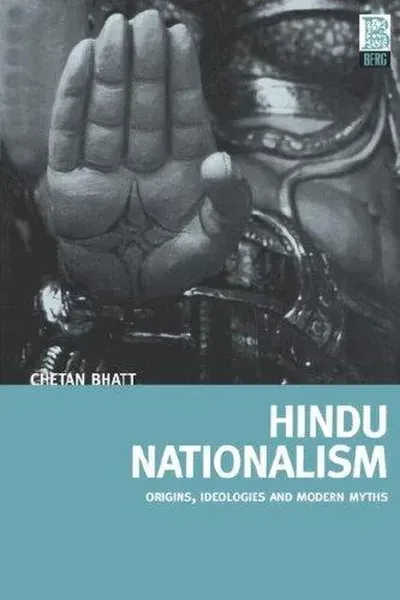
The Archetypes and the Collective Unconscious

 72
72

The Archetypes and the Collective Unconscious
Jung's "The Archetypes and the Collective Unconscious" remains a cornerstone text for understanding the deeper currents of the psyche. The clarity with which Jung outlines the theoretical basis for archetypes, particularly in the initial essays, is remarkable. He skillfully connects abstract concepts to concrete examples from mythology and dreams, illustrating how these primordial patterns shape human experience. A notable strength is the exploration of the Shadow archetype, a concept that continues to challenge and enlighten readers. However, the density of Jung's prose can, at times, be demanding, requiring careful rereading. The later sections, while rich, sometimes assume a familiarity with his broader theoretical framework that may not be present in every reader. Despite these challenges, the book's enduring power lies in its ability to illuminate the universal dimensions of human psychology. It offers a compelling framework for interpreting the symbolic language that underlies our myths, dreams, and conscious lives.
📝 Description
72
Carl Jung's 1968 collected essays introduced his theories on archetypes and the collective unconscious.
This volume compiles key essays by Carl Gustav Jung concerning the archetypes and the collective unconscious. First gathered in 1968, these writings draw from Jung's extensive research into the fundamental structures of the human psyche. The book moves from the theoretical basis of these concepts to detailed examinations of specific archetypal figures. It demonstrates how these patterns appear across mythologies, world religions, and individual psychological experiences.
Jung developed these ideas during a dynamic intellectual period in early 20th century Europe. His work presented a departure from Freudian psychoanalysis by positing a deeper, transpersonal dimension of the unconscious. The book's concepts emerged as fields like anthropology and religious studies began to examine diverse cultural systems and symbolic expressions. Its publication generated both recognition and debate, cementing Jung's significant, though often contested, standing in psychology.
Jung's work on archetypes and the collective unconscious connects to broader esoteric traditions that explore hidden dimensions of human experience. His emphasis on symbols, myths, and universal patterns echoes the Gnostic search for innate spiritual knowledge and the Hermetic principle of correspondence between the inner and outer worlds. The collective unconscious can be seen as a modern articulation of a universal mind or divine spark present in all humanity, a concept found in various mystical and occult philosophies. This book positions itself within a lineage of thought that seeks to understand consciousness beyond purely material or individualistic frameworks.
💡 Why Read This Book?
• Learn about the theoretical framework for archetypes as innate psychic structures, as detailed in the foundational essays, offering a distinct model from learned behaviors. • Understand the concept of the collective unconscious as a shared, transpersonal layer of the psyche, a key departure from personal unconscious theories, first fully articulated by Jung. • Examine the role of specific archetypes, such as the Anima/Animus, in the process of individuation, providing concrete symbols for psychological development explored in later chapters.
⭐ Reader Reviews
Honest opinions from readers who have explored this book.
❓ Frequently Asked Questions
When was "The Archetypes and the Collective Unconscious" first published?
The concepts were developed over decades, but "The Archetypes and the Collective Unconscious" was first published in its collected form on March 1, 1968, as part of Jung's "Collected Works."
What is the difference between archetypes and instincts?
Archetypes are innate patterns of psychic organization and imagery, while instincts are innate biological drives. Archetypes shape how we perceive and react to instinctual impulses.
How does the collective unconscious differ from the personal unconscious?
The personal unconscious contains repressed memories and individual experiences, whereas the collective unconscious is a deeper, inherited layer of the psyche shared by all humanity, containing archetypes.
What is the significance of the Anima and Animus archetypes?
The Anima (feminine principle in men) and Animus (masculine principle in women) represent the contrasexual aspect of the psyche and play a crucial role in relationships and the individuation process.
Does this book discuss specific myths or symbols?
Yes, the book extensively discusses specific archetypes and their manifestations in myths, fairy tales, and religious imagery across various cultures.
Who translated "The Archetypes and the Collective Unconscious"?
The primary translator for this volume of Jung's work was R. F. C. Hull, who rendered many of Jung's key texts into English.
🔮 Key Themes & Symbolism
The Collective Unconscious
Jung posits the collective unconscious as a psychic inheritance, a reservoir of latent images and patterns shared by all humanity. Unlike the personal unconscious, it is not formed by individual experience but exists prior to it. This layer contains the archetypes, the fundamental psychic structures that organize our perceptions and behaviors. Its existence is inferred from the recurring motifs found in myths, religions, and dreams across disparate cultures and historical periods, suggesting a universal psychic blueprint.
Archetypal Imagery
Archetypes are not fully formed images but rather predispositions to form certain representations of the world and ourselves. They manifest in symbolic forms – the Great Mother, the Hero, the Trickster, the Wise Old Man – which appear in dreams, myths, and art. These symbols are not arbitrary but arise from the inherent structure of the psyche, providing a framework for understanding the human condition and its fundamental experiences like birth, death, love, and conflict.
Individuation Process
The core psychological journey described by Jung is individuation, the process of becoming a whole, integrated individual. This involves confronting and integrating various aspects of the psyche, including the Shadow (our darker, unacknowledged traits) and the Anima/Animus (the contrasexual element). Archetypes play a central role in this process, guiding the individual through the complex terrain of self-discovery and the realization of their unique potential, moving beyond mere conformity to societal norms.
The Shadow
The Shadow represents the unconscious, often negative, aspects of the personality that the ego rejects or fails to acknowledge. It is the 'other' within, comprising repressed desires, instincts, and inferiorities. Jung emphasizes that confronting and integrating the Shadow is vital for psychological health and the individuation process. Ignoring it leads to projection onto others, causing interpersonal conflict and hindering self-awareness. Its integration allows for greater authenticity and wholeness.
💬 Memorable Quotes
Direct passages from the work, attributed to the author.
“Archetypes are patterns of behavior and imagery that are inherited.”
— This statement captures Jung's radical idea that certain fundamental structures of the psyche are not learned but are part of our biological and psychological inheritance, shaping our experience across cultures and time.
“The collective unconscious is the mother of all the experiences of the spirit.”
— This highlights the foundational role Jung assigns to the collective unconscious, suggesting it is the primary source from which all spiritual and psychological phenomena emerge, predating individual consciousness.
“The Shadow is a living something, a dynamic and effective psychic factor.”
— This emphasizes that the Shadow is not merely a passive repository of repressed traits but an active force within the psyche that influences behavior and requires conscious engagement for integration.
“The aim of the individuation process is to become who you truly are.”
— This succinctly defines the ultimate goal of Jungian psychology: the development of the unique, integrated self, distinct from collective norms and fully realized in one's personal potential.
“The archetype is a tendency to form representations of a motif.”
— This clarifies that archetypes are not fixed images but rather inherent potentials or organizing principles that give rise to recurring symbolic forms in human consciousness.
🌙 Esoteric Significance
Tradition
Jung's work sits at the nexus of analytical psychology and esoteric traditions, particularly Hermeticism and Gnosticism, though he sought to ground his concepts empirically. He engaged deeply with alchemical symbolism, a practice often considered esoteric, seeing it as a precursor to his understanding of psychological transformation. While not strictly a follower of any single esoteric lineage, his exploration of the collective unconscious and archetypes provided a modern, psychological framework for understanding ancient symbolic systems and initiation rites found in various mystical paths.
Symbolism
The book examines numerous archetypal symbols crucial to esoteric thought. The Anima and Animus, representing the inner feminine and masculine principles, are central to understanding psychic balance and projection in relationships, echoing concepts of divine union found in various mystical traditions. The archetype of the Self, often symbolized by mandalas or divine figures, represents wholeness and the goal of psychological and spiritual integration, a concept resonant with the ultimate union sought in many esoteric paths.
Modern Relevance
Jung's concepts of archetypes and the collective unconscious remain highly relevant in contemporary esoteric and New Age thought. They inform modern depth psychology, archetypal astrology, and various forms of spiritual counseling. Thinkers like James Hillman, who developed archetypal psychology, built directly upon Jung's foundations. Furthermore, the exploration of archetypes continues to influence contemporary artists, writers, and mythologists seeking to understand universal human narratives and symbolic expressions in both traditional and modern contexts.
👥 Who Should Read This Book
• Students of analytical psychology and depth psychology seeking to understand the foundational concepts of Jungian theory, particularly the nature of archetypes and the collective unconscious. • Comparative religion scholars and mythologists interested in the underlying psychic structures that give rise to universal mythic patterns and religious symbolism across cultures. • Individuals engaged in personal growth and self-exploration who wish to understand the symbolic language of their dreams, inner life, and the deeper motivations shaping their experiences.
📜 Historical Context
Carl Gustav Jung's "The Archetypes and the Collective Unconscious" emerged from a fertile, yet contentious, intellectual landscape in the first half of the 20th century. Developed primarily between the 1910s and 1950s, his theories stood in stark contrast to the prevailing Freudian psychoanalysis, which focused more on repressed sexuality and personal history. Jung's concept of a transpersonal, inherited collective unconscious and its archetypal contents was a significant departure, drawing inspiration from comparative mythology, religious studies, and anthropology, fields then actively exploring non-Western cultures. While figures like Mircea Eliade were similarly interested in myth and ritual, Jung's psychological framework offered a unique interpretive lens. The work's reception was complex; it was hailed by some as a profound expansion of psychological understanding, while others, particularly within more orthodox scientific circles, viewed it with skepticism due to its seemingly metaphysical or mystical implications.
📔 Journal Prompts
The Shadow's projection onto others, and its integration.
The archetype of the Wise Old Man as a guiding principle.
The symbolic representation of the Self in personal experience.
The Anima/Animus and its influence on relationships.
Recurring motifs in dreams and their archetypal significance.
🗂️ Glossary
Archetype
An innate, universal psychic disposition that organizes experience and manifests in symbolic imagery. It is a tendency to form specific representations of a motif.
Collective Unconscious
A deeper layer of the unconscious psyche, inherited and shared by all humanity, containing archetypes and primordial images.
Individuation
The lifelong psychological process of becoming an individual, integrating conscious and unconscious aspects of the self to achieve wholeness.
Shadow
The unconscious, often rejected or inferior, aspects of the personality that the ego fails to acknowledge or integrate.
Anima/Animus
The contrasexual archetype within the psyche: the Anima is the feminine principle in men, and the Animus is the masculine principle in women.
Persona
The social mask or role an individual presents to the world, which may or may not align with their true self.
Self
The archetype of wholeness and the totality of the psyche, encompassing both conscious and unconscious aspects; the goal of individuation.
This book appears in 1 collection
🔮 Readers Also Liked
Browse all →








From the “Collective Unconscious” Collection
View all →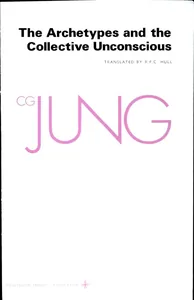




More Free Occult Philosophy Books
View all →