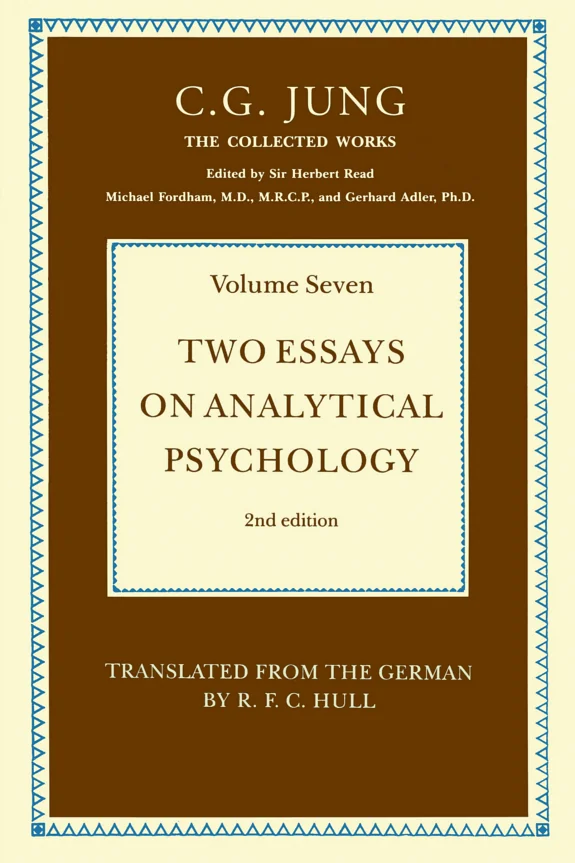
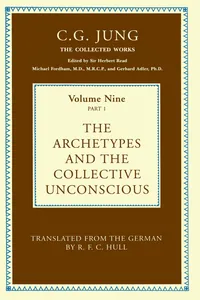
Two Essays on Analytical Psychology
 82
82

Two Essays on Analytical Psychology
Jung's "Two Essays" remains a formidable, if challenging, entry point into his complex thought. The strength lies in the raw presentation of his core ideas – the collective unconscious and archetypes – in a relatively concentrated form. The appendices, offering earlier formulations, are particularly illuminating, allowing readers to witness the genesis of concepts that would reshape psychological discourse. However, the density of the prose and the assumption of a certain familiarity with psychological terminology can be a barrier for newcomers. A passage detailing the anima and animus, for instance, while crucial, requires careful parsing. Despite its demanding nature, the sheer intellectual force of Jung's vision makes this collection indispensable for serious students of the psyche.
📝 Description
82
In 1946, C.G. Jung published two essays that became central to his psychological system.
This volume contains C.G. Jung's "On the Nature of the Psyche" and "The Structure of the Unconscious," originally released in 1946. These essays are considered fundamental to understanding Jung's overall psychological framework. The book includes appendices with earlier drafts, providing insight into how Jung developed his key ideas. This specific edition is the revised and expanded second edition, making it a valuable resource for dedicated study. It addresses serious students, scholars, and practitioners who want to engage directly with Jung's own writings. It is also relevant for those interested in the history of psychoanalysis and the evolution of depth psychology. Readers interested in the connection between psychology and spirituality, or in the archetypal aspects of the human mind, will find much of value. This is not an introductory text; it demands a serious engagement with complex concepts.
These essays were written in the post-World War II period, a time of significant intellectual activity. Jung's theories on the collective unconscious and archetypes represented a significant departure from Freudian and Adlerian psychology. He engaged in intellectual discussions with figures like Erich Fromm and Karen Horney, though his own focus was on the objective psyche. The concept of the collective unconscious, first outlined in earlier works, proved particularly challenging and influential, affecting fields beyond psychology such as anthropology and comparative religion.
Jung's work in these essays connects to a broader esoteric tradition that seeks to understand the deeper, often hidden, structures of human consciousness. His concept of the collective unconscious, with its inherited psychic patterns and archetypes, echoes ideas found in Gnosticism, alchemy, and Hermeticism, which explore universal symbols and primordial images. The essays treat the psyche not merely as a personal construct but as a transpersonal reality, aligning with mystical traditions that posit a universal soul or consciousness connecting all individuals. This perspective moves beyond purely scientific or rationalistic explanations to acknowledge the symbolic and mythical dimensions of human experience.
💡 Why Read This Book?
• Gain direct access to Jung's foundational concepts like the collective unconscious and archetypes, understanding their original formulation beyond secondary interpretations, as presented in the revised second edition. • Grasp the concept of individuation as a central life process, learning how Jung envisioned the journey toward psychic wholeness distinct from the ego's perspective. • Explore the structure of the unconscious psyche, including the role of archetypes, which provides a framework for understanding universal human experiences and symbolism in myths and dreams.
⭐ Reader Reviews
Honest opinions from readers who have explored this book.
❓ Frequently Asked Questions
What is the primary focus of C.G. Jung's "Two Essays on Analytical Psychology"?
The book primarily focuses on Jung's core concepts of the collective unconscious and archetypes, presenting his fundamental framework for analytical psychology as detailed in his "Collected Works."
When were the "Two Essays on Analytical Psychology" first published?
The essays were first published in 1946 as part of C.G. Jung's Collected Works. This specific edition is the revised and augmented second edition.
What is the concept of the 'collective unconscious' as explained by Jung?
Jung describes the collective unconscious as a universal, inherited layer of the human psyche containing archetypes – primordial patterns and images shared across all cultures and individuals.
How does "Two Essays on Analytical Psychology" differ from introductory books on Jung?
Unlike introductory texts, these essays present Jung's ideas in their original, dense form, requiring deeper engagement. They include appendices with earlier drafts, offering a scholarly perspective.
Who would benefit most from reading Jung's "Two Essays"?
Psychology students, scholars, and anyone deeply interested in Jungian psychology, the history of psychoanalysis, or the archetypal dimensions of the human mind will find this work invaluable.
What are archetypes according to Jung in these essays?
Archetypes are presented as universal, innate psychic dispositions or patterns that manifest in symbols, myths, and dreams, shaping human behavior and perception across cultures.
🔮 Key Themes & Symbolism
The Collective Unconscious
This seminal concept posits a psychic layer inherited by all humanity, distinct from personal experience. Jung argues it contains primordial patterns, or archetypes, that shape our perceptions and behaviors universally. The essays explore its structure and function, suggesting it is the source of myths, fairy tales, and religious motifs, providing a common psychic ground for all people. Understanding this layer is key to grasping the objective psyche beyond the ego's confines.
Archetypes as Psychic Structures
Archetypes are the fundamental constituents of the collective unconscious. They are not inherited ideas but rather innate dispositions to experience and represent the world in certain ways. The essays detail how archetypes like the Mother, the Hero, or the Shadow manifest through symbols and narratives across cultures. Jung's work here provides a framework for analyzing these universal patterns found in dreams, art, and mythology, revealing the deep structure of the human psyche.
Individuation and the Self
The process of individuation is Jung's term for the lifelong psychological development towards wholeness. Central to this is the realization of the Self, the archetype of totality and the regulating center of the psyche, distinct from the ego. The essays discuss how confronting archetypal contents, integrating unconscious aspects, and differentiating from collective norms are essential steps. This journey leads to a more authentic and complete personality, moving beyond mere adaptation.
The Structure of the Psyche
Jung outlines a model of the psyche that includes the ego, the personal unconscious, and the collective unconscious. He explores the dynamic interplay between these layers and the role of psychic energy (libido) in driving psychological processes. The essays examine how the conscious ego relates to the vast unconscious, including the powerful influence of archetypal complexes and the potential for transformation through engagement with these deeper psychic realities.
💬 Memorable Quotes
Direct passages from the work, attributed to the author.
“The collective unconscious means the existence of archetypes, that is to say, of primordial images.”
— This statement succinctly defines the core of Jung's theory, linking the inherited, universal psyche (collective unconscious) directly to its fundamental building blocks (archetypes) which manifest as universal patterns.
“Archetypes are forms without content.”
— This highlights the nature of archetypes as structural potentials or predispositions, rather than fully formed ideas. They gain specific content through individual experience and cultural expression.
“The ego is not the center of the personality; the Self is.”
— This points to Jung's reorientation of psychological focus from the conscious ego to the Self as the true center and totality of the psyche, encompassing both conscious and unconscious elements.
“The psyche is not only a condition of the brain, but also a condition for the brain.”
— This interpretation emphasizes Jung's view of the psyche as a fundamental reality, not merely a byproduct of the physical brain, suggesting a more holistic and perhaps even transpersonal understanding of consciousness.
💡 Key Ideas
Editorial paraphrase of the work's core concepts — not direct quotes.
The goal of individuation is to become who you truly are.
This paraphrase captures the essence of Jung's concept of individuation – the process of realizing one's unique potential and integrating all aspects of the personality to achieve wholeness and self-realization.
🌙 Esoteric Significance
Tradition
Jung's work on archetypes and the collective unconscious bridges empirical psychology with ancient esoteric traditions. While not strictly aligned with any single lineage like Hermeticism or Kabbalah, his exploration of universal psychic patterns strongly echoes Gnostic ideas of innate spiritual structures and the Hermetic principle of "as above, so below" applied to the inner cosmos. His focus on psychological integration and the realization of the Self can be seen as a modern, psychological interpretation of alchemical processes and the quest for spiritual wholeness.
Symbolism
Central symbols in Jung's work, as explored in these essays, include the **Mandala**, representing the Self and psychic totality, often depicted as a circle containing squares or intricate geometric patterns. The **Shadow** represents the repressed, darker aspects of the personality, often projected onto others. The **Anima/Animus** figures symbolize the contrasexual aspects within the psyche, mediating the connection to the unconscious and influencing relationships. These symbols function as archetypal motifs, pointing towards deeper psychic realities.
Modern Relevance
Jung's concepts continue to be highly relevant in contemporary esoteric and spiritual circles. Thinkers and practitioners in depth psychology, Jungian analysis, and archetypal psychology directly engage with his work. His ideas on archetypes and the collective unconscious also inform modern mythology studies, comparative religion, and even certain strands of transpersonal psychology. Furthermore, concepts like the Shadow and individuation are frequently discussed in self-help, spiritual development, and creative arts contexts, demonstrating their enduring appeal.
👥 Who Should Read This Book
• Aspiring Jungian analysts and psychotherapists seeking foundational texts directly from the source, to understand the core tenets of analytical psychology. • Students of comparative mythology and religious studies looking to explore the underlying psychological structures that inform cross-cultural narratives and belief systems. • Individuals on a path of personal growth and self-discovery interested in understanding the deeper, often unconscious, patterns that shape their lives and experiences.
📜 Historical Context
Published in 1946, "Two Essays on Analytical Psychology" emerged from the intellectual landscape following World War II, a period marked by profound societal upheaval and a renewed interest in the human psyche. C.G. Jung's work stood in contrast to prevailing psychoanalytic thought, particularly Sigmund Freud's emphasis on personal repressed material and Alfred Adler's focus on power dynamics. Jung's theories of the collective unconscious and archetypes offered a more expansive, transpersonal view, drawing parallels with mythology, anthropology, and religious studies. Key contemporaries like Mircea Eliade were exploring similar themes in comparative religion, while Jung's ideas were beginning to influence fields outside of clinical psychology, although his concepts were often met with skepticism or misunderstanding by the more empirically-minded scientific community.
📔 Journal Prompts
The concept of the collective unconscious and its manifestation through archetypes.
Archetypes encountered in personal dreams or cultural narratives.
The process of individuation and the role of the Self.
The dynamic relationship between the ego and the unconscious.
Personal understanding of the Shadow archetype.
🗂️ Glossary
Collective Unconscious
A universal, inherited layer of the human psyche containing primordial images and patterns (archetypes) shared by all people.
Archetype
Universal, archaic patterns and images that derive from the collective unconscious and are the psychic counterpart of a regular, and therefore common, phenomenon.
Ego
The center of consciousness, the part of the personality that is aware of itself and its surroundings.
Self
The central archetype of totality and the regulating center of the entire psyche, encompassing both conscious and unconscious aspects.
Individuation
The psychological process of integrating the conscious and unconscious aspects of the personality to achieve wholeness and self-realization.
Libido
Psychic energy; not limited to sexual energy, but a general life force that drives psychological processes.
Shadow
The unconscious, repressed, or disowned aspects of the personality, often projected onto others.
This book appears in 1 collection
🔮 Readers Also Liked
Browse all →









From the “Collective Unconscious” Collection
View all →




More Free Occult Philosophy Books
View all →