Templars : History and Myth

 83
83

Templars : History and Myth
Michael Haag’s "Templars: History and Myth" approaches its subject with a welcome dose of scholarly skepticism, a valuable counterpoint to the many sensationalist accounts of the Knights Templar. Haag effectively separates the historical order, founded in the early 12th century, from the later mythologies that have attached themselves to its name. His meticulous examination of primary sources, particularly concerning the trials and accusations that led to the order’s suppression in 1312, is a significant strength. However, the narrative occasionally feels dense, particularly when detailing financial transactions or intricate feudal relationships, which might slow the pace for readers less invested in the minutiae of medieval economics and politics. A passage detailing the specific accusations of idolatry and spitting on the cross during the 1307-1312 trials vividly illustrates the blend of religious fervor and political expediency at play. Ultimately, Haag provides a crucial, fact-based foundation for understanding the Templars, essential for anyone seeking substance over sensationalism.
📝 Description
83
Michael Haag's 2015 book examines the historical Knights Templar, separating fact from legend.
Michael Haag's "Templars: History and Myth" analyzes the historical Knights Templar, moving past popular romantic notions to detail their foundation, swift growth, and abrupt end. The book follows their establishment in the early 12th century, their involvement in the Crusades, and their eventual collapse in the early 14th century, fueled by accusations of heresy. The work is intended for serious students of medieval history, military orders, and the complex interactions between religious authority, political might, and financial systems in the High Middle Ages. It speaks to readers interested in the historical basis of persistent legends, presenting a grounded view of a group frequently surrounded by mystery and conjecture.
Founded around 1119 after the First Crusade, the Poor Fellow-Soldiers of Christ and of the Temple of Solomon rapidly secured papal approval and considerable property across Europe, becoming major economic and military forces. Haag places their narrative within the context of papal politics, the Crusader states, and the economic innovations of the period, like the early banking methods they pioneered. The book addresses the Templars' dual role as warrior monks, their specific Rule, and the charges brought against them by King Philip IV of France. It considers the nature of heresy accusations in the medieval era and the political reasons for the order's dissolution, especially the seizure of their extensive wealth and holdings.
While the book focuses on historical fact, its subject matter inevitably touches upon the enduring fascination with secret societies and hidden knowledge. The Knights Templar, due to their rapid rise, immense wealth, and dramatic suppression, have become a potent symbol in various esoteric traditions. Haag's work provides the historical grounding that informs, and sometimes challenges, the mythical status the Templars hold in later occult and fraternal organizations, offering a necessary counterpoint to purely speculative interpretations.
💡 Why Read This Book?
• Gain a historically grounded understanding of the Knights Templar, distinguishing their actual 12th-century origins and 1312 suppression from later romantic interpretations. • Grasp the complex socio-political landscape of the Crusades and the medieval Church that shaped the Templars' rise and fall, including their innovative financial practices. • Critically assess the evidence and motivations behind the accusations of heresy that led to the order's dissolution, moving beyond speculative conspiracy theories.
⭐ Reader Reviews
Honest opinions from readers who have explored this book.
❓ Frequently Asked Questions
What was the primary historical role of the Knights Templar?
The Knights Templar were a military order established around 1119 to protect Christian pilgrims in the Holy Land. They evolved into a powerful economic force, pioneering early banking methods and accumulating vast wealth and land holdings across Europe.
When were the Knights Templar suppressed and why?
The Knights Templar were suppressed in 1312 by Pope Clement V, largely at the behest of King Philip IV of France. The official reasons cited were accusations of heresy, blasphemy, and other offenses, though political and financial motives were significant.
Does the book explore the esoteric myths surrounding the Templars?
While the book focuses on historical accuracy, it addresses the genesis of myths by examining the historical context that later gave rise to esoteric interpretations, particularly after their suppression.
What historical period does Michael Haag primarily cover?
Michael Haag primarily covers the period from the early 12th century, when the order was founded, through its peak influence, to its dramatic suppression and dissolution in the early 14th century.
Is this book suitable for absolute beginners in medieval history?
The book is detailed and scholarly, best suited for those with some background in medieval history or a strong interest in military orders. It provides a rigorous exploration rather than a simple overview.
What makes Haag's approach to the Templars unique?
Haag's approach is distinguished by its adherence to verifiable historical evidence and its critical examination of sources, aiming to debunk popular myths and present a more factual account of the order's history and demise.
🔮 Key Themes & Symbolism
Warrior Monks and Papal Authority
The book dissects the unique dual identity of the Templars as both devout monks and formidable warriors, operating under a specific Rule approved by the Church. It highlights their direct allegiance to the Pope, which granted them considerable autonomy from secular rulers but also made them targets. Haag examines how this unique position allowed them to amass power and influence during the Crusades and beyond, while also setting the stage for their eventual downfall when that papal protection was withdrawn.
Economic Power and Financial Innovation
A significant portion of the work details the Templars' role as early financiers. They managed vast estates, collected revenues, and are credited with developing early forms of credit and secure money transfer systems for pilgrims and monarchs. This economic prowess, while essential to their survival and influence, ultimately became a major catalyst for their destruction, making their vast holdings a tempting prize for indebted rulers like Philip IV.
Heresy Trials and Political Motivations
Haag thoroughly investigates the infamous trials that began in 1307, scrutinizing the charges of blasphemy, idolatry, and secret rituals. He carefully distinguishes between genuine historical evidence and the coerced confessions and political machinations orchestrated by Philip IV to dismantle the order and seize its assets. The book illuminates the medieval legal and religious climate that allowed such a powerful institution to be destroyed.
The Birth of Templar Mythos
By meticulously reconstructing the historical events, Haag provides the necessary context for understanding how and why the Templars became subjects of enduring myth and legend. The book traces the transition from the historical reality of the order's existence and suppression in the early 14th century to the later esoteric and romantic narratives that have captivated imaginations for centuries.
💬 Memorable Quotes
Direct passages from the work, attributed to the author.
“The order's wealth was a primary driver of its persecution.”
— This interpretation highlights a central argument: the Templars' immense financial power and landholdings, accumulated over two centuries, made them an irresistible target for King Philip IV of France, who was heavily indebted and sought to seize their assets.
“The Templars' direct allegiance to the Pope distinguished them from other feudal lords.”
— This concept emphasizes the unique constitutional position of the Knights Templar. Their exemption from secular jurisdiction and direct subservience to papal authority granted them significant power but also isolated them from potential defenders among the nobility.
“Distinguishing historical fact from later embellishment is crucial for understanding the Templars.”
— This interpretation underscores the book's core objective: to present a rigorously researched historical account of the Knights Templar, separating verifiable events from the centuries of mythologizing and speculation that have accumulated around the order.
“The suppression of the Templars in 1312 marked a significant shift in papal and royal power dynamics.”
— This concept points to the broader historical consequences of the Templars' downfall. It suggests that their dissolution was not merely the end of a military order but a central event that reshaped the balance of power between the papacy and emerging European monarchies.
💡 Key Ideas
Editorial paraphrase of the work's core concepts — not direct quotes.
Accusations of heresy often served political ends in the medieval period.
This paraphrase suggests that the charges of heresy leveled against the Templars were not solely based on religious deviation but were strategically employed as a tool to undermine and destroy a powerful entity that threatened the political agenda of figures like Philip IV.
🌙 Esoteric Significance
Tradition
While "Templars: History and Myth" is primarily a historical work, it inadvertently serves as a crucial counterpoint to esoteric traditions that have appropriated the Templar name. By meticulously detailing the historical order's origins, function, and suppression in the early 14th century, Haag provides a factual bedrock against which later mystical interpretations can be measured. The work doesn't align with a specific esoteric lineage but rather provides the historical data that later esotericists, such as those in 19th-century occultism or modern conspiracy theories, often disregard or reinterpret.
Symbolism
The book implicitly addresses the symbolic weight the Templars acquired posthumously. While Haag focuses on their historical military and financial roles, the potent symbols associated with them—the red cross on white surcoat, the Temple Mount, the Knights themselves as warrior ascetics—became fertile ground for later mythologizing. Esoteric traditions later imbued these symbols with meanings related to lost knowledge, Gnostic secrets, or initiatory mysteries, far removed from the Templars' original context of pilgrimage protection and Crusade warfare.
Modern Relevance
Contemporary thinkers and practitioners interested in historical accuracy within esoteric studies often reference works like Haag's. It's essential for those exploring modern Templar-inspired orders, chivalric revival movements, or even certain branches of conspiracy theory research to consult such scholarly analyses. The book provides a vital corrective, allowing for a more informed engagement with the historical Templars before studying the layers of myth and esoteric speculation that have attached themselves to the order's legacy since its 1312 suppression.
👥 Who Should Read This Book
• Students of medieval military orders seeking a scholarly, fact-based account of the Knights Templar's rise and fall. • Researchers of the Crusades and the political range of 12th- and 14th-century Europe interested in the order's socio-economic impact. • Readers disillusioned with sensationalist or conspiracy-laden narratives about the Templars, who desire a critical, evidence-based historical perspective.
📜 Historical Context
Michael Haag's "Templars: History and Myth" emerged in 2009, a period where popular interest in the Knights Templar, fueled by fiction and conspiracy theories, remained high. The book situates itself against this backdrop by grounding the narrative in the early 12th century, the era of the Second Crusade and the order's founding around 1119. Haag engages with the intellectual currents of medieval Christendom, exploring the intersection of religious zeal, military expansion, and nascent financial capitalism that characterized the High Middle Ages. His work contrasts sharply with contemporary romantic interpretations prevalent in esoteric circles. Crucially, Haag's analysis of the Templars' suppression in 1312, initiated by King Philip IV of France, directly confronts the historical reception of the order, detailing the accusations of heresy and the political motivations behind their dissolution, a process documented through extensive papal and royal records.
📔 Journal Prompts
The financial innovations of the Templars and their role in Philip IV's motivation for suppression.
The specific accusations of heresy leveled against the Templars during their 1307-1312 trials.
The dual identity of the Templars as warrior monks and their adherence to a Rule.
The historical context of the Crusades and the establishment of the Templar order around 1119.
Distinguishing the historical Knights Templar from later esoteric myths and interpretations.
🗂️ Glossary
Knights Templar
A Catholic military order founded circa 1119, officially known as the Poor Fellow-Soldiers of Christ and of the Temple of Solomon. They were active during the Crusades and became a powerful financial institution before their suppression in 1312.
Rule of the Templars
The monastic code of conduct established for the Knights Templar, based on Cistercian principles. It dictated their daily lives, vows, and military duties, emphasizing poverty, chastity, and obedience.
Philip IV of France
King of France from 1285 to 1314. He was instrumental in orchestrating the downfall of the Knights Templar, driven by a desire to seize their wealth and consolidate royal power.
Heresy
In medieval religious context, belief or opinion contrary to orthodox religious doctrine. Accusations of heresy were serious and could lead to severe punishment, often used politically against powerful groups like the Templars.
Papal Bull
An official decree or charter issued by a Pope. Key papal bulls, such as Omne Datum Optimum (1139), granted the Templars significant privileges and protections.
Crusades
A series of religious wars initiated, supported, and sometimes directed by the Latin Church in the medieval period. The Templars played a significant military role in the Crusades, particularly in the Holy Land.
Suppression of the Templars
The official dissolution of the Knights Templar order by Pope Clement V in 1312, following widespread arrests, trials, and accusations of heresy, largely driven by King Philip IV of France.
🔮 Readers Also Liked
Browse all →









More by Michael Haag
All books →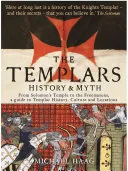


More Free Occult Philosophy Books
View all →