The tragedy of the Templars

 80
80

The tragedy of the Templars
Michael Haag's "The Tragedy of the Templars" presents a meticulously researched, if somewhat dry, account of the Knights Templar's rise and fall. Haag excels at dismantling the more fanciful myths surrounding the order, grounding his narrative in the stark realities of medieval political and religious power struggles. A particularly strong section details the sheer speed and brutality of the arrests initiated on October 13, 1307, highlighting the coordinated effort by Philip IV's agents. However, the book occasionally falters in its narrative drive, sometimes getting bogged down in the minutiae of trial transcripts. While Haag is commendable for his commitment to historical accuracy, a more vivid portrayal of the era's atmosphere could have elevated the material further. It is a solid, scholarly dissection of a legendary subject.
📝 Description
80
Michael Haag's 2023 "The Tragedy of the Templars" debunks popular myths surrounding the Knights Templar.
Michael Haag's "The Tragedy of the Templars" critically examines the historical trajectory and eventual suppression of the Knights Templar. The book moves beyond popular myth to scrutinize their rise, immense wealth, and influence during the medieval period. Haag dissects the complex accusations that led to their downfall, detailing the trial proceedings, the nature of the charges, and the political motivations of Philip IV of France and Pope Clement V.
Haag situates the Templars within the turbulent context of the Crusades and the feudal politics of 12th and 13th-century Europe. He details their official recognition by the Church in 1129, their transformation into a powerful international financial and military institution, and their suppression in the early 14th century. The work addresses charges of heresy, idolatry, and sodomy, often extracted under torture, and their profound impact on papal authority and the perception of religious military orders.
The book is suited for students of medieval history, knights' orders, and the intersection of religion and power. Readers interested in the historical basis for enduring legends, rather than sensationalized accounts, will find value in Haag's rigorous research and balanced perspective on controversial historical episodes.
While "The Tragedy of the Templars" focuses on historical events, its examination of the Knights Templar inevitably touches upon themes that resonate within esoteric traditions. The order's mysterious downfall, the accusations leveled against them, and their subsequent legendary status have long fueled speculation and occult interpretations. Haag's work provides a factual counterpoint to these narratives, grounding the Templars' story in documented history. For those interested in the historical roots of symbols and legends that appear in later esoteric movements, this book offers a solid scholarly foundation.
💡 Why Read This Book?
• Learn about the specific accusations of heresy and blasphemy levied against the Templars during their 1307 trials, moving beyond vague notions of "secret rites." • Understand the political motivations of Philip IV of France, who pressured Pope Clement V to dissolve the order, revealing the interplay of state power and religious institutions. • Grasp the practical functions of the Knights Templar as financiers and landowners in the 12th century, illustrating their significant economic impact before their suppression.
⭐ Reader Reviews
Honest opinions from readers who have explored this book.
❓ Frequently Asked Questions
When were the Knights Templar officially founded and recognized by the Church?
The Knights Templar were officially recognized by the Catholic Church at the Council of Troyes in 1129, roughly a decade after their formation around 1119.
What was the primary reason Philip IV of France sought to suppress the Templars?
Philip IV of France sought to suppress the Templars primarily to seize their immense wealth and eliminate a powerful entity that rivaled his own authority.
Were the Templars truly heretics, or were the charges fabricated?
The historical consensus, as explored in Haag's work, is that the charges of heresy, idolatry, and sodomy were largely fabricated and extracted under torture to justify their dissolution.
What happened to the Templars' assets after their suppression?
Following their suppression, many of the Templars' assets were transferred to the Knights Hospitaller, though Philip IV managed to confiscate a significant portion for himself.
Does the book discuss the Templars' alleged involvement in the Holy Grail or Freemasonry?
While the book addresses the legends that have grown around the Templars, it primarily focuses on their historical existence and suppression, treating later mystical and Masonic associations as separate developments.
What year did the main suppression of the Templars occur?
The mass arrests and the beginning of the suppression of the Knights Templar occurred on Friday, October 13, 1307.
🔮 Key Themes & Symbolism
Medieval Power Dynamics
The book meticulously details the complex interplay between secular rulers, particularly Philip IV of France, and the ecclesiastical hierarchy, represented by Pope Clement V. It illustrates how the Templars, once a favored military order, became a pawn in political games. Their vast wealth and influence, initially a source of power, ultimately made them a target for a king desperate for funds and control, demonstrating the precariousness of power in the 14th century.
Heresy and Accusation
Haag scrutinizes the nature of the charges of heresy, idolatry, and blasphemy leveled against the Templars. The work highlights how these accusations, often extracted under duress and torture during the trials initiated in 1307, served as a convenient pretext for their dissolution. It explores the historical context of heresy as a concept and a tool used to marginalize or eliminate dissenting or inconvenient groups within the medieval Church.
The Myth vs. History
A central theme is the distinction between the historical reality of the Knights Templar and the enduring myths that have surrounded them since their suppression. The book aims to peel back layers of legend, conspiracy, and romanticism to present a factual account of their monastic rule, military campaigns, and financial operations, offering a sober perspective on their actual legacy.
Ecclesiastical and Military Fusion
The work examines the unique paradox of the Knights Templar as a military order bound by monastic vows. It explores how this fusion allowed them to gain significant prestige and authority, operating as warrior-monks who were both feared on the battlefield and respected for their religious devotion. The book dissects the structure that enabled them to manage vast estates and financial networks across Christendom.
💬 Memorable Quotes
Direct passages from the work, attributed to the author.
“The arrest order was issued on Thursday, September 14, 1307, but the arrests did not begin until Friday, October 13.”
— This detail underscores the methodical planning and the symbolic significance of the chosen date, Friday the 13th, highlighting the calculated nature of the Templars' downfall.
“Philip IV was obsessed with the Templars' wealth and saw their suppression as a solution to his financial woes.”
— This interpretation emphasizes the king's primary motivation: greed. It frames the accusations of heresy not as genuine concerns, but as a political maneuver to legitimize the seizure of Templar assets.
“The trial proceedings were characterized by torture and coerced confessions.”
— This points to the illegitimacy of the trials themselves. The forced nature of the confessions stripped the proceedings of any pretense of justice, revealing them as a tool of state-sponsored persecution.
“The Order was officially recognized in 1129 at the Council of Troyes.”
— This factual anchor establishes the formal beginning of the Templars' legitimate existence within the Church structure, providing a contrast to their later condemnation and dissolution.
“The charges included spitting on the cross and denying Christ.”
— These specific examples of alleged blasphemy illustrate the extreme nature of the accusations, intended to shock and condemn the Templars in the eyes of the public and the Church.
🌙 Esoteric Significance
Tradition
While not strictly an esoteric text, "The Tragedy of the Templars" engages with the historical roots of numerous esoteric traditions that later adopted or mythologized the Templars. Its focus on the order's historical trajectory and suppression provides a crucial counterpoint to Gnostic, Hermetic, and Masonic interpretations that often project later mystical beliefs onto the medieval knights. The work serves as a foundational text for understanding the historical context from which these later esoteric narratives emerged.
Symbolism
Although the book focuses on historical fact, it implicitly touches upon symbols that became significant in later esoteric lore. The Templar cross, a potent symbol of Christian devotion and martyrdom, is examined in the context of accusations of idolatry. The concept of a hidden, secret knowledge or initiation, while debunked by Haag as historically unsubstantiated for the medieval period, became a central to later Templar mythos, representing a lost esoteric wisdom.
Modern Relevance
Contemporary occult and esoteric circles, particularly within Freemasonry and neo-Templar orders, continue to draw heavily on the perceived mysteries and alleged secrets of the Knights Templar. Haag's work offers a vital corrective, providing historical grounding for those seeking to understand the actual origins of these groups and the historical events that have been mythologized. It informs discussions on historical accuracy versus symbolic interpretation within modern esoteric practice.
👥 Who Should Read This Book
• Students of medieval military orders seeking a factual account of the Knights Templar's institutional history and suppression. • Readers interested in the intersection of religion and politics in the late Middle Ages, specifically the power struggles between monarchs and the Papacy. • Skeptics of conspiracy theories who wish to understand the historical evidence behind the Templars' downfall, moving beyond popular sensationalism.
📜 Historical Context
Published in 2012, Michael Haag's "The Tragedy of the Templars" arrived in an era still fascinated by the Knights Templar, a fascination fueled by centuries of myth-making. The book engages with a long scholarly tradition that has sought to separate historical fact from legend, a tradition that includes historians like Malcolm Barber and Alain Demurger, who also critically examined the Templars' history. Haag's work emerged when popular culture continued to widely disseminate sensationalist theories about Templar secrets, Freemasonry, and hidden treasures. The book's significance lies in its direct confrontation with these popular narratives, offering a grounded, evidence-based account of the order's rise, its role in the Crusades, its financial activities, and its brutal suppression orchestrated by Philip IV of France and Pope Clement V in 1307-1312. The reception of such works often grapples with the enduring appeal of Templar esotericism versus rigorous historical analysis.
📔 Journal Prompts
The accusations of heresy against the Templars in 1307, such as denying Christ, prompt reflection on the use of religious doctrine as political tools.
Philip IV's motivation for suppressing the Templars, driven by financial need, invites contemplation on the corrupting influence of wealth and power.
The Council of Troyes in 1129 officially recognized the Templars; consider the implications of institutional endorsement for nascent orders.
The contrast between the Templars' monastic vows and their military/financial roles suggests an exploration of paradoxes in human endeavors.
The brutal extraction of confessions under torture raises questions about justice and persecution throughout history.
🗂️ Glossary
Knights Templar
A Catholic military order founded around 1119, officially recognized in 1129. They were known for their military prowess during the Crusades and their extensive financial network across Europe.
Philip IV of France
King of France from 1285 to 1314. Known as 'Philip the Fair,' he played a central role in the suppression of the Knights Templar, driven by a desire to seize their wealth and consolidate his power.
Pope Clement V
The Pope from 1305 to 1314, who, under significant pressure from Philip IV, officially dissolved the Knights Templar in 1312.
Council of Troyes
An ecclesiastical council held in 1129 where the Knights Templar were officially recognized by the Catholic Church and given their Rule.
Heresy
In a religious context, belief or opinion contrary to orthodox religious doctrine. During the medieval period, accusations of heresy were often used as a tool for political or social control.
Friday, October 13, 1307
The date on which Philip IV of France ordered the mass arrest of the Knights Templar throughout his kingdom, initiating their brutal suppression.
Knights Hospitaller
Another major Catholic military order, founded before the Templars. After the Templars' dissolution, many of their assets were transferred to the Hospitallers.
🔮 Readers Also Liked
Browse all →







More by Michael Haag
All books →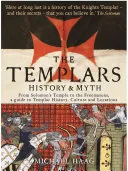


More Free Occult Philosophy Books
View all →