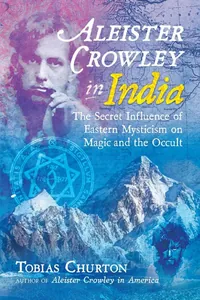
Shadow of the Alchemist
 82
82

Shadow of the Alchemist
Jeri Westerson’s Shadow of the Alchemist immediately plunges the reader into the grimy realities of late 14th-century London, eschewing romanticized notions of the past for a more grounded portrayal. Crispin Guest, our disgraced knight investigator, is a fascinatingly flawed protagonist; his sharp mind is often dulled by his cynicism, making his pursuit of justice all the more compelling. The introduction of Jack Tucker, his apprentice, provides a welcome counterpoint, injecting a youthful energy and a different perspective on the city's underbelly. While the historical detail is commendable, occasionally the intricate plotting can feel a touch convoluted, requiring close attention to follow every thread. However, the strength of Guest’s character and the authentic atmosphere Westerson creates make this a solid entry for fans of historical crime fiction. It successfully evokes a specific time and place, making the mystery feel both personal and historically relevant.
📝 Description
82
In 1390s London, a disgraced knight named Crispin Guest becomes an investigator known as The Tracker.
Shadow of the Alchemist introduces Crispin Guest, a knight stripped of his rank, now working as an investigator in the shadowed corners of 14th-century England. Alongside his apprentice, Jack Tucker, a reformed thief, Guest tackles cases that elude official notice. The story combines accurate historical detail with the tension of a modern mystery, highlighting Guest's sharp mind and his ability to solve difficult puzzles.
This novel is written for those who value historical fiction built on careful research and enjoy complex detective stories. Readers interested in the medieval era, its social structures, and its legal systems will find the setting particularly engaging. Those who prefer stories focused on character development, featuring a protagonist with a complicated moral compass and a dark, atmospheric environment, will appreciate Guest's struggles. The blend of historical accuracy and a quick mystery plot makes Guest's investigations appealing.
This novel is set against the backdrop of 1390s London, a time of social and political unrest following the Peasants' Revolt and during Richard II's reign. It explores themes of justice, class divisions, and the persistence of chivalric codes in a changing society. The narrative places a fictional investigator within this specific historical context, examining how societal shifts and lingering traditions influence the pursuit of truth and order.
💡 Why Read This Book?
• Gain insight into the practicalities of medieval justice systems and urban life in 1390s London, understanding the challenges faced by individuals outside the established hierarchy. • Experience the psychological depth of a disgraced knight, Crispin Guest, as he navigates a world where his past status offers little protection but sharpens his investigative skills. • Uncover the symbolic weight of alchemy as a metaphor for transformation and hidden truths, applied to the gritty realities of crime and redemption in a historical setting.
⭐ Reader Reviews
Honest opinions from readers who have explored this book.
❓ Frequently Asked Questions
What is the historical setting of Shadow of the Alchemist?
The novel is set in London during the 1390s, a period in English history marked by the aftermath of the Peasants' Revolt and the reign of Richard II, offering a gritty and authentic backdrop for the mystery.
Who is the main protagonist and what is his background?
The protagonist is Crispin Guest, a former Knight of the Realm who has been stripped of his title and lands. He now works as an investigator, known as 'The Tracker,' relying on his wits to survive.
What is the relationship between Crispin Guest and Jack Tucker?
Jack Tucker is Crispin Guest's young apprentice. Tucker is a reformed thief who assists Guest in his investigations, bringing his own street knowledge and unique skills to their partnership.
What makes this book unique compared to other historical mysteries?
Shadow of the Alchemist stands out by authentically portraying the social strata and legal limitations of 14th-century England, combining meticulous historical detail with a suspenseful detective narrative.
Does the book involve supernatural elements or alchemy in a literal sense?
While the title suggests alchemy, the book primarily uses it as a thematic element. The focus is on the historical mystery and character-driven suspense, not literal magical practices.
Is this part of a series?
Yes, Shadow of the Alchemist is the first book in the Crispin Guest medieval mystery series by Jeri Westerson, introducing the main characters and their world.
🔮 Key Themes & Symbolism
Justice and Redemption
Crispin Guest's journey is fundamentally about seeking redemption for his past transgressions, which led to his downfall. The narrative explores his personal quest for a form of justice, both for himself and for those he investigates, often operating in the legal and moral grey areas of 14th-century England. His effectiveness as 'The Tracker' stems from his fall from grace, giving him a unique perspective on societal outcasts and the failures of the official justice system.
Social Stratification
The novel vividly depicts the stark class divisions prevalent in medieval society. Guest, a former knight now fallen from his station, navigates between the nobility, the burgeoning merchant class, and the impoverished underclass of London. The book highlights the differing legal treatments, opportunities, and daily struggles of each group, showing how one's birth and social standing heavily influenced their life and access to justice in the 1390s.
The Nature of Truth
As an investigator, Guest's primary role is to uncover hidden truths. The 'alchemist' in the title can be interpreted metaphorically, representing the process of transforming base circumstances or hidden deceptions into clear understanding. The book examines how truth is perceived, manipulated, and obscured by power, personal ambition, and societal norms, challenging characters and readers alike to look beyond surface appearances.
Urban Survival
Westerson grounds the narrative in the gritty realities of medieval urban existence. The book details the physical environment of London, its crowded streets, sanitation issues, and the prevalence of crime. The characters, particularly Jack Tucker with his past as a thief, exemplify the constant struggle for survival and the various means individuals employed to work through the city's dangers and opportunities.
💬 Memorable Quotes
Direct passages from the work, attributed to the author.
“Once a Knight of the Realm, Crispin Guest was stripped of his title and his lands and must now earn his meager living through his wits.”
— This directly establishes the protagonist's central conflict: the loss of status and the necessity of relying on intelligence and resourcefulness for survival in a world that has cast him out.
“With the help of his young apprentice, reformed thief Jack Tucker, Guest is known to certain populations as The Tracker.”
— This highlights the dynamic partnership between Guest and Tucker, emphasizing their reliance on each other's contrasting skills—Guest's deductive reasoning and Tucker's street-level experience—to achieve their goals.
“Nicholas F...”
— The blurb cuts off here, indicating the introduction of a new client or an important character who seeks out Crispin Guest's unique investigative services, setting the central mystery of the plot in motion.
💡 Key Ideas
Editorial paraphrase of the work's core concepts — not direct quotes.
He was known in certain circles as The Tracker, the man who could find anything—for a price.
This line expresses Crispin Guest's precarious position in society. Stripped of his former status, he has carved out a new, albeit shadowy, livelihood by leveraging his skills in a way that operates outside legitimate channels.
If you enjoy authentic Medieval history combined with modern suspense, this one's for you.
This quote, attributed to John Lescroart, serves as a concise endorsement, positioning the book as a successful fusion of historical accuracy and contemporary thriller elements, appealing to a broad audience.
🌙 Esoteric Significance
Tradition
While not overtly tied to a specific esoteric lineage like Hermeticism or Gnosticism, Shadow of the Alchemist taps into the broader Hermetic principle of 'As Above, So Below' through its exploration of macrocosmic societal structures mirrored in the microcosm of individual lives and criminal investigations. The quest for hidden knowledge and the transformative nature implied by the 'alchemist' title align with alchemical traditions focused on spiritual purification and the transmutation of base elements into gold, here paralleled by Guest's personal journey and the uncovering of truth.
Symbolism
The figure of the 'Alchemist' itself serves as a potent symbol, representing transformation, the pursuit of hidden knowledge, and the potential for profound change. Crispin Guest, the fallen knight, embodies this principle as he seeks to transmute his disgraced past into a future of purpose through his investigative work. The city of London, with its layers of poverty, corruption, and hidden dealings, acts as a symbolic landscape where truths are buried and must be unearthed, much like the philosopher's stone sought by alchemists.
Modern Relevance
Contemporary readers interested in the intersection of history, psychology, and the perennial quest for meaning find resonance in Westerson's work. The focus on a protagonist grappling with his identity and seeking justice outside conventional systems speaks to modern anxieties about societal structures and personal agency. Furthermore, the thematic exploration of transformation and hidden truths aligns with contemporary interest in self-help, personal development, and narrative psychology, where understanding one's own 'inner alchemy' is paramount.
👥 Who Should Read This Book
• Readers interested in detailed historical settings, particularly those fascinated by the social and legal intricacies of 14th-century England, will appreciate the authentic atmosphere. • Fans of character-driven mysteries who enjoy complex protagonists like Crispin Guest, a disgraced knight seeking redemption, will find the narrative compelling. • Individuals exploring themes of justice, social inequality, and personal transformation within a historical context will find the book offers a rich ground for reflection.
📜 Historical Context
Set in 1390s London, Shadow of the Alchemist emerges from a literary landscape increasingly interested in historical authenticity, particularly following the resurgence of medieval studies and popular historical fiction in the late 20th and early 21st centuries. This period in England was marked by the turbulent reign of Richard II, a time of political intrigue, social unrest following the 1381 Peasants' Revolt, and evolving legal structures. Jeri Westerson places her protagonist, Crispin Guest, within this specific milieu, exploring themes of justice, class, and the remnants of chivalric ideals. While contemporary authors like Sharon Kay Penman were lauded for their detailed historical novels of the Plantagenet era, Westerson differentiates herself by focusing on a detective narrative set within the grimy urban realities, rather than grand courtly dramas. The reception of such works often hinges on the balance between historical accuracy and compelling storytelling, with Westerson striving to create an immersive experience of medieval life.
📔 Journal Prompts
Crispin Guest's identity as 'The Tracker' after losing his knighthood.
The contrast between aristocratic privilege and urban poverty in 1390s London.
The symbolic meaning of alchemy in relation to uncovering hidden truths.
Jack Tucker's perspective as a reformed thief assisting a former knight.
The challenges of seeking justice within the medieval legal system.
🗂️ Glossary
Knight of the Realm
A distinguished status granted by a monarch, typically conferring land, titles, and significant social standing. Losing this status, as Crispin Guest did, meant a complete reversal of fortune and social exclusion.
The Tracker
The moniker given to Crispin Guest by certain populations, signifying his skill in finding people or information, usually for a fee. It highlights his role as an unofficial investigator operating outside formal channels.
Apprentice
A person who is learning a trade or skill by working for another person. In this context, Jack Tucker learns investigative skills and street smarts from Crispin Guest.
14th-century England
The historical period roughly spanning 1301-1400, characterized by events like the Black Death, the Hundred Years' War, and significant social and political shifts, including the Peasants' Revolt of 1381.
Medieval London
The capital city of England during the Middle Ages. Its depiction in the book focuses on the crowded, often unsanitary conditions, social stratification, and prevalence of crime typical of the era.
Alchemy
An ancient practice often associated with the medieval period, focused on the transformation of matter (e.g., lead into gold) and the pursuit of immortality. In literature, it often symbolizes spiritual transformation or the discovery of hidden truths.
Chivalry
A medieval code of conduct associated with knights, emphasizing virtues like honor, courage, courtesy, and protection of the weak. The book explores its remnants and relevance in a harsher world.
This book appears in 1 collection
🔮 Readers Also Liked
Browse all →









From the “Alchemy” Collection
View all →







More Free Occult Philosophy Books
View all →