Earth: The Elementals Book Four
 78
78

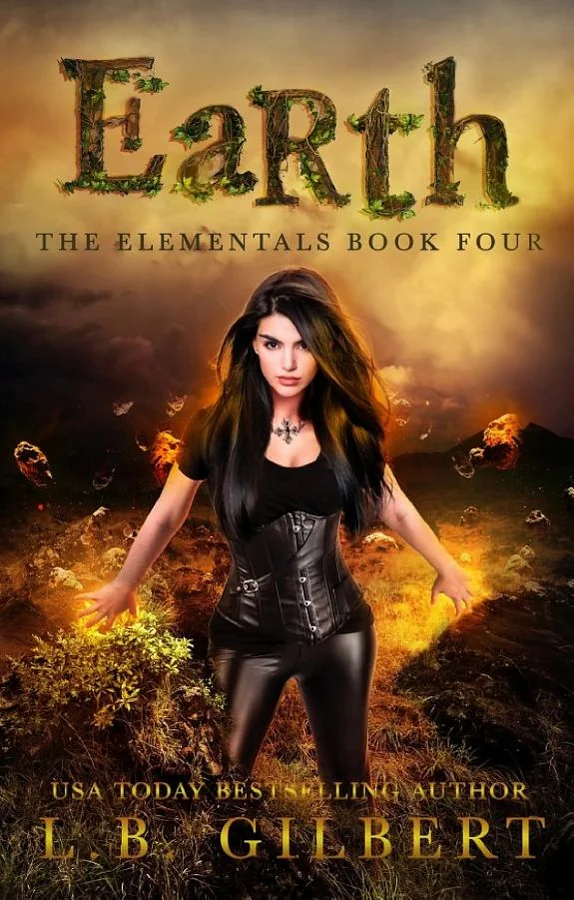
Earth: The Elementals Book Four
L.B. Gilbert’s *Earth: The Elementals Book Four* presents a high-stakes scenario that is undeniably compelling, particularly in its premise of an Earth Elemental’s poisoning. The narrative’s strength lies in its daring juxtaposition: an elemental guardian’s survival hinging on the scion of a dark magic family. This core conflict, between Gia and Salvador, generates palpable tension. However, the pacing occasionally falters, particularly in the exposition surrounding Salvador’s heritage, which, while necessary, feels somewhat over-explained. A passage where Gia struggles with her instinctual aversion to Salvador, wrestling with the potential betrayal versus the desperate need for his aid, exemplifies the book's most potent dramatic moments. The stakes, as K.J. Simmill for Readers’ Favorite noted, are indeed unprecedented. Gilbert's work offers a fresh perspective on elemental lore, though it could benefit from tighter narrative focus in places. Ultimately, it's a solid entry for fans invested in the series' unfolding ecological crisis.
📝 Description
78
In L.B. Gilbert's 2020 novel *Earth*, an Earth Elemental faces a poisoning that threatens the planet.
The fourth installment in The Elementals series, *Earth* centers on Gia, an Earth Elemental who has been poisoned. Her survival, and by extension the planet's, hinges on an alliance with Salvador, a descendant of a lineage known for its malevolence. This unexpected partnership is forged against a backdrop of deep mistrust, a necessary step to avert a dire threat.
The narrative appeals to readers of fantasy who enjoy elemental magic and ecological themes. It is for those who appreciate stories where ancient forces contend with modern dangers, and where characters must overcome inherited animosities for a greater purpose. Fans of series that weave lore and character growth into their plots will find this novel fits their preferences.
Published in 2020, *Earth* taps into a resurgence of interest in nature-based spirituality. The novel's depiction of elemental beings as sentient entities tied to the planet's well-being aligns with concepts found in ecocriticism and pagan revival traditions. It reflects anxieties surrounding ecological collapse and explores the idea of personifying Earth, echoing themes present in esoteric thought from the late 20th and early 21st centuries.
💡 Why Read This Book?
• Gain insight into the intricate relationship between elemental beings and planetary health, as depicted through Gia's struggle in *Earth: The Elementals Book Four*, offering a unique perspective on ecological stewardship. • Explore the esoteric concept of inherited karma and the potential for redemption, examining how Salvador’s lineage conflicts with his role in saving Mother Earth. • Experience a narrative that challenges preconceived notions of good and evil, demonstrating how cooperation between seemingly antagonistic forces, like Gia and Salvador, can be crucial for survival.
⭐ Reader Reviews
Honest opinions from readers who have explored this book.
❓ Frequently Asked Questions
What is the core conflict in Earth: The Elementals Book Four?
The central conflict involves the Earth Elemental Gia being poisoned and needing the help of Salvador, a descendant of a notorious witch family, to heal her and prevent the death of Mother Earth.
Who is the author of Earth: The Elementals Book Four?
The author is L.B. Gilbert, and the book was first published on April 20, 2020.
What genre does Earth: The Elementals Book Four belong to?
It falls under the esoteric and fantasy genres, focusing on elemental magic, mythology, and ecological themes.
What makes Salvador's role significant in the plot?
Salvador's significance lies in his lineage; he is the scion of an 'evil witch family,' making his potential to heal the Earth Elemental Gia a profound paradox and a test of trust.
What award did Earth: The Elementals Book Four receive?
The book was a 2020 Readers' Favorite Bronze Medal Winner, as recognized by K.J. Simmill for Readers’ Favorite.
How does this book relate to the previous installments in the series?
As Book Four in 'The Elementals' series, it continues the narrative arc, likely building upon established lore and character relationships while introducing new, critical challenges for the elemental guardians.
🔮 Key Themes & Symbolism
Elemental Guardianship
The novel portrays elemental beings, like Gia, not merely as forces of nature but as sentient guardians with personal stakes in the planet's survival. Their vulnerability to poison and their deep connection to Earth's life force underscore a spiritual interdependence. This theme extends beyond Gia, suggesting a broader network of elemental consciousness under threat, challenging readers to consider the intrinsic value and agency of the natural world beyond human perception.
Inherited Legacy and Redemption
Salvador’s character embodies the conflict between inherited destiny and individual choice. As the scion of an 'evil witch family,' his very existence is tied to a dark legacy. The narrative forces him into a position where his ancestral magic, typically associated with destruction, might be the only means of salvation. This explores the esoteric idea that power itself is neutral, its application determined by the wielder, and that even those born into darkness can choose a path toward healing.
The Peril of Unchecked Malice
The overarching threat—a 'madman trying to kill off mother earth'—serves as a potent allegory for humanity's destructive tendencies towards the environment. The poisoning of Gia and the subsequent crisis highlight the tangible consequences of such malice on a cosmic scale. The book posits that this destruction is not abstract but a direct assault on the living spirit of the planet, necessitating extraordinary measures for its defense.
Trust Across Divides
A central dramatic engine is the required alliance between Gia and Salvador, entities representing fundamentally opposed forces—nature's purity and the shadow of dark magic. Gia’s struggle to trust Salvador, given his lineage, mirrors real-world challenges of overcoming prejudice and historical animosity. The narrative suggests that true healing and preservation often demand forging connections with those perceived as enemies, especially when facing existential threats.
💬 Memorable Quotes
Direct passages from the work, attributed to the author.
““If she fails to trust him—or if putting her trust in him fails her—Mother Earth will die.””
— This statement expresses the novel's central dilemma. It highlights the extreme stakes involved, where Gia's internal conflict over trusting Salvador directly correlates to the planet's potential demise, emphasizing the critical nature of their forced alliance.
““A madman is trying to kill off mother earth.””
— This direct assertion sets the stage for the book's conflict, framing the antagonist's actions as a deliberate, almost insane, assault on the planet itself, elevating the threat from mere environmental damage to an existential war.
“Earth Elemental Gia has been poisoned.”
— This simple, declarative sentence immediately establishes the inciting incident and the protagonist's dire condition. It grounds the fantastical elements in a tangible crisis, making the threat to Mother Earth personal and immediate through Gia.
“The only man who can heal her is the scion of the most evil witch family in history, Salvador.”
— This highlights the core paradox of the plot: salvation coming from the most unlikely and dangerous source. It sets up the central conflict of trust and the subversion of expectations regarding good and evil.
💡 Key Ideas
Editorial paraphrase of the work's core concepts — not direct quotes.
“The rules are changing, the stakes are unprecedented, and you'll just have to know how it all ends.”
This quote, attributed to K.J. Simmill for Readers’ Favorite, emphasizes the escalating nature of the conflict and the high-stakes conclusion promised by the narrative, urging the reader to engage with the unfolding crisis.
🌙 Esoteric Significance
Tradition
This work fits within contemporary esoteric fantasy, drawing loosely from elemental traditions found in Hermeticism and Western occultism. It personifies the classical elements (Earth, Air, Fire, Water) as sentient beings, a concept echoed in various magical systems where elementals are understood as nature spirits or intelligences. Unlike stricter grimoire traditions, Gilbert imbues these beings with personal agency and emotional depth, framing their existence as integral to planetary health, thus connecting elemental magic to modern ecological concerns.
Symbolism
Gia, as the Earth Elemental, symbolizes the planet's vital life force, its resilience, and its inherent vulnerability. Her poisoning represents ecological damage and the consequences of human or malevolent actions. Salvador, the scion of an evil witch family, embodies the shadow aspect—inherited darkness or potentially destructive power—but also the possibility of transformation and redemption. His lineage symbolizes the complex, often intertwined nature of creation and destruction within the magical worldview.
Modern Relevance
The novel's emphasis on the Earth Elemental's plight speaks to contemporary ecospiritual movements and ecofeminist thought, which advocate for a deeper, more respectful relationship with nature. Thinkers and practitioners exploring animism, rewilding, and planetary consciousness may find parallels in Gia's struggle. Furthermore, the theme of unlikely alliances against existential threats speaks to current discussions on global cooperation needed to address crises like climate change, suggesting that solutions may arise from unexpected sources.
👥 Who Should Read This Book
• Readers interested in contemporary fantasy fiction that engages with ecological themes and elemental magic, particularly those seeking stories where nature itself is a character facing peril. • Practitioners of earth-based spiritual traditions or those exploring animistic philosophies who appreciate narratives that personify natural forces and explore their sentience. • Fans of L.B. Gilbert's previous works in 'The Elementals' series, who are invested in the ongoing narrative and the fate of the elemental guardians and Mother Earth.
📜 Historical Context
Published in April 2020, *Earth: The Elementals Book Four* arrived amidst growing global ecological anxieties and a burgeoning interest in nature-based spirituality. The novel’s premise of elemental beings defending the planet taps into contemporary ecocritical discourse and the spiritual currents within modern paganism. Its focus on elemental forces aligns with resurgence of interest in pre-Christian European nature religions, often explored through esoteric lenses. While not directly engaging with the chaos magic movement that gained traction in the late 20th century, its exploration of will and intent in confronting planetary threats shares thematic ground. The book's reception as a 2020 Readers' Favorite Bronze Medal winner indicates its appeal to a readership actively seeking genre fiction that engages with profound, albeit fantastical, real-world concerns like environmentalism.
📔 Journal Prompts
Gia's struggle to trust Salvador, the descendant of an evil witch family.
The concept of Mother Earth being poisoned and its tangible effects.
Salvador's internal conflict regarding his inherited magical lineage.
The narrative’s portrayal of elemental beings as sentient guardians.
The unprecedented stakes mentioned by K.J. Simmill for Readers’ Favorite.
🗂️ Glossary
Earth Elemental
A sentient being intrinsically connected to the element of Earth, embodying its strength, stability, and life-giving properties. In this context, Gia represents the living essence of the planet.
Scion
A descendant or heir, particularly of a prominent or noble family. In this book, Salvador is the scion of a historically significant and malevolent witch lineage.
Witch Family
A lineage or group associated with the practice of witchcraft, often implying inherited magical abilities or a shared tradition. Salvador's family is characterized as particularly 'evil'.
Mother Earth
A personification of the planet Earth, viewed as a nurturing, life-sustaining entity. The narrative presents Mother Earth as a living being directly threatened by external forces.
Poisoned
In this context, Gia's poisoning signifies a direct attack on the life force of the Earth Elemental, leading to a critical decline that threatens the well-being of the planet itself.
Readers' Favorite Bronze Medal Winner
An award granted by the book review platform Readers' Favorite, recognizing excellence in self-published and independently published works. The 2020 award signifies critical acclaim within that sphere.
Esoteric
Relating to or concerned with the occult, mystical, or supernatural. The book's category suggests themes beyond the ordinary, involving hidden knowledge and spiritual forces.
This book appears in 1 collection
🔮 Readers Also Liked
Browse all →








From the “Elementals” Collection
View all →





More Free Occult Philosophy Books
View all →