Take Your Pick of Haunted Places
 74
74

Take Your Pick of Haunted Places
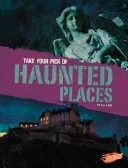
G.G. Lake's 'Take Your Pick of Haunted Places' certainly delivers on its promise of spooky locales, offering a straightforward catalog that functions as a veritable theme park of the paranormal for young readers. Its strength lies in its directness; it doesn't shy away from the sensational, providing descriptions designed to elicit a visceral reaction. The inclusion of "grossed-out" facts, as mentioned in its original blurb, is particularly effective for its target demographic, blending historical eeriness with a touch of the visceral. However, the book's primary limitation is its lack of critical depth. It presents a series of chilling anecdotes without much exploration of the psychological or cultural underpinnings of why we are drawn to haunted places, or any serious examination of the evidence. A passage detailing the alleged hauntings of the Tower of London, for instance, efficiently conveys the spooky atmosphere but offers little beyond the sensational. Ultimately, 'Take Your Pick of Haunted Places' is a diverting collection of frights, best suited for its intended audience seeking thrills rather than deep inquiry.
📝 Description
74
G.G. Lake's 2019 book, 'Take Your Pick of Haunted Places,' catalogs purportedly haunted locations worldwide.
'Take Your Pick of Haunted Places' by G.G. Lake presents a collection of allegedly haunted sites from around the world. Published in 2019, the book details accounts associated with these locations, positioning them as potential destinations for individuals interested in spectral encounters. It functions as a guide, aiming to evoke both dread and curiosity through its descriptions.
The volume targets younger readers, specifically children, who have an interest in the macabre and supernatural. The original promotional material highlighted 'fun facts' designed to keep them engaged and perhaps a little spooked. It is intended for an audience that enjoys ghost stories and learning about eerie places in an accessible, if somewhat sensationalized, way. Parents or educators seeking spooky yet engaging material for this age group may also find the book useful.
While published in 2019, 'Take Your Pick of Haunted Places' draws on a long tradition of collecting and sharing tales of the uncanny. This genre connects to earlier works such as Charles Fort's 1919 'The Book of the Damned,' which documented strange phenomena. Lake's book, by focusing on specific sites and presenting them in a manner suitable for younger audiences, reflects a modern approach to making paranormal subjects approachable. This contrasts with more academic or philosophical treatments of the supernatural, aiming instead for accessible engagement with eerie folklore.
💡 Why Read This Book?
• Learn about the spectral lore associated with specific locations like the Tower of London, understanding how local legends contribute to a place's haunted reputation. • Discover the appeal of the macabre for younger audiences by examining how 'Take Your Pick of Haunted Places' uses 'grossed-out' facts to engage children with paranormal tales. • Explore the concept of curated fear by understanding how the book presents multiple haunted sites, allowing readers to choose their preferred spooky destination.
⭐ Reader Reviews
Honest opinions from readers who have explored this book.
❓ Frequently Asked Questions
What kinds of haunted places are featured in 'Take Your Pick of Haunted Places'?
The book features a variety of locations purported to be haunted, ranging from historical sites like castles and prisons to other locales with significant folklore and reported paranormal activity.
Is 'Take Your Pick of Haunted Places' suitable for very young children?
While aimed at children, the content is designed to be scary and includes 'grossed-out' facts. Parental discretion is advised to gauge suitability for individual children's sensitivities.
Does the book provide historical evidence for the hauntings?
The book focuses on anecdotal evidence, local legends, and sensationalized accounts rather than providing rigorous historical or scientific proof of hauntings.
When was 'Take Your Pick of Haunted Places' first published?
The book was first published on May 1, 2019.
What is the main goal of 'Take Your Pick of Haunted Places'?
Its primary goal is to entertain and scare young readers by presenting a selection of the world's most chilling haunted locations and associated tales.
Does the author, G.G. Lake, offer personal experiences in the book?
The book primarily compiles existing lore and tales about haunted places, rather than detailing the author's personal paranormal investigations or experiences.
🔮 Key Themes & Symbolism
The Geography of Fear
The book maps out fear geographically, presenting specific locations as focal points for supernatural energy or residual hauntings. It suggests that certain places inherently hold a charge of the uncanny, drawing on a long tradition of associating spectral activity with particular locales, from ancient ruins to sites of historical tragedy. This theme explores how human narratives of fear and the supernatural become embedded within the physical landscape, turning ordinary places into destinations for the morbidly curious.
Childhood Fascination with the Macabre
This theme addresses the inherent curiosity children often possess regarding death, ghosts, and the eerie. 'Take Your Pick of Haunted Places' taps into this by presenting frightening concepts in an accessible, even entertaining, format. The inclusion of 'grossed-out' facts and sensationalized accounts caters specifically to a younger demographic's fascination with the grotesque and the terrifying, framing fear as a source of excitement and engagement.
The Power of Anecdote and Folklore
The work highlights how stories, legends, and personal accounts, rather than empirical evidence, often form the basis of our understanding of the supernatural. Each haunted place is presented through a collection of anecdotes, emphasizing the oral tradition and the transmission of spooky tales. This theme underscores the role of folklore in shaping our perception of the world, particularly concerning phenomena that lie beyond scientific explanation.
Choice and Agency in Exploration
The title itself, 'Take Your Pick,' suggests an element of reader agency. Instead of a single narrative, the book offers a selection, allowing the reader to choose which haunted locale appeals most to their sense of dread or curiosity. This implies that the experience of engaging with the supernatural can be personalized, enabling readers to actively select their preferred 'fear' from a curated list.
💬 Memorable Quotes
Direct passages from the work, attributed to the author.
“Prepare to be scared as you choose between some of the scariest places on Earth.”
— This statement directly sets the book's intent: to provide a selection of terrifying locations, empowering the reader to pick their preferred source of fright.
“Fun facts will keep kids scared, interested—and grossed out!”
— This highlights the book's specific appeal to children, promising a blend of frights, engagement, and visceral details designed to captivate a younger audience.
💡 Key Ideas
Editorial paraphrase of the work's core concepts — not direct quotes.
The work explores locations with alleged spectral activity.
This paraphrased concept indicates the book's focus on places where paranormal phenomena are reported, framing them as subjects of investigation or curiosity.
Readers can select their preferred haunted destination.
This paraphrased concept emphasizes the interactive nature of the book, allowing individuals to choose which spooky site they wish to learn about.
The book is designed for an audience interested in the eerie.
This paraphrased concept defines the target reader as someone who actively seeks out and finds enjoyment or fascination in the supernatural and frightening.
🌙 Esoteric Significance
Tradition
While not explicitly tied to a specific esoteric lineage like Hermeticism or Kabbalah, 'Take Your Pick of Haunted Places' draws upon the broader, popular fascination with the supernatural that permeates many occult traditions. It reflects a modern, secularized engagement with concepts like hauntings and residual energy, which have roots in spiritualist movements and folklore studies that often intersect with esoteric thought. The book treats haunted places as sites where unseen forces manifest, echoing a fundamental esoteric principle of hidden realities interacting with the physical world.
Symbolism
The primary symbol is the haunted place itself, representing a nexus of intense emotional residue, historical trauma, or spiritual disturbance. Specific locations like castles or old houses function as symbols of the past intruding upon the present, embodying memory and lingering energies. Ghosts, as depicted in the book's accounts, symbolize the unresolved, the departed, and the persistent nature of consciousness or energy beyond physical death, a concept explored across numerous esoteric traditions.
Modern Relevance
This work connects to contemporary interests in urban exploration (urbex), paranormal investigation shows, and the general public's enduring curiosity about ghosts and the afterlife. Thinkers and practitioners in fields like cryptozoology, ghost hunting, and even certain New Age interpretations of energy fields might find its cataloging of purportedly haunted sites a useful, albeit basic, reference point for understanding popular beliefs about spectral phenomena.
👥 Who Should Read This Book
• Young readers aged 8-14 with a burgeoning interest in ghosts, monsters, and the supernatural, seeking exciting and slightly scary stories. • Parents and educators looking for engaging, age-appropriate material that sparks curiosity about folklore, history, and the paranormal. • Casual readers interested in a quick, entertaining overview of famously spooky locations without exploring complex theories or historical analysis.
📜 Historical Context
Published in 2019, G.G. Lake's 'Take Your Pick of Haunted Places' arrived in an era saturated with paranormal content across various media. It belongs to a long tradition of compendiums of ghost stories and haunted locations, dating back to at least the 19th century with works like Elliott O'Donnell's prolific output of ghost-hunting narratives. While O'Donnell's work often presented itself as investigative, Lake's book, aimed at a younger audience, leans more towards sensationalism. Its contemporary, the late 2010s, saw a boom in online paranormal forums, YouTube channels, and reality television shows dedicated to ghosts, creating a fertile ground for such publications. Unlike more scholarly approaches to folklore or parapsychology, which might engage with figures like Charles Fort or J.W. Dunne, Lake's work operates purely in the area of popular entertainment, making it distinct from intellectual currents exploring the uncanny.
📔 Journal Prompts
Reflect on the concept of 'scary places' and why they hold appeal.
Consider the 'fun facts' presented about a specific haunted location.
Analyze the role of 'grossed-out' details in engaging young readers.
Explore the idea of choosing your own haunted adventure.
Think about the folklore surrounding a chosen haunted site.
🗂️ Glossary
Haunted Place
A location where paranormal activity, such as sightings of ghosts or unexplained phenomena, is reported to occur regularly.
Spectral Activity
Refers to alleged manifestations of ghosts, spirits, or other supernatural entities, often perceived through sight, sound, or feeling.
Folklore
The traditional beliefs, customs, and stories of a community, passed through generations by word of mouth, often including legends and ghost stories.
Anecdotal Evidence
Information or accounts based on personal stories or informal observations rather than systematic scientific research or proof.
Macabre
A style or element that involves the theme of death, decay, or gruesome subjects, often presented in a way that is considered disturbing or morbid.
Paranormal
Phenomena that are beyond the scope of normal scientific understanding, often involving ghosts, ESP, or other supernatural occurrences.
Residual Haunting
A type of haunting where paranormal energy is believed to be imprinted on a location, replaying past events like a recording, without conscious intelligence.