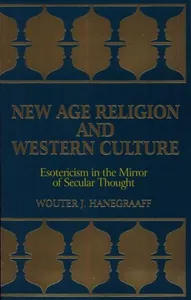
Apocrifi dell'Antico Testamento

 73
73

Apocrifi dell'Antico Testamento
Paolo Sacchi’s compilation, *Apocrifi dell'Antico Testamento*, functions as a critical resource rather than a devotional text. Its strength lies in the scholarly rigor applied to texts often relegated to textual footnotes or obscure translations. The sheer breadth of material presented, drawing from sources like the Ethiopic Book of Enoch and the Assumption of Moses, provides an invaluable survey. However, the lack of extensive introductory essays for each individual apocryphon, beyond Sacchi's initial scholarly framing, means readers may need supplementary works to fully grasp the nuances of each text's unique historical and theological context. The section on the *Apocalypse of Abraham*, for instance, while present, could benefit from more detailed textual analysis of its intricate angelic lore. Sacchi offers a vital, if demanding, panorama of pre-rabbinic and early Christian Jewish thought.
📝 Description
73
Paolo Sacchi's 1993 compilation gathers pseudepigraphal texts from the Old Testament period.
Apocrifi dell'Antico Testamento contains pseudepigraphal texts attributed to the Old Testament era, works largely absent from the Hebrew Bible and most Christian canons. These writings illuminate ancient Jewish thought, cosmology, and apocalyptic visions, providing a counterpoint to canonical scripture. The collection is intended for serious students of ancient religion, comparative mythology, and esoteric traditions. It appeals to scholars, theologians, and practitioners interested in early Jewish literature beyond the recognized biblical canon. A background in biblical studies is recommended for readers.
These apocryphal texts originated primarily between the Second Temple period, roughly 530 BCE to 70 CE, and the early centuries of the Common Era. They reflect a broad range of Jewish religious expression during a time of considerable cultural and political change, marked by Hellenistic and Roman influences. Paolo Sacchi's compilation offers critical editions and scholarly notes for these often fragmented and obscure writings.
These apocryphal and pseudepigraphal texts circulated within various Jewish communities during the Second Temple period and beyond. They represent a stream of thought that often engaged with apocalyptic visions, angelic encounters, and hidden knowledge, sometimes diverging from or elaborating upon the narratives found in the Hebrew Bible. Works like the Book of Enoch and the Testaments of the Twelve Patriarchs, included here, were influential in shaping mystical and Gnostic traditions, offering insights into early esoteric interpretations of scripture and cosmology.
💡 Why Read This Book?
• Gain access to foundational texts like the *Book of Enoch*, exploring ancient Jewish angelology and eschatology beyond the biblical canon. • Understand the development of apocalyptic literature during the Second Temple period, a crucial era for religious thought preceding Christianity. • Examine the diverse narrative traditions and cosmological views present in works excluded from later religious authorities, offering a broader perspective on early Semitic thought.
⭐ Reader Reviews
Honest opinions from readers who have explored this book.
❓ Frequently Asked Questions
What are the key differences between canonical Old Testament books and these apocryphal texts?
Canonical texts underwent a rigorous selection process by religious authorities. Apocryphal texts, while often originating from similar cultural milieus and periods like the Second Temple era, were ultimately excluded from the final canon for theological, historical, or textual reasons.
Does this book include the Apocrypha found in Catholic and Orthodox Bibles?
This volume focuses on pseudepigraphal works, which are generally distinct from the Deuterocanonical books (often called Apocrypha) included in Catholic and Orthodox Bibles. It delves into texts like the Book of Enoch and the Testaments of the Twelve Patriarchs.
Who was Paolo Sacchi and why is his work significant?
Paolo Sacchi was a scholar of ancient Jewish literature. His work is significant for providing critical editions and scholarly introductions to a wide range of pseudepigraphal texts, making them accessible to a modern academic audience for study.
What historical period does the content of Apocrifi dell'Antico Testamento primarily cover?
The texts compiled in this volume largely date from the Second Temple period (roughly 530 BCE to 70 CE) and the early centuries of the Common Era, offering insights into Jewish thought during this pivotal era.
Are these texts considered historically accurate accounts?
These texts are primarily theological and visionary in nature, reflecting beliefs and interpretations of their time rather than historical chronicles. They offer valuable insights into ancient religious thought and cosmology.
Can these texts be useful for understanding early Christian beliefs?
Yes, many apocryphal texts predate or are contemporaneous with early Christianity. They illuminate the theological and conceptual landscape from which early Christian ideas emerged, providing context for New Testament themes.
🔮 Key Themes & Symbolism
Angelology and Heavenly Realms
The collection extensively details complex angelic hierarchies, celestial journeys, and the roles of divine messengers. Texts like the Book of Enoch offer intricate cosmographies, naming archangels and describing their functions within the heavenly court. This theme explores ancient conceptions of the divine structure and the mediation between the human and the sacred, providing a framework for understanding spiritual ascent and divine communication often explored in esoteric traditions.
Apocalyptic Visions and Eschatology
A significant portion of these writings comprises apocalyptic literature, predicting future events, divine judgment, and the establishment of a new cosmic order. These visions often involve symbolic language, cosmic upheavals, and detailed accounts of the afterlife. For esoteric practitioners, these narratives offer insights into cyclical time, divine intervention in history, and the ultimate triumph of spiritual principles, providing a basis for interpreting present circumstances within a grander, divinely ordained scheme.
Wisdom and Divine Revelation
Many apocryphal texts present themselves as vehicles for divine revelation, transmitting hidden wisdom and secrets from God or angelic beings to chosen individuals. This often includes narratives of patriarchs or prophets receiving divine instruction. This theme is central to esoteric studies, as it highlights the pursuit of gnosis—direct spiritual knowledge—and the belief in accessible, albeit often veiled, divine truths that can guide human understanding and spiritual development.
The Nature of the Soul and Afterlife
These texts grapple with questions surrounding the fate of the soul after death, offering diverse perspectives on Sheol, paradise, and areas of punishment. They explore concepts of resurrection, divine judgment, and the ultimate destiny of humanity. Esoteric traditions often draw upon these ancient ideas to formulate their own doctrines regarding reincarnation, spiritual evolution, and the post-mortem journey, seeking to understand the eternal nature of consciousness.
💬 Memorable Quotes
Direct passages from the work, attributed to the author.
“Angels descend to reveal hidden knowledge to the righteous.”
— This interpretation highlights the function of angels as conduits of divine wisdom in these texts, emphasizing the transmission of secret lore that informs spiritual understanding and practice.
“The Book of Enoch details the Watchers and their transgressions.”
— This refers to a specific narrative element within the Book of Enoch, concerning fallen angels who corrupted humanity, a motif explored in various later esoteric traditions regarding divine order and its disruption.
“The Testaments of the Twelve Patriarchs offer moral guidance for their descendants.”
— This interpretation focuses on the didactic purpose of the Testaments, presenting ethical teachings and prophecies attributed to the sons of Jacob, serving as a form of spiritual inheritance.
💡 Key Ideas
Editorial paraphrase of the work's core concepts — not direct quotes.
The Lord will create a new heaven and a new earth.
This paraphrased concept reflects the recurring theme of eschatological renewal found in many apocryphal texts, envisioning a future divine intervention that purifies and perfects creation.
The secrets of the ages are unveiled in divine visions.
This paraphrased concept points to the apocalyptic nature of many apocryphal works, where hidden truths about history, cosmology, and the divine plan are revealed through prophetic or visionary experiences.
🌙 Esoteric Significance
Tradition
These texts belong to the broader corpus of ancient Jewish literature that informs both Hermetic and Kabbalistic traditions, as well as later Theosophical and Gnostic inquiries. They represent a foundational layer of esoteric thought, predating and influencing later systematizations. The focus on angelic hierarchies, cosmic journeys, and divine secrets aligns with the Hermetic principle of 'As Above, So Below' and the Kabbalistic exploration of divine emanations and hidden realms.
Symbolism
Key symbols include the celestial ladder or ascent, representing spiritual progression and the attainment of higher consciousness, often depicted through angelic guides. The 'Tree of Knowledge' motif, while not always explicit, underlies the pursuit of forbidden or hidden wisdom. The motif of the 'Elect' or 'Righteous' signifies those who are attuned to divine truths, a concept central to many mystical paths seeking spiritual election.
Modern Relevance
Contemporary esotericists, particularly those in Western esotericism, find these texts important for understanding the roots of angelology, divination, and apocalyptic prophecy. Thinkers in comparative religion and mythology also draw upon them to trace the development of ancient Near Eastern cosmologies. Practices involving angelic invocation or the study of eschatological timelines often reference concepts found within these apocryphal works.
👥 Who Should Read This Book
• Students of Comparative Religion and Mythology: Gain access to foundational texts that shaped early Jewish and Christian thought, offering unique cosmological and theological perspectives. • Practitioners of Western Esotericism: Explore the ancient roots of angelology, visionary experiences, and apocalyptic themes that continue to inform modern mystical traditions. • Academic Scholars of Antiquity: Utilize critical editions and scholarly apparatus to analyze pseudepigraphal literature from the Second Temple period and its influence.
📜 Historical Context
The compilation *Apocrifi dell'Antico Testamento* engages with texts that flourished primarily during the Second Temple period (c. 530 BCE – 70 CE) and the subsequent centuries. This era was a crucible of Jewish thought, marked by Hellenistic influence, the rise of various philosophical and religious sects, and intense anticipation of messianic deliverance. Contemporary figures like Philo of Alexandria were also exploring allegorical interpretations of scripture, while the Qumran community produced its own unique sectarian literature. The pseudepigraphal works Sacchi compiles—such as the *Book of Enoch* and the *Testaments of the Twelve Patriarchs*—represent a vibrant, often heterodox, stream of Jewish religious expression that existed alongside, and sometimes in tension with, proto-rabbinic developments. Their reception varied; while some texts were influential in certain Jewish circles and early Christianity, others remained obscure, only to be rediscovered or preserved through later traditions, such as the Ethiopian Orthodox Church's canon for the *Book of Enoch*.
📔 Journal Prompts
The structure of angelic hierarchies described in the Book of Enoch.
The concept of divine judgment and its portrayal in the Apocalypses.
The role of hidden wisdom revealed through prophetic figures.
The narrative of the Watchers and their impact on humanity.
The symbolic meaning of cosmic journeys or ascents.
🗂️ Glossary
Pseudepigrapha
Ancient religious writings that are falsely attributed to biblical authors or figures. These texts were not accepted into the Jewish or Christian biblical canons but offer valuable insights into ancient religious thought.
Second Temple Period
The era of Jewish history spanning from the rebuilding of the Jerusalem Temple (c. 516 BCE) to its destruction by the Romans (70 CE). A period of significant religious and cultural development.
Apocalypse
A literary genre characterized by divine revelation, often concerning eschatological events, cosmic conflicts, and the ultimate triumph of good over evil. Typically revealed through symbolic visions.
Angelology
The study of angels and angelic beings. Apocryphal texts often contain detailed descriptions of angelic hierarchies, their roles, and their interactions with humanity.
Eschatology
The theological study of final things, including concepts of the end of the world, divine judgment, the afterlife, and the ultimate destiny of humanity and the cosmos.
Sheol
In ancient Hebrew thought, the underworld or area of the dead, often depicted as a shadowy place of silence and inactivity, distinct from later concepts of heaven or hell.
The Watchers
A group of fallen angels mentioned in the Book of Enoch, who descended to Earth, taught forbidden knowledge to humans, and corrupted mankind, leading to divine judgment.
This book appears in 1 collection
🔮 Readers Also Liked
Browse all →







From the “Apocrypha” Collection
View all →

More Free Sacred Texts & Gnosticism Books
View all →