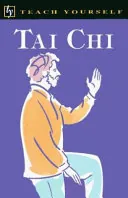
Teach Yourself Tai Chi

 82
82

Teach Yourself Tai Chi
Robert Parry’s Teach Yourself Tai Chi arrives not with the thunder of a martial arts epic, but with the quiet instruction of a seasoned teacher. The book’s strength lies in its methodical breakdown of the 24-form, a widely practiced sequence. Parry’s explanation of the "Cloud Hands" movement, for instance, is particularly clear, detailing the subtle shifts in weight and hip rotation that are easily overlooked by novices. However, the book occasionally suffers from a lack of visual aids, making complex transitions harder to grasp purely through text. While the historical section touches upon the martial origins, it could benefit from more detailed exploration of the lineage leading to the 24-form’s standardization in the mid-20th century. Despite this, Parry offers a solid, accessible entry point for those willing to engage with the practice diligently.
📝 Description
82
Robert Parry's Teach Yourself Tai Chi, published in 1990, simplifies the ancient Chinese art for new students.
Teach Yourself Tai Chi introduces the fundamentals of Tai Chi Chuan, a practice originating in China. Parry breaks down the essential postures, breathing methods, and mental concentration needed for this movement art, aiming to make it accessible to anyone, regardless of prior experience. The book details the physical forms and core principles that define Tai Chi practice.
This guide is written for individuals new to martial arts or contemplative movement who are interested in Tai Chi. It is suitable for those seeking a mild exercise that improves physical well-being, sharpens the mind, and fosters a sense of peace. Readers drawn to Eastern philosophies and traditional health systems will find the material relevant.
Parry places Tai Chi within its historical and cultural setting. He acknowledges its connections to Taoist monasteries and its development as a martial art and health discipline. The book discusses the practice's journey to wider recognition.
Tai Chi Chuan is rooted in Taoist traditions, particularly those associated with Wudang Mountain. Its practice involves cultivating and directing internal energy, or 'Qi,' through specific movements and mindful breathing. The aim is to harmonize the body's energy, promote health, and foster a connection to natural principles. This approach aligns with broader esoteric goals of self-cultivation and achieving balance between mind, body, and spirit within a Taoist framework.
💡 Why Read This Book?
• Learn the fundamental principles of "yielding" and "rooting" in movement, essential for understanding Tai Chi's defensive and energetic applications, as detailed in the early chapters. • Gain practical instruction on executing the "Cloud Hands" posture, a key transitional movement that teaches body coordination and energy flow, allowing you to practice specific forms. • Understand the concept of "Qi" as it relates to physical practice and internal cultivation, providing a framework for deepening your personal connection to the art.
⭐ Reader Reviews
Honest opinions from readers who have explored this book.
❓ Frequently Asked Questions
What is the primary benefit of learning Tai Chi from Robert Parry's book?
The book offers a structured approach to learning the fundamental movements and principles of Tai Chi, making it accessible for beginners to build a solid foundation in the practice.
Does Teach Yourself Tai Chi cover the martial applications of the movements?
While the primary focus is on health and cultivation, the book touches upon the underlying martial principles and how movements can be applied, referencing concepts like redirecting force.
How does Robert Parry explain the concept of Qi in Tai Chi?
Parry explains Qi as vital energy that flows through the body, emphasizing its cultivation through coordinated movement, breath, and mindful attention within the practice.
Is this book suitable for someone with no prior martial arts experience?
Yes, the book is explicitly designed for beginners, starting with basic stances, postures, and breathing techniques before progressing to sequences like the 24-form.
What historical context is provided for Tai Chi?
The book briefly situates Tai Chi within its Chinese origins, acknowledging its development from martial arts and health cultivation practices, referencing its Taoist associations.
What specific Tai Chi form does the book focus on?
Teach Yourself Tai Chi primarily focuses on introducing and detailing the 24-form, a widely practiced and standardized sequence of Tai Chi movements.
🔮 Key Themes & Symbolism
Movement and Stillness
The book explores the dynamic interplay between continuous, flowing movement and moments of internal stillness. It emphasizes that true stillness is not inactivity but a state of centered awareness within motion. This concept is vital for understanding Tai Chi's meditative aspect, where practitioners aim to achieve a state of mindful presence through precise physical execution. The practice teaches that external fluidity supports internal tranquility, a core tenet derived from Taoist principles of natural balance.
Qi Cultivation
Central to the practice is the concept of Qi, or vital energy. Parry guides readers on how to cultivate and direct this energy through specific postures, breathwork, and mental focus. The book explains that Qi flows through meridians in the body, and Tai Chi movements are designed to unblock these pathways, promoting health and vitality. This energetic dimension elevates Tai Chi beyond mere physical exercise, positioning it as a method for internal alchemy and well-being.
Yielding and Rooting
The principles of "yielding" and "rooting" are fundamental to understanding Tai Chi’s effectiveness. Yielding, or 'song,' involves releasing muscular tension and learning to absorb and redirect an opponent's force rather than meeting it head-on. Rooting refers to establishing a stable, grounded connection to the earth, providing a strong base from which to move. These concepts, explored throughout the movement sequences, are critical for both self-defense and maintaining balance.
The 24-Form Sequence
The book meticulously breaks down the 24-form, a simplified and widely adopted sequence of Tai Chi movements. Each posture and transition is explained in detail, providing a step-by-step guide for learners. Mastering this form is presented as a pathway to internalizing the core principles of Tai Chi, developing coordination, and achieving a harmonious state of mind and body. The sequence itself is a microcosm of the art's philosophy.
💬 Memorable Quotes
Direct passages from the work, attributed to the author.
“The body moves like a coiled spring, always ready to release energy.”
— This highlights the dynamic potential within each posture. It suggests that even in seemingly static positions, there is an inherent readiness and stored energy, crucial for both martial application and the flow of Qi.
“Each movement should flow seamlessly into the next, like water finding its course.”
— This emphasizes the importance of continuity and fluidity in Tai Chi. The practice is not about individual poses but about the smooth, unbroken transition between them, mirroring the natural, effortless flow found in Taoist philosophy.
“Breathe naturally, letting the breath guide the body's expansion and contraction.”
— This underscores the integral role of breath in Tai Chi. It's not a forced technique but a natural accompaniment to movement, facilitating the circulation of Qi and deepening the connection between mind and body.
“Find stillness within the movement; find movement within the stillness.”
— This paradoxical statement captures the essence of Tai Chi as a moving meditation. It points to the goal of achieving a state of alert calm, where the practitioner remains centered and aware amidst the physical exertion.
“The principles of yielding and rooting are the foundation of all effective Tai Chi.”
— This identifies two core concepts as paramount. Yielding teaches how to manage force, while rooting provides stability, forming the bedrock upon which all other techniques and energetic principles are built.
🌙 Esoteric Significance
Tradition
Tai Chi Chuan, while often presented as a health practice, is deeply rooted in Taoist philosophy and internal alchemy traditions. Its movements are designed to harmonize the body's vital energy (Qi) with the natural rhythms of the universe, a core tenet of Taoist cosmology. Parry's work, by focusing on the mechanics and principles, serves as an accessible entry point into practices that, in their deeper application, aim for spiritual cultivation and union with the Tao.
Symbolism
The "Cloud Hands" posture symbolizes the interaction between the ethereal and the tangible, representing the practitioner's ability to navigate subtle energies like clouds. The "Pushing Hands" exercises, though not always detailed in introductory texts, symbolize the engagement with external forces and the cultivation of sensitivity and responsiveness, mirroring the Taoist principle of adapting to circumstances rather than rigidly resisting them.
Modern Relevance
Contemporary practices in mindfulness, somatic therapy, and even some branches of physical rehabilitation draw inspiration from Tai Chi's emphasis on body-mind integration and gentle, flowing movement. Thinkers and practitioners exploring embodied cognition and the energetic body often reference Tai Chi principles. Its non-competitive, internal focus continues to appeal to those seeking holistic approaches to well-being in a fast-paced, often fragmented modern world.
👥 Who Should Read This Book
• Individuals new to contemplative movement seeking a low-impact exercise that enhances balance and coordination, as the book provides clear instructions on foundational stances. • Aspiring practitioners of traditional Chinese arts interested in understanding the core principles of Qi cultivation and mindful movement, benefiting from the explanations of energy flow. • Those exploring Eastern philosophies and seeking practical methods to cultivate inner calm and reduce stress, finding value in the meditative aspects of the described forms.
📜 Historical Context
Published in 2004, Robert Parry's Teach Yourself Tai Chi entered a landscape where the practice of Tai Chi Chuan was already globally recognized, largely through the popularization efforts of masters like Yang Chengfu in the early 20th century. The book’s focus on the 24-form, standardized by the Chinese Sports Commission in 1956, places it within a specific lineage of simplified routines designed for broader accessibility. This standardization occurred during a period when Chinese martial arts were being re-evaluated and presented to the world. While Parry's work emphasizes the health and meditative aspects, it implicitly acknowledges the practice's roots in traditional Chinese martial arts, a field that often faced scrutiny and shifts in official recognition throughout the 20th century, particularly during periods of political upheaval. The book offers a modern interpretation for Western audiences, diverging from the more esoteric or strictly martial interpretations found in older texts.
📔 Journal Prompts
The principle of "yielding" in movement: How can this concept be applied to daily interactions?
Reflecting on "rooting": What does it mean to feel grounded, both physically and mentally?
The flow of "Qi": Describe a moment when you felt a sense of natural, unhindered energy.
Analyzing the "Cloud Hands" movement: What challenges arise in coordinating breath, weight shift, and arm motion?
The concept of "stillness within movement": How can one maintain inner calm during demanding physical activity?
🗂️ Glossary
Qi (Chi)
Vital life force or energy believed to flow through the body, influencing health and vitality. Cultivated through breath and movement in practices like Tai Chi.
Form
A specific, pre-arranged sequence of movements in Tai Chi Chuan, designed to cultivate internal energy, physical health, and martial skill.
Yielding (Song)
A principle of releasing muscular tension and softness, allowing one to absorb and redirect force rather than meeting it directly.
Rooting
The practice of establishing a stable, grounded connection to the earth, providing a strong base for movement and balance.
24-Form
A simplified and standardized sequence of Tai Chi movements, created in the 1950s for wider popularization and practice.
Dantian
An energy center in the lower abdomen, considered the primary reservoir of Qi in Traditional Chinese Medicine and martial arts.
Wu Wei
A Taoist concept meaning 'non-action' or 'effortless action,' suggesting acting in accordance with the natural flow of things.
🔮 Readers Also Liked
Browse all →








More by Robert Parry
All books →




More Free Occult Philosophy Books
View all →