House of Sky and Breath
 76
76

House of Sky and Breath
Maas demonstrates an undeniable skill for world expansion in "House of Sky and Breath." The introduction of new factions and the deeper exploration of the Angelic pantheon, particularly the fallen angels, add significant layers to the Crescent City mythos. The intricate plotting, while often compelling, occasionally becomes a tangled web, particularly in the latter half, where the sheer volume of subplots requires considerable reader attention. The dynamic between Bryce and Hunt remains a strong anchor, their relationship tested by external pressures and internal doubts. A standout element is the depiction of the Asteri's oppressive regime and the nascent rebellion against it, which feels urgent and consequential. However, some character arcs, while promising, feel somewhat truncated by the narrative's relentless pace toward its cliffhanger conclusion. The work ultimately succeeds in escalating the stakes and deepening the established lore, even if its ambition occasionally outstrips its narrative cohesion.
This novel solidifies the Crescent City series as a major force in contemporary fantasy.
📝 Description
76
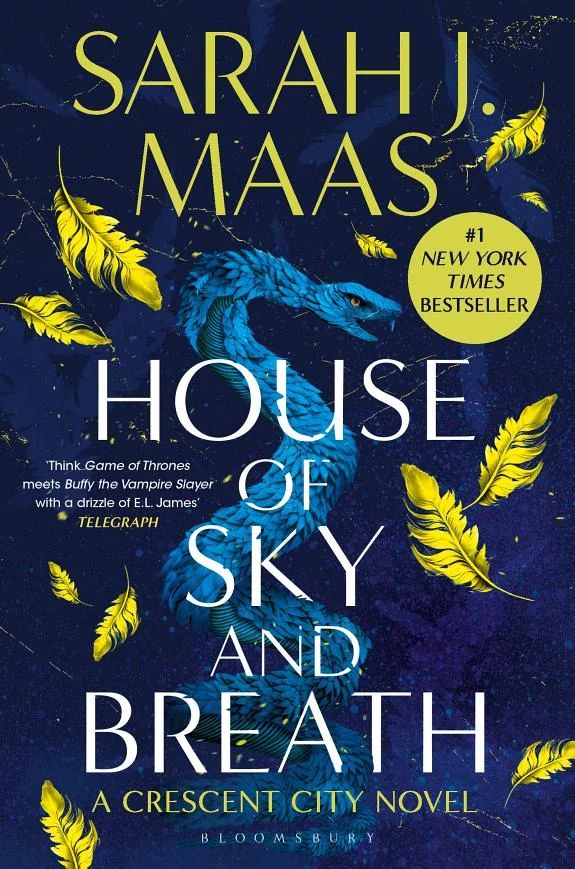
Published in 2022, House of Sky and Breath continues Bryce and Hunt's story in Crescent City.
Sarah J. Maas's "House of Sky and Breath," released in 2022, picks up the story of Bryce Quinlan and Hunt Athalar within the Crescent City universe. The novel expands on the lore of "House of Earth and Blood," introducing new celestial beings and ancient prophecies. It focuses on the political tensions and magical conflicts developing in their world, with the threat of war growing.
This book is best suited for readers already familiar with Maas's Crescent City series. Those who enjoy detailed world-building, complex characters with questionable morals, and a mix of romance, action, and high-stakes fantasy will likely connect with the narrative. The story also appeals to readers interested in detailed magical systems and relationships between different species in a modern urban fantasy setting.
Published in 2022, "House of Sky and Breath" engages with contemporary trends in adult fantasy that often blend mythological structures with modern settings. The novel's exploration of celestial hierarchies, ancient prophecies, and the conflict between established divine powers and more primal forces touches on themes common in occult and supernatural fiction. It reflects a modern interpretation of archetypal struggles between order and chaos, good and evil, often seen in traditions that examine the influence of supernatural or divine entities on human affairs.
💡 Why Read This Book?
• Gain insight into the intricate political machinations of the Asteri regime, understanding the specific historical grievances that fuel the rebellion against their rule, as detailed throughout the novel's exploration of ancient celestial conflicts. • Experience the unfolding of Bryce and Hunt's relationship under intense pressure, examining how their bond is tested by the introduction of powerful new allies and the looming threat of war, as depicted in key romantic interludes and action sequences. • Explore the complex ethical dilemmas surrounding free will versus destiny through the characters' choices, particularly when confronting the prophecies and divine interventions that shape their world, offering a unique perspective on agency within a magical framework.
⭐ Reader Reviews
Honest opinions from readers who have explored this book.
❓ Frequently Asked Questions
What is the main conflict in House of Sky and Breath?
The primary conflict involves Bryce Quinlan and Hunt Athalar navigating the oppressive rule of the Asteri, celestial beings who have subjugated humanity and other races. They must contend with political intrigue, uncover ancient secrets, and rally allies to challenge this tyrannical power structure.
Who are the main characters in Sarah J. Maas's "House of Sky and Breath"?
The central characters are Bryce Quinlan, a half-Fae, half-human woman with significant untapped power, and Hunt Athalar, a skilled warrior and fallen angel. Key supporting characters include Ruhn Danaan, Nesta's brother, and Tharion Ketos, a mer.
When was "House of Sky and Breath" published?
Sarah J. Maas's "House of Sky and Breath" was first published in 2022, serving as the second installment in the Crescent City series.
What is the significance of the "Angel" hierarchy in the book?
The Asteri, referred to as Angels, are depicted as ancient, powerful beings who rule over Crescent City and its inhabitants. Their hierarchy and control are central to the book's themes of oppression and rebellion, representing a divine but tyrannical authority.
Does "House of Sky and Breath" connect to other Sarah J. Maas series?
While primarily set in its own world, "House of Sky and Breath" does contain subtle connections and character crossovers with Maas's "A Court of Thorns and Roses" series, particularly through appearances of characters like Nesta Archeron and Cassian.
What are the main themes explored in "House of Sky and Breath"?
The novel explores themes of power and corruption, free will versus destiny, the fight for freedom against tyranny, the complexities of interspecies relationships, and the nature of faith and divinity.
🔮 Key Themes & Symbolism
Celestial Tyranny and Rebellion
The narrative centers on the oppressive rule of the Asteri, ancient beings who have subjugated Crescent City and its diverse inhabitants. Their reign is characterized by strict control and the suppression of magic, creating a fertile ground for rebellion. The book details the historical context of this subjugation, highlighting the sacrifices and strategies employed by those who resist. This theme examines the nature of absolute power and the inherent human (and non-human) drive for freedom, even in the face of overwhelming odds and divine authority.
The Nature of Divinity and Faith
"House of Sky and Breath" interrogates the concept of divinity, presenting the ruling Asteri as powerful but morally corrupt celestial beings, rather than benevolent gods. This challenges traditional notions of faith and worship, forcing characters to question who or what is worthy of reverence. The story explores how faith can be manipulated by those in power and how true spiritual strength might lie in resistance and self-determination, even when divine intervention seems absent or malevolent.
Intertwined Destinies and Free Will
A significant theme is the tension between predetermined fate and individual agency. Characters grapple with prophecies, ancient pacts, and the influence of powerful entities that seem to dictate their paths. Bryce, in particular, struggles with her burgeoning powers and her perceived destiny, often clashing with the actions she feels compelled to take. The book suggests that while external forces may shape circumstances, the ultimate choices made by individuals define their true selves and their impact on the world.
Power, Corruption, and Morality
The novel meticulously dissects how power, especially absolute or unchecked power, can corrupt. The Asteri's dominion serves as a prime example of this, showcasing their cruelty and self-serving motivations. Conversely, the characters fighting against them often face moral compromises, forcing them to make difficult choices that blur the lines between right and wrong. This exploration examines the complexities of maintaining one's integrity and humanity amidst conflict and the temptations of power.
💬 Memorable Quotes
Direct passages from the work, attributed to the author.
“The first time Bryce Quinlan saw the stars, she fell in love.”
— This opening line immediately establishes a sense of wonder and longing, hinting at Bryce's deep connection to the cosmos and foreshadowing her significant destiny within the celestial and terrestrial domains of the story.
“She was the darkness and the light, the chaos and the calm.”
— This description captures Bryce's many-sided nature, highlighting her internal struggles and the powerful, often conflicting, forces within her. It suggests a character who embodies duality, capable of both immense destruction and profound peace.
“There was no such thing as a weapon that could not be turned against its wielder.”
— This aphorism speaks to the inherent dangers of power and the potential for even the most potent tools or abilities to backfire. It serves as a cautionary principle within the narrative, relevant to both magical combat and political maneuvering.
“The world was not a kind place, and it was often the bravest souls who suffered the most.”
— This observation reflects the harsh realities faced by the characters, suggesting that courage and selflessness do not guarantee safety or happiness. It underscores the thematic exploration of sacrifice and the often-unjust nature of the world they inhabit.
“We are the gods now.”
— This statement, likely uttered by characters embracing their power or asserting dominance, signifies a shift in authority or a rejection of established divine order. It speaks to themes of ascendance, responsibility, and the potential for unchecked power to usurp traditional roles.
🌙 Esoteric Significance
Tradition
While not explicitly rooted in a single esoteric lineage, "House of Sky and Breath" draws heavily from Gnostic and Hermetic concepts concerning fallen or tyrannical divine powers and the struggle for liberation. The Asteri, as a ruling celestial class that has lost its way or intentionally corrupted its divine mandate, mirror Gnostic demiurges. The narrative's emphasis on uncovering hidden truths, reclaiming lost power, and achieving gnosis (knowledge) through struggle aligns with Hermetic principles of understanding the cosmos and one's place within it.
Symbolism
The concept of 'Wings' serves as a potent symbol of power, freedom, and divine or infernal heritage, particularly for the fallen angels like Hunt. Celestial bodies and constellations are frequently referenced, acting as cosmic maps and indicators of fate, echoing ancient astrological symbolism. The 'Veil' between worlds or dimensions represents a boundary of knowledge and reality, the crossing of which signifies profound transformation or forbidden access.
Modern Relevance
Contemporary readers interested in modern fantasy that tackles themes of rebellion against oppressive systems, questioning religious authority, and the empowerment of marginalized voices find resonance in Maas's work. Thinkers exploring archetypal psychology might find parallels in the character dynamics and the struggle between light and shadow. The series' popularity also indicates a modern appetite for epic narratives that blend romance, action, and intricate magical lore, appealing to a generation seeking escapism with substance.
👥 Who Should Read This Book
• Readers fascinated by intricate world-building who appreciate detailed lore concerning celestial hierarchies and ancient magical systems, as presented in the Crescent City universe. • Fans of character-driven fantasy epics who enjoy complex relationships tested by high stakes, political intrigue, and the overarching threat of war, particularly Bryce and Hunt's evolving dynamic. • Individuals interested in exploring themes of rebellion against tyrannical powers and the philosophical questions surrounding free will versus destiny within a richly imagined magical setting.
📜 Historical Context
Published in 2022, "House of Sky and Breath" arrived amidst a flourishing market for adult fantasy, a genre increasingly dominated by complex world-building and mature themes. Sarah J. Maas, already a celebrated author with the "A Court of Thorns and Roses" and "Throne of Glass" series, leveraged this established readership. The novel's setting in Crescent City, a modern-feeling metropolis infused with magic, aligns with the growing popularity of urban fantasy subgenres. Its intricate plotlines and extensive cast echo the multi-layered narratives found in contemporaries like Leigh Bardugo's "Grishaverse" or V.E. Schwab's "Shades of Magic" series. The book's reception was largely enthusiastic among its dedicated fanbase, building upon the momentum of its 2020 predecessor, "House of Earth and Blood." While not directly engaging with specific intellectual movements, its exploration of power structures and rebellion implicitly touches upon contemporary societal dialogues regarding authority and resistance.
📔 Journal Prompts
Bryce's evolving understanding of the Asteri's true nature.
Hunt Athalar's internal conflict between duty and personal desire.
The symbolic meaning of wings within the context of power and freedom.
The ethical compromises made by characters fighting for liberation.
Ruhn Danaan's role as a protector amidst growing chaos.
🗂️ Glossary
Asteri
The ancient, powerful celestial beings who rule over Crescent City and its inhabitants. They are depicted as tyrannical and oppressive, having subjugated various races and suppressed magic.
Fae
A race of beings possessing magical abilities, often with distinct physical characteristics. Bryce Quinlan is half-Fae, a heritage that influences her powers and identity.
Fallen Angel
A celestial being who has been cast out from the divine ranks. Hunt Athalar is a prominent Fallen Angel, possessing immense power but carrying the burden of his past.
The Veil
A metaphorical or literal barrier separating different realms or dimensions. Crossing or interacting with the Veil often signifies significant magical events or shifts in reality.
Midgard
The primary world setting for the Crescent City series, a vibrant, modern-esque planet inhabited by various magical and non-magical beings, ruled under the dominion of the Asteri.
Oracle
An individual or entity possessing prophetic or divinatory abilities. Oracles play a role in revealing future events or hidden truths within the narrative.
Shifter
A being capable of transforming into different forms, often animals. The concept of shifting abilities appears within the broader magical ecosystem of the world.
🔮 Readers Also Liked
Browse all →








More by Sarah J. Maas
All books →



More Free Occult Philosophy Books
View all →