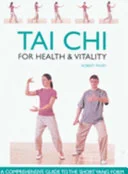
Tai Chi for Health & Vitality
 76
76

Tai Chi for Health & Vitality
Robert Parry’s "Tai Chi for Health & Vitality" presents the Yang form with a commendable clarity that sidesteps the usual esoteric jargon. Its strength lies in the direct, instructional approach; the step-by-step breakdown of movements, like the transition from "Parting the Wild Horse's Mane," is particularly effective for beginners. However, the book leans heavily on the physical mechanics, with less emphasis on the deeper philosophical underpinnings that inform the practice for many adherents. While it fulfills its promise of teaching the form, readers seeking extensive exploration of Taoist concepts or martial applications might find it somewhat superficial. Nonetheless, for its stated purpose of guiding health-conscious learners through the Yang style, it is a solid, functional text.
📝 Description
76
Robert Parry's 2005 guide details the Yang style of Tai Chi for improved well-being.
Published in 2005, Robert Parry's "Tai Chi for Health & Vitality" focuses on the Yang style of Tai Chi. The book breaks down this ancient Chinese practice into clear, step-by-step instructions, making it suitable for beginners. It emphasizes the physical movements and their direct impact on health and vitality. The author guides readers through the sequence of the Yang form, stressing proper posture, controlled breathing, and attentive execution of each movement. Parry also touches upon foundational concepts like the cultivation of 'Qi,' or vital energy, through these precise actions. The aim is to foster both physical robustness and mental tranquility. This manual is a practical resource for individuals interested in gentle exercise, stress management, and enhancing physical coordination through a structured approach to Tai Chi for health purposes.
The Yang style of Tai Chi, detailed in this book, has roots in Chinese martial arts and Taoist philosophy. Its practice, particularly the emphasis on slow, deliberate movements and the cultivation of vital energy (Qi), aligns with internal alchemy traditions. These traditions seek to harmonize mind, body, and spirit, promoting longevity and inner balance. The book's focus on mindful execution and the connection between physical action and mental calmness places it within the broader esoteric pursuit of self-cultivation and energetic well-being.
💡 Why Read This Book?
• Learn the foundational movements of the Yang style Tai Chi form, a practice with roots in the 19th century, allowing for a structured physical discipline. • Understand the practical application of posture and breath control, as detailed in the book's step-by-step instructions, to improve coordination and reduce physical tension. • Gain a clear, actionable guide to practicing Tai Chi for enhanced vitality, focusing on the accessible techniques presented by Robert Parry, first published in 2005.
⭐ Reader Reviews
Honest opinions from readers who have explored this book.
❓ Frequently Asked Questions
Is Robert Parry's Tai Chi book suitable for absolute beginners?
Yes, "Tai Chi for Health & Vitality" is specifically designed for beginners. It provides step-by-step instructions for the Yang form, breaking down each movement clearly to make the practice accessible to those with no prior experience.
What specific form of Tai Chi does this book focus on?
The book concentrates on the Yang style of Tai Chi, which is the most widely practiced form globally. It details the sequence of movements characteristic of this particular lineage.
When was Robert Parry's Tai Chi book originally published?
Robert Parry's "Tai Chi for Health & Vitality" was first published in 2005, making it a relatively contemporary guide to this ancient practice.
Does the book explain the philosophical aspects of Tai Chi?
While the book's primary focus is on the physical practice and step-by-step instructions for the Yang form, it does touch upon concepts like Qi (vital energy) and their relation to movement and vitality.
What are the benefits of practicing Tai Chi as described in the book?
The book highlights benefits such as improved physical coordination, stress reduction, and enhanced vitality. It presents Tai Chi as a method for promoting overall well-being through gentle, mindful movement.
Is this book suitable for learning self-defense applications of Tai Chi?
While the Yang form has martial origins, "Tai Chi for Health & Vitality" emphasizes the health and vitality aspects. It focuses on the form's execution for well-being rather than detailed self-defense techniques.
🔮 Key Themes & Symbolism
Yang Form Mastery
This book meticulously dissects the Yang style of Tai Chi, a lineage known for its expansive and graceful movements that became prominent in the 19th century. Parry guides readers through each posture and transition, emphasizing precision and flow. The focus is on replicating the form accurately as a means to cultivate physical skill and internal awareness, rather than exploring the myriad variations found in other schools or historical periods.
Cultivating Vitality
Central to Parry's approach is the enhancement of 'vitality,' often understood as life force or energy (Qi). The book connects the physical practice of Tai Chi—the coordinated movements, controlled breathing, and mindful attention—directly to an increase in personal energy and well-being. It presents Tai Chi as an accessible system for those seeking to invigorate their physical and mental states in a gentle yet effective manner.
Accessible Practice
Published in 2005, the work aims to clarify Tai Chi for a Western audience. It prioritizes clarity and practical instruction over complex philosophical discourse or historical debate. The step-by-step format ensures that individuals, regardless of their fitness level or background, can begin to learn and practice the Yang form, making Tai Chi a tangible pursuit for health improvement.
Mind-Body Connection
The practice detailed in "Tai Chi for Health & Vitality" inherently fosters a connection between the mind and body. By requiring focused attention on precise movements and breath, the book encourages a state of presence. This integration is presented not just as a physical benefit but as a pathway to mental calmness and a reduction in the effects of stress on the body.
💬 Memorable Quotes
Direct passages from the work, attributed to the author.
“The Yang form is characterized by its slow, deliberate, and expansive movements.”
— This highlights a key distinguishing feature of the specific Tai Chi style taught in the book, emphasizing its aesthetic and kinetic qualities that contribute to its therapeutic effects.
“Focus on maintaining correct posture throughout each movement.”
— This emphasizes the foundational principle of proper alignment in Tai Chi, crucial for both effective practice and injury prevention, as Parry likely details in his instructional sections.
“Controlled breathing enhances the flow of vital energy.”
— This connects the physical act of respiration to the concept of 'Qi' or vital energy, suggesting that mindful breathing is integral to the health benefits derived from practicing the form.
“Each step builds upon the previous one, creating a seamless sequence.”
— This underscores the methodical nature of learning the Tai Chi form, illustrating how mastery is achieved through consistent practice and the integration of individual movements into a flowing whole.
“Tai Chi offers a pathway to improved physical coordination and mental calmness.”
— This statement expresses the dual benefits—physical and mental—that the book promises readers can achieve through dedicated practice of the Tai Chi form.
🌙 Esoteric Significance
Tradition
While "Tai Chi for Health & Vitality" focuses on the physical practice, it operates within the broader context of Taoist principles, even if not explicitly detailed. The emphasis on cultivating 'Qi' (vital energy) and harmonizing mind and body aligns with Taoist ideals of balance and natural flow. The Yang style itself, with its roots in martial arts and contemplative practices, can be seen as a somatic expression of these ancient philosophies, seeking internal harmony through external form.
Symbolism
The movements themselves, such as 'Parting the Wild Horse's Mane' or 'White Crane Spreads Wings,' are not merely physical actions but symbolic representations. In a Taoist framework, these names often evoke natural phenomena and principles, encouraging practitioners to embody qualities like yielding, balance, and adaptability. The circularity and continuous flow of the Yang form can symbolize the cyclical nature of existence and the interconnectedness of all things.
Modern Relevance
Works like Parry's continue to be relevant for contemporary practitioners seeking practical methods for stress reduction, improved physical health, and a connection to ancient traditions. In an era focused on wellness and mindfulness, Tai Chi offers a tangible practice. Modern interpretations often build upon such foundational guides, integrating them with contemporary understandings of biomechanics, exercise physiology, and mental health, demonstrating the enduring appeal of these practices.
👥 Who Should Read This Book
• Individuals seeking a clear, methodical introduction to the Yang style of Tai Chi, particularly those new to the practice and looking for detailed, step-by-step instructions. • Health-conscious readers interested in gentle, low-impact exercise for improving balance, coordination, and reducing physical tension, as outlined in the book's practical approach. • Students of mind-body practices who want to understand the foundational movements of Tai Chi and its role in cultivating vitality, as presented in this 2005 publication.
📜 Historical Context
Emerging in the early 21st century, Robert Parry's "Tai Chi for Health & Vitality" (2005) addressed a growing Western interest in holistic health practices. By 2005, Tai Chi had moved beyond niche martial arts circles, embraced by millions for its perceived health benefits, making it a significant fitness trend. Parry's work arrived in a landscape increasingly populated by books on Qigong and other mind-body disciplines, often drawing from Traditional Chinese Medicine. While contemporaries like Dr. Paul Lam were also popularizing simplified Tai Chi forms for health, Parry focused specifically on the traditional Yang style's step-by-step execution. The book's relative accessibility positioned it as a practical manual, contributing to Tai Chi's widespread adoption as a gentle exercise modality, distinct from its martial origins or its integration into more complex Taoist philosophical systems.
📔 Journal Prompts
The transition between movements like 'Parting the Wild Horse's Mane' and 'White Crane Spreads Wings'.
The concept of 'Qi' and its perceived flow during practice.
Maintaining correct posture across different stances.
The relationship between controlled breathing and physical exertion.
Integrating the mindful focus required for the Yang form into daily life.
🗂️ Glossary
Tai Chi (Yang Style)
A traditional Chinese martial art practiced for health benefits, characterized by slow, flowing, and deliberate movements. The Yang style is known for its expansive postures and is the most widely practiced form.
Qi (Chi)
A fundamental concept in Traditional Chinese Medicine and Taoism, referring to vital life force or energy that flows through the body. Tai Chi practice aims to cultivate and balance Qi.
Form
In Tai Chi, the 'form' refers to a specific, prearranged sequence of movements. This book details the steps of the Yang style form.
Posture
The way the body is held during the practice of Tai Chi. Correct posture is essential for balance, energy flow, and executing movements effectively and safely.
Vitality
The state of being strong, active, and energetic. The book presents Tai Chi as a practice to enhance physical and mental vitality.
Breath Control
The conscious regulation of breathing during Tai Chi practice. It is considered crucial for coordinating movements and enhancing the flow of Qi.
Movement Sequence
The specific order in which the postures and transitions of a Tai Chi form are performed. Parry provides a detailed breakdown of the Yang form's sequence.
This book appears in 1 collection
🔮 Readers Also Liked
Browse all →









From the “Tai Chi” Collection
View all →









More Free Occult Philosophy Books
View all →