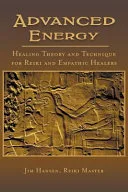
Advanced Energy Healing Theory and Technique for Reiki and Empathic Healers
 73
73

Advanced Energy Healing Theory and Technique for Reiki and Empathic Healers
Jim Hansen’s "Advanced Energy Healing Theory and Technique" attempts to bridge the gap between novice Reiki practice and a more sophisticated understanding of energetic manipulation. The author’s strength lies in his commitment to explaining the mechanics, such as the concept of consciously directing energy flow, which is often left implicit in basic training. He offers a methodical approach to sensing a client's energetic state, a valuable skill for any practitioner. However, the text occasionally leans towards a somewhat dry, technical exposition that might alienate those seeking a more intuitive or spiritual exploration. A passage discussing the 'nonphysical human anatomy' provides a detailed, albeit theoretical, map of energetic centers, which, while informative, can feel overly clinical. Ultimately, the book provides a solid, albeit sometimes dense, framework for enhancing practical energy healing skills.
📝 Description
73
Jim Hansen's 2017 book details advanced theory and technique for Reiki and empathic healers.
Advanced Energy Healing Theory and Technique for Reiki and Empathic Healers moves beyond introductory concepts. The 2017 publication addresses the practical application and underlying principles of healing modalities like Reiki and empathic channeling. Hansen aims to equip practitioners with the ability to consciously direct and perceive energy flows, enhancing their effectiveness.
This text is for individuals who have completed foundational training in Reiki or possess innate empathic healing abilities. It helps those seeking to deepen their understanding and refine their practical skills. The book focuses on moving from a basic level of practice to a more controlled application of energy healing techniques, for the serious student ready to explore the mechanics and rationale behind energetic interventions.
Published in 2017, this work enters a field where energy healing, especially Reiki, saw increased interest in the late 20th and early 21st centuries. Unlike many popular Reiki manuals that focus on basic practices, Hansen's book addresses a need for advanced theoretical and practical instruction. It is situated within the New Age movement's focus on consciousness and subtle energies, providing a more technical framework than earlier works on the subject.
💡 Why Read This Book?
• Gain practical techniques for consciously activating your hands to channel energy, moving beyond passive energy reception as detailed in Chapter 3, "Turning On Your Hands." • Learn to accurately sense a client's energetic receptivity and identify specific areas that require deeper intervention, enhancing diagnostic accuracy based on Hansen's 2017 publication. • Understand the theoretical underpinnings of energy healing, including nonphysical anatomy and the link between consciousness and physical well-being, as explored in Chapters 1 and 2.
⭐ Reader Reviews
Honest opinions from readers who have explored this book.
❓ Frequently Asked Questions
What specific techniques does "Advanced Energy Healing Theory and Technique" offer that go beyond basic Reiki classes?
The book teaches how to "turn on your hands" for conscious energy transfer, sense the flow of Reiki, and identify areas on a client's body most receptive to healing energy, as detailed in its practical chapters.
Who is the intended audience for Jim Hansen's book?
This book is for Reiki practitioners and empathic healers who have completed introductory training and wish to deepen their theoretical understanding and refine their advanced techniques.
What is the publication year of "Advanced Energy Healing Theory and Technique for Reiki and Empathic Healers"?
The book was first published on September 8, 2017, by Jim Hansen.
Does the book explain the theoretical basis of energy healing?
Yes, it includes chapters on nonphysical human anatomy, the relationship between energy and consciousness, and healing theory, explaining the 'how' and 'why' behind energy healings.
What does the book say about sensing energy flow?
It provides methods for sensing the flow of Reiki and identifying specific energetic blockages or receptivity within a client's body, allowing for more targeted healing.
Can this book help improve empathic healing abilities?
Yes, by explaining the underlying principles and offering advanced techniques, it aims to enhance the practitioner's ability to consciously utilize and direct their empathic healing energies.
🔮 Key Themes & Symbolism
Conscious Energy Channeling
The work emphasizes the active and conscious direction of healing energies, moving beyond passive reception. Hansen provides techniques for 'turning on your hands,' enabling practitioners to feel and control the flow of Reiki or empathic energy. This focus aims to empower healers, making their interventions more precise and effective by engaging their intent directly with the client's energetic field.
Nonphysical Anatomy
A core element is the exploration of the body's subtle energy systems, often referred to as nonphysical anatomy. The book details these structures, such as chakras and energy pathways, explaining how they interact with the physical body and influence health. Understanding this energetic framework is presented as crucial for accurately diagnosing and treating energetic imbalances.
The Science of Healing
Hansen attempts to provide a theoretical rationale for why energy healing works, linking it to concepts of energy, consciousness, and healing theory. The book seeks to clarify the process by explaining the mechanisms involved, offering practitioners a deeper comprehension of their abilities and the phenomena they encounter during sessions.
Empathic Resonance
Beyond Reiki, the book addresses empathic healers, exploring how to sense and respond to a client's energetic and emotional state. It highlights the importance of distinguishing between one's own energetic field and that of the client, offering methods to manage empathic input for more effective and balanced healing practice.
💬 Memorable Quotes
Direct passages from the work, attributed to the author.
“Learn how to "turn on your hands" to sense and direct Reiki flow.”
— This highlights the book's focus on empowering practitioners with conscious control over their healing energy, moving beyond instinctual or passive application.
“Locate areas on the client's body that will accept heavy Reiki flow.”
— This points to the diagnostic aspect of advanced energy healing, suggesting a method to identify specific energetic needs within a client's system.
“Understanding nonphysical human anatomy is key to effective energy healing.”
— This emphasizes the theoretical foundation of the book, arguing that knowledge of energetic structures is as important as practical technique.
“Energy and consciousness are deeply intertwined in the healing process.”
— This interpretation underscores the metaphysical perspective of the book, suggesting that mental states and energetic fields mutually influence physical well-being.
“Take advantage of both Reiki and empathic healing methods.”
— This suggests the book aims to integrate different energy healing modalities, providing techniques applicable to both established and intuitive approaches.
🌙 Esoteric Significance
Tradition
This work fits within the modern esoteric lineage of energy healing, particularly drawing from and expanding upon the principles of Reiki, which itself has roots in Eastern meditative and healing practices. It departs from purely spiritual interpretations by focusing on practical mechanics and theoretical explanations grounded in concepts of energy flow and consciousness, aligning with later 20th and 21st-century Western esoteric interests in applied subtle energies.
Symbolism
While not heavily symbolic in a traditional esoteric sense, the book uses concepts like 'turning on your hands' as a motif for conscious activation. The 'flow of Reiki' represents the vital life force (Qi/Prana) that practitioners learn to direct. The 'nonphysical human anatomy' functions as a symbolic map of energetic centers and pathways, crucial for understanding the energetic body.
Modern Relevance
Contemporary energy healers, particularly those practicing advanced Reiki or seeking to integrate empathic abilities with structured techniques, find value in Hansen's approach. Thinkers and practitioners in fields like energy medicine, consciousness studies, and integrated healing modalities may draw upon its blend of theory and practical application to refine their methods.
👥 Who Should Read This Book
• Reiki practitioners seeking to deepen their understanding beyond basic attunements and hand positions, aiming for more precise energetic interventions. • Empathic healers who wish to develop more structured techniques for channeling and sensing energy, enhancing their intuitive abilities with theoretical frameworks. • Students of esoteric literature interested in the practical application of energy principles and the connection between consciousness and physical well-being.
📜 Historical Context
Published in 2017, Jim Hansen's "Advanced Energy Healing Theory and Technique" emerged during a period of widespread interest in alternative and complementary therapies, with Reiki being a prominent example. While Usui's original system laid the groundwork in the early 20th century, and authors like Diane Stein popularized it in the West later on, Hansen's work addresses a perceived need for more in-depth theoretical and practical instruction. It enters a market often saturated with introductory manuals, seeking to provide a more technical and analytical approach. The book positions itself within the broader New Age and esoteric movements that explore consciousness, subtle energies, and mind-body connections, offering a bridge between spiritual concepts and practical application, distinct from purely medical or scientific explanations of healing.
📔 Journal Prompts
The concept of "turning on your hands" for energy flow.
Methods for sensing areas receptive to heavy Reiki flow.
The relationship between energy and consciousness in healing.
Understanding your own nonphysical anatomy during a session.
Integrating empathic sensing with deliberate technique.
🗂️ Glossary
Reiki
A Japanese form of energy healing that involves the laying on of hands, believed to channel universal life force energy (Ki) to promote physical and emotional well-being.
Empathic Healer
An individual who uses their innate sensitivity to feel and process the emotions and energetic states of others, often incorporating this into a healing practice.
Nonphysical Human Anatomy
The study of the body's subtle energy systems, including chakras, meridians, and energy fields, which are believed to influence physical health and consciousness.
Energy Flow
The movement of subtle or vital life force energy through the body's energetic pathways, which can be consciously directed or sensed by trained practitioners.
Consciousness
The state of being aware of and responsive to one's surroundings; in esoteric contexts, often viewed as a fundamental aspect of the universe that influences energy and matter.
Healing Theory
The principles and explanations that underpin various healing modalities, exploring the mechanisms by which physical, emotional, and energetic imbalances are addressed.
Client Receptivity
The degree to which a client's energetic system is open and able to absorb and integrate healing energy, a factor that advanced practitioners learn to assess.