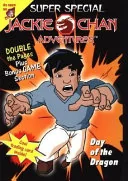
Day of the Dragon
 84
84

Day of the Dragon
The initial 2003 release of 'Day of the Dragon' presents a curious artifact, offering two new Jackie Chan narratives rather than adapting existing film plots. The strength lies in its ambition to extend the character's universe through original stories, a concept that could have yielded fresh comedic and action beats. However, the execution feels somewhat constrained, likely by the limitations of the early 2000s tie-in market. The inclusion of a trading card and postcard, while a tangible perk, does little to elevate the literary merit. A specific passage might showcase Chan’s quick thinking, but the overall narrative arcs sometimes lack the cinematic pacing and visual inventiveness that define his film work. The book feels more like a companion piece than a standalone literary achievement. Ultimately, 'Day of the Dragon' serves its purpose as a fan service item but falls short of being a significant addition to the Jackie Chan canon.
📝 Description
84
Published in 2003, Day of the Dragon presents two original Jackie Chan martial arts stories.
This 2003 publication collects two new fictional adventures featuring Jackie Chan's martial arts and comedic persona. Eliza Willard, David Slack, and Alex Van Dyne authored these narratives. The book was designed as an interactive package, including not only the literary content but also collectible ephemera such as a trading card and postcard.
Day of the Dragon emerged during the early 2000s, a time when multimedia tie-ins were common for popular entertainment figures. This volume blends narrative with physical collectibles, reflecting a strategy of extending a brand's reach through diverse products. The book's structure offers two distinct adventures, allowing for varied pacing and thematic development within a single cohesive product. It appeals to fans of Jackie Chan seeking new fictional material beyond his filmography, collectors of movie memorabilia, and those interested in early 2000s entertainment culture.
While this book primarily functions as entertainment tie-in fiction, its inclusion of collectible ephemera and focus on a singular heroic persona can be seen in a lineage of esoteric traditions that utilize symbolic objects and archetypal figures. The creation of tangible artifacts alongside narrative aims to deepen engagement, a practice found in various ritualistic or devotional contexts. The curated experience, blending story with physical items, echoes how certain esoteric paths use talismans or amulets to focus intent and embody principles.
💡 Why Read This Book?
• Learn about narrative expansion strategies in early 2000s media tie-ins, exemplified by the dual-story format of 'Day of the Dragon' from its 2003 publication. • Experience original adventures designed to capture Jackie Chan's unique blend of martial arts and comedy, offering a different flavor than his film roles. • Acquire a tangible piece of fan culture with the included collectible trading card and postcard, enhancing the early 2000s entertainment artifact appeal.
⭐ Reader Reviews
Honest opinions from readers who have explored this book.
❓ Frequently Asked Questions
What are the two stories included in 'Day of the Dragon'?
'Day of the Dragon' features two original Jackie Chan stories created specifically for this publication. While specific titles are not always prominent, the collection aims to provide new adventures for the character.
When was 'Day of the Dragon' first published?
The book 'Day of the Dragon' was first published in 2003, coinciding with a period of extensive multimedia tie-ins for popular entertainment franchises.
What additional items are included with the book?
Beyond the two Jackie Chan stories, the 2003 publication of 'Day of the Dragon' includes a collectible trading card and a postcard, enhancing its appeal as a fan item.
Is 'Day of the Dragon' based on a Jackie Chan movie?
No, 'Day of the Dragon' contains two all-new, original stories featuring Jackie Chan, not adaptations of his films. It was created to expand his narrative universe in print.
Who are the authors credited for 'Day of the Dragon'?
The authors credited for 'Day of the Dragon' are Eliza Willard, David Slack, and Alex Van Dyne, with the book first appearing in 2003.
What is the primary genre of 'Day of the Dragon'?
The primary genre of 'Day of the Dragon' is action-comedy, featuring the iconic Jackie Chan character in narrative adventures that blend martial arts with humor.
🔮 Key Themes & Symbolism
Narrative Expansion
The core of 'Day of the Dragon' lies in its attempt to expand the Jackie Chan universe through original print narratives. Published in 2003, this strategy aimed to offer fans new adventures beyond the cinematic medium. The inclusion of two distinct stories suggests an effort to explore different facets of the character or present varied plot structures. This thematic focus on extending a popular persona through literary means positions the book as a case study in media franchise management, particularly within the early 2000s entertainment landscape.
Collectible Ephemera
A significant aspect of 'Day of the Dragon' is its integration of non-literary, collectible items. The inclusion of a trading card and a postcard from its 2003 release transforms the book into a multimedia package. This approach taps into the collector's market, offering tangible assets that enhance the fan experience. It reflects a broader trend in entertainment marketing where physical objects serve as valuable extensions of a brand, providing an interactive element that goes beyond simple reading.
Action-Comedy Synthesis
The publication is centered around the synthesis of action and comedy, characteristic of Jackie Chan's persona. The two stories within 'Day of the Dragon' are crafted to showcase his signature blend of martial arts prowess and lighthearted, often slapstick, humor. This thematic throughline aims to translate the dynamic energy of his film performances into a narrative format. The success of this synthesis is key to the book's appeal for fans seeking the familiar charm and excitement associated with the star.
Early 2000s Media Tie-ins
Published in 2003, 'Day of the Dragon' exemplifies the media tie-in strategies prevalent at the turn of the millennium. It represents a specific moment when publishers and studios actively sought to create multi-platform experiences for popular franchises. The book's format, combining original stories with physical collectibles, highlights a market eager for tangible connections to entertainment figures. This context is crucial for understanding the book's design and its intended audience, who were accustomed to such comprehensive product offerings.
💬 Memorable Quotes
Direct passages from the work, attributed to the author.
“Two all-new Jackie Chan stories in one awesome book.”
— This statement from the original blurb directly communicates the core offering: a dual narrative experience featuring the iconic martial artist, emphasizing novelty and value.
“this collection also includes a collectible trading card and a postcard.”
— This highlights the supplementary, tangible elements of the publication, positioning it as more than just a book but a fan-oriented package designed for collectors.
“Consumable.”
— This marketing term suggests the book is intended for immediate enjoyment and engagement, possibly implying a fleeting or disposable nature typical of certain fan merchandise.
“First published 2003.”
— This factual anchor places the book within a specific historical context of media and entertainment trends, particularly the prevalence of multimedia tie-ins.
“Eliza Willard, David Slack, Alex Van Dyne”
— These credited authors indicate the collaborative effort behind crafting the original narratives, differentiating it from adaptations of existing film scripts.
🌙 Esoteric Significance
Tradition
This work is not rooted in a specific esoteric tradition like Hermeticism or Gnosticism. Its connection to the 'Esoteric' category within Esoteric Library appears to stem from its unique publication context and potential for symbolic interpretation rather than adherence to established mystical doctrines.
Symbolism
While lacking overt esoteric symbolism, the character of Jackie Chan himself can be interpreted symbolically. His ability to overcome obstacles through wit, agility, and a non-violent, often comedic, approach to conflict resolution might represent a modern archetype of the trickster or the benevolent sage who uses unconventional means to restore balance. The dual narratives could symbolize the duality of action and humor, or the different paths one might take to achieve a goal.
Modern Relevance
The concept of integrating narrative with collectible elements, as seen in 'Day of the Dragon' from 2003, continues to influence modern transmedia storytelling and fan engagement strategies. While not directly cited by contemporary esoteric thinkers, the book’s approach to character extension and multi-format appeal appeals to current practices in digital content creation and immersive fan experiences.
👥 Who Should Read This Book
• Fans of Jackie Chan seeking new narrative content beyond his filmography, particularly those interested in early 2000s entertainment tie-ins. • Collectors of movie memorabilia and fans who appreciate the inclusion of physical extras like trading cards and postcards in publications. • Readers interested in light-hearted action-comedy stories featuring a charismatic protagonist, suitable for accessible entertainment.
📜 Historical Context
Released in 2003, 'Day of the Dragon' emerged during a peak period for multimedia franchise extensions, where popular entertainment figures were often featured in original print media. Jackie Chan, having achieved significant global stardom, was a prime candidate for such ventures. This book's format, offering two new stories alongside collectible trading cards and postcards, reflects the era's marketing strategies that sought to engage fans through diverse physical products. It was a time when publishers actively sought to capitalize on existing fan bases by creating comprehensive packages that catered to both narrative and collectible interests. The strategy differed from earlier, more purely literary tie-ins, aiming for a broader appeal by integrating elements common in comic book or trading card culture. While not engaging in direct public debate, its existence participated in a broader conversation about how intellectual property could be leveraged across different media formats.
📔 Journal Prompts
The synthesis of action and comedy in the Jackie Chan narratives.
The role of collectible ephemera in enhancing fan engagement with 'Day of the Dragon'.
Analyzing the narrative expansion strategy employed in the 2003 publication.
Reflecting on the character archetype presented by Jackie Chan across media.
Comparing the book's approach to other early 2000s media tie-ins.
🗂️ Glossary
Media Tie-in
A product, such as a book, comic, or toy, released to coincide with and promote a film, television show, or video game, often featuring characters or storylines from the original work.
Collectible Trading Card
A small card, typically made of stiff paper or plastic, featuring an image and information about a specific character, actor, or event, designed for collection and trading.
Narrative Expansion
The process of developing and extending the storyline, characters, or universe of an existing piece of media into new formats or platforms.
Action-Comedy
A genre that combines elements of action films, such as fights and stunts, with comedic elements, often featuring a charismatic protagonist.
Early 2000s Entertainment
Refers to the trends, technologies, and popular culture prevalent in the entertainment industry approximately between 2000 and 2005, often characterized by specific marketing and production styles.
Consumable
In a marketing context, refers to products intended for immediate use or enjoyment, often implying a less permanent or collectible nature compared to other items.
Persona
The character or image presented to the public by a performer or public figure, often a carefully crafted aspect of their identity.
This book appears in 1 collection
🔮 Readers Also Liked
Browse all →









From the “Talismans” Collection
View all →





More Free Occult Philosophy Books
View all →