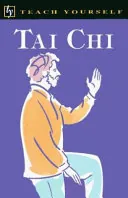
Teac Yourself Tai Chi

 72
72

Teac Yourself Tai Chi
Robert Parry's Teac Yourself Tai Chi, first appearing in 2007, attempts to bridge the gap between the physical practice of Tai Chi and its esoteric underpinnings. The book is commendable for its attempt to articulate the internal energetic principles, such as the role of 'intent' (Yi) and the cultivation of 'Qi', in a manner accessible to Western esoteric students. Parry's explanation of the 'Eight Energies' offers a structured way to understand the nuanced movements. However, the work sometimes struggles to translate the embodied experience of Tai Chi into purely textual descriptions. While the concepts are present, the visceral feeling of practicing the forms, particularly the 'push hands' aspect which fosters relational awareness, feels somewhat diluted. A passage discussing the 'Dan Tian' as a central energetic reservoir is particularly illustrative of the book's strengths in conceptual explanation, though it could benefit from more direct experiential guidance. Overall, Teac Yourself Tai Chi provides a solid conceptual framework but may leave practitioners seeking a more fully embodied understanding wanting.
📝 Description
72
Robert Parry's 2007 book, Teac Yourself Tai Chi, connects the martial art to spiritual development.
Published in 2007, Teac Yourself Tai Chi by Robert Parry presents the Chinese martial art of Tai Chi Chuan through a lens of internal energetics and philosophical depth. Parry moves beyond simple physical instruction to detail the concepts that underpin the practice, framing it as a system for cultivating mind-body harmony and spiritual awareness. The book aims to make complex ideas about Tai Chi accessible to those interested in esoteric sciences and personal growth.
This text is for individuals seeking a more profound connection with their physical and energetic selves. It appeals to students of Eastern philosophies, martial artists interested in the internal dimensions of their training, and anyone drawn to the intersection of physical discipline and metaphysical principles. Readers who value detailed explanations of 'Qi' flow and the integration of meditative states into movement will find it particularly useful. It also serves those new to Tai Chi but curious about its reputation for promoting balance and well-being.
Teac Yourself Tai Chi was published in 2007, a period marked by growing Western interest in Eastern contemplative and martial arts, often viewed through an esoteric framework. Parry's work situates Tai Chi within a broader interest in practices like Qigong and meditation, which were then popular pathways for self-discovery and energetic mastery. The book contributes to this milieu by presenting a specific martial art as a method for achieving these goals.
💡 Why Read This Book?
• Gain an understanding of Tai Chi's energetic principles, such as 'Qi' and 'Yi' (intent), that extend beyond mere physical form, offering a unique perspective on cultivating internal balance. • Explore the concept of the 'Eight Energies' as presented in the book, providing a structured framework for appreciating the subtle dynamics within Tai Chi movements that resonate with broader esoteric concepts. • Learn about the 'Dan Tian' as a central energetic hub, as detailed in the text, and its significance in harmonizing mind and body, a practical application for personal development.
⭐ Reader Reviews
Honest opinions from readers who have explored this book.
❓ Frequently Asked Questions
When was Teac Yourself Tai Chi first published?
Teac Yourself Tai Chi by Robert Parry was first published in 2007, making it a relatively contemporary exploration of this ancient practice.
What esoteric concepts does Teac Yourself Tai Chi explore?
The book delves into concepts like 'Qi' (vital energy), 'Yi' (intent), the 'Eight Energies' of Tai Chi, and the 'Dan Tian' (energetic center), framing them within an esoteric context.
Is Teac Yourself Tai Chi suitable for absolute beginners to Tai Chi?
While it aims for accessibility, the book's focus on esoteric principles suggests it might be most beneficial for those with some interest or background in contemplative or martial practices.
What is the 'Dan Tian' as discussed in the book?
The 'Dan Tian' is presented as a crucial energetic reservoir within the body, central to harmonizing mind, body, and spirit in Tai Chi practice according to the book's teachings.
Does Robert Parry mention specific Tai Chi forms?
The book focuses more on the underlying principles and energetic concepts, using movements as examples rather than providing a form-by-form instructional guide.
What historical period does the book situate Tai Chi within?
While not explicitly detailing historical periods of Tai Chi's development, the book's publication in 2007 places its commentary within the modern resurgence of interest in esoteric Eastern practices.
🔮 Key Themes & Symbolism
Cultivating Qi
The book emphasizes the vital life force, Qi, not merely as breath but as a palpable energy that flows through the body. Parry guides readers to perceive and direct this energy through specific postures and intentions, essential for Tai Chi's health and martial benefits. This concept aligns with broader esoteric traditions that view Qi as the fundamental energetic substrate of existence, influencing well-being and consciousness.
The Role of Intent (Yi)
Parry highlights 'Yi' as the commander of Qi and movement. The book explains how focused intention shapes the energetic quality of each posture and transition. This principle resonates deeply with Western esoteric practices where directed will and visualization are key to manifesting desired outcomes, suggesting a universal application of focused consciousness.
Structure and Energetic Flow
A significant theme is the maintenance of correct structural alignment to facilitate unimpeded energetic flow. The text details how proper posture, described in the context of the 'Eight Energies', creates pathways for Qi to circulate, preventing stagnation and promoting vitality. This focus on form as a conduit for subtle energies is a hallmark of many esoteric disciplines.
Mind-Body Harmony
Teac Yourself Tai Chi presents Tai Chi as a means to achieve profound integration of the mind and body. By synchronizing breath, intention, and physical movement, practitioners can achieve a state of balanced awareness. This pursuit of holistic integration is a central tenet across numerous esoteric paths seeking to unify the physical, mental, and spiritual aspects of being.
💬 Memorable Quotes
Direct passages from the work, attributed to the author.
“Intent guides the Qi, and the Qi animates the form.”
— This concise statement captures the core principle that conscious will ('Yi') is the primary driver in Tai Chi, directing the vital energy ('Qi') to manifest the physical movements and their underlying energetic purpose.
“Stillness within movement is the paradox of Tai Chi.”
— This highlights the practice's meditative quality, where despite continuous physical motion, a deep internal stillness and centered awareness are cultivated, a common goal in many esoteric disciplines.
“The body is a vessel for energetic cultivation.”
— This interpretation underscores the book's perspective that the physical form is not an end in itself but a tool or medium through which internal energetic development and spiritual growth can occur.
“Structure provides the framework for Qi's free circulation.”
— This suggests that correct physical alignment and posture are crucial not just for biomechanical efficiency but for creating clear channels for vital energy flow, preventing energetic blockages.
“Sensitivity to subtle forces is paramount.”
— This points to the importance of developing internal awareness to perceive and respond to the finer energetic currents within oneself and in interaction with others, a skill emphasized in esoteric training.
🌙 Esoteric Significance
Tradition
This work aligns with the Western esoteric interest in Chinese internal arts, particularly Taoist principles, viewed as a practical method for energetic cultivation and spiritual development. It fits within a lineage that interprets martial arts not solely for combat but as vehicles for harmonizing the self with cosmic energies, akin to how Hermeticism or certain Kabbalistic practices explore correspondence between microcosm and macrocosm.
Symbolism
Key symbols include the 'Dan Tian,' representing the energetic core and seat of consciousness, analogous to the concept of the 'hunchback' or sacred center in some Western mystical traditions. The 'Eight Energies' (Peng, Lu, Ji, An, Cai, Lie, Zhou, Kao) function symbolically, representing fundamental forces and their dynamic interplay, mirroring elemental or alchemical correspondences found in Western esotericism.
Modern Relevance
Contemporary practitioners of somatic therapies, mindfulness-based stress reduction, and even certain branches of energy medicine can find resonance in Parry's emphasis on embodied awareness and Qi cultivation. Thinkers exploring the integration of ancient wisdom traditions with modern psychology and neuroscience also draw upon the principles articulated in works like this, seeking practical applications for well-being.
👥 Who Should Read This Book
• Students of Taoism and Chinese philosophy seeking a practical, embodied understanding of core concepts like Qi and intent beyond theoretical study. • Practitioners of internal martial arts, including Tai Chi, Qigong, or Baguazhang, who wish to deepen their comprehension of the energetic principles and their esoteric significance. • Individuals interested in holistic health and mind-body integration who are drawn to practices that cultivate internal harmony and subtle energy awareness.
📜 Historical Context
Robert Parry's Teac Yourself Tai Chi, published in 2007, arrived during a period of heightened Western engagement with Eastern contemplative practices, often viewed through an esoteric lens. While scholarly works on martial arts and Chinese philosophy were established, Parry's text contributed to a broader cultural trend that embraced practices like Qigong and meditation as pathways to self-discovery. This era saw a significant influx of popular books interpreting these traditions for Western audiences, frequently highlighting their metaphysical and energetic dimensions. Contemporaries like Stephen Mitchell, known for his popularizations of Taoist texts, and various New Age authors were exploring similar themes. The reception of such works often focused on their perceived benefits for stress reduction and personal transformation, sometimes leading to a more generalized understanding of complex traditions.
📔 Journal Prompts
The concept of 'Yi' as the commander of Qi requires focused reflection.
Contemplate the 'Eight Energies' and their potential application beyond Tai Chi.
Reflect on the body as a vessel for energetic cultivation.
Explore the meaning of 'stillness within movement' in your daily life.
Consider how the 'Dan Tian' might serve as an anchor for your awareness.
🗂️ Glossary
Qi (Chi)
The fundamental vital life force or energy believed to permeate all things. In Tai Chi, it is cultivated and directed through movement, breath, and intent for health and spiritual development.
Yi
Intent or consciousness. In Tai Chi, Yi is considered the director of Qi, meaning that focused mental intention guides the flow of energy and thus the physical movement.
Dan Tian
Literally 'elixir field,' this is a crucial energetic center located in the lower abdomen, considered the seat of Qi and vital energy in the body.
Eight Energies
The fundamental qualities or forces inherent in Tai Chi movements (Peng, Lu, Ji, An, Cai, Lie, Zhou, Kao), representing distinct energetic actions and principles.
Structure
Refers to the correct alignment and postural integrity of the body, which is essential for facilitating the smooth flow of Qi and maintaining balance.
Mind-Body Harmony
A state of integrated balance and unity between one's mental, emotional, and physical aspects, often a primary goal of practices like Tai Chi.
Internal Arts
A category of martial and contemplative practices, including Tai Chi and Qigong, that emphasize the development and cultivation of internal energy (Qi) rather than external physical force.
🔮 Readers Also Liked
Browse all →









More by Robert Parry
All books →




More Free Occult Philosophy Books
View all →