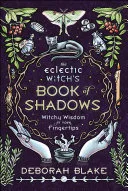
The Eclectic Witch's Book of Shadows
 83
83

The Eclectic Witch's Book of Shadows
Deborah Blake's "The Eclectic Witch's Book of Shadows" arrives as a practical, if somewhat generalized, entry into the crowded field of beginner witchcraft guides. Its greatest strength lies in its design: ample white space and prompted sections genuinely encourage the user to make the book their own, a stark contrast to more static texts. The inclusion of a dedicated section on correspondences, detailing items like herbs and colors, is particularly useful for novices building their magical toolkit. However, the book occasionally feels too broad, offering brief overviews of complex topics like divination without significant depth. A more thorough exploration of specific divination methods beyond basic tarot or pendulum work would have been beneficial. Despite this, Blake provides a solid, accessible framework for nascent practitioners. It functions well as a personalized journal and introductory manual for those beginning their path, offering a functional, if not deeply revelatory, starting point.
📝 Description
83
Published in 2021, Deborah Blake's The Eclectic Witch's Book of Shadows guides users in creating a personal grimoire.
This book provides a framework for practitioners to build their own Book of Shadows, a personal record of magical practice. It moves beyond theoretical instruction by offering dedicated space for users to document their spells, observations, and insights. The approach is designed for active engagement, encouraging the creation of a living magical journal.
Blake's guide is suited for those new to witchcraft or experienced practitioners looking to organize their work. Its accessible format welcomes newcomers to magical systems. Readers who prefer a hands-on learning style and value documenting their spiritual development will find the interactive elements beneficial. The book specifically appeals to eclectic witches who adapt traditions to their individual beliefs and needs.
While the concept of a Book of Shadows has historical roots, particularly in mid-20th century Wicca as popularized by Gerald Gardner, Blake's 2021 work adapts this tradition for a modern, eclectic practice. It acknowledges the lineage of personal magical records but emphasizes individual adaptation over adherence to a single, rigid structure. This contemporary approach aligns with a current interest in personal spirituality and witchcraft.
💡 Why Read This Book?
• Gain a foundational understanding of magical correspondences, learning how to select specific herbs, colors, and timings for your spells, as detailed in the book's dedicated sections. • Develop a personalized grimoire by actively filling its pages with your own rituals and observations, a key feature highlighted from its 2021 publication date. • Master the basics of candle magic, understanding its symbolic elements and practical application as presented in the guide’s accessible spellcraft instructions.
⭐ Reader Reviews
Honest opinions from readers who have explored this book.
❓ Frequently Asked Questions
What is a Book of Shadows and how does Deborah Blake's version differ?
A Book of Shadows is traditionally a witch's personal magical journal. Deborah Blake's "The Eclectic Witch's Book of Shadows" (2021) differs by providing a structured template with ample writing and sketching space, specifically designed for eclectic witches to personalize and build their practice from the ground up.
Is this book suitable for someone with no prior witchcraft experience?
Yes, the book is explicitly designed as a beginner-friendly guide. It covers essential topics like candle magic, divination, and correspondences in an accessible manner, making it ideal for those new to the craft.
What kind of magical practices does 'The Eclectic Witch's Book of Shadows' focus on?
The book focuses on foundational witchcraft practices. Key areas include candle magic, various forms of divination, understanding magical correspondences, and creating personal magical recipes, all presented within the framework of a customizable grimoire.
How much writing space is available in the book?
The book is designed with 'ample writing and sketching space' throughout. This encourages users to actively record their spells, thoughts, and magical discoveries, making it a personalized working grimoire rather than a static reference.
Who is Deborah Blake, the author?
Deborah Blake is a popular author known for her contributions to witchcraft and paganism. Her work, including 'The Eclectic Witch's Book of Shadows' (first published 2021), often aims to make magical practices accessible and adaptable for modern practitioners.
Can I use this book if I follow a specific pagan tradition?
Absolutely. The 'eclectic' nature of the title suggests adaptability. While it provides a solid foundation, it encourages users to integrate elements into their existing beliefs, making it suitable for those exploring various pagan paths.
🔮 Key Themes & Symbolism
Personalized Grimoire Creation
The core of this work is its emphasis on the user crafting their own Book of Shadows. Unlike historical grimoires which were often static records, Blake's 2021 publication provides extensive blank pages and prompts. This encourages practitioners to document not just spells and rituals but also personal insights, correspondences they discover, and the evolution of their practice. It transforms the book from a passive repository into an active, evolving magical journal, central to developing an authentic witchcraft path.
Foundational Spellcraft Elements
Blake systematically introduces essential components of witchcraft, making them accessible to beginners. This includes detailed sections on correspondences – the symbolic relationships between elements like colors, herbs, and celestial bodies – and practical spellcasting, with a particular focus on candle magic. The book breaks down these concepts into manageable lessons, offering clear guidance on how to apply them in personal workings. It aims to equip readers with the fundamental knowledge needed to construct effective spells.
Eclectic Approach to Magic
The title itself highlights the book's embrace of an eclectic path. It acknowledges that modern witchcraft often involves drawing inspiration from diverse traditions rather than adhering strictly to a single lineage. The book facilitates this by providing a flexible framework. It encourages practitioners to experiment, adapt, and integrate various magical tools and concepts into a unique system that appeals to their individual spiritual journey, fostering autonomy and personal discovery.
Introduction to Divination
Understanding the future and gaining deeper insight is a significant aspect of many magical practices. This book offers an introduction to divination, presenting various methods that practitioners can explore and record within their personal Book of Shadows. While not exhaustive, it provides a starting point for learning techniques that can aid in decision-making, self-reflection, and understanding the subtle energies at play in one's life.
💬 Memorable Quotes
Direct passages from the work, attributed to the author.
“A Book of Shadows is modeled on a traditional Book of Shadows but designed with ample writing and sketching space so you can personalize it in a myriad of ways.”
— This highlights the book's core function: it's a template for a personal grimoire. The emphasis is on user interaction and customization, suggesting that the true magic lies not just in the provided content but in the practitioner's active engagement and unique additions.
“perfect for building your practice from the ground up.”
— This statement underscores the book's suitability for novices. It positions the text as a foundational tool, emphasizing its role in establishing a solid, personal witchcraft practice from its earliest stages.
“Popular author and eclectic witch Deborah B”
— This identifies the author and her approach, signaling that the book will likely reflect an inclusive and adaptable perspective on witchcraft, appealing to those who don't fit neatly into a single, defined tradition.
“A beautiful and abundant source of magical information”
— This suggests that the book is not only informative but also aesthetically pleasing and rich in content. It implies a well-curated collection of knowledge designed to inspire and support the practitioner's magical journey.
💡 Key Ideas
Editorial paraphrase of the work's core concepts — not direct quotes.
wisdom on candle magic, divination, correspondences, magical recipes, and more.
This succinctly summarizes the practical, foundational knowledge offered. It points to the book's utility as a starting point for learning key witchcraft skills, positioning it as a comprehensive resource for beginners seeking practical application.
🌙 Esoteric Significance
Tradition
This work fits within the modern neo-pagan and witchcraft revival, particularly the 'eclectic' branch. It departs from strictly traditional lineages like Gardnerian or Alexandrian Wicca, which often have specific, codified Books of Shadows. Instead, it aligns with a broader Hermetic principle of 'as above, so below,' adapted for personal interpretation. It emphasizes individual gnosis and the creation of a personal magical path, drawing inspiration from various sources rather than a single, prescribed esoteric system.
Symbolism
The book inherently utilizes the symbolism of the 'Book of Shadows' itself—a sacred, personal repository of magical knowledge. Beyond this, it encourages the user to explore and record symbols relevant to their personal practice, such as correspondences (e.g., the symbolism of colors like red for passion or blue for peace) and celestial influences (e.g., the waxing moon for new beginnings). It prompts the user to define and imbue their own chosen symbols with meaning.
Modern Relevance
Blake's book is highly relevant to contemporary spiritual seekers, particularly those drawn to witchcraft outside of established religious structures. It appeals to practitioners influenced by figures like Starhawk or authors who champion personal sovereignty in magic. The emphasis on digital accessibility and customizable tools, even in a physical book format, aligns with modern trends in spiritual practice and self-help, making witchcraft feel accessible and adaptable for the 21st-century individual.
👥 Who Should Read This Book
['• Aspiring witches seeking a practical, guided introduction to core magical concepts like correspondences and candle magic, who appreciate a hands-on approach.', '• Solitary practitioners looking to establish or formalize their personal magical practice by creating a dedicated, customizable grimoire.', "• Individuals interested in eclectic witchcraft who wish to blend elements from various traditions into their own unique system, as encouraged by the book's design."]
📜 Historical Context
Published in 2021, Deborah Blake's "The Eclectic Witch's Book of Shadows" emerges within a contemporary landscape vastly different from the mid-20th century when figures like Gerald Gardner were solidifying Wiccan traditions and the concept of the Book of Shadows. Gardner's own writings, influential in the post-WWII era, often presented a more structured, initiatory form of witchcraft. Blake's work, however, caters to an 'eclectic' practitioner, reflecting a modern trend towards syncretism and personal spiritual authority, moving away from the rigid, often hereditary or coven-based structures of earlier decades. While Gardnerian Wicca was gaining traction in the 1950s and 60s, Blake's book speaks to a generation less bound by singular traditions, embracing a DIY approach to spirituality. There was no specific censorship or major reception event tied to Blake's 2021 publication in the way that some earlier occult texts faced scrutiny, but its existence points to the mainstreaming and diversification of pagan and witchcraft practices.
📔 Journal Prompts
Reflect on the correspondences of three colors and how they might apply to a personal goal.
Record a simple candle spell for protection, noting the color and intention.
Document a recent divination experience, including the method used and any insights gained.
List five herbs and their associated magical properties relevant to your life.
Design a personal sigil and record its meaning in your Book of Shadows.
🗂️ Glossary
Book of Shadows
A personal magical journal or grimoire kept by witches, containing spells, rituals, correspondences, observations, and personal magical knowledge. Blake's version is designed for active personalization.
Correspondences
The symbolic relationships between different elements (e.g., colors, herbs, planets, days) and their associated energies or magical properties. Used to enhance spellcraft.
Divination
The practice of seeking knowledge or insight into the future or the unknown through various methods, such as tarot, runes, scrying, or pendulum work.
Candle Magic
A form of spellcasting that utilizes candles, focusing on their color, type, and the energy imbued during burning to manifest intentions.
Eclectic Witch
A practitioner of witchcraft who draws upon multiple traditions, sources, and techniques, creating a personalized magical system rather than adhering to a single, strict path.
Spellcraft
The art and practice of creating and casting spells, involving intention, visualization, magical tools, and energetic manipulation to achieve a desired outcome.
Grimoire
A textbook of magic, typically containing instructions on how to create magical tools, perform rituals and spells, and invoke spirits. Often synonymous with a Book of Shadows.