Tarot
 62
62

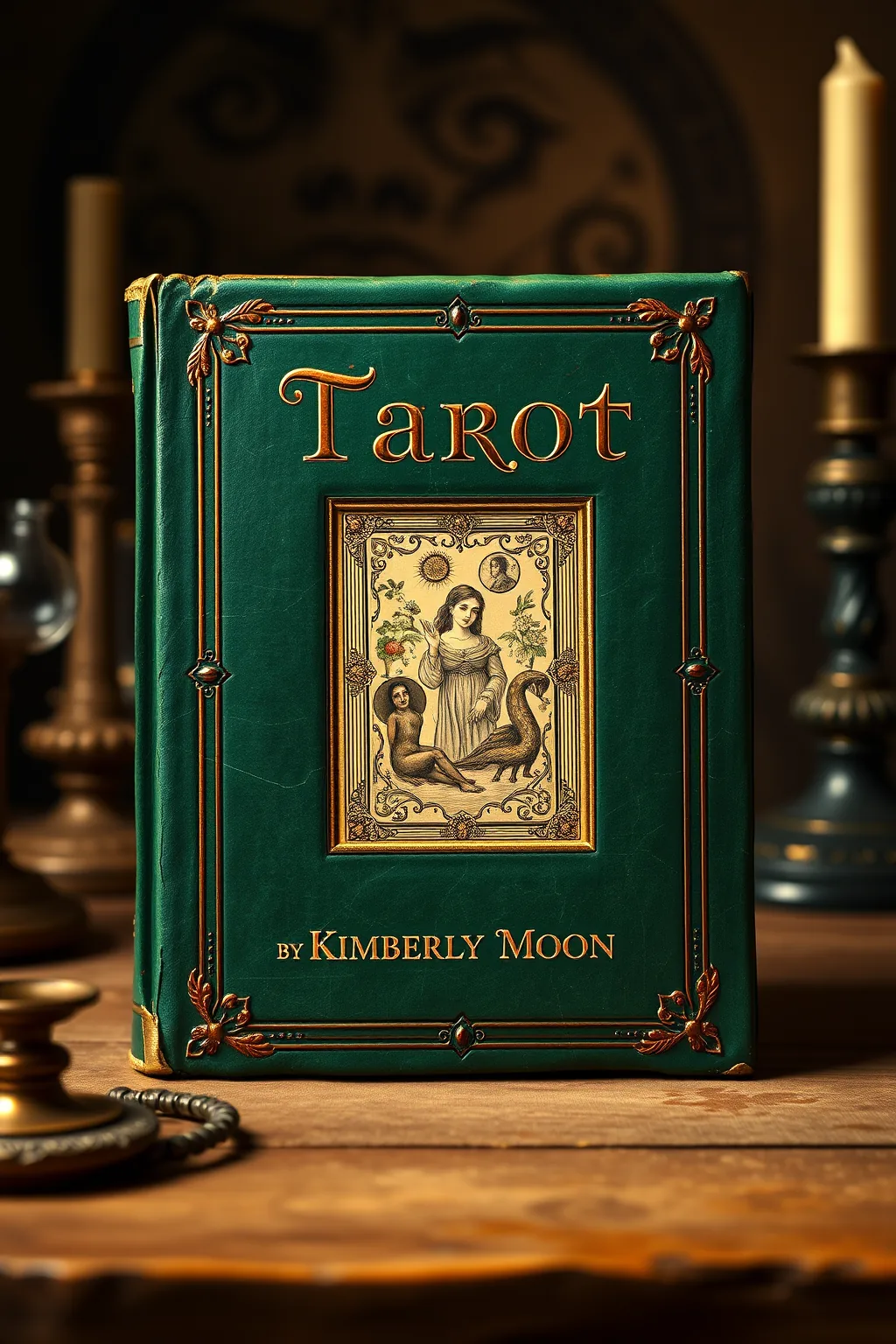
Tarot



Kimberly Moon's 'Tarot' is a masterful and deeply insightful compendium that transcends conventional interpretations. Evander Ashcroft, our Alchemy & Hermeticism Editor, notes: Moon doesn't merely catalog meanings; she unveils the alchemical transformations and hermetic principles embedded within the Tarot's rich symbology. Her prose, imbued with an almost alchemical luminescence, guides the reader through the archetypal landscapes of the Major Arcana and the elemental dance of the Minor Arcana with unparalleled clarity. This work is essential for serious practitioners and scholars alike, offering a profound philosophical grounding that elevates Tarot study from mere prediction to a sophisticated path of spiritual development. A truly indispensable addition to the esoteric library.
📝 Description
62
Kimberly Moon's Tarot, published in 2015, views the cards as a map of the psyche.
Kimberly Moon's Tarot examines the seventy-eight cards not merely as tools for divination, but as a symbolic representation of the human mind. The book details the Major Arcana's archetypal figures and the Minor Arcana's elemental associations. Moon invites readers to understand the symbolic language of the cards as a way to connect with deeper psychological and existential currents.
This work is aimed at readers who seek a more philosophical approach to the Tarot than simple fortune-telling. It encourages introspection and a connection with esoteric ideas. The goal is to provide a framework for understanding consciousness and a path toward self-knowledge.
This book is situated within the Western esoteric tradition that interprets the Tarot as a symbolic system reflecting universal principles and the human psyche. It follows in a lineage that views the cards as a hermetic text, akin to alchemy or astrology, for understanding consciousness and spiritual development. Moon's work engages with the idea of the Tarot as a mirror to inner states and a guide for personal transformation, rather than solely a predictive device.
💡 Why Read This Book?
This book offers a deep dive into the esoteric heart of the Tarot, revealing its profound symbolic language and philosophical underpinnings. Ideal for seekers yearning for self-discovery, scholars of ancient wisdom traditions, and practitioners looking to enrich their intuitive understanding. It's a guide to unlocking hidden knowledge and navigating life's journey with enhanced spiritual awareness.
⭐ Reader Reviews
Honest opinions from readers who have explored this book.
❓ Frequently Asked Questions
What is the core philosophy behind the Tarot as presented in this book?
This book posits the Tarot as a symbolic map of the human psyche and the cosmos, offering insights into archetypal energies and the unfolding of destiny, rather than a mere fortune-telling tool.
Is this book suitable for beginners?
Yes, while rich in esoteric depth, Kimberly Moon's accessible writing style makes it an excellent starting point for beginners eager to understand the Tarot's profound symbolism and philosophical underpinnings.
What makes this Tarot book different from others?
It emphasizes the philosophical and esoteric significance of each card, linking Tarot symbolism to ancient wisdom traditions and psychological archetypes, offering a deeper, more transformative practice.
How does the book explore the symbolism of the cards?
The book meticulously dissects the intricate symbolism of each card, drawing connections to mythology, astrology, and hermetic philosophy to reveal layers of hidden meaning.
Can this book help with personal growth?
Absolutely. By exploring the archetypal energies and life lessons represented in the Tarot, readers can gain profound self-awareness and unlock their inner potential for personal transformation.
🔮 Key Themes & Symbolism
Archetypal Journeys and the Human Psyche
This book illuminates the Tarot as a sophisticated system for understanding the archetypal forces that shape human experience. Moon guides readers through the Major Arcana, presenting them not as static images, but as dynamic stages in the soul's journey towards individuation and enlightenment. Each card becomes a portal to exploring universal themes of creation, challenge, transformation, and ultimate realization, inviting a deep introspection into the reader's own inner landscape and the archetypal patterns that govern their life.
The Language of Symbolism and Hidden Meanings
Kimberly Moon masterfully deciphers the intricate symbolic language embedded within the Tarot. She reveals how colors, numbers, figures, and celestial references on each card are not arbitrary, but rather form a coherent esoteric grammar. Understanding this language unlocks layers of meaning, allowing for useful insights into the subtle energies at play in personal and universal affairs. This theme emphasizes the Tarot as a sacred text, waiting to be read by those who attune themselves to its visual and conceptual lexicon.
Divination as a Tool for Spiritual Evolution
Beyond mere prediction, this work presents Tarot divination as a potent catalyst for spiritual growth and self-awareness. Moon advocates for a practice that moves beyond external fortune-telling to an internal dialogue with the subconscious and the Higher Self. The cards serve as mirrors reflecting opportunities for growth, karmic lessons, and the unfolding of one's divine potential. This theme encourages a mindful engagement with the Tarot, fostering intuition and empowering individuals to consciously shape their destinies through enlightened understanding.
💬 Memorable Quotes
Direct passages from the work, attributed to the author.
“Each card is a whispered secret of the soul.”
— This evokes the idea that the Tarot cards hold intimate truths and useful insights about our inner selves, waiting to be unveiled through careful contemplation.
“The path of the Fool is the beginning of all wisdom.”
— This highlights the importance of embracing new beginnings, innocence, and the willingness to step into the unknown as the foundational step towards genuine knowledge.
“Within the patterns lies the blueprint of destiny.”
— This suggests that by understanding the intricate relationships and symbols within the Tarot, one can discern the underlying structure and potential trajectory of life's events.
“The mirror reflects not what is, but what can be.”
— This speaks to the Tarot's power to reveal not just current circumstances, but also future possibilities and the potential for personal transformation based on present choices.
💡 Key Ideas
Editorial paraphrase of the work's core concepts — not direct quotes.
The Tarot is the alphabet of the divine.
This quote suggests that the Tarot's symbols are fundamental building blocks of universal truth, a language through which cosmic principles can be understood and communicated.
🌙 Esoteric Significance
Tradition
This work is deeply rooted in the Hermetic and Kabbalistic traditions, viewing the Tarot as a microcosm of the universe and a macrocosm of the human soul. It aligns with the esoteric principle of 'As Above, So Below,' presenting the cards as symbolic representations of divine energies and universal laws that manifest in the material world and within individual consciousness.
Symbolism
The book meticulously unravels the profound symbolism of the Tarot, connecting each card's imagery to archetypal figures, astrological correspondences, and numerological significance. From the Fool's journey of creation to the World's completion, the symbolism acts as a visual language for understanding cosmic forces, psychological states, and the alchemical processes of transformation.
Modern Relevance
In our fast-paced, often disconnected world, the Tarot offers a timeless anchor for introspection and spiritual connection. Kimberly Moon's interpretation highlights its relevance as a tool for navigating modern challenges, fostering intuition, and accessing inner wisdom. It provides a framework for understanding personal growth and the interconnectedness of all things, empowering individuals to find meaning and purpose.
👥 Who Should Read This Book
This book is a profound resource for a diverse range of individuals. **Beginners** will find a clear yet deep introduction to the Tarot's symbolic language and philosophical underpinnings. **Scholars** of esotericism and comparative religion will appreciate its meticulous research and connections to ancient traditions. **Seekers** on a path of self-discovery will find it an invaluable guide to understanding their inner landscape and life's journey. **Practitioners** of Tarot will discover new layers of meaning and sophisticated techniques to deepen their readings and spiritual practice.
📜 Historical Context
The Tarot, with its roots shrouded in the mists of time, emerged into a European landscape ripe with esoteric inquiry during the Renaissance. While its exact origins are debated, its popularization in the 18th century coincided with a surge of interest in Hermeticism, Kabbalah, and occult philosophies. Figures like Antoine Court de Gébelin sought to link Tarot imagery to ancient Egyptian mysteries and Kabbalistic Tree of Life, embedding it within a wide range of hidden knowledge. This era saw the Tarot transition from a mere card game to a sophisticated system of divination and spiritual exploration, influencing secret societies and occult orders for centuries to come. Its enduring appeal lies in its ability to synthesize complex philosophical ideas into accessible, visually compelling archetypes.
📔 Journal Prompts
Reflect on the Fool's journey: What 'leap of faith' is calling you now?
How does the symbolism of the High Priestess resonate with your intuition?
Identify a 'challenge' card in your recent readings and explore its lesson.
Consider the 'Wheel of Fortune' in your life: What cycles are you currently experiencing?
Meditate on the 'Sun' card: What brings you clarity and radiant joy?
🗂️ Glossary
Arcana
Referring to the two main divisions of the Tarot deck: the Major Arcana (22 trump cards depicting archetypal themes) and the Minor Arcana (56 cards divided into four suits).
Archetype
A universal, archaic pattern or image that is part of the collective unconscious, often represented by figures or symbols in mythology and the Tarot.
Divination
The practice of seeking knowledge of the future or the unknown by supernatural means, often through the use of tools like the Tarot.
Esoteric
Intended for or likely to be understood by only a small number of people with a specialized knowledge or interest; pertaining to inner, spiritual truths.
Gnosis
Spiritual knowledge or insight, particularly that which is attained through direct experience or intuition, often associated with mystical traditions.
This book appears in 3 collections
🔮 Readers Also Liked
Browse all →
![CIA Reading Room cia-rdp78t05439a000400230090-7: MENSURATION OF THE [ ]-BUKHARA CANAL, USSR](/img/thumb/cia-reading-room-cia-rdp78t05439a000400230090-7-mensuration-of-the-bukhara-canal-ussr-cia-reading-room.webp)
More by Kimberly Moon
All books →


From the “Tarot” Collection
View all →

More Free Divination & Tarot Books
View all →