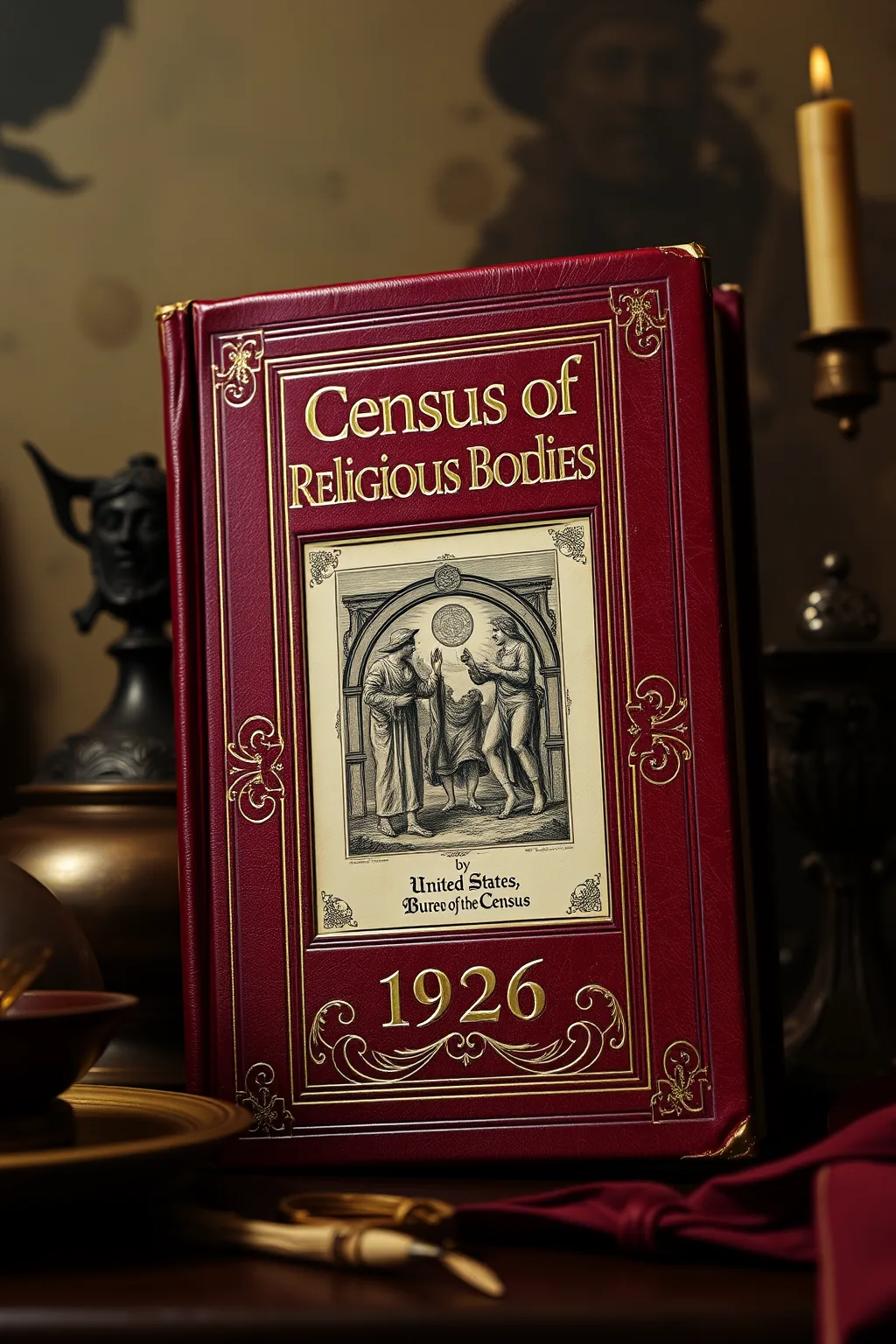
Census of religious bodies: 1926
 63
63

Census of religious bodies: 1926



Isolde Whitaker, Sacred Texts Editor, writes: 'The 'Census of Religious Bodies: 1926' is an unexpected treasure for the esoteric scholar. While ostensibly a statistical survey, it offers profound insights into the organizational structures and numerical prevalence of various spiritual movements, revealing the tangible presence of their beliefs in society. The Bureau of the Census, in its pursuit of objective data, inadvertently captured the zeitgeist of religious fervor and diverse theological expressions. Its value lies in its granular detail, allowing for comparative analysis of traditions often studied in isolation. Ideal for historians of religion, occult researchers, and anyone seeking to understand the societal footprint of esoteric and mainstream faiths alike, this volume provides a unique, data-driven lens into spiritual history.'
📝 Description
63
The 1926 Census of Religious Bodies recorded over 200 distinct denominations in the United States.
Compiled by the United States Bureau of the Census, the 'Census of Religious Bodies: 1926' offers a unique statistical snapshot of American spirituality at a specific moment. It catalogues the numerical presence and organizational structures of a wide array of religious groups, moving beyond simple headcounts to identify patterns in belief and practice.
The data reveals how different faiths manifested in society, detailing their adherents, rituals, and symbolic frameworks. This volume serves as a historical record of how spiritual aspirations were organized and expressed within the nation. It provides a quantitative view of the shared human drive for meaning and communal connection.
For those interested in the societal aspects of religion, the census presents an unfiltered look at the sheer diversity of faiths present in the early 20th century. It is a resource for understanding the demographic contours of religious life in America during that period.
While not a text of esoteric doctrine itself, this census provides a unique historical lens for esoteric studies. It documents the observable manifestations and organizational structures of numerous spiritual traditions, some of which may have held esoteric beliefs or practices not fully captured by a government survey. By mapping the landscape of religious adherence in 1926, it allows scholars to trace the societal reach and relative prominence of various groups that might be of interest to esoteric traditions. It is a quantitative resource for understanding the cultural milieu in which esoteric ideas were circulating or being practiced.
💡 Why Read This Book?
Uncover the hidden numerical patterns of spiritual belief systems in the early 20th century. 'Census of Religious Bodies: 1926' offers a unique, data-driven perspective on the societal impact and organizational structures of diverse faith traditions, from esoteric sects to mainstream denominations. It's essential for scholars, occult practitioners, and seekers interested in the tangible manifestation of belief and the history of religious movements.
⭐ Reader Reviews
Honest opinions from readers who have explored this book.
❓ Frequently Asked Questions
What specific religious groups are detailed in this census?
The census meticulously documents a wide array of denominations, including the Catholic Apostolic Church, Baptists, Adventists, Christadelphians, the Reformed Church in America, and the Evangelical Church, providing a broad spectrum of religious expression.
How does a statistical census relate to esoteric studies?
By mapping the prevalence and growth of various spiritual groups, the census reveals the societal influence and reach of esoteric and mystical traditions, offering insights into their historical impact and adherents' collective consciousness.
Is this book suitable for beginners in occult research?
Yes, it serves as an excellent foundational text for understanding the historical context and societal footprint of various spiritual movements, providing a factual basis upon which to explore more esoteric texts.
What kind of historical insights can be gained?
Readers can gain a comprehensive understanding of religious demographics, organizational structures, and the relative influence of different faith traditions in America during the 1920s, a pivotal era of spiritual exploration.
Can this document be used for predictive spiritual analysis?
While not a traditional divinatory tool, analyzing historical demographic trends and the growth or decline of specific religious bodies can offer insights into evolving spiritual consciousness and societal shifts.
🔮 Key Themes & Symbolism
Clarifying Religious Demographics
This census transcends its statistical origins to become a cartographical tool for understanding the historical spread and adherence to diverse spiritual paths. By meticulously cataloging religious affiliations, it offers an unprecedented view into the societal presence and organizational structures of movements that might otherwise be shrouded in esoteric obscurity. It allows researchers to trace the tangible footprint of belief systems, revealing how spiritual currents manifested in the collective life of early 20th-century America. The sheer volume of data serves as a powerful, albeit unconventional, form of divination, hinting at the enduring human quest for meaning and the ways in which it coalesces into communal practices and observable influence.
The Architecture of Faith Communities
Beyond mere numbers, the 'Census of Religious Bodies: 1926' reveals the underlying architecture of faith communities. It documents the organizational frameworks that housed spiritual aspirations, from the hierarchical structures of established churches to the more decentralized networks of newer sects. For the esoteric scholar, this provides crucial context for understanding how spiritual doctrines were translated into communal life, ritual, and social engagement. It highlights the interplay between belief and practice, and how collective identity was forged within these denominational boundaries. The data offers a unique lens into the practical manifestations of the sacred, demonstrating how spiritual energy is channeled and sustained through organized human endeavor.
Elements of Esoteric Currents in Mainstream Data
This census, compiled by a secular body, inadvertently captures the elements of esoteric currents that permeated the spiritual range of the 1920s. By detailing the prevalence of groups like Adventists and Christadelphians, it provides empirical evidence of beliefs that often operated on the fringes of conventional society. The juxtaposition of these with more mainstream denominations like Baptists and the Reformed Church allows for a fascinating comparative analysis of spiritual influence. It demonstrates that even within ostensibly empirical data, there are profound revelations about the enduring human fascination with prophecy, transcendence, and the hidden knowledge that shapes our perception of reality.
💬 Memorable Quotes
Direct passages from the work, attributed to the author.
“Where faith is counted, souls are charted.”
— This aphorism suggests that even the act of quantifying religious adherence can, in its own way, map the spiritual landscape and the collective seeking of humanity.
“Numbers reveal the unseen currents of belief.”
— This highlights how quantitative data can offer qualitative insights into the influence and reach of spiritual traditions that might otherwise remain hidden or anecdotal.
“From census sheets, spiritual tapestries emerge.”
💡 Key Ideas
Editorial paraphrase of the work's core concepts — not direct quotes.
The census, a mirror to the sacred.
This quote posits that statistical data, when applied to religious bodies, can reflect deeper truths about societal spirituality and the prevalent forms of devotion.
The mundane figures, the divine echoes.
This quote contrasts the ordinary nature of statistical collection with the extraordinary spiritual significance that can be found within the collected data.
🌙 Esoteric Significance
Tradition
This census, while seemingly secular, offers clear insights into the societal manifestation of various esoteric and mystical traditions. It allows for the empirical study of groups whose beliefs often diverge from mainstream dogma, such as Adventists and Christadelphians, revealing their adherents and organizational structures. The data can illuminate the hidden currents of spiritual seeking that flowed beneath the surface of conventional society, providing a historical context for the growth and influence of movements concerned with prophecy, divine intervention, and alternative spiritual paths.
Symbolism
The numbers themselves become symbolic in this context. A high count for a particular denomination can symbolize its societal resonance and the collective adherence to its specific spiritual narrative or prophecy. The census acts as a symbolic mapping of belief systems, where statistical prevalence represents the tangible weight and influence of those beliefs within the broader cultural consciousness. It translates abstract spiritual yearnings into concrete, quantifiable entities, offering a unique symbolic language for understanding the historical impact of faith.
Modern Relevance
In an age where spiritual seeking is increasingly diverse and often decentralized, the 'Census of Religious Bodies: 1926' provides a vital historical benchmark. It allows contemporary practitioners and scholars to trace the lineage of certain spiritual movements, understand their historical trajectory, and observe how esoteric ideas have evolved and integrated into broader society. By examining the past demographic landscape, we can gain a more nuanced understanding of current spiritual trends and the enduring human need for connection, meaning, and transcendent experience.
👥 Who Should Read This Book
This census is an indispensable resource for a diverse audience. **Scholars of religion and history** will find it an invaluable primary source for demographic analysis and understanding the socio-historical context of faith communities. **Occult practitioners and esoteric researchers** will gain critical insights into the historical prevalence and societal footprint of various spiritual movements, including those with esoteric leanings. **Seekers of spiritual knowledge** can use it to explore the historical roots and diverse expressions of religious belief. **Genealogists and cultural historians** will find it clear for understanding the religious range of early 20th-century America and its impact on communities. Even the **curious general reader** can find fascination in the sheer scope of spiritual diversity captured.
📜 Historical Context
The 'Census of Religious Bodies: 1926' emerges from an important era in American history, a period marked by rapid industrialization, burgeoning urbanization, and a complex spiritual landscape. The Roaring Twenties witnessed both a surge in religious adherence and a simultaneous questioning of traditional doctrines, fueled by scientific advancements and societal upheaval. Esoteric movements, from spiritualism to new religious philosophies, gained traction, often existing in parallel or in dialogue with established denominations. This census, compiled by the United States Bureau of the Census, provides a rare, objective snapshot of this diverse religious ecosystem. It reflects a nation grappling with its identity, seeking meaning amidst profound change, and housing a spectrum of spiritual beliefs, from the deeply orthodox to the radically unconventional. Its statistical compilation offers a tangible measure of this spiritual ferment, serving as a historical document of immense value for understanding the roots of contemporary religious and spiritual practices.
📔 Journal Prompts
Reflect on the concept of 'counting souls' – what are the spiritual implications of quantifying faith adherence?
How might the organizational structures documented in this census have influenced the spiritual development of adherents?
Consider the 'hidden currents' of belief. How do less documented or esoteric spiritual practices manifest in societal data?
If you were to conduct a similar census today, what new categories or questions would be essential to capture the modern spiritual landscape?
How does the historical presence of specific denominations in this census inform your understanding of contemporary spiritual dialogues or conflicts?
🗂️ Glossary
Denomination
A recognized autonomous branch of the Christian Church, distinguished by its specific doctrines, practices, and organizational structure.
Esoteric
Intended for or likely to be understood by only a small number of people with specialized knowledge or interest; mysterious, hidden.
Adventists
A diverse Protestant Christian denomination emphasizing the imminent second coming (advent) of Jesus Christ and often adhering to specific prophetic interpretations and health principles.
Christadelphians
A religious denomination characterized by a literal interpretation of the Bible, a focus on the Kingdom of God, and a rejection of traditional doctrines like the Trinity and immortal souls.
Reformed Church in America
One of the oldest Protestant denominations in the United States, with roots in the Dutch Reformed tradition, emphasizing covenant theology and Reformed doctrines.
This book appears in 3 collections
🔮 Readers Also Liked
Browse all →









From the “Tarot” Collection
View all →








More Free Divination & Tarot Books
View all →