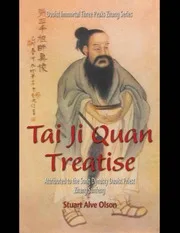
Tai Ji Quan Treatise: Attributed to the Song Dynasty Daoist Priest Zhang Sanfeng
 83
83

Tai Ji Quan Treatise: Attributed to the Song Dynasty Daoist Priest Zhang Sanfeng



Stuart Alve Olson’s translation and commentary on Zhang Sanfeng’s Tai Ji Quan Treatise is a monumental contribution to the field of esoteric and martial arts literature. Olson’s work is not just a translation but a comprehensive guide that demystifies the ancient text, making it accessible to modern readers. For esoteric seekers, this book is a treasure trove of wisdom, offering profound insights into the philosophies that underpin Tai Ji Quan. The detailed commentary provides practical applications of the treatise’s verses, making it an invaluable resource for practitioners. Olson’s scholarly approach ensures that the text is both historically accurate and spiritually enriching. This book is a must-read for anyone interested in the deeper dimensions of Tai Ji Quan and Daoist esotericism.
📝 Description
83
Stuart Alve Olson's 2015 translation of the Tai Ji Quan Treatise connects Song Dynasty Daoism with martial practice.
This book presents Stuart Alve Olson's annotated translation of the Tai Ji Quan Treatise, a text attributed to Zhang Sanfeng, a Daoist priest from the Song Dynasty. Olson's commentary unpacks the verses, connecting them to internal alchemy and hermetic traditions within ancient China. The translation aims to clarify the symbolic language and philosophical underpinnings of the treatise for practitioners and students of esoteric thought.
The work is structured to guide readers through the spiritual and martial aspects of Tai Ji Quan. Olson's annotations illuminate the deeper meanings within the text, bridging the gap between physical cultivation and internal development. The book is intended for those interested in the mystical dimensions of Chinese martial arts and the philosophical systems that inform them.
The Tai Ji Quan Treatise, as translated and annotated by Olson, is situated within a lineage of Chinese esoteric practices. It connects the physical discipline of Tai Ji Quan to the internal alchemy (neidan) and cosmological principles found in Daoism. The text reflects a tradition where martial arts are not merely combat techniques but also vehicles for spiritual transformation and the cultivation of vital energy (qi). Its hermetic aspects suggest an interest in universal principles that govern both the microcosm of the human body and the macrocosm of the universe, a common theme in Daoist internal arts.
💡 Why Read This Book?
Reading "Tai Ji Quan Treatise" today offers a unique opportunity to connect with ancient wisdom that is as relevant now as it was during the Song Dynasty. This book provides a deep understanding of the principles that govern Tai Ji Quan, enhancing both physical practice and spiritual growth. For modern esoteric seekers, it offers a bridge between the mystical and the practical, making it an essential addition to any spiritual library. Whether you are a practitioner looking to refine your skills or a seeker of esoteric knowledge, this book will enrich your journey.
⭐ Reader Reviews
Honest opinions from readers who have explored this book.
❓ Frequently Asked Questions
Who was Zhang Sanfeng?
Zhang Sanfeng was a legendary Daoist priest from the Song Dynasty, renowned for his contributions to Tai Ji Quan and martial arts philosophy.
What formats is the book available in?
The book is available in EPUB, AZW3, and PDF formats, ensuring compatibility with various e-readers and devices.
Is this book suitable for beginners?
While the book is deeply insightful, it is best suited for those with some prior knowledge of Tai Ji Quan or esoteric traditions.
🔮 Key Themes & Symbolism
Daoist Alchemy
Explore the principles of Daoist alchemy as they apply to the practice of Tai Ji Quan. Olson's commentary reveals the alchemical processes that transform the body and mind, leading to spiritual enlightenment.
Spiritual Cultivation
Discover the esoteric techniques for spiritual cultivation embedded within the Tai Ji Quan Treatise. Each verse offers insights into the mystical journey of self-transformation and inner harmony.
Symbolism in Tai Ji Quan
Study the detailed symbolism of Tai Ji Quan, where movements and postures are imbued with deep philosophical meanings. Olson's annotations decode these symbols, providing a profound understanding of the martial art's esoteric dimensions.
💬 Memorable Quotes
Direct passages from the work, attributed to the author.
“The highest form of Tai Ji Quan is not physical, but spiritual.”
— Olson highlights the ultimate goal of Tai Ji Quan as spiritual enlightenment, not just physical mastery.
“The stillness of the mind is the foundation of all movements.”
— Olson explains how mental stillness is essential for the fluid and precise movements of Tai Ji Quan.
“The body is a temple of the spirit.”
— Olson interprets this as the importance of cultivating the body as a vessel for spiritual growth in Tai Ji Quan.
💡 Key Ideas
Editorial paraphrase of the work's core concepts — not direct quotes.
Harmony within leads to harmony without.
This quote underscores the Daoist principle of inner harmony reflecting in outer actions and interactions.
The Tao is the path to unity and balance.
This quote emphasizes the central role of the Tao in achieving unity and balance in Tai Ji Quan practice.
🌙 Esoteric Significance
Tradition
The Tai Ji Quan Treatise belongs to the Daoist tradition, which emphasizes the cultivation of inner harmony, spiritual enlightenment, and the principles of Yin and Yang. It is a key text in the study of Chinese alchemy and hermeticism.
Symbolism
Key symbols in the treatise include the Tao, Yin and Yang, and the Five Elements. Each symbol represents deeper philosophical concepts that guide the practice of Tai Ji Quan and the journey towards spiritual enlightenment.
Modern Relevance
Today, the Tai Ji Quan Treatise remains relevant for practitioners seeking to deepen their understanding of the martial art's spiritual dimensions. Modern practitioners use it to enhance their practice and gain insights into the esoteric traditions of China.
👥 Who Should Read This Book
Beginners interested in the mystical and esoteric traditions of China will find this book an accessible introduction to Tai Ji Quan's spiritual dimensions. Scholars of Daoist philosophy will appreciate Olson's detailed commentary and analysis. Spiritual seekers will benefit from the clear insights into spiritual cultivation and inner harmony. Practitioners of Tai Ji Quan will find valuable guidance for enriching their practice with deeper philosophical understanding.
📜 Historical Context
Written during the Song Dynasty, the Tai Ji Quan Treatise reflects the body of Daoist philosophy and martial arts practice of the era. Zhang Sanfeng, the attributed author, was a legendary figure known for his mastery of both spiritual cultivation and martial arts. The treatise became a central to Tai Ji Quan literature, influencing generations of practitioners and scholars. Its enduring importance lies in its ability to bridge the gap between ancient wisdom and modern practice, making it a timeless guide for seekers of hidden knowledge.
📔 Journal Prompts
How does the Tai Ji Quan Treatise challenge your current understanding of spiritual cultivation?
What symbols in the treatise resonate with you the most, and why?
Reflect on a time when you experienced inner harmony. How can Tai Ji Quan help you achieve this state more frequently?
How does the concept of the Tao influence your approach to Tai Ji Quan?
What insights from the treatise can you apply to your daily practice and spiritual journey?
🗂️ Glossary
Daoist Alchemy
The practice of transforming the body and mind through spiritual cultivation, often involving martial arts and meditation.
Yin and Yang
The dualistic principles of balance and harmony in Daoist philosophy, represented by the Tao symbol.
Spiritual Cultivation
The process of refining the body and mind to achieve spiritual enlightenment and inner harmony.
Tao
The fundamental principle of the universe in Daoist philosophy, representing the path to unity and balance.
Five Elements
The five basic elements—Wood, Fire, Earth, Metal, and Water—in Daoist cosmology, symbolizing different aspects of nature and the self.
This book appears in 3 collections
🔮 Readers Also Liked
Browse all →








More by Stuart Alve Olson
All books →




From the “Hermeticism” Collection
View all →







More Free Alchemy & Hermeticism Books
View all →