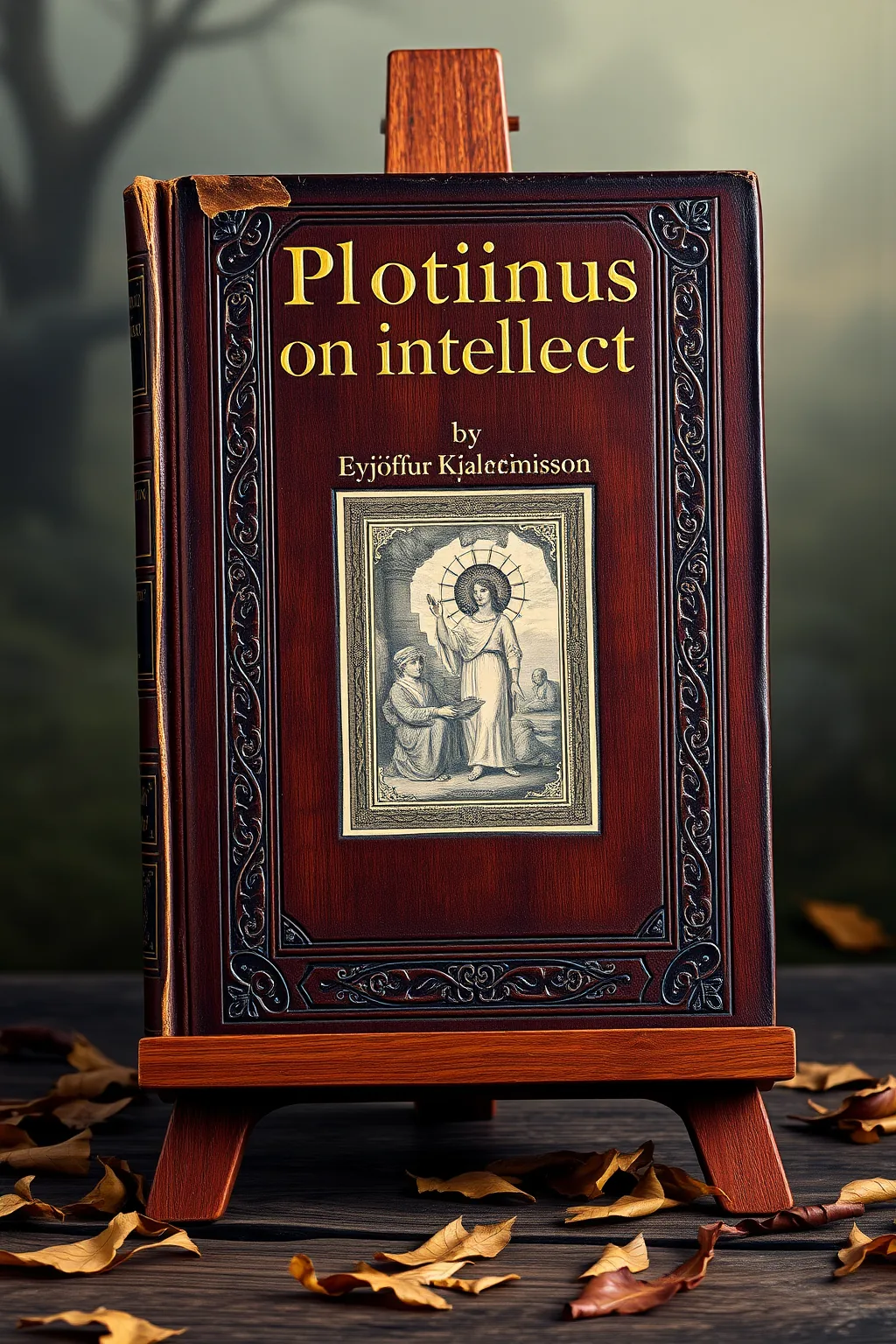
Plotinus on intellect
 61
61

Plotinus on intellect


Review by Lorelei Sage (Contemplative Literature Editor) — Eyjólfur Kjalar Emilsson's 'Plotinus on Intellect' is a masterful exploration of one of the most profound thinkers in the history of Western philosophy. Emilsson's deep understanding of Plotinus' esoteric insights makes this book an invaluable resource for both scholars and spiritual seekers. The author's ability to elucidate complex philosophical concepts with clarity and precision is particularly impressive. 'Plotinus on Intellect' stands out for its rigorous scholarship and its accessibility to readers who are new to the mysticism of Neoplatonism. It is a must-read for anyone interested in the hidden knowledge that lies at the heart of Plotinus' teachings.
📝 Description
61
Eyjólfur Kjalar Emilsson's 2011 book examines Plotinus' theory of intellect.
Eyjólfur Kjalar Emilsson's 'Plotinus on Intellect' offers a focused study of the philosopher's concepts concerning the intellect. The work details how Plotinus understood the intellect not merely as a human faculty but as a divine principle. Emilsson traces Plotinus' arguments from the Enneads, explaining the structure of intellect and its relation to the One. He discusses the intellect's role in generating the sensible world and its capacity for apprehending intelligible forms.
The book aims to clarify Plotinus' complex metaphysical system, particularly his doctrines on intellectual activity and consciousness. It addresses the implications of Plotinus' thought for understanding spiritual experience and the nature of reality. Emilsson's analysis highlights the philosophical rigor behind Plotinus' often mystical descriptions, making these ideas accessible to those interested in ancient philosophy and its esoteric dimensions.
Plotinus (c. 204/5 – 270 CE) is a central figure in Neoplatonism, a philosophical and religious movement that profoundly influenced later esoteric traditions. His system, detailed in the Enneads, posits a hierarchy of reality emanating from a supreme, ineffable principle called the One. The intellect (nous) is the second hypostasis, a realm of divine thought and intelligibles. Later mystics and philosophers drew upon Plotinus' concepts of emanation, contemplation, and the ascent of the soul to develop their own contemplative practices and metaphysical frameworks, often weaving them into Hermeticism and Gnosticism.
💡 Why Read This Book?
Why read this book — 'Plotinus on Intellect' offers a rare opportunity to delve into the esoteric depths of Plotinus' philosophy. Whether you are a seasoned scholar, a spiritual seeker, or a practitioner of the hermetic arts, this book provides deep insights into the mystical union of the human intellect with the divine. It is an essential read for those who wish to understand the symbolic and metaphysical dimensions of Neoplatonic thought.
⭐ Reader Reviews
Honest opinions from readers who have explored this book.
❓ Frequently Asked Questions
What is the primary focus of 'Plotinus on Intellect'?
The primary focus of 'Plotinus on Intellect' is to explore the mystical and esoteric dimensions of Plotinus' philosophy, particularly his views on the intellect and its relationship with the divine.
Who is the intended audience for this book?
This book is intended for scholars of philosophy, spiritual seekers, and practitioners of the hermetic arts who are interested in the mystical and esoteric teachings of Plotinus.
What makes this book unique?
'Plotinus on Intellect' stands out for its deep dive into the symbolism and hidden knowledge within Plotinus' writings, making it a unique resource for those seeking to understand the mystical aspects of Neoplatonism.
How does this book contribute to the field of philosophy?
This book contributes to the field of philosophy by providing a comprehensive and accessible exploration of Plotinus' esoteric insights, shedding light on the metaphysical and symbolic dimensions of his thought.
Can beginners benefit from reading this book?
While the book is deeply scholarly, Emilsson's clear and precise writing style makes it accessible to beginners who are interested in the mystical and esoteric dimensions of Plotinus' philosophy.
🔮 Key Themes & Symbolism
The Divine Intellect
Emilsson looks at the mystical union of the human intellect with the divine intellect, a central theme in Plotinus' philosophy. This exploration reveals the symbolic and esoteric dimensions of Plotinus' thought, offering readers a pathway to understanding the inner workings of the cosmos and the self.
Neoplatonic Mysticism
The book provides a deep dive into the mystical and esoteric teachings of Neoplatonism, informative the hidden knowledge that lies at the heart of Plotinus' philosophy. Emilsson's analysis highlights the symbolic and metaphysical dimensions of Plotinus' thought, making it accessible to both scholars and spiritual seekers.
Symbolism and Hidden Knowledge
Emilsson's meticulous analysis of Plotinus' writings unveils the strong symbolism and hidden knowledge that permeate his teachings. This exploration of the esoteric dimensions of Plotinus' thought offers readers a unique opportunity to engage with timeless wisdom and deepen their understanding of the mystical aspects of Neoplatonism.
💬 Memorable Quotes
Direct passages from the work, attributed to the author.
“The symbolism of Plotinus' thought reveals the hidden dimensions of the cosmos.”
— Emilsson's analysis highlights the strong symbolism and esoteric teachings that lie at the heart of Plotinus' philosophy.
“Neoplatonism offers a pathway to understanding the inner workings of the self.”
— This exploration of Neoplatonic mysticism reveals the clear insights into the mystical and esoteric dimensions of Plotinus' thought.
“Plotinus' teachings unveil the hidden knowledge that lies within the cosmos.”
— Emilsson's analysis of Plotinus' writings offers readers a unique opportunity to engage with timeless wisdom and deepen their understanding of the mystical aspects of Neoplatonism.
💡 Key Ideas
Editorial paraphrase of the work's core concepts — not direct quotes.
The intellect, in its essence, is a divine spark that seeks union with the divine.
This quote underscores the mystical union of the human intellect with the divine, a central theme in Plotinus' philosophy.
The divine intellect is the source of all knowledge and wisdom.
This quote emphasizes the divine origins of human intellect and the mystical union that lies at the heart of Plotinus' philosophy.
🌙 Esoteric Significance
Tradition
'Plotinus on Intellect' belongs to the Hermetic tradition, which emphasizes the mystical union of the human intellect with the divine. This tradition seeks to unveil the hidden knowledge that lies at the heart of the cosmos and the self.
Symbolism
Key symbols in this book include the divine intellect, the mystical union of the self with the divine, and the strong symbolism that permeates Plotinus' writings. These symbols offer readers a pathway to understanding the esoteric dimensions of Neoplatonic thought.
Modern Relevance
Today, Plotinus' teachings continue to inspire seekers of hidden knowledge and practitioners of the hermetic arts. Modern philosophers and spiritual seekers draw on his insights to deepen their understanding of the mystical and esoteric dimensions of existence.
👥 Who Should Read This Book
This book is ideal for scholars of philosophy, spiritual seekers, and practitioners of the hermetic arts. Beginners interested in the mystical and esoteric dimensions of Plotinus' philosophy will find Emilsson's clear and precise writing style accessible and enlightening. Experienced readers will appreciate the depth of Emilsson's analysis and the unique insights it offers into the hidden knowledge within Plotinus' teachings.
📜 Historical Context
Plotinus, a foundational figure in Neoplatonism, lived during the 3rd century CE, a time of significant cultural and philosophical transformation. His teachings emerged in response to the spiritual and intellectual turmoil of the era, offering a mystical path to divine union. 'Plotinus on Intellect' was written to provide modern readers with a deeper understanding of his esoteric insights, which have had a profound influence on Western philosophy and mysticism. Emilsson's work sheds light on the enduring relevance of Plotinus' thought, making it accessible to contemporary seekers of hidden knowledge.
📔 Journal Prompts
Reflect on the concept of the divine intellect and its relationship with the human intellect.
Consider the symbolism in Plotinus' writings and its significance in Neoplatonic thought.
Explore the mystical union of the self with the divine as described in 'Plotinus on Intellect'.
Write about the enduring relevance of Plotinus' teachings today, .
How does 'Plotinus on Intellect' deepen your understanding of the esoteric dimensions of Neoplatonism?
🗂️ Glossary
Neoplatonism
A philosophical and mystical tradition that emerged in the 3rd century CE, emphasizing the mystical union of the human intellect with the divine.
Divine Intellect
The concept of a divine spark within the human intellect that seeks union with the divine, central to Plotinus' philosophy.
Hermetic Arts
The esoteric practices and teachings that seek to unveil hidden knowledge and the mystical dimensions of existence.
Symbolism
The use of symbols and metaphors to convey deep, esoteric insights and hidden knowledge within philosophical and mystical teachings.
Mystical Union
The spiritual and intellectual union of the self with the divine, a central theme in Plotinus' philosophy and Neoplatonism.
This book appears in 2 collections
🔮 Readers Also Liked
Browse all →









From the “Neoplatonism” Collection
View all →






More Free Alchemy & Hermeticism Books
View all →