Stuart Alve Olson
The Eight Immortals are legendary Taoist figures in Chinese mythology, revered for their powers and influence in art, literature, and spiritual practices.
The Eight Immortals are a prominent group of legendary figures in Chinese mythology, revered within Taoism and popular in secular culture. Each immortal possesses unique powers, often transferable to symbolic objects known as "vessels." Their origins are typically placed in the Tang or Song Dynasties, and they are believed to reside on mythical islands in the Bohai Sea. Their stories and imagery have been widely depicted in art, literature, and even martial arts, symbolizing prosperity, longevity, and spiritual attainment. While often venerated as deities, they are also seen as folk heroes and saints who represent a connection between the living and the spiritual realm.
The Immortals' influence extends beyond mythology, permeating various aspects of Chinese culture. They are frequently represented in paintings, sculptures, and murals, often alongside other deities or symbols of good fortune. In literature, numerous stories and plays chronicle their adventures and teachings, with "The Eight Immortals Cross the Sea" being a particularly well-known narrative that spawned a popular proverb about individual skill contributing to a collective goal. Furthermore, their archetypes have inspired qigong exercises and martial arts styles, reflecting their diverse roles in spiritual and physical disciplines.
Mythological Origins and Attributes
The Eight Immortals are legendary figures in Chinese mythology, revered within Taoism and deeply embedded in secular Chinese culture. Each immortal is said to possess distinct powers, which can be transferred to symbolic objects called "vessels," collectively known as the "Covert Eight Immortals." These vessels are capable of bestowing life or dispelling evil. While their exact origins are debated, many accounts place their birth in the Tang or Song Dynasties. They are popularly believed to inhabit a group of five islands in the Bohai Sea, including the mythical Mount Penglai. The group typically comprises He Xiangu, Cao Guojiu, Li Tieguai, Lan Caihe, Lü Dongbin, Han Xiangzi, Zhang Guolao, and Zhongli Quan, each with unique characteristics and associations.
Artistic and Literary Representations
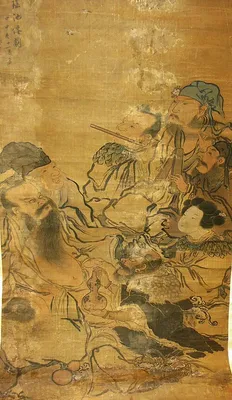
The Eight Immortals have been a persistent theme in Chinese art and literature since at least the Jin Dynasty, appearing in wall murals, sculptures, and paintings. They are seen as symbols of prosperity and longevity, frequently adorning celadon vases and noble possessions. Early artwork often depicted them with jade handmaidens and other symbols of spiritual power. During the Ming and Qing dynasties, they were commonly shown with other deities like the Three Stars or the Queen Mother of the West. Numerous literary works, including plays and stories like "The Yellow-Millet Dream" and "The Eight Immortals Cross the Sea," have explored their legends, with the latter giving rise to a proverb emphasizing individual expertise in achieving a common objective.
Spiritual and Martial Arts Connections
The influence of the Eight Immortals extends into spiritual practices and martial arts. They are linked to the development of qigong exercises, such as the "Eight Piece Brocade," and have inspired various Chinese martial arts styles that incorporate techniques attributed to each immortal's characteristics. Some drunken boxing styles specifically utilize the archetypes of the Eight Immortals for conditioning, meditation, and combat training. Worship of the Immortals is evident in temples, such as the Eight Immortals Palace in Xi'an, which houses statues of the group. While often revered as deities, many view them more as folk heroes and saints, representing a connection between the living and the deceased.
Key Ideas
- The Eight Immortals as legendary Taoist figures.
- Individual powers and symbolic vessels.
- Representation of prosperity and longevity.
- Influence on art, literature, and martial arts.
- Connection between the living and the spiritual realm.
Books by Stuart Alve Olson
6 free public domain books · Read online or download