Tai Chi
 74
74

Tai Chi
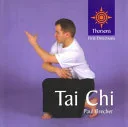
Paul Brecher's "Tai Chi" distinguishes itself by dissecting the myriad styles and lineages of this practice, a feat few introductions attempt with such rigor. The author’s methodical approach, evident in his clear delineation of differences between, say, the Chen and Yang styles, provides a much-needed map for navigating the often-convoluted landscape of Tai Chi's transmission. A particular strength lies in its historical grounding, situating the art's evolution beyond mere physical technique. However, the book's exhaustive detail can occasionally feel dense, especially for the absolute novice unfamiliar with basic martial arts terminology. Brecher's explanation of Qi, while informative, might benefit from further contextualization within broader Chinese metaphysical thought for readers less initiated in Taoist concepts. Nevertheless, for those seeking an authoritative, detailed account of Tai Chi's diverse forms and historical roots, Brecher's work offers a solid, if demanding, foundation.
📝 Description
74
Paul Brecher's 2000 book details Tai Chi's philosophical underpinnings and mechanics.
Published in 2000, Paul Brecher's "Tai Chi" examines this ancient Chinese martial art and its philosophical foundations. The book systematically introduces the core principles and varied practices of Tai Chi, moving past simple demonstrations to analyze the fundamental mechanics and historical growth. Brecher aims to give readers a solid understanding, separating his work from texts that focus only on physical movements without their deeper context.
This book is a helpful resource for those wanting a thorough introduction to Tai Chi, especially those interested in its philosophical and esoteric aspects. It suits beginners who want to learn the differences between styles and lineages before starting practice. Practitioners looking to expand their knowledge of the art's history and the theoretical structures behind its different schools will also find it useful. Students of Chinese philosophy or martial arts history will find it a practical reference.
Brecher situates Tai Chi within its historical development, noting its shift from martial uses to a practice focused on health and spiritual growth. He traces the lineage of various styles, showing how knowledge and techniques passed down through generations. The book touches on Tai Chi's widespread popularity in the late 20th century, a time of growing global interest in Eastern philosophies and practices, providing a structured way to understand this trend.
Brecher's "Tai Chi" places the art within a tradition that views physical practice as a vehicle for spiritual cultivation and understanding universal principles. It connects the movements and internal states to concepts like Qi, or vital energy, and the balance of Yin and Yang, which are central to many Taoist and Chinese internal arts. The book addresses how these practices, originating from martial applications, developed into methods for harmonizing the body, mind, and spirit, aligning with esoteric goals of self-awareness and connection to natural forces.
💡 Why Read This Book?
• Gain a precise understanding of the distinctions between major Tai Chi lineages, such as the Chen and Yang styles, as detailed in the book's comparative sections, offering clarity unavailable in generalized introductions. • Grasp the foundational role of 'Qi' (vital energy) and 'Yin and Yang' principles in Tai Chi practice, as explained by Brecher, providing a metaphysical framework for your own understanding or study. • Appreciate the historical development of Tai Chi styles from their martial origins to their modern health-focused applications, a perspective directly addressed by the book's exploration of its early 2000s context.
⭐ Reader Reviews
Honest opinions from readers who have explored this book.
❓ Frequently Asked Questions
What is the main difference between Tai Chi styles discussed in Paul Brecher's book?
Brecher's "Tai Chi" details differences in movement patterns, speed, and emphasis. For example, the Chen style often features explosive 'fajin' (power emission) and more dynamic stances, while the Yang style is known for its slower, broader, and more uniform movements.
When was Paul Brecher's book on Tai Chi first published?
The book "Tai Chi" by Paul Brecher was first published in the year 2000, making it a relatively contemporary yet comprehensive introduction to the subject.
Does the book explain the concept of Qi in Tai Chi?
Yes, the work explores the concept of Qi, or vital energy, explaining its central role in Tai Chi practice for both health benefits and martial applications, as discussed within its key concepts section.
Is Paul Brecher's "Tai Chi" suitable for complete beginners?
While comprehensive, the book is best suited for beginners who are serious about understanding the theoretical and historical nuances of Tai Chi, rather than just learning movements. It provides a solid foundation before practical training.
What historical context does the book provide for Tai Chi?
The book situates Tai Chi's evolution, noting its shift from martial origins to practices emphasizing health and spiritual cultivation, reflecting the increased global interest in Eastern philosophies around the turn of the millennium.
Does the book cover the philosophical aspects of Tai Chi?
Absolutely. Brecher's work delves into the philosophical underpinnings, including the principles of Yin and Yang as they relate to movement, balance, and internal states within Tai Chi practice.
🔮 Key Themes & Symbolism
Lineage and Style Divergence
Brecher's work meticulously unpacks the branching paths of Tai Chi transmission, differentiating major styles like Yang, Chen, and Wu. This exploration highlights how distinct lineages developed unique movement signatures, theoretical emphases, and even philosophical interpretations over centuries. Understanding these divergences is crucial for appreciating Tai Chi not as a monolithic practice, but as a rich, internally varied art form. The book provides the reader with the analytical tools to discern these differences, moving beyond superficial similarities to grasp the core innovations and transmissions within each major school.
The Role of Qi
A central tenet explored is the concept of Qi, or vital energy, which permeates Tai Chi theory and practice. The book elucidates how Qi is cultivated, directed, and utilized within the art, linking physical movement to internal states and health. It explains Qi's significance not just as a life force but as a dynamic principle governing balance, power, and flow. For the esoteric student, understanding Qi is fundamental to comprehending Tai Chi's deeper applications beyond mere physical exercise, connecting it to broader Taoist energetic principles.
Yin and Yang in Motion
Brecher examines the pervasive influence of Yin and Yang principles on Tai Chi's execution and philosophy. This duality is presented as the engine of Tai Chi's dynamic balance, manifesting in concepts like yielding and asserting, stillness and movement, hardness and softness. The book illustrates how practitioners learn to embody these complementary forces, creating a fluid, adaptable, and internally harmonious practice. This application of Yin and Yang is key to unlocking Tai Chi's potential for both self-defense and profound personal development.
Historical Evolution of Practice
The book traces the historical trajectory of Tai Chi, acknowledging its roots as a martial art while charting its evolution into a practice widely recognized for its health benefits and meditative qualities. Brecher contextualizes this transformation, showing how the art adapted and was reinterpreted across different eras and by various masters. This historical perspective is vital for understanding the diverse intentions and applications of Tai Chi as it entered the global consciousness around the year 2000.
💬 Memorable Quotes
Direct passages from the work, attributed to the author.
“Distinguishing between the various lineages of Tai Chi.”
— This highlights the book's core strength: providing a clear, analytical framework to understand the often-confusing proliferation of Tai Chi styles and their historical transmission.
“The difference between various Tai Chi styles.”
— This concise statement points to the book's practical value for practitioners and scholars seeking to differentiate the unique characteristics and theoretical underpinnings of major Tai Chi schools.
“Explaining the main Tai Chi styles.”
— This emphasizes the comprehensive nature of the introduction, suggesting that the work covers the most significant forms and their defining features in an accessible manner.
“A comprehensive introduction to Tai Chi.”
— This serves as a direct descriptor of the book's scope and intent, positioning it as a foundational text for anyone wishing to gain a thorough understanding of the art.
“Discussion of all the main Tai Chi styles.”
— This suggests the book's exhaustive approach, assuring readers that major stylistic variations and their historical contexts are thoroughly examined, offering a complete overview.
🌙 Esoteric Significance
Tradition
While Tai Chi is deeply rooted in Taoist philosophy, Brecher's approach places it within a broader esoteric framework that recognizes the interconnectedness of mind, body, and energy. It aligns with Neidan (internal alchemy) concepts where physical practice becomes a vehicle for cultivating internal states and spiritual awareness, moving beyond purely martial or health-focused interpretations. The work facilitates understanding how Taoist principles of harmony, balance, and energetic flow can be applied to personal transformation.
Symbolism
Key symbols implicitly explored include the circle, representing the unity of Yin and Yang and the cyclical nature of existence fundamental to Taoism. The 'softness overcoming hardness' principle is a symbolic motif representing the efficacy of yielding and adaptability over brute force, a core tenet in many esoteric traditions. The focus on 'stillness within movement' symbolizes the attainment of inner peace and centeredness amidst the flux of life, a common goal in contemplative practices.
Modern Relevance
Contemporary practitioners and scholars of embodied cognition and contemplative science draw upon the principles detailed in works like Brecher's. The emphasis on mindful movement, breath control, and energetic awareness appeals to modern mindfulness-based stress reduction (MBSR) techniques and somatic therapies. Furthermore, the detailed exploration of Tai Chi lineages informs ongoing academic and practitioner research into the transmission of esoteric knowledge in the digital age.
👥 Who Should Read This Book
• Aspiring Tai Chi practitioners seeking a foundational understanding of different styles and their historical roots before choosing a teacher or lineage. • Students of comparative martial arts and philosophy interested in the theoretical underpinnings and cultural context of Chinese internal arts. • Individuals exploring Taoist principles and their practical application in physical and energetic cultivation, seeking to understand concepts like Qi and Yin/Yang.
📜 Historical Context
Published in 2000, Paul Brecher's "Tai Chi" emerged during a period of burgeoning global interest in Eastern martial arts and philosophies. The late 20th century saw practices like Tai Chi move from niche communities to mainstream wellness and self-defense discourse. This era was characterized by a growing demand for accessible yet authentic explanations of complex traditions, as many Westerners sought alternatives to conventional physical and spiritual practices. Brecher's work appeared in dialogue with a broader scholarly and popular engagement with Chinese culture, influenced by figures like Joseph Needham whose multi-volume 'Science and Civilisation in China' had already laid significant groundwork. While not a direct response to a specific controversy, the book addressed the need for clarity amidst a range of often simplified or commercialized interpretations of Tai Chi, aiming to provide a structured, historically informed perspective.
📔 Journal Prompts
The Chen style's 'fajin' (power emission) and its relation to internal energy cultivation.
The historical transmission of Tai Chi knowledge across different lineages.
How the principles of Yin and Yang are embodied in specific Tai Chi movements.
The role of Qi in achieving balance and fluidity within Tai Chi practice.
Personal reflections on the distinction between martial origins and modern health applications of Tai Chi.
🗂️ Glossary
Qi (Chi)
Vital energy or life force, considered fundamental in Traditional Chinese Medicine and martial arts like Tai Chi. It is believed to flow through the body and influence health, vitality, and martial efficacy.
Yin and Yang
The fundamental Taoist concept of dualistic, complementary forces that govern the universe. In Tai Chi, it represents principles of softness/hardness, stillness/movement, and yielding/asserting.
Lineage
A succession of teachers and students in a particular school or tradition, signifying the direct transmission of knowledge, techniques, and philosophy from master to disciple.
Yang Style
One of the major styles of Tai Chi, characterized by its slow, deliberate, broad, and evenly paced movements, emphasizing health and relaxation.
Chen Style
Considered the original style of Tai Chi, known for its combination of slow, meditative movements with rapid, explosive bursts of power ('fajin') and more dynamic postures.
Wu Style
Another prominent Tai Chi style, often characterized by its compact, precise movements and emphasis on subtle shifts in weight and intention.
Fajin
A term used in Chinese martial arts, particularly in styles like Chen Tai Chi, referring to the explosive emission of power from the entire body in a short, rapid burst.
This book appears in 1 collection
🔮 Readers Also Liked
Browse all →









From the “Tai Chi” Collection
View all →





More Free Occult Philosophy Books
View all →